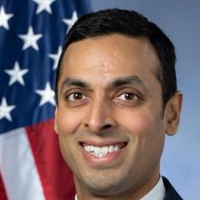
Legislative Activity
Track Suhas's sponsored bills, co-sponsored legislation, and voting record
The Quiet Communities Act of 2025 reestablishes the EPA's Office of Noise Abatement and Control to combat noise pollution through research, technical assistance, and funding for state and local programs.
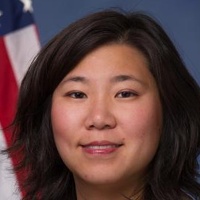
Grace Meng
Representative
NY
Grace Meng
Representative
NY
The Quiet Communities Act of 2025 addresses the growing public health crisis caused by noise pollution by reestablishing the Environmental Protection Agency's (EPA) Office of Noise Abatement and Control. This office will be tasked with researching noise impacts, supporting state and local noise control efforts through technical assistance and grants, and conducting a specific study on aircraft noise. The Act authorizes \$25 million annually through Fiscal Year 2030 to fund these critical national noise reduction initiatives.
This Act strengthens the cooperative management of National Scenic and Historic Trails by formally designating operational partners, clarifying roles, and establishing priority systems for land protection and visitor capacity planning.
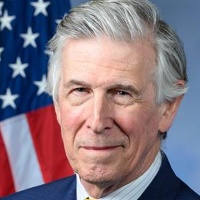
Donald Beyer
Representative
VA
Donald Beyer
Representative
VA
The Appalachian Trail Centennial Act officially recognizes the vital role of cooperative management, particularly volunteer partnerships, in maintaining National Scenic and Historic Trails. This bill formally designates operational partners, like the Appalachian Trail Conservancy, to share management responsibilities with federal agencies. It also establishes processes for prioritizing land protection and assessing the economic impact of these trails on local communities. Ultimately, the Act aims to strengthen the framework for long-term stewardship and development of the National Trails System.
This Act bans Members of Congress and their immediate families from trading or owning specific investments while in office, requiring divestment within 90 to 180 days or facing significant financial penalties.

Chip Roy
Representative
TX
Chip Roy
Representative
TX
The Restore Trust in Congress Act establishes strict new rules prohibiting Members of Congress and their immediate families from owning or trading specific financial assets, referred to as "covered investments," while in office. Covered individuals must divest existing prohibited holdings within a set timeframe or face significant financial penalties, including fines and forfeiture of profits. The legislation aims to eliminate conflicts of interest arising from personal financial trading while serving in federal office.
This act prohibits discrimination in federal jury service based on disability or age, ensuring individuals are not excluded if they can perform the essential functions of jury duty with reasonable accommodation.
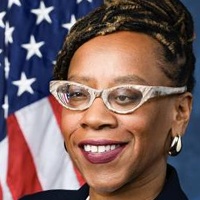
Lateefah Simon
Representative
CA
Lateefah Simon
Representative
CA
This Act prohibits discrimination against individuals based on disability or age in federal jury service. It amends federal law to ensure that a disability cannot be used as a basis for exclusion from a jury unless the individual cannot perform the essential functions of service even with a reasonable accommodation. The legislation updates existing jury qualification standards to reflect this nondiscrimination principle.
This Act mandates a review of federal nursing workforce programs to recommend changes that increase faculty, facilitate experienced nurse transitions to teaching, and expand LPN-to-RN pathways.
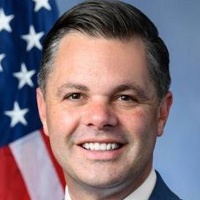
Zachary (Zach) Nunn
Representative
IA
Zachary (Zach) Nunn
Representative
IA
The Train More Nurses Act mandates a comprehensive review of federal grant programs supporting the nursing workforce. The resulting report must provide Congress with specific recommendations to improve these programs. Key goals include increasing nursing faculty, facilitating experienced nurses' transition to teaching, and creating clearer pathways for LPNs to become RNs.
The Enduring Welcome Act of 2025 establishes a permanent Office of the Coordinator for Afghan Relocation Efforts within the State Department to streamline and support the resettlement of Afghan allies and their families.
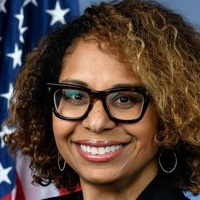
Sydney Kamlager-Dove
Representative
CA
Sydney Kamlager-Dove
Representative
CA
The Enduring Welcome Act of 2025 establishes a permanent Office of the Coordinator for Afghan Relocation Efforts within the State Department to streamline and support the resettlement of Afghan allies. This Act mandates the creation of a secure, centralized database to track all applicants, beneficiaries, and relocation progress, ensuring accountability to Congress. The Coordinator will manage interagency efforts, resolve family reunification roadblocks, and provide integration support for covered persons. This entire framework is set to automatically expire five years after enactment unless otherwise specified.
This Act directs the U.S. Postal Service to issue a special semipostal stamp to raise funds for Lyme disease and tick-borne illness research at the National Institute of Allergy and Infectious Diseases.
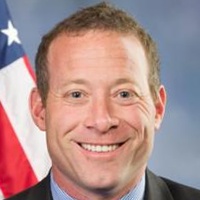
Josh Gottheimer
Representative
NJ
Josh Gottheimer
Representative
NJ
The Stamp Out Lyme Disease Act directs the U.S. Postal Service to issue a special semipostal stamp to raise funds for Lyme disease research. All proceeds from the sale of this stamp will be directed to the National Institute of Allergy and Infectious Diseases (NIAID). This measure aims to support research into tick-borne illnesses, acknowledging the significant public health and financial burden of Lyme disease in the United States.
This resolution terminates the President's declared crime emergency in the District of Columbia, asserting that the emergency is unwarranted and the legal basis for federal MPD control is flawed.
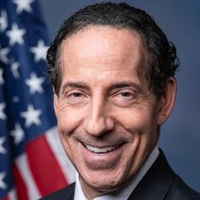
Jamie Raskin
Representative
MD
Jamie Raskin
Representative
MD
This resolution terminates the President's August 11, 2025, declaration of a crime emergency in the District of Columbia. Congress asserts that the President lacks the legal authority under the D.C. Home Rule Act to take operational control of the Metropolitan Police Department. Furthermore, the bill notes that local violent crime rates have been declining significantly.
The House of Representatives expresses its strong opposition to any presidential pardon or clemency for Ghislaine Maxwell, affirming her conviction for sex trafficking and abuse.
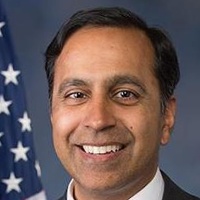
Raja Krishnamoorthi
Representative
IL
Raja Krishnamoorthi
Representative
IL
This House resolution expresses the strong sense of Congress opposing any pardon, commutation, or clemency for Ghislaine Maxwell. It affirms her conviction for sex trafficking and emphasizes that her continued imprisonment is necessary for justice for the survivors. The resolution serves as a formal condemnation of her heinous crimes and stands firmly with the victims.
This bill repeals specific prior health reconciliation provisions and expands eligibility for the Premium Tax Credit by removing the 400% income cap and adjusting the subsidy calculation formula.
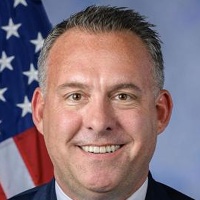
Adam Gray
Representative
CA
Adam Gray
Representative
CA
The Protecting Health Care and Lowering Costs Act of 2025 repeals specific prior reconciliation health provisions. This bill significantly expands eligibility for the Premium Tax Credit by eliminating the 400% Federal Poverty Level income cap. It also updates the subsidy calculation formula to ensure a smoother, linear adjustment of assistance across various income levels.
The LOAN Act significantly expands Pell Grants, eliminates loan fees, restructures repayment and forgiveness for federal loans, stops interest capitalization, and ties future federal loan interest rates to Treasury yields while creating refinancing options.
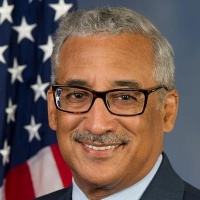
Robert Scott
Representative
VA
Robert Scott
Representative
VA
The LOAN Act significantly overhauls federal student aid by dramatically expanding Pell Grants, making higher education more accessible through increased funding and eligibility pathways. It also restructures federal student loans by eliminating origination fees, introducing new income-driven repayment plans, and stopping interest capitalization to reduce borrower debt. Furthermore, the bill establishes new fixed interest rate formulas for future loans and creates refinancing options for both existing federal and private student loans. Overall, the legislation aims to lower the cost of college and ease the burden of repayment for millions of borrowers.
The Transnational Repression Policy Act establishes a national strategy and mandates training to protect individuals in the U.S. and abroad from harassment, intimidation, and human rights abuses orchestrated by foreign governments.
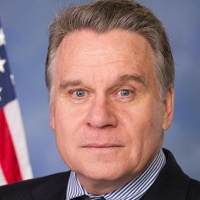
Christopher Smith
Representative
NJ
Christopher Smith
Representative
NJ
The Transnational Repression Policy Act establishes a comprehensive U.S. strategy to protect individuals within the country and abroad from harassment, intimidation, and abuse by foreign governments. The law mandates interagency coordination to develop a national strategy, enhance training for federal personnel, and direct the Department of Homeland Security and the Department of Justice to create resources to combat these foreign interference tactics domestically. Ultimately, this Act aims to increase international cooperation and hold foreign actors accountable for violating human rights across borders.
This act codifies the FTC's "click-to-cancel" rule into federal law, requiring businesses to provide simple online cancellation methods for subscriptions.
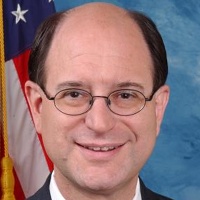
Brad Sherman
Representative
CA
Brad Sherman
Representative
CA
The Click to Cancel Act of 2025 officially codifies the Federal Trade Commission's "click-to-cancel" rule into federal law. This mandates that businesses provide consumers with a simple, online method to cancel subscriptions. Violations of this new law will be enforced by the FTC using its existing authority under the Federal Trade Commission Act.
The EATS Act of 2025 expands eligibility for SNAP benefits by removing previous restrictions for students enrolled at least half-time in recognized educational programs.
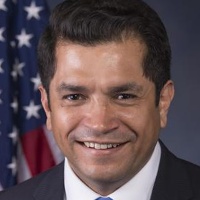
Jimmy Gomez
Representative
CA
Jimmy Gomez
Representative
CA
The EATS Act of 2025 significantly updates eligibility for the Supplemental Nutrition Assistance Program (SNAP) by removing previous restrictions that often disqualified students. This legislation explicitly includes bona fide students enrolled at least half-time in recognized educational programs as eligible participants for food assistance. These changes take effect on January 2, 2026.
This act repeals the prohibition on Medicaid payments to certain healthcare entities and mandates retroactive payment for services already rendered under the repealed ban.
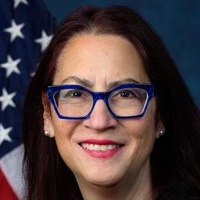
Laura Friedman
Representative
CA
Laura Friedman
Representative
CA
The Restoring Essential Healthcare Act repeals an outdated ban that prevented Medicaid from making payments to certain healthcare providers. This legislation ensures that these previously prohibited entities will now be reimbursed for medical services rendered between the enactment of the original ban and the passage of this Act. In short, it restores payment eligibility and retroactively covers past services.
This Act eliminates age restrictions and simplifies premium requirements for adult children covered under the TRICARE Young Adult program.
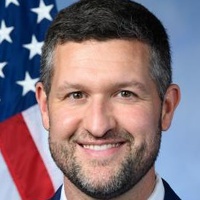
Patrick Ryan
Representative
NY
Patrick Ryan
Representative
NY
The Health Care Fairness for Military Families Act of 2025 significantly improves the TRICARE Young Adult (TYA) program for military dependents. This legislation eliminates the age restriction for TYA eligibility and removes the separate premium requirement for coverage. These changes aim to provide broader and simpler healthcare access for adult children of service members.
This Act prioritizes federal research and development funding for controlling the invasive Spotted Lanternfly and extends key agricultural research programs through 2030.
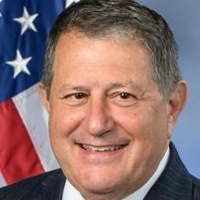
Joseph Morelle
Representative
NY
Joseph Morelle
Representative
NY
The Spotted Lanternfly Research and Development Act prioritizes federal funding for research and extension programs specifically aimed at controlling the invasive Spotted Lanternfly. This legislation ensures that developing effective tools and treatments against this pest becomes a high-priority initiative. Additionally, the Act extends the authorization for several existing high-priority agricultural research programs until 2030.
This Act prohibits the President from imposing new or continuing existing duties on essential baby items like formula, bottles, and breast pumps under the International Emergency Economic Powers Act.
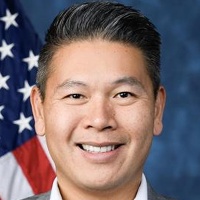
Derek Tran
Representative
CA
Derek Tran
Representative
CA
The Baby Food Tax Relief Act explicitly prohibits the President from imposing new or existing tariffs or duties on essential baby items like bottles, formula, and breast pumps using the International Emergency Economic Powers Act (IEEPA) or similar authorities. This legislation ensures that these necessary goods remain free from such taxation.
The VISIBLE Act mandates that federal immigration officers clearly display their agency and identifying information when conducting public-facing enforcement activities.
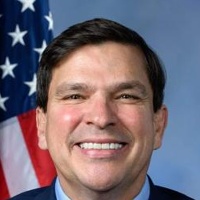
Vicente Gonzalez
Representative
TX
Vicente Gonzalez
Representative
TX
The VISIBLE Act mandates that federal immigration enforcement officers, such as those from CBP and ICE, must clearly display their agency name and either their last name or badge number during all public-facing civil immigration enforcement activities. This requirement ensures officers are easily identifiable to the public from a distance, promoting transparency and public trust. The law also establishes disciplinary procedures for non-compliance and requires annual reporting to Congress on enforcement activities and violations.
This Act prohibits the imposition or continuation of any duties on essential baby sleep items, such as cribs, mattresses, and monitors, enacted under the International Emergency Economic Powers Act.
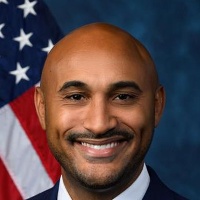
Shomari Figures
Representative
AL
Shomari Figures
Representative
AL
The Baby Sleep Tax Relief Act prohibits the President from imposing new or continuing existing duties on essential baby sleep items, such as cribs, mattresses, and monitors, under the authority of the International Emergency Economic Powers Act (IEEPA). This legislation ensures that these necessary items are not subject to additional tariffs imposed through that specific executive power.