Legislative Activity
Track Jan's sponsored bills, co-sponsored legislation, and voting record
This Act establishes federal programs to address the impact of climate change risks, like extreme heat and pollution, on maternal and infant health through grants, education, research, and risk zone identification.
Lauren Underwood
Representative
IL
Lauren Underwood
Representative
IL
The Protecting Moms and Babies Against Climate Change Act directs the Department of Health and Human Services to address how climate change risks, like extreme heat and pollution, harm maternal and infant health. The bill establishes grant programs to support local efforts and education, and mandates research and strategies to identify high-risk zones for pregnant individuals and young children. Its goal is to reduce adverse outcomes such as preterm birth, low birth weight, and maternal mortality linked to climate change.
This resolution directs the President to remove U.S. Armed Forces from hostilities with Iran, unless necessary for imminent self-defense.
Gregory Meeks
Representative
NY
Gregory Meeks
Representative
NY
This resolution directs the President, under the War Powers Resolution, to remove U.S. Armed Forces from hostilities involving Iran. The order mandates withdrawal unless forces are necessary for imminent self-defense of the U.S. or its allies. Any continued defensive action must comply with existing War Powers reporting requirements.
This resolution censures President Trump and Special Envoy Witkoff for violating the Foreign Emoluments Clause by accepting undisclosed payments from the UAE and demands they divest from related foreign business interests.
Jamie Raskin
Representative
MD
Jamie Raskin
Representative
MD
This resolution expresses the sense of the House that President Trump and Special Envoy Witkoff violated the Foreign Emoluments Clause by accepting undisclosed payments linked to a secret deal with an entity substantially funded by the UAE. It demands they immediately turn over all such payments to the Treasury and divest from any business interests connected to foreign governments. The bill cites specific financial transactions and subsequent U.S. policy actions favoring the UAE as evidence of a grave conflict of interest.
This bill expresses support for designating April as National Arab American Heritage Month to celebrate the rich heritage and significant contributions of Arab Americans to the United States.
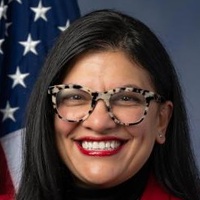
Rashida Tlaib
Representative
MI
Rashida Tlaib
Representative
MI
This resolution expresses support for designating April as National Arab American Heritage Month (NAAHM). It recognizes the profound and diverse contributions of Arab Americans throughout U.S. history, spanning science, public service, culture, and more. The designation aims to celebrate this heritage while countering misconceptions and discrimination.
This resolution commemorates the 5-year remembrance of the Indianapolis FedEx mass shooting, denounces all forms of anti-Asian hate, and calls for enhanced federal support to combat hate crimes and protect targeted communities.

Pramila Jayapal
Representative
WA
Pramila Jayapal
Representative
WA
This resolution commemorates the five-year remembrance of the 2021 Indianapolis FedEx mass shooting, which tragically killed eight people, many of whom were Sikh. It strongly denounces all forms of anti-Asian hate, discrimination, and violence targeting South Asian communities. Furthermore, the resolution calls for strengthening federal programs to combat hate crimes and reaffirms the commitment to protecting the civil rights of all communities.
This bill officially renames the United States Postal Service facility at 14855 South Van Dyke Road in Plainfield, Illinois, as the Staff Sergeant Jose Dueñez Jr. Post Office Building.
Lauren Underwood
Representative
IL
Lauren Underwood
Representative
IL
This bill officially renames the United States Postal Service facility located at 14855 South Van Dyke Road in Plainfield, Illinois. The facility will now be known as the Staff Sergeant Jose Dueñez Jr. Post Office Building. This designation will apply to all official federal references to the building.
This bill officially renames the U.S. Postal Service facility in Palatine, Illinois, to the Bernie Bluestein Post Office Building.
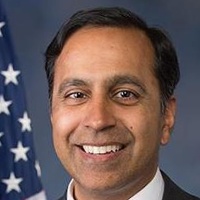
Raja Krishnamoorthi
Representative
IL
Raja Krishnamoorthi
Representative
IL
This bill officially renames the United States Postal Service facility located at 1300 East Northwest Highway in Palatine, Illinois. The facility will now be known as the "Bernie Bluestein Post Office Building." This designation will be used in all official records and documents pertaining to this location.
This bill establishes a commission of medical and former government experts to evaluate a President's physical or mental capacity to discharge the duties of the office when directed by Congress.
Jamie Raskin
Representative
MD
Jamie Raskin
Representative
MD
This bill establishes the Commission on Presidential Capacity to Discharge the Powers and Duties of the Office, a body tasked with evaluating the physical or mental fitness of the President. The Commission, composed of medical experts and former high-ranking officials, can be directed by Congress to examine the President. Its findings regarding the President's ability to execute their duties are then reported to Congress and the Vice President.
This Act mandates federal oversight and new rules for large data centers connecting to the electric grid, requiring them to pay for associated infrastructure costs and adhere to labor and clean energy standards.
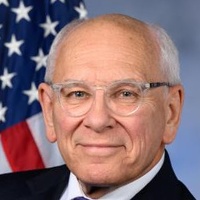
Paul Tonko
Representative
NY
Paul Tonko
Representative
NY
The Power for the People Act of 2026 aims to hold large data centers accountable for their significant and growing impact on the electric grid and consumer energy bills. It mandates that the Federal Energy Regulatory Commission (FERC) establish a special interconnection queue prioritizing data centers that use clean energy, pay prevailing wages, and agree to load flexibility. Furthermore, the bill requires states to consider creating special electricity rate classes so that data centers pay the full cost of necessary local grid upgrades instead of passing those costs to other ratepayers.
This resolution seeks to nullify the Department of Education’s recent rule regarding the William D. Ford Federal Direct Loan Program.
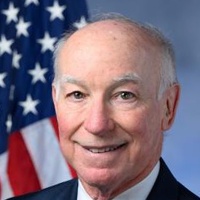
Joe Courtney
Representative
CT
Joe Courtney
Representative
CT
This resolution seeks to exercise congressional disapproval of the Department of Education’s recent rule regarding the William D. Ford Federal Direct Loan Program. If passed, the resolution would nullify the rule, rendering it without force or effect.
This resolution supports the goals and ideals of International Transgender Day of Visibility by celebrating the achievements of the transgender community and recognizing their ongoing fight for equality and dignity.
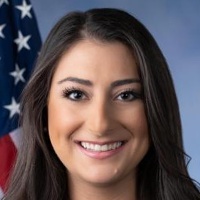
Sara Jacobs
Representative
CA
Sara Jacobs
Representative
CA
This resolution formally recognizes International Transgender Day of Visibility to celebrate the achievements and bravery of the transgender community. It highlights the ongoing challenges of discrimination and legislative threats faced by transgender individuals while honoring their significant historical and contemporary contributions to society. The bill encourages all Americans to observe the day and reaffirms a commitment to the fight for equal dignity and respect.
This resolution formally recognizes the persistence of the gender wage gap in the United States and reaffirms a commitment to achieving equal pay for equal work.
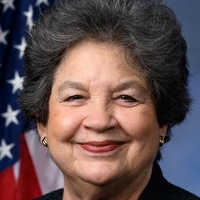
Lois Frankel
Representative
FL
Lois Frankel
Representative
FL
This resolution formally recognizes the persistent gender wage gap in the United States and its significant negative impact on women, families, and the national economy. It highlights the systemic factors contributing to pay disparities across various demographics and occupations. Ultimately, the resolution reaffirms Congress's commitment to achieving equal pay for equal work.
This resolution seeks to overturn the Department of Labor’s rule regarding the Adverse Effect Wage Rate methodology for H-2A nonimmigrant workers.
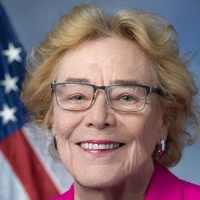
Zoe Lofgren
Representative
CA
Zoe Lofgren
Representative
CA
This joint resolution exercises congressional authority to overturn the Department of Labor’s rule regarding the Adverse Effect Wage Rate (AEWR) methodology for H-2A nonimmigrant workers. If enacted, the resolution would nullify the rule, ensuring it has no further force or effect.
This bill prohibits the use of federal funds for military force in or against Cuba through 2026, unless explicitly authorized by Congress or permitted under the War Powers Resolution.
Pramila Jayapal
Representative
WA
Pramila Jayapal
Representative
WA
This bill prohibits the use of federal funds for military action in or against Cuba through December 31, 2026. Exceptions are only permitted if Congress declares war, provides specific statutory authorization, or if the action aligns with the War Powers Resolution.
The Safe Staffing Saves Lives Act establishes federal minimum staffing requirements for Medicare and Medicaid-certified nursing facilities to improve resident care and safety.
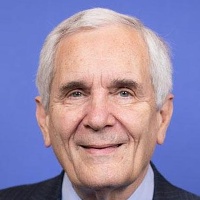
Lloyd Doggett
Representative
TX
Lloyd Doggett
Representative
TX
The Safe Staffing Saves Lives Act establishes federal minimum staffing requirements for Medicare and Medicaid-certified nursing facilities, mandating at least 4.1 hours of nursing care per resident per day by 2029. The bill includes strict enforcement mechanisms, such as payment denials and increased inspections, for facilities that fail to meet these standards. Additionally, it mandates public disclosure of staffing compliance and requires periodic reporting to ensure these measures improve resident safety and quality of care.
This bill repeals the federal tax credits for using carbon dioxide in enhanced oil recovery and eliminates the dedicated enhanced oil recovery tax credit.
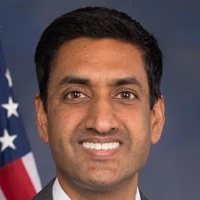
Ro Khanna
Representative
CA
Ro Khanna
Representative
CA
This bill, the End Polluter Welfare for Enhanced Oil Recovery Act of 2026, eliminates key federal tax credits for using captured carbon dioxide in enhanced oil recovery (EOR) projects. Specifically, it repeals the Section 43 EOR credit and removes the Section 45Q credit for carbon oxide used as a tertiary injectant in EOR. These changes are effective for taxable years beginning after December 31, 2025.
The Ultra-Millionaire Tax Act of 2026 establishes an annual federal wealth tax on individuals with a net worth exceeding $50 million while increasing funding for IRS enforcement and taxpayer services.
Pramila Jayapal
Representative
WA
Pramila Jayapal
Representative
WA
The Ultra-Millionaire Tax Act of 2026 proposes a new annual federal wealth tax on individuals with a net worth exceeding $50 million, with rates ranging from 2% to 3% based on total assets. The legislation includes robust enforcement measures, such as increased IRS funding and mandatory audit requirements, to ensure compliance among the ultra-wealthy. Additionally, it strengthens foreign asset disclosure requirements to prevent tax avoidance.
This concurrent resolution affirms the duty of Congress to protect working women by addressing systemic wage disparities, workplace discrimination, and economic barriers to ensure equal opportunity and dignity for all.
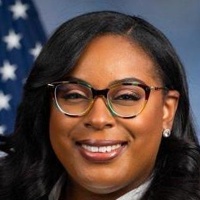
LaMonica McIver
Representative
NJ
LaMonica McIver
Representative
NJ
This concurrent resolution recognizes the economic challenges and systemic barriers facing working women, including wage disparities, discrimination, and the erosion of workplace protections. It affirms Congress's duty to champion policies that ensure equal opportunity, fair pay, and safe working conditions for all women. Ultimately, the resolution calls for collaborative action to strengthen labor rights and promote economic security as essential components of national prosperity.
This bill establishes a federally funded nutrition assistance program to provide SNAP-equivalent benefits to lawfully present noncitizens who are currently ineligible due to their immigration status.

Shontel Brown
Representative
OH
Shontel Brown
Representative
OH
The Feeding Families Not Fear Act of 2026 establishes a nutrition assistance program for lawfully present noncitizens who are currently ineligible for SNAP benefits due to their immigration status. This initiative provides eligible individuals with monthly food assistance via EBT cards, mirroring the benefits and standards of the regular SNAP program. The bill authorizes $3 billion in annual funding through 2029 to ensure food security for these households.
The Momnibus Act is a comprehensive legislative package designed to improve maternal health outcomes and reduce racial disparities by addressing social determinants, expanding nutritional and mental health support, diversifying the perinatal workforce, and investing in data-driven, community-based care.
Lauren Underwood
Representative
IL
Lauren Underwood
Representative
IL
The Momnibus Act is a comprehensive legislative package designed to end preventable maternal mortality and close racial and ethnic disparities in maternal health outcomes. By addressing social determinants of health, expanding nutritional and mental health support, and investing in a diverse, culturally competent workforce, the bill provides a holistic framework for improving care. Through targeted federal grants, enhanced data collection, and innovative technology, the Act aims to ensure that all pregnant and postpartum individuals receive the equitable, high-quality care they deserve.