
Legislative Activity
Track Victoria's sponsored bills, co-sponsored legislation, and voting record
This resolution supports the designation of February as "Serbian American Heritage Month" to honor the history, culture, and significant contributions of Serbian Americans to the United States.

Claudia Tenney
Representative
NY
Claudia Tenney
Representative
NY
This resolution designates February as "Serbian American Heritage Month" to honor the rich history, culture, and enduring contributions of Serbian Americans to the United States. It recognizes the significant impact of the Serbian American community across fields such as science, military service, business, and the arts. Additionally, the designation celebrates the historic partnership and alliance between the United States and Serbia.
This resolution expresses support for the inaugural Freedom 250 Grand Prix in Washington, D.C., while honoring the historic legacy and cultural impact of American INDYCAR racing.
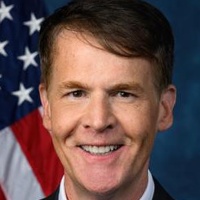
Jefferson Shreve
Representative
IN
Jefferson Shreve
Representative
IN
This resolution expresses official support for the inaugural Freedom 250 Grand Prix, an INDYCAR race scheduled to take place in Washington, D.C., in August 2026. It honors the historic legacy of American INDYCAR racing while celebrating the upcoming event as a centerpiece for the nation’s 250th birthday commemoration. The race will feature a unique course near the National Mall, highlighting American innovation and sporting tradition.
This bill prohibits federal agencies and the use of federal funds for the deployment of automated mass surveillance technologies, including facial and biometric recognition systems.

Tim Burchett
Representative
TN
Tim Burchett
Representative
TN
The Protection Against Mass Surveillance Act prohibits federal agencies from purchasing or using invasive automated surveillance technologies, including facial recognition and license plate tracking. It also restricts state and local governments from using federal funds for these systems. Additionally, the bill mandates the deletion of illegally obtained data and bars its use as evidence in legal proceedings.
The American Enrichment Deployment Act amends the Atomic Energy Act to allow for the "at-risk" construction of uranium enrichment facilities prior to the issuance of a final license.
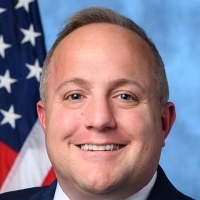
Russell Fry
Representative
SC
Russell Fry
Representative
SC
The American Enrichment Deployment Act amends the Atomic Energy Act of 1954 to allow for the "at-risk" construction of uranium enrichment facilities before a final license is issued. This legislation aims to streamline the development process for these facilities while maintaining the Nuclear Regulatory Commission’s full authority to regulate safety and deny licenses.
The Common Sense 250 Act of 2026 authorizes the placement of a Thomas Paine commemorative work within Area I in Washington, D.C.
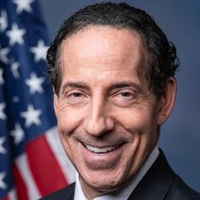
Jamie Raskin
Representative
MD
Jamie Raskin
Representative
MD
The Common Sense 250 Act of 2026 authorizes the placement of a commemorative work honoring Thomas Paine within Area I of Washington, D.C. This legislation specifically approves the designated site and overrides existing location requirements to ensure the monument is established in the intended area.
This Act mandates that group health plans receive broad, timely access to claims data, payment information, and pricing terms from network service providers, while strengthening attestation requirements and imposing penalties for non-compliance.
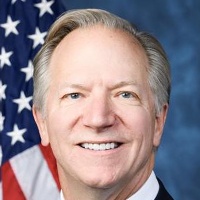
Robert Onder
Representative
MO
Robert Onder
Representative
MO
The Health Data Access, Transparency, and Affordability Act of 2026 significantly increases the required access group health plans have to claims data, payment information, and pricing terms from their network service providers. It voids contract clauses that restrict this data access and strengthens requirements for annual attestations regarding price and quality information. The bill establishes civil penalties for non-compliance and mandates specific electronic formats for data delivery.
This bill proposes to repeal the Seventeenth Amendment, returning the election of U.S. Senators to state legislatures.
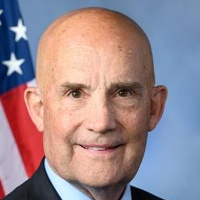
Keith Self
Representative
TX
Keith Self
Representative
TX
This proposed constitutional amendment seeks to repeal the Seventeenth Amendment, thereby eliminating the direct popular election of U.S. Senators. If ratified, it would restore the original method of senatorial selection by state legislatures. Sitting Senators would complete their current terms under the existing rules.
This bill authorizes a single Congressional Gold Medal to honor the individuals who defended Bataan, Corregidor, and other Pacific locations during World War II.

Teresa Leger Fernandez
Representative
NM
Teresa Leger Fernandez
Representative
NM
This bill authorizes the award of a single Congressional Gold Medal to recognize the collective heroism of the individuals who defended Bataan, Corregidor, and other locations in the Pacific theater during World War II. The medal honors the extraordinary sacrifice of U.S. service members and Filipino forces who fought and endured imprisonment by Imperial Japan. Following the presentation, the medal will be permanently displayed at the Smithsonian's National Museum of American History. The legislation also allows for the production and sale of bronze duplicate medals.
The HAILEY Act of 2026 establishes that AMBER Alerts must only be issued for individuals under 18 who law enforcement reasonably believes to be a high-risk missing person.
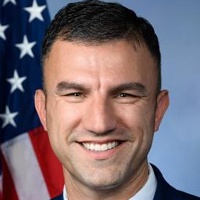
Rudy Yakym
Representative
IN
Rudy Yakym
Representative
IN
The HAILEY Act of 2026 establishes new minimum standards for issuing AMBER Alerts through the national network. Specifically, it mandates that an alert can only be issued for an individual under the age of 18. Furthermore, the bill requires law enforcement to reasonably believe the missing person meets the criteria of a high-risk missing person before an alert is disseminated.
This act establishes the Medal of Sacrifice to honor law enforcement officers and first responders killed in the line of duty, creating a Commission to oversee its design and eligibility determinations.
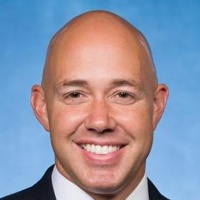
Brian Mast
Representative
FL
Brian Mast
Representative
FL
The Medal of Sacrifice Act establishes a new national medal to honor law enforcement officers and first responders killed in the line of duty. This legislation creates a Commission to advise on the medal's design, presentation, and final eligibility decisions, particularly when there are findings of wrongdoing. The medal itself will feature specific symbolic elements and will be awarded to eligible fallen heroes.
This resolution designates specific dates to honor law enforcement officers killed in the line of duty and expresses support for all officers.

Michael Guest
Representative
MS
Michael Guest
Representative
MS
This resolution officially designates May 15, 2026, as Peace Officers Memorial Day and the week of May 10-16, 2026, as National Police Week. It honors the service and sacrifice of law enforcement officers killed in the line of duty, specifically recognizing 363 officers lost in 2025. The bill expresses unwavering support for law enforcement and acknowledges the need for proper resources to ensure officer safety.
This bill mandates that states and federal agencies rapidly report all prohibiting records to the NICS database and requires annual reports detailing the demographics of those found ineligible for firearm purchases.

Thomas Massie
Representative
KY
Thomas Massie
Representative
KY
The NICS Data Reporting Act of 2026 mandates that states and federal agencies must report records prohibiting firearm purchases to the National Instant Criminal Background Check System (NICS) within 48 hours. This ensures more complete and timely data, including mental health and domestic violence records, is available for background checks. The bill also requires the Attorney General to submit an annual report to Congress detailing demographic information on individuals found ineligible through NICS. Non-compliant states face potential reductions in federal grant funding.
The Enhanced Iran Sanctions Act of 2025 mandates broad economic and immigration sanctions on foreign individuals, entities, and financial institutions that support Iran’s nuclear, missile, drone, or terrorist activities, while specifically targeting the country's petroleum and petrochemical sectors.
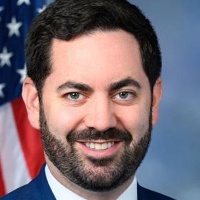
Michael Lawler
Representative
NY
Michael Lawler
Representative
NY
The Enhanced Iran Sanctions Act of 2025 strengthens U.S. policy by imposing mandatory sanctions on foreign persons and financial institutions that support Iran’s nuclear, ballistic missile, drone, and terrorist activities. The bill specifically targets Iran’s petroleum and petrochemical sectors to cut off funding for these malign programs. Additionally, it expands the State Department’s "Rewards for Justice" program to incentivize the reporting of individuals who evade these sanctions.
This bill authorizes Congress to award Congressional Gold Medals to the 1980 U.S. Men's Olympic Ice Hockey team for their historic "Miracle on Ice" victory.
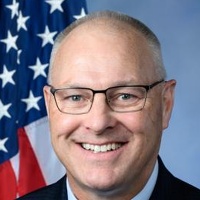
Pete Stauber
Representative
MN
Pete Stauber
Representative
MN
This bill, the Miracle on Ice Congressional Gold Medal Act, officially authorizes Congress to award Congressional Gold Medals to the 1980 U.S. Men's Olympic Ice Hockey Team for their historic "Miracle on Ice" victory. The medals will be struck by the Treasury and permanently displayed at specific national sports museums. The Act also permits the sale of duplicate bronze medals to cover production costs.
This act grants the Federal Energy Regulatory Commission (FERC) exclusive authority to approve or deny natural gas and LNG terminal applications, deeming such exports and imports consistent with the public interest, while preserving presidential sanction authority.
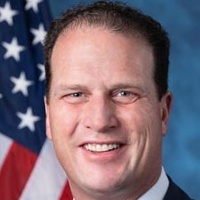
August Pfluger
Representative
TX
August Pfluger
Representative
TX
This act grants the Federal Energy Regulatory Commission (FERC) exclusive authority to approve or deny applications for natural gas and LNG export/import facilities, mandating that such actions be considered consistent with the public interest. The legislation clarifies that it does not limit the President's existing authority to impose sanctions through trade restrictions.
The Patients Deserve Price Tags Act mandates comprehensive price transparency for hospitals, labs, and ambulatory surgical centers, strengthens cost disclosure for health plans, and requires itemized billing and detailed Explanation of Benefits for patients.
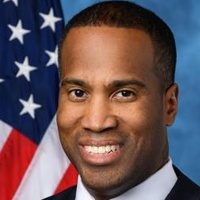
John James
Representative
MI
John James
Representative
MI
The Patients Deserve Price Tags Act aims to significantly increase healthcare price transparency across the board. It mandates that hospitals, clinical diagnostic laboratories, and ambulatory surgical centers must publicly post detailed, consumer-friendly pricing information, including negotiated rates and cash prices. Furthermore, the bill strengthens requirements for health plans to provide real-time cost-sharing estimates and mandates itemized Explanation of Benefits (EOBs) and itemized bills to consumers after receiving care. Finally, it increases fiduciary oversight by requiring group health plans to gain greater access to claims and payment data from their service providers.
This act streamlines the Nuclear Regulatory Commission's licensing process by allowing permits and licenses to be issued without mandatory hearings unless requested, and by updating procedural requirements for various nuclear facility applications.
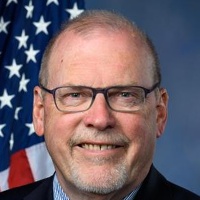
H. Griffith
Representative
VA
H. Griffith
Representative
VA
The Efficient Nuclear Licensing Hearings Act streamlines the Nuclear Regulatory Commission's (NRC) process for issuing certain nuclear facility permits and licenses. This legislation allows the NRC to issue permits without automatically holding a full hearing if no affected party requests one. It also updates procedures to favor informal hearings when they are held and modifies timing requirements for license issuance.
This resolution honors the life and legacy of Charles "Charlie" James Kirk, condemns his assassination as political violence, and calls for a renewed commitment to civil discourse and American founding principles.

Mike Johnson
Representative
LA
Mike Johnson
Representative
LA
This resolution honors the life and legacy of Charles "Charlie" James Kirk, founder of Turning Point USA. It strongly condemns his assassination as an act of political violence. The bill calls for a renewed national commitment to civil discourse and the founding principles of the United States.
This Act mandates that new passenger motor vehicles sold in the U.S. must include standard equipment capable of receiving AM broadcast radio signals.

Gus Bilirakis
Representative
FL
Gus Bilirakis
Representative
FL
The AM Radio for Every Vehicle Act of 2025 mandates that the Secretary of Transportation establish a rule requiring AM broadcast radio receivers to be installed as standard equipment in new passenger motor vehicles. This requirement aims to ensure public access to AM radio signals, which are often used for emergency alerts. The bill also directs a GAO study on the effectiveness of AM radio within the national emergency alert system compared to other technologies. Finally, the Act preempts state and local laws on this matter and includes a sunset provision eight years after enactment.
This Act establishes sanctions against Pakistani officials undermining democracy and human rights, while urging the U.S. government to promote democratic institutions in Pakistan until September 30, 2030.
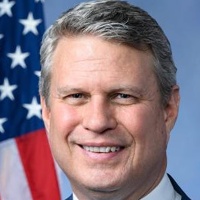
Bill Huizenga
Representative
MI
Bill Huizenga
Representative
MI
The Pakistan Freedom and Accountability Act expresses strong U.S. support for democracy and human rights in Pakistan, citing concerns over military influence and recent election interference. This legislation directs the President to identify and impose sanctions on Pakistani officials responsible for undermining democratic processes or committing serious human rights abuses. The Act emphasizes the need for civilian control over the military and sets an expiration date for its provisions in September 2030.