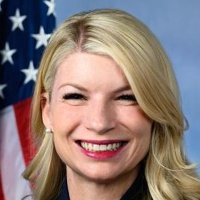
Legislative Activity
Track Brittany's sponsored bills, co-sponsored legislation, and voting record
The UPLIFT Act establishes a refundable residential energy expenditure tax credit of up to \$2,400, available only when annual energy price inflation exceeds 2%.
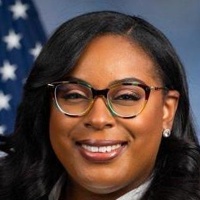
LaMonica McIver
Representative
NJ
LaMonica McIver
Representative
NJ
The UPLIFT Act establishes a new, refundable residential energy tax credit for taxpayers facing significant increases in electricity, natural gas, or propane costs. This credit, capped at \$1,200 or \$2,400 for joint filers, is only available when energy price inflation exceeds 2% year-over-year. The benefit is subject to an income-based phase-out for higher-earning households.
The Shelter Act establishes nonrefundable personal and business tax credits for making qualified disaster-resilience improvements to homes and places of business.
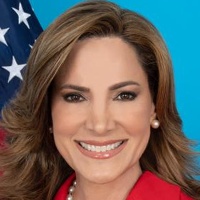
Maria Salazar
Representative
FL
Maria Salazar
Representative
FL
The Shelter Act establishes a new nonrefundable personal income tax credit for homeowners who invest in qualified disaster-resilience improvements to their homes, starting in 2026. This credit equals 25% of eligible expenditures, up to a $3,750 annual limit and a $15,000 lifetime cap, with phase-outs for higher-income taxpayers. The bill also creates a similar 25% business tax credit for disaster mitigation expenses at a place of business, capped at $5,000 annually. Both credits aim to incentivize proactive measures against natural hazards in disaster-prone areas.
This bill authorizes Congress to award Congressional Gold Medals to the 1980 U.S. Men's Olympic Ice Hockey team for their historic "Miracle on Ice" victory.
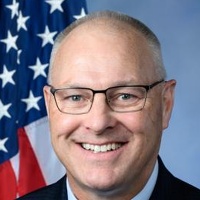
Pete Stauber
Representative
MN
Pete Stauber
Representative
MN
This bill, the Miracle on Ice Congressional Gold Medal Act, officially authorizes Congress to award Congressional Gold Medals to the 1980 U.S. Men's Olympic Ice Hockey Team for their historic "Miracle on Ice" victory. The medals will be struck by the Treasury and permanently displayed at specific national sports museums. The Act also permits the sale of duplicate bronze medals to cover production costs.
This act nullifies a recent Executive Order regarding federal labor relations and ensures existing collective bargaining agreements remain in effect.
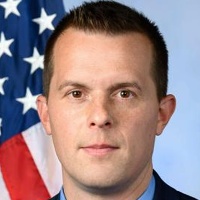
Jared Golden
Representative
ME
Jared Golden
Representative
ME
The Protect America's Workforce Act nullifies a specific Executive Order issued in March 2025 concerning exclusions from federal labor-management relations programs. This legislation ensures that any existing collective bargaining agreements between federal agencies and employee unions remain fully in effect until their stated expiration dates. The Act also prohibits the use of federal funds to implement the overturned Executive Order.
This act mandates protective barriers for new fixed-route bus operator workstations purchased with federal funds, unless waived by the relevant labor union.
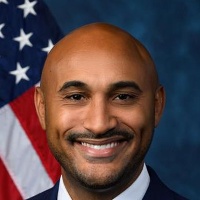
Shomari Figures
Representative
AL
Shomari Figures
Representative
AL
The Bus Operator Safety and Security Act mandates that new fixed-route buses purchased with federal funds, meeting specific size and lifespan criteria, must be equipped with a protective barrier around the operator's workstation. This barrier must fully enclose the area without obstructing the driver's line of sight. This requirement can be waived if the relevant labor union agrees to the waiver for the specific bus purchase.
This resolution commends state and local governments for championing reproductive rights as human rights while condemning abortion restrictions and criminalization following the *Dobbs* decision.
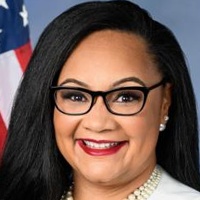
Nikema Williams
Representative
GA
Nikema Williams
Representative
GA
This concurrent resolution commends state and local governments for championing reproductive rights as human rights following the overturning of *Roe v. Wade*. It declares that denying abortion care leads to severe health risks and highlights the criminalization of pregnancy outcomes across the U.S. The resolution urges states to repeal abortion restrictions and affirm that reproductive rights are fundamental human rights.
This bill officially names the World War II Women's Memorial at Arlington National Cemetery and adjusts location restrictions for a related commemorative work in Washington, D.C.
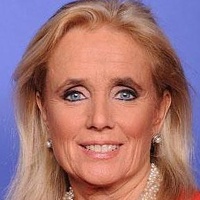
Debbie Dingell
Representative
MI
Debbie Dingell
Representative
MI
This Act officially names the memorial at the entrance to Arlington National Cemetery as the "World War II Women's Memorial." It also designates this memorial as a "commemorative work" under existing federal law. Furthermore, the bill allows a specific World War II home front women's commemorative work to be placed in designated areas within Washington, D.C., overriding standard location restrictions.
This bill establishes a 20% excise tax, dubbed the "ROBINHOOD Act," on certain secured business loans taken out by high-income individuals (AGI over $400,000).

Dan Goldman
Representative
NY
Dan Goldman
Representative
NY
The ROBINHOOD Act establishes a new 20 percent excise tax on certain secured business loans and lines of credit exceeding $400,000 in adjusted gross income. This tax applies when the loan is secured by capital assets, excluding residential mortgages and farmland loans. The borrower is responsible for paying this annual tax to the Treasury.
This bill establishes a five-year VA pilot program to implement the Zero Suicide Initiative curriculum across five medical centers to reduce veteran suicide rates.
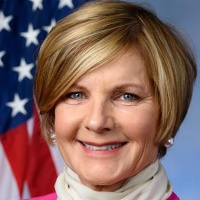
Susie Lee
Representative
NV
Susie Lee
Representative
NV
This act establishes the VA Zero Suicide Demonstration Project, a five-year pilot program to reduce veteran suicide rates. The initiative will implement the Zero Suicide Institute's curriculum across five selected VA medical centers, including one serving rural veterans. The program focuses on intensive staff training, policy development, and rigorous data collection to evaluate effectiveness. Annual reports will track progress and compare outcomes against other VA facilities.
This bill increases the owner and asset limits for qualifying venture capital funds and mandates a study on the impact of these changes on capital allocation diversity.
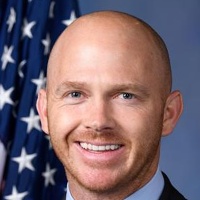
William Timmons
Representative
SC
William Timmons
Representative
SC
The Improving Capital Allocation for Newcomers Act of 2025 modifies the rules for qualifying venture capital funds by increasing the maximum number of investors allowed from 250 to 500 and raising the asset value limit from $10 million to $50 million. Five years after enactment, the SEC must study the impact of these changes on capital distribution to diverse startups. Based on the study's findings regarding geographic and socio-economic diversity, the SEC may gain authority to further adjust these limits.
The Mikaela Naylon Give Kids a Chance Act primarily focuses on enhancing pediatric drug research, ensuring completion of pediatric study requirements, extending incentives for rare pediatric disease treatments, and making targeted updates to FDA and organ transplant network operations.
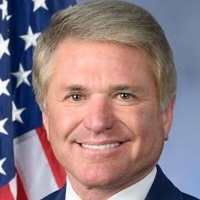
Michael McCaul
Representative
TX
Michael McCaul
Representative
TX
The Mikaela Naylon Give Kids a Chance Act focuses primarily on improving pediatric drug development and ensuring patient access to necessary treatments. This legislation mandates new research requirements for molecularly targeted pediatric cancer drugs, strengthens FDA enforcement of pediatric study completion, and extends incentives for developing drugs for rare pediatric diseases. Additionally, the bill updates organ transplant network functions and establishes an Abraham Accords Office within the FDA to enhance international regulatory cooperation.
The SUPPORT for Patients and Communities Reauthorization Act of 2025 strengthens federal efforts across prevention, treatment, and recovery for substance use disorders while enhancing public health infrastructure and provider training requirements through 2030.
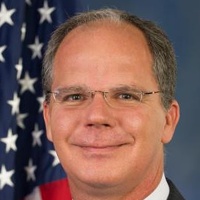
Brett Guthrie
Representative
KY
Brett Guthrie
Representative
KY
The **SUPPORT for Patients and Communities Reauthorization Act of 2025** is a comprehensive bill designed to strengthen the nation's response to the substance use disorder crisis across prevention, treatment, and recovery. It locks in funding for key health initiatives, expands overdose tracking, enhances cybersecurity for crisis hotlines, and increases resources for workforce development and community recovery infrastructure through 2030. The legislation also clarifies provider definitions and updates requirements for mandatory prescriber training programs.
This act prohibits individuals convicted of a misdemeanor hate crime or who received an enhanced sentence due to hate or bias from obtaining or possessing firearms.
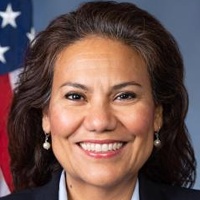
Veronica Escobar
Representative
TX
Veronica Escobar
Representative
TX
The Disarm Hate Act prohibits individuals convicted of a misdemeanor hate crime, or who received an enhanced sentence for a misdemeanor due to hate or bias, from obtaining or possessing firearms. This legislation specifically targets misdemeanor offenses involving threats or force motivated by bias against protected characteristics. The bill also makes it illegal for others to sell or transfer firearms to these prohibited persons.
This act exempts small businesses from duties imposed under Executive Order 14257 and mandates refunds for any such duties already paid.
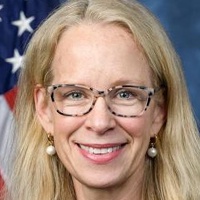
Kelly Morrison
Representative
MN
Kelly Morrison
Representative
MN
The Small Business RELIEF Act exempts qualified small businesses from duties imposed under Executive Order 14257. It also mandates that the President refund any such duties already paid by small businesses within 90 days of enactment. This legislation aims to provide economic fairness and relief to small importers.
This bill establishes the Baby Bonus Act, creating a federal program administered by the Social Security Administration to provide a one-time, non-taxable financial payment to eligible parents of newborn or near-term children born on or after January 1, 2026.
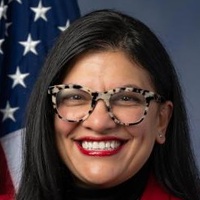
Rashida Tlaib
Representative
MI
Rashida Tlaib
Representative
MI
The Baby Bonus Act establishes a new federal program within the Social Security Administration to provide a one-time financial payment to eligible parents of newborn children, beginning in 2026. This benefit is designed to be non-taxable and protected from being counted as a resource for federal benefit programs. The legislation creates the Office of Baby Assistance to manage the application and payment process for this new benefit.
This Act prohibits discrimination based on religion, sex, or marital status in federally funded child welfare services to improve outcomes for all children, especially LGBTQ youth.
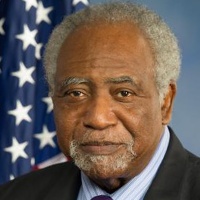
Danny Davis
Representative
IL
Danny Davis
Representative
IL
The John Lewis Every Child Deserves a Family Act prohibits discrimination based on religion, sex, or marital status in federally funded child welfare services. This aims to increase the number of stable, family-like placements for children, especially for LGBTQ youth who are overrepresented in foster care. The bill mandates federal guidance, training, and data collection to improve safety and well-being outcomes for all children involved in the system.
This bill establishes sanctions against foreign individuals responsible for human rights violations against LGBTQI people and mandates enhanced tracking and reporting of such abuses in annual human rights reports.
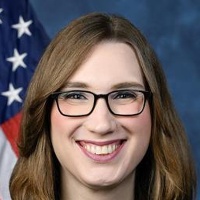
Sarah McBride
Representative
DE
Sarah McBride
Representative
DE
The Global Respect Act aims to promote and protect the human rights of LGBTQI individuals worldwide. It mandates the President to identify and report foreign persons responsible for human rights violations against LGBTQI people, leading to their inadmissibility to the United States. Furthermore, the Act requires enhanced tracking and reporting of violence and discrimination targeting individuals based on sexual orientation, gender identity, or sex characteristics in the annual human rights reports.
This bill directs the Department of Defense to establish a pilot program partnering basic needs banks with military installations to provide essential diapers and diapering supplies to military families.
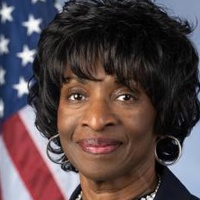
Valerie Foushee
Representative
NC
Valerie Foushee
Representative
NC
This bill directs the Secretary of Defense to establish a pilot program creating partnerships between military installations and qualified basic needs banks. The goal of this program is to provide essential diapers and diapering supplies to military families in need. The Secretary must also seek collaboration with the National Diaper Bank Network for technical assistance and program evaluation.
This act mandates Medicare coverage for FDA-approved early detection screening tests for Alzheimer's disease and related dementias beginning in 2028.
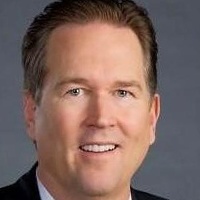
Vern Buchanan
Representative
FL
Vern Buchanan
Representative
FL
The Alzheimer’s Screening and Prevention Act of 2025 (ASAP Act) amends Medicare to cover early detection screening tests for Alzheimer's disease and related dementias starting in 2028. This coverage applies to FDA-cleared tests, including genomic sequencing and other equivalent diagnostic methods, designed to detect pre-symptomatic or early-stage conditions. The bill ensures these screenings are added to the list of covered medical services under Medicare.
This act repeals specific sections of a prior reconciliation act to restore previous laws affecting American families and farmers.
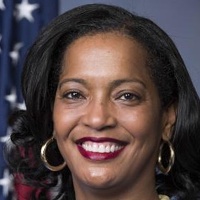
Jahana Hayes
Representative
CT
Jahana Hayes
Representative
CT
The Restoring Food Security for American Families and Farmers Act of 2025 aims to strengthen domestic food security by repealing specific sections of a prior reconciliation act. This action effectively revives the original laws that were previously amended by the repealed provisions. The bill seeks to revert existing agricultural and food-related statutes to their pre-amendment status.