Legislative Activity
Track Zachary's sponsored bills, co-sponsored legislation, and voting record
The Honoring Our Fallen Heroes Act of 2025 expands public safety officer benefits to include disability and death coverage for certain cancers presumed to be caused by on-duty exposure to carcinogens, and clarifies "line of duty" definitions for first responder benefits.
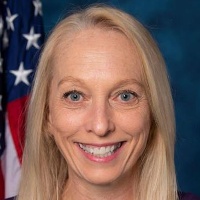
Mary Scanlon
Representative
PA
Mary Scanlon
Representative
PA
The Honoring Our Fallen Heroes Act of 2025 expands public safety officer benefits to include deaths and disabilities caused by exposure-related cancers, presuming that certain cancers diagnosed within 15 years of service are line-of-duty injuries if the officer served for at least 5 years. It defines "exposure-related cancer" and allows for updates to the list based on medical evidence, while also permitting individuals to petition for additions. The Act also clarifies "line of duty action" and applies retroactively to claims dating back to January 1, 2020, with a three-year window for filing claims based on these amendments.
This Act allows schools participating in the National School Lunch Program to offer organic or non-organic whole milk alongside other options, while clarifying saturated fat accounting and restricting milk sourcing from China state-owned enterprises.
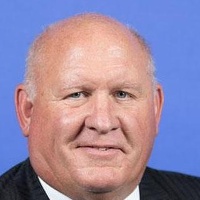
Glenn Thompson
Representative
PA
Glenn Thompson
Representative
PA
The Whole Milk for Healthy Kids Act of 2025 expands milk options available to students in the National School Lunch Program by allowing schools to offer organic or non-organic whole milk. This legislation provides greater flexibility for schools in providing fluid milk choices while maintaining accommodations for students with special dietary needs. Importantly, the saturated fat content of these offered milk options will not count toward the meal's overall saturated fat limits.
The Investing in Rural America Act of 2025 expands Farm Credit System institutions' ability to finance essential community facilities in rural areas, fostering partnerships with local lenders and increasing transparency through public reporting.
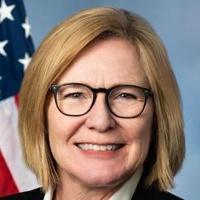
Michelle Fischbach
Representative
MN
Michelle Fischbach
Representative
MN
The Investing in Rural America Act of 2025 amends the Farm Credit Act of 1971, enabling Farm Credit System institutions to finance essential community facilities in rural areas, with a limit of 15% of their total outstanding loans. These institutions must offer participation in financing to other domestic lenders, especially community banks, and report these offers to the Farm Credit Administration. The Farm Credit Administration will then provide an annual report to Congress on these activities. This amendment aims to support rural development by leveraging the resources of the Farm Credit System.
Requires the Department of Homeland Security to conduct annual assessments of terrorist threats posed by terrorist organizations using foreign cloud-based messaging applications.
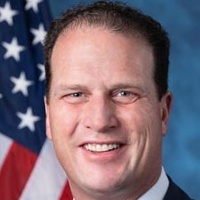
August Pfluger
Representative
TX
August Pfluger
Representative
TX
The "Countering Online Radicalization and Terrorism Act" directs the Department of Homeland Security, in coordination with the Director of National Intelligence, to conduct annual assessments on how terrorist organizations use foreign cloud-based messaging apps to threaten the United States. These assessments will analyze terrorist recruitment and radicalization, examine the use of online payment features to support terrorist financing, and provide recommendations to counter these threats. The goal of the act is to evaluate and address the national security risks associated with terrorist groups using these applications, while also ensuring compliance with legal, privacy, and civil rights protections.
The PREEMIE Reauthorization Act of 2025 extends funding for research and programs aimed at preventing premature births and improving the health outcomes of preterm infants, while also mandating a comprehensive study on preterm birth in the U.S.
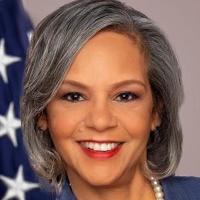
Robin Kelly
Representative
IL
Robin Kelly
Representative
IL
The "PREEMIE Reauthorization Act of 2025" extends funding for research on preterm births and infant care through 2029. It directs the Department of Health and Human Services to establish an interagency working group to address premature birth issues and mandates a comprehensive study by the National Academies of Sciences, Engineering, and Medicine on preterm births, including cost analysis, risk factor identification, and best practices for prevention and treatment. A report on the study's findings must be submitted to Congress and the Secretary of Health and Human Services within 24 months.
The "Semiconductor Supply Chain Security and Diversification Act of 2025" aims to diversify and secure the semiconductor supply chain within the Western Hemisphere through diplomatic support, regulatory improvements, and strategic investments, bolstering both economic and national security.
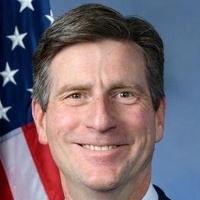
Greg Stanton
Representative
AZ
Greg Stanton
Representative
AZ
The "Semiconductor Supply Chain Security and Diversification Act of 2025" aims to diversify the semiconductor supply chain within the Western Hemisphere by offering diplomatic and financial support to participating countries. This includes supporting international negotiations, improving regulatory environments, and enhancing market integration for semiconductors. The Act also allows the United States International Development Finance Corporation to support semiconductor projects in upper-middle and high-income Western Hemisphere countries, under specific conditions certified by the President. This diversification effort supports both U.S. economic and national security interests, aligning with investments made under the CHIPS and Science Act.
The "National Plan for Epilepsy Act" aims to create a comprehensive national strategy to improve epilepsy prevention, diagnosis, treatment, and research through coordinated federal efforts and an advisory council.

Jim Costa
Representative
CA
Jim Costa
Representative
CA
The "National Plan for Epilepsy Act" aims to address the significant impact of epilepsy by establishing a comprehensive national plan for its prevention, diagnosis, treatment, and cure. This act mandates the creation of an Advisory Council on Epilepsy Research, Care, and Services, composed of federal and non-federal experts, to evaluate and improve federally funded epilepsy efforts. The council will provide recommendations to enhance coordination, diagnosis, treatment, research, and public awareness, and reduce the financial burden of epilepsy on families. Ultimately, the act seeks to improve the lives of individuals with epilepsy and their caregivers through coordinated research, improved access to care, and enhanced public awareness.
The Credit Union Board Modernization Act updates federal requirements to allow credit unions to determine board meeting frequency based on their age and financial performance ratings.
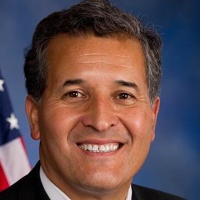
Juan Vargas
Representative
CA
Juan Vargas
Representative
CA
The Credit Union Board Modernization Act updates federal requirements for board of directors meetings, moving away from a mandatory monthly schedule. Under this bill, meeting frequency will be determined by a credit union’s age and its financial performance ratings, allowing high-performing institutions greater operational flexibility while maintaining oversight for newer or lower-rated credit unions.
This bill creates a 20-year demonstration project waiving certain Social Security disability benefit rules for blind Americans to encourage their return to work.
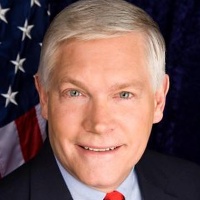
Pete Sessions
Representative
TX
Pete Sessions
Representative
TX
The Blind Americans Return to Work Act of 2025 initiates a 20-year demonstration project aimed at helping blind Americans receiving Social Security disability benefits return to work. For the first 10 years, eligibility for benefits will be determined without considering substantial gainful activity, and benefits will be reduced based on earnings above a set amount, incentivizing employment without immediate loss of support. The project waives certain benefit requirements to facilitate successful employment, with participants having the option to opt out after the initial 10-year period. This act aims to support blind individuals in their transition back to the workforce while maintaining a safety net.
This bill allows states to use Medicaid to pay primary care providers directly, including through value-based care models, and requires a report on the quality and cost of these arrangements.

Dan Crenshaw
Representative
TX
Dan Crenshaw
Representative
TX
The "Medicaid Primary Care Improvement Act" allows states to use Medicaid funds for direct agreements with healthcare providers, including value-based care models and direct primary care arrangements. It requires the Secretary of Health and Human Services to gather input and issue guidance to states on implementing these arrangements. Additionally, the Act mandates a report to Congress analyzing state contracts with independent physicians and the quality/cost of care in direct primary care arrangements within Medicaid. This aims to improve primary care access and quality within the Medicaid program without altering existing cost-sharing or limiting medical assistance.
The "Freedom to Invest in Tomorrow's Workforce Act" expands the use of 529 savings accounts to cover expenses related to postsecondary credentialing programs, including tuition, fees, books, supplies, equipment, and testing fees.
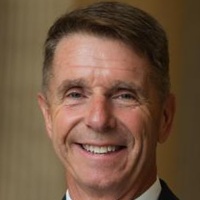
Robert Wittman
Representative
VA
Robert Wittman
Representative
VA
The "Freedom to Invest in Tomorrow's Workforce Act" amends Section 529 savings accounts to include expenses related to postsecondary credentialing programs. This allows 529 funds to cover costs like tuition, fees, books, supplies, and testing fees for recognized programs and credentials, as defined by the bill. These changes would apply to distributions made after the bill is enacted.
The "Bonus Tax Relief for America's Seniors Act" increases the standard tax deduction for seniors by amending Section 63(f)(1) of the Internal Revenue Code of 1986, changing the deduction from $600 to $5,000.
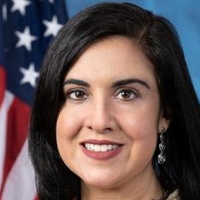
Nicole Malliotakis
Representative
NY
Nicole Malliotakis
Representative
NY
The "Bonus Tax Relief for America's Seniors Act" increases the standard tax deduction for seniors by raising it from $600 to $5,000. This change will be adjusted for inflation starting in 2026. This adjustment aims to provide additional tax relief to senior citizens. The provisions of this bill will be enacted for taxable years beginning after December 31, 2025.
Prohibits the use of the DeepSeek application on government devices, with exceptions for law enforcement, national security, and security research under specific conditions.
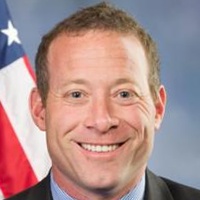
Josh Gottheimer
Representative
NJ
Josh Gottheimer
Representative
NJ
The "No DeepSeek on Government Devices Act" prohibits the use of the DeepSeek application on government devices, with exceptions for law enforcement, national security, and security research. The Office of Management and Budget is tasked with creating guidelines for executive agencies to remove DeepSeek from their information technology. Any authorized use of DeepSeek under the exceptions requires documented risk mitigation actions.
Exempts family farms and small businesses from asset considerations in need analysis for federal student aid.
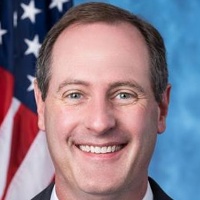
Tracey Mann
Representative
KS
Tracey Mann
Representative
KS
The "Family Farm and Small Business Exemption Act" amends the Higher Education Act of 1965 to exclude the net value of a family farm (on which the family resides) or a small business (with no more than 100 employees and owned/controlled by the family) from consideration as an asset when determining financial need for federal student aid. This change aims to make higher education more accessible for students from family farm and small business backgrounds.
The HALT Fentanyl Act permanently classifies fentanyl-related substances as Schedule I controlled substances while streamlining registration procedures for legitimate scientific research.
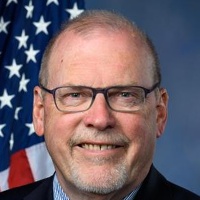
H. Griffith
Representative
VA
H. Griffith
Representative
VA
The Halt All Lethal Trafficking of Fentanyl (HALT Fentanyl) Act permanently classifies fentanyl-related substances as Schedule I controlled substances to strengthen enforcement and penalties against their trafficking. Additionally, the bill streamlines registration processes for researchers to facilitate legitimate scientific study of these substances. It also includes technical corrections and mandates updated federal rulemaking to ensure effective implementation.
This resolution expresses the sense of Congress that the United States should formally recognize Taiwan as an independent nation, establish full diplomatic relations, negotiate a free trade agreement, and support its membership in international organizations.
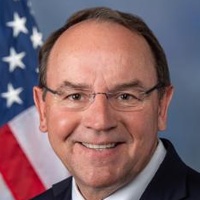
Thomas Tiffany
Representative
WI
Thomas Tiffany
Representative
WI
This resolution expresses the sense of Congress that the United States should formally recognize Taiwan as an independent, sovereign nation and abandon the obsolete "One China Policy." It calls for the normalization of diplomatic relations, the negotiation of a bilateral free trade agreement, and active U.S. support for Taiwan’s membership in international organizations.
The DRONE Act of 2025 authorizes law enforcement agencies to utilize federal Byrne and COPS grant funding for the purchase and operation of unmanned aircraft systems to enhance public safety.
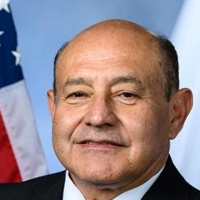
J. Correa
Representative
CA
J. Correa
Representative
CA
The DRONE Act of 2025 authorizes law enforcement agencies to utilize federal Byrne and COPS grant funding for the purchase and operation of unmanned aircraft systems. This legislation aims to enhance public safety by expanding the allowable uses of these grant programs to include modern drone technology.
The CARGO Act of 2025 prohibits the NIH from funding any research using live animals outside of the United States.
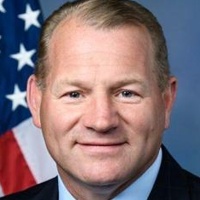
Troy Nehls
Representative
TX
Troy Nehls
Representative
TX
The CARGO Act of 2025 prohibits the National Institutes of Health (NIH) from funding research or programs involving live animals outside of the United States. This bill addresses concerns over the lack of oversight and potential mistreatment of animals in foreign research projects funded by American taxpayers. The Act ensures that NIH funding for animal research is restricted to projects conducted within the U.S. and its territories.
The Responsible Budgeting Act establishes new, expedited procedures for Congress to increase the federal debt limit, contingent upon the adoption of fiscal reforms that reduce the debt-to-GDP ratio.
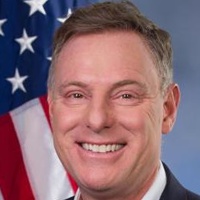
Scott Peters
Representative
CA
Scott Peters
Representative
CA
The Responsible Budgeting Act establishes new mechanisms for increasing the federal debt limit, linking it to the adoption of budget resolutions that meet specific debt-reduction targets. If Congress fails to pass a qualifying budget, the bill grants the President authority to propose a debt limit increase, subject to expedited congressional review and disapproval procedures. Additionally, the legislation creates formal, fast-track processes for Congress to consider and act upon debt-reduction proposals.
The CONSTRUCTS Act of 2025 establishes a grant program for community colleges and trade schools to expand residential construction training, with a focus on serving rural and underserved populations.
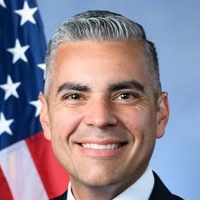
Juan Ciscomani
Representative
AZ
Juan Ciscomani
Representative
AZ
The CONSTRUCTS Act of 2025 establishes a competitive grant program to expand education and training for careers in the residential construction industry. By providing $20 million annually, the bill supports community colleges and trade schools in developing skilled labor pipelines, with a priority on serving rural and underserved populations. These programs aim to increase the supply of qualified workers while helping to address local housing needs through flexible, industry-aligned training.