Legislative Activity
Track Troy's sponsored bills, co-sponsored legislation, and voting record
The REMAIN in Mexico Act of 2025 mandates the implementation of the Migrant Protection Protocols, requiring asylum seekers to wait in Mexico while their claims are processed.
Brandon Gill
Representative
TX
Brandon Gill
Representative
TX
The REMAIN in Mexico Act of 2025 mandates that the Secretary of Homeland Security reinstate the Migrant Protection Protocols (MPP). This legislation requires that asylum seekers be returned to Mexico to await their U.S. immigration proceedings, effectively codifying the 2019 policy guidance into law.
This bill officially designates the Department of Veterans Affairs community-based outpatient clinic in Lubbock, Texas, as the "General Bernie Mittemeyer VA Clinic."
Jodey Arrington
Representative
TX
Jodey Arrington
Representative
TX
This bill officially designates the Department of Veterans Affairs community-based outpatient clinic in Lubbock, Texas, as the "General Bernie Mittemeyer VA Clinic." All future federal references to this facility will reflect this new name.
This bill designates the United States Postal Service facility located at 107 North Hoyne Avenue in Fritch, Texas, as the "Chief Zeb Smith Post Office."
Ronny Jackson
Representative
TX
Ronny Jackson
Representative
TX
This bill designates the United States Postal Service facility located at 107 North Hoyne Avenue in Fritch, Texas, as the "Chief Zeb Smith Post Office." All official references to this facility will henceforth bear this name in honor of Chief Zeb Smith.
This bill authorizes the President to initiate formal negotiations with the Government of Panama to reacquire the Panama Canal.
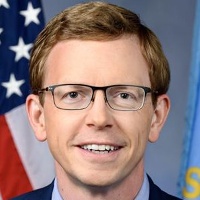
Dusty Johnson
Representative
SD
Dusty Johnson
Representative
SD
The Panama Canal Repurchase Act of 2025 authorizes the President to initiate formal negotiations with the Government of Panama to reacquire the Panama Canal. The legislation also mandates that the President provide Congress with a progress report on these negotiations within 180 days of enactment.
The Legal Workforce Act mandates that all U.S. employers use a phased-in electronic verification system to confirm the employment eligibility of all new and existing employees.
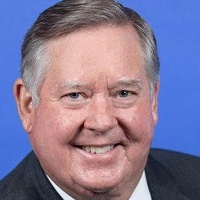
Ken Calvert
Representative
CA
Ken Calvert
Representative
CA
The Legal Workforce Act mandates that all U.S. employers use a new, electronic verification system to confirm the work eligibility of every new hire. This legislation replaces the existing E-Verify program with a phased-in, mandatory process that requires employers to verify both identity and work authorization for all employees. Additionally, the bill increases penalties for hiring unauthorized workers, establishes new fraud prevention measures, and preempts state laws to create a uniform national employment verification policy.
The Laken Riley Act mandates the detention of certain undocumented immigrants charged with theft-related crimes and empowers state attorneys general to sue federal officials for failures in enforcing immigration laws.
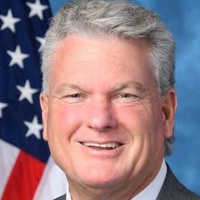
Mike Collins
Representative
GA
Mike Collins
Representative
GA
The Laken Riley Act mandates the detention of undocumented immigrants who are charged with or convicted of theft-related offenses. Additionally, the bill empowers state attorneys general to sue federal officials for failures in enforcing immigration detention, removal, and parole laws.
The Land and Social Security Optimization (LASSO) Act allocates 10% of the annual revenue from Department of Interior and Agriculture activities on public lands to the Social Security Trust Fund, without raising prices or reducing funds to states or tribes.

Paul Gosar
Representative
AZ
Paul Gosar
Representative
AZ
The Land And Social Security Optimization Act (LASSO Act) directs 10% of the revenue generated from activities on public lands managed by the Department of the Interior and the Forest Service to be deposited into the Social Security Trust Fund annually. This act does not authorize increasing prices for activities on public lands, nor does it reduce funds available to states, Indian Tribes, territories, or local governments from revenue generated on public lands.
This bill mandates the detention of families who enter the U.S. illegally and prohibits states from requiring licenses for family detention facilities.

Andy Biggs
Representative
AZ
Andy Biggs
Representative
AZ
The Ensuring United Families at the Border Act expands the government's authority to detain families together in immigration custody. It mandates the detention of parents and their children when the parent is charged with improper entry and prevents states from requiring licenses for these detention facilities. The bill aims to align federal detention practices with specific court interpretations regarding the treatment of accompanied minors.
The "Fentanyl is a WMD Act" mandates the Department of Homeland Security to classify illicit fentanyl as a weapon of mass destruction.
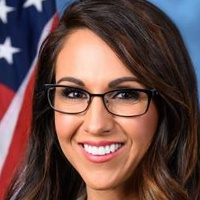
Lauren Boebert
Representative
CO
Lauren Boebert
Representative
CO
The "Fentanyl is a WMD Act" mandates the Department of Homeland Security to classify illicit fentanyl as a weapon of mass destruction. This directs the Assistant Secretary for the Countering Weapons of Mass Destruction Office to treat illicit fentanyl as such, as defined in the Homeland Security Act of 2002.
The FIND Act prohibits federal agencies from contracting with entities that discriminate against the firearm and ammunition industry, ensuring fair access to government contracts for these businesses. Contractors must certify they do not discriminate against firearm entities, with violations leading to contract termination.
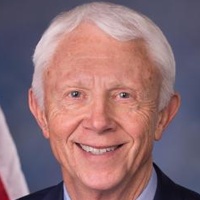
Jack Bergman
Representative
MI
Jack Bergman
Representative
MI
The FIND Act prohibits federal agencies from contracting with entities that discriminate against the firearm and ammunition industry. It requires federal contractors to certify they do not discriminate against firearm entities and prohibits them from awarding subcontracts to entities that do not provide a similar certification. Violations of these clauses will result in contract termination. The act defines "discriminate" as making judgments or refusing/limiting services based on biased criteria, rather than case-by-case evaluations, empirical data, financial risk, or legal non-compliance.
The First Amendment Accountability Act allows individuals to sue federal executive branch employees for civil damages when their First Amendment rights are violated under color of federal authority.
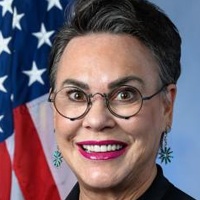
Harriet Hageman
Representative
WY
Harriet Hageman
Representative
WY
The First Amendment Accountability Act empowers individuals to sue federal executive branch employees for violating their First Amendment rights while acting under federal authority. This legislation allows victims to seek monetary damages and legal remedies, while explicitly excluding internal federal employment disputes from its scope. Additionally, it provides for the recovery of attorney’s fees for successful plaintiffs to ensure greater accountability for government actions.
The VENUE Act establishes new rules for determining the federal judicial district where criminal charges must be filed for offenses committed on federal property within the National Capital Region.
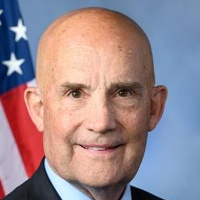
Keith Self
Representative
TX
Keith Self
Representative
TX
The "Venue Named Under Exception Act" (VENUE Act) establishes new rules for where federal criminal charges must be filed for offenses committed on federal property within the National Capital Region. Under this act, cases are generally filed in the defendant’s home district rather than the District of Columbia, with provisions allowing defendants to request a transfer to their primary place of domicile. The law applies to all future cases and those currently pending without a scheduled trial date.
The Stopping Border Surges Act implements stricter asylum eligibility requirements, accelerates deportation timelines for unaccompanied minors, and mandates family detention to deter unauthorized border crossings.
Andy Biggs
Representative
AZ
Andy Biggs
Representative
AZ
The Stopping Border Surges Act proposes comprehensive reforms to U.S. immigration policy by tightening asylum eligibility and accelerating the processing of unaccompanied minors. The bill mandates stricter screening standards, expands detention authority for families, and limits legal protections for those seeking asylum. Ultimately, the legislation aims to deter fraudulent claims and expedite removals through more restrictive border and interior enforcement measures.