Legislative Activity
Track Tim's sponsored bills, co-sponsored legislation, and voting record
This bill increases the railroad track maintenance tax credit, introduces annual inflation adjustments, and extends the eligibility period for qualifying expenditures.

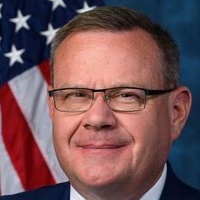
Mike Kelly
Representative
PA
Mike Kelly
Representative
PA
This bill amends the Internal Revenue Code to expand the railroad track maintenance credit by increasing the per-mile tax credit to $6,100 and implementing annual inflation adjustments starting in 2026. It also extends the eligibility window for qualifying maintenance expenditures to include costs incurred through 2023. These updates aim to provide greater financial support for ongoing railroad infrastructure improvements.
The Lumbee Fairness Act grants full federal recognition to the Lumbee Tribe of North Carolina, establishing their eligibility for federal services, benefits, and land-into-trust protections.
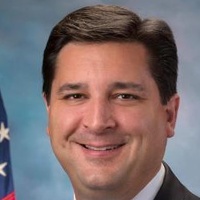
David Rouzer
Representative
NC
David Rouzer
Representative
NC
The Lumbee Fairness Act grants full federal recognition to the Lumbee Tribe of North Carolina, extending eligibility for federal services and benefits to its members. The bill establishes a framework for tribal roll verification, authorizes the Secretary of the Interior to take land into trust for the tribe, and outlines the jurisdictional relationship between the tribe, the state, and the federal government.
The Old Glory Only Act mandates that only the United States flag may be flown at U.S. diplomatic and consular posts.
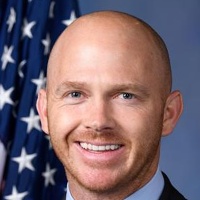
William Timmons
Representative
SC
William Timmons
Representative
SC
The Old Glory Only Act mandates that only the official United States flag may be flown at U.S. diplomatic and consular posts. This legislation prohibits the display of any other flags at these facilities.
This bill reclassifies silencers under federal tax law, removes federal registration requirements for legally transferred silencers, preempts state taxation and registration of silencers in commerce, and mandates the destruction of existing federal silencer registration records.

Ben Cline
Representative
VA
Ben Cline
Representative
VA
The Hearing Protection Act aims to remove silencers from the purview of the National Firearms Act (NFA) by treating them similarly to standard firearms under federal tax law. This legislation preempts certain state and local taxes and registration requirements related to silencers involved in interstate commerce. Furthermore, the bill mandates the destruction of existing federal silencer registration records and updates federal marking requirements for manufacturers.
The Regulation Reduction Act of 2025 mandates that federal agencies repeal at least three existing regulations for every new rule issued, ensuring that the costs of new major rules are fully offset by the elimination of previous ones.

Stephanie Bice
Representative
OK
Stephanie Bice
Representative
OK
The Regulation Reduction Act of 2025 mandates that federal agencies repeal at least three existing regulations before issuing any new rule. For major rules, the legislation further requires that the cost of the new regulation be offset by the cost savings of the repealed rules. Additionally, the bill directs agencies to conduct a comprehensive review to identify and eliminate outdated, duplicative, or ineffective regulatory burdens.
The Thin Blue Line Act amends federal law to include the killing or attempted killing of law enforcement officers, firefighters, and other first responders as an aggravating factor in capital sentencing cases.

Vern Buchanan
Representative
FL
Vern Buchanan
Representative
FL
The Thin Blue Line Act amends federal law to designate the killing or attempted killing of a law enforcement officer, firefighter, or first responder as an aggravating factor in capital sentencing. This legislation ensures that when a jury considers the death penalty, they must take into account whether the victim was targeted due to their status as a public servant or while performing their official duties.
The REMAIN in Mexico Act of 2025 mandates the implementation of the Migrant Protection Protocols, requiring asylum seekers to wait in Mexico while their claims are processed.

Brandon Gill
Representative
TX
Brandon Gill
Representative
TX
The REMAIN in Mexico Act of 2025 mandates that the Secretary of Homeland Security reinstate the Migrant Protection Protocols (MPP). This legislation requires that asylum seekers be returned to Mexico to await their U.S. immigration proceedings, effectively codifying the 2019 policy guidance into law.
This bill proposes a constitutional amendment to limit members of the House of Representatives to three terms and Senators to two terms, with specific provisions for partial terms. Terms served before the amendment's ratification would not be counted towards these limits, and the amendment must be ratified within seven years to be valid.
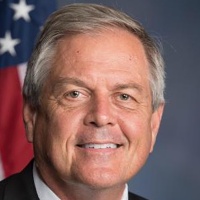
Ralph Norman
Representative
SC
Ralph Norman
Representative
SC
This bill proposes a constitutional amendment to limit the number of terms a member of Congress can serve. Representatives would be limited to 3 terms and Senators to 2 terms, with specific rules for partial terms. Terms served before the amendment's ratification would not be counted. The amendment must be ratified by three-fourths of the states within seven years to be valid.
The TCJA Permanency Act makes the individual tax reforms and Alternative Minimum Tax exemptions from the Tax Cuts and Jobs Act permanent, simplifying tax filing while adjusting credits, deductions, and exemptions for families and small businesses.
Vern Buchanan
Representative
FL
Vern Buchanan
Representative
FL
The TCJA Permanency Act makes the individual tax reforms of the Tax Cuts and Jobs Act permanent, including lowered income tax rates, an increased standard deduction, and an expanded Child Tax Credit. The legislation also solidifies higher exemptions for the Alternative Minimum Tax to protect more households from the parallel tax system. By locking in these provisions, the bill aims to simplify tax filing while providing long-term stability for families, small business owners, and individual taxpayers.
The FIND Act prohibits federal agencies from contracting with entities that discriminate against the firearm and ammunition industry, ensuring fair access to government contracts for these businesses. Contractors must certify they do not discriminate against firearm entities, with violations leading to contract termination.
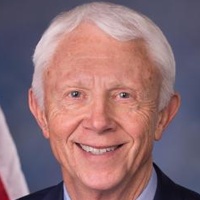
Jack Bergman
Representative
MI
Jack Bergman
Representative
MI
The FIND Act prohibits federal agencies from contracting with entities that discriminate against the firearm and ammunition industry. It requires federal contractors to certify they do not discriminate against firearm entities and prohibits them from awarding subcontracts to entities that do not provide a similar certification. Violations of these clauses will result in contract termination. The act defines "discriminate" as making judgments or refusing/limiting services based on biased criteria, rather than case-by-case evaluations, empirical data, financial risk, or legal non-compliance.
The Regulations from the Executive in Need of Scrutiny (REINS) Act of 2025 increases congressional accountability by requiring federal agencies to obtain legislative approval for all "major" rules before they can take effect.

Katherine Cammack
Representative
FL
Katherine Cammack
Representative
FL
The Regulations from the Executive in Need of Scrutiny (REINS) Act of 2025 aims to increase federal regulatory accountability by requiring Congress to approve any "major" rule before it can take effect. Under this legislation, rules with a significant economic impact require a joint resolution of approval from both chambers of Congress to become law. By shifting this authority back to the legislative branch, the Act seeks to ensure greater transparency and oversight of the federal rulemaking process.
The "No Bailout for Sanctuary Cities Act" would deny certain federal funds to sanctuary jurisdictions that obstruct information sharing or detainment requests from Homeland Security regarding individuals' immigration status, while requiring an annual report on non-compliant jurisdictions.
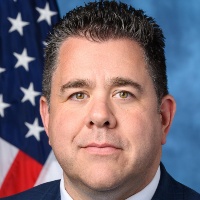
Nicolas LaLota
Representative
NY
Nicolas LaLota
Representative
NY
The "No Bailout for Sanctuary Cities Act" aims to withhold certain federal funds from state and local governments deemed "sanctuary jurisdictions" that obstruct the sharing of immigration status information or compliance with detainment requests from Homeland Security. These jurisdictions would be ineligible for federal funds intended to benefit individuals in the U.S. without legal immigration status. The Department of Homeland Security is required to report annually to the House and Senate Judiciary Committees on non-compliant states and local governments.