
Legislative Activity
Track Teresa's sponsored bills, co-sponsored legislation, and voting record
The Right to Contraception Act establishes a federal right to obtain and use contraception and prohibits government interference with access to contraceptive services and information.

Lizzie Fletcher
Representative
TX
Lizzie Fletcher
Representative
TX
The Right to Contraception Act establishes a federal right for individuals to access and use contraception without government interference. It prohibits federal and state governments from enacting laws that restrict access to contraceptives or the provision of related services. The Act provides clear enforcement mechanisms, allowing individuals and the Attorney General to sue to strike down any rule that violates these protections.
The Access to Counsel Act requires the Department of Homeland Security to provide individuals undergoing secondary or deferred immigration inspection with meaningful access to legal counsel and interested parties.

Pramila Jayapal
Representative
WA
Pramila Jayapal
Representative
WA
The Access to Counsel Act ensures that U.S. nationals, lawful permanent residents, and valid visa holders have the right to consult with legal counsel and interested parties during secondary or deferred immigration inspections at ports of entry. The bill mandates that this access be provided within one hour of inspection and offers specific protections for permanent residents regarding the abandonment of their status. By guaranteeing this support, the legislation aims to provide individuals with meaningful advocacy and assistance during the inspection process.
This resolution condemns Russia’s nuclear threats and suspension of the New START Treaty while urging renewed international commitment to arms control, risk reduction, and strategic stability.
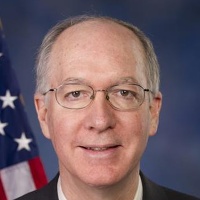
Bill Foster
Representative
IL
Bill Foster
Representative
IL
This resolution condemns Russia’s nuclear threats and its suspension of the New START Treaty, emphasizing the vital importance of arms control in maintaining global security. It calls for an immediate end to nuclear saber-rattling and urges Russia to return to full treaty compliance. Furthermore, it encourages the U.S. administration to pursue new nuclear risk reduction frameworks with both Russia and China to prevent an unconstrained arms race.
The Stop the Wait Act of 2025 eliminates the five-month waiting period for Social Security Disability Insurance (SSDI) benefits and removes the 24-month Medicare waiting period for eligible individuals lacking affordable health coverage.

Lloyd Doggett
Representative
TX
Lloyd Doggett
Representative
TX
The Stop the Wait Act of 2025 aims to provide faster financial and medical support to individuals with disabilities by eliminating the five-month waiting period for Social Security Disability Insurance (SSDI) benefits by 2030. Additionally, the bill removes the 24-month Medicare waiting period for SSDI recipients who lack access to affordable health insurance, ensuring they can access necessary medical coverage sooner.
This bill provides a 6.62 percent Medicare payment increase for physicians and practitioners from April through December 2025 to help stabilize medical practices.
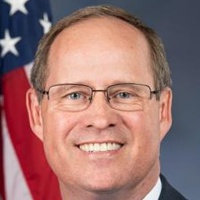
Gregory Murphy
Representative
NC
Gregory Murphy
Representative
NC
The Medicare Patient Access and Practice Stabilization Act of 2025 aims to support healthcare providers by extending Medicare payment adjustments through the end of 2025. Specifically, the bill provides a 6.62 percent payment increase for services rendered between April 1, 2025, and December 31, 2025, to help practitioners adjust to evolving Medicare payment policies.
The Stop Antiabortion Disinformation (SAD) Act empowers the Federal Trade Commission to prohibit and penalize deceptive advertising by crisis pregnancy centers that mislead individuals seeking reproductive health care.
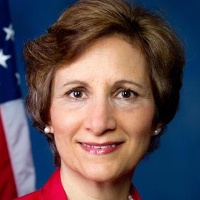
Suzanne Bonamici
Representative
OR
Suzanne Bonamici
Representative
OR
The Stop Antiabortion Disinformation (SAD) Act prohibits crisis pregnancy centers from using deceptive advertising to mislead individuals seeking reproductive health care. The bill empowers the Federal Trade Commission (FTC) to regulate and penalize organizations that falsely claim to provide abortion services or licensed medical care. This legislation aims to ensure patients have access to accurate, evidence-based information when making reproductive health decisions.
The Global Health, Empowerment and Rights Act prevents the U.S. government from denying foreign aid to nongovernmental organizations based on the legal health services they provide or the advocacy they conduct using their own private funds.
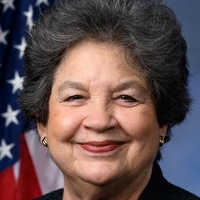
Lois Frankel
Representative
FL
Lois Frankel
Representative
FL
The Global Health, Empowerment and Rights Act prevents the U.S. government from denying foreign aid to nongovernmental organizations based on the legal health services they provide using their own private funds. It ensures that these organizations are not penalized for offering counseling or referrals that comply with local laws. Additionally, the bill prohibits the imposition of restrictive advocacy and lobbying requirements on these groups that exceed those applied to U.S.-based organizations.
This bill expresses the House of Representatives' desire to keep the United States Postal Service (USPS) as an independent entity within the Federal Government, protecting it from privatization. It emphasizes the USPS's importance to the mailing industry, its role in connecting communities, and the potential negative impacts of privatization on prices, services, and infrastructure.

Stephen Lynch
Representative
MA
Stephen Lynch
Representative
MA
This bill expresses the House of Representatives' view that Congress should act to maintain the United States Postal Service (USPS) as an independent entity within the Federal Government. It emphasizes the USPS's role as a self-sustaining service vital to the economy and national connectivity. The resolution discourages privatization, citing concerns about increased costs, reduced services, and damage to critical infrastructure.
Expresses the House of Representatives' disapproval of the President's decision to withdraw the United States from the Paris Agreement, urging the President to reverse his decision and Congress to prioritize climate change leadership.

Bradley Schneider
Representative
IL
Bradley Schneider
Representative
IL
This bill expresses the House of Representatives' disapproval of the President's decision to withdraw the United States from the Paris Agreement, recognizing climate change as a threat and highlighting the increasing costs of extreme weather events. It commends entities supporting the Agreement, urges the President to reconsider, and encourages Congress to prioritize U.S. leadership on climate change.
The Health Care Providers Safety Act of 2025 authorizes federal grants to help health care facilities enhance their physical and cybersecurity measures to ensure the safety of personnel and patients.
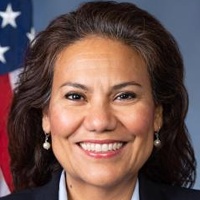
Veronica Escobar
Representative
TX
Veronica Escobar
Representative
TX
The Health Care Providers Safety Act of 2025 authorizes federal grants to help health care facilities enhance the safety of their personnel, patients, and infrastructure. These funds support critical security upgrades, including physical site improvements, advanced surveillance systems, and strengthened cybersecurity measures.
The WaterSMART Access for Tribes Act authorizes the Secretary of the Interior to reduce or waive non-Federal cost-share requirements for water management grants when such payments would cause financial hardship for Indian Tribes.

Melanie Stansbury
Representative
NM
Melanie Stansbury
Representative
NM
The WaterSMART Access for Tribes Act authorizes the Secretary of the Interior to reduce or waive non-Federal cost-share requirements for water management improvement grants awarded to Indian Tribes. This measure ensures that financial hardship does not prevent Tribes from accessing essential funding for critical water infrastructure projects.
The Chiropractic Medicare Coverage Modernization Act of 2025 expands Medicare coverage to include all services provided by doctors of chiropractic that are within the scope of their state licensure.

W. Steube
Representative
FL
W. Steube
Representative
FL
The Chiropractic Medicare Coverage Modernization Act of 2025 expands Medicare coverage to include all services legally authorized under a chiropractor’s state license, moving beyond the current restriction limited to manual spinal manipulation. This legislation aligns Medicare benefits with private insurance and other federal health programs to better reflect modern chiropractic practice. To provide these expanded services, chiropractors will be required to complete a one-time training program verified by the Secretary of Health and Human Services.
This bill authorizes the presentation of a Congressional Gold Medal to Muhammad Ali in recognition of his extraordinary athletic achievements and humanitarian contributions to the United States.

André Carson
Representative
IN
André Carson
Representative
IN
The Muhammad Ali Congressional Gold Medal Act authorizes the presentation of a Congressional Gold Medal to Muhammad Ali in recognition of his extraordinary athletic achievements and lifelong humanitarian contributions. The bill directs the Secretary of the Treasury to design and strike the medal for presentation to his wife, Lonnie Ali, and authorizes the production and sale of bronze duplicates.
The Equal COLA Act amends federal law to ensure Federal Employees Retirement System (FERS) annuities receive full annual cost-of-living adjustments regardless of the annuity's start date.

Gerald Connolly
Representative
VA
Gerald Connolly
Representative
VA
The Equal COLA Act amends the Federal Employees Retirement System (FERS) to ensure that retirees receive the full annual cost-of-living adjustment (COLA). This legislation eliminates current discrepancies in calculation methods, providing federal annuitants with a COLA that matches the full percentage change in the price index.
The Saving the Civil Service Act protects the merit-based federal workforce by restricting the ability of agencies to reclassify competitive service positions into the excepted service.
Gerald Connolly
Representative
VA
Gerald Connolly
Representative
VA
The Saving the Civil Service Act protects the merit-based federal workforce by restricting the ability of agencies to reclassify competitive service positions into the excepted service. The bill establishes strict oversight, limits the number of positions that can be transferred, and mandates employee consent for such reclassifications. These measures ensure that federal staffing remains professional and protected from arbitrary political interference.
This bill prohibits the Department of Education from using appropriated funds to reorganize, decentralize, or reduce its current staffing and operational structure.

Jahana Hayes
Representative
CT
Jahana Hayes
Representative
CT
The Department of Education Protection Act prohibits the Department of Education from using federal funds to reorganize, decentralize, or reduce its staffing and operations. This legislation mandates that the Department must maintain the structure, authority, and functions that were in place as of January 1, 2025.
This Act directs the Secretary of the Treasury to mint commemorative coins in 2028 to honor the diverse women who served on the Home Front during World War II, with proceeds supporting the Rosie the Riveter WWII Home Front National Historical Park.

John Garamendi
Representative
CA
John Garamendi
Representative
CA
The Rosie the Riveter Commemorative Coin Act directs the Secretary of the Treasury to mint and issue a series of commemorative coins in 2028 to honor the diverse women who served on the Home Front during World War II. Proceeds from the sale of these coins will support the Rosie the Riveter Trust in its efforts to maintain the Rosie the Riveter/WWII Home Front National Historical Park and fund educational programs. This initiative ensures the legacy of these essential workers is preserved and recognized through a national numismatic program.
The TRUST in Congress Act requires Members of Congress, their spouses, and their dependent children to place certain investment assets into qualified blind trusts to prevent conflicts of interest.

Seth Magaziner
Representative
RI
Seth Magaziner
Representative
RI
The TRUST in Congress Act requires Members of Congress, their spouses, and their dependent children to place covered financial investments into qualified blind trusts to prevent conflicts of interest. The bill establishes strict deadlines for asset transfers and mandates public certification of compliance. These measures ensure that lawmakers cannot influence or benefit from their personal investments while serving in office.
Allows Members of the House of Representatives, Delegates, and the Resident Commissioner to designate a proxy to vote on their behalf in the House, in committee, and in the Committee of the Whole for a period of 12 weeks following the birth of a child or in the event of a pregnancy-related serious medical condition.

Brittany Pettersen
Representative
CO
Brittany Pettersen
Representative
CO
The "Proxy Voting for New Parents Resolution" allows Members of the House, Delegates, and the Resident Commissioner who have recently given birth or whose spouse has given birth to designate another Member to vote on their behalf in the House, in committee, and in the Committee of the Whole for a period of 12 weeks. This proxy voting authority can begin before the birth if a doctor advises that the pregnancy presents a serious medical condition or that she is unable to travel safely. The resolution outlines specific procedures for designating, changing, and revoking proxy designations, ensuring transparency and adherence to instructions. Members whose votes are cast by proxy will not be counted for quorum purposes.
The Health Care Affordability Act of 2025 expands access to premium tax credits by removing income eligibility caps and implementing a new sliding-scale contribution formula.

Lauren Underwood
Representative
IL
Lauren Underwood
Representative
IL
The Health Care Affordability Act of 2025 expands access to health insurance by removing the 400% federal poverty level income cap for premium tax credits. It also introduces a new sliding-scale contribution formula to ensure that insurance costs remain affordable for households across all income levels. These changes are set to take effect for taxable years beginning after December 31, 2025.