
Legislative Activity
Track Hank's sponsored bills, co-sponsored legislation, and voting record
This bill prohibits federal health agencies from sharing identifiable Medicaid data with U.S. Immigration and Customs Enforcement (ICE).

Sydney Kamlager-Dove
Representative
CA
Sydney Kamlager-Dove
Representative
CA
The Limiting ICE’s Nationwide Encroachment Act (LINE Act) prohibits federal health agencies, like CMS and HHS, from sharing the personally identifiable Medicaid enrollment data of individuals with U.S. Immigration and Customs Enforcement (ICE). This measure is designed to protect the private health information of Medicaid recipients from being used for immigration enforcement purposes.
This bill posthumously awards a Congressional Gold Medal to honor the groundbreaking civil rights achievements of Constance Baker Motley and authorizes the production and sale of bronze duplicates.

Rosa DeLauro
Representative
CT
Rosa DeLauro
Representative
CT
This bill, the Congressional Tribute to Constance Baker Motley Act of 2025, posthumously awards the Congressional Gold Medal to the pioneering civil rights attorney and federal judge, Constance Baker Motley. The legislation recognizes her historic achievements, including her role in *Brown v. Board of Education* and her service as the first African-American woman appointed as a federal judge. The Secretary of the Treasury is authorized to strike the medal, and provisions are made for selling bronze duplicates to cover production costs.
This bill prohibits the Department of Housing and Urban Development from disclosing individual records to immigration enforcement agencies without explicit consent or a written request from the individual.
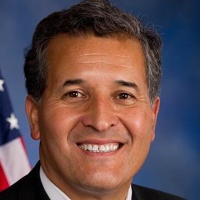
Juan Vargas
Representative
CA
Juan Vargas
Representative
CA
This bill prohibits the Secretary of Housing and Urban Development (HUD) from disclosing individual records to immigration enforcement agencies. HUD records are protected from sharing unless the individual provides consent or makes a written request in a language they understand. The legislation also prevents HUD from compelling public housing agencies to share these confidential records for immigration purposes.
This Act caps out-of-pocket costs for essential prescription inhalers and nebulizers at a maximum of \$15 per 30-day supply for most insured and establishes a new assistance program for uninsured individuals.
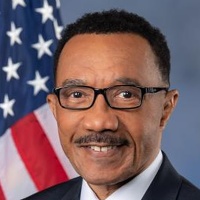
Kweisi Mfume
Representative
MD
Kweisi Mfume
Representative
MD
The Affordable Inhalers and Nebulizers Act of 2025 aims to significantly reduce patient out-of-pocket costs for essential prescription inhalers and nebulizers used to treat conditions like asthma and COPD. This bill caps patient cost-sharing for these products at a maximum of \$15 per 30-day supply for most private insurance and Medicare beneficiaries, effective in 2026. Additionally, it establishes a new program to provide similar cost relief for uninsured individuals. The legislation ensures that payments made toward these caps count toward deductibles and out-of-pocket maximums.
This Act establishes sanctions against Pakistani officials undermining democracy and human rights, while urging the U.S. government to promote democratic institutions in Pakistan until September 30, 2030.
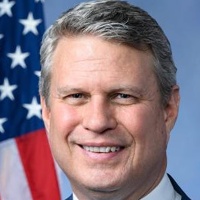
Bill Huizenga
Representative
MI
Bill Huizenga
Representative
MI
The Pakistan Freedom and Accountability Act expresses strong U.S. support for democracy and human rights in Pakistan, citing concerns over military influence and recent election interference. This legislation directs the President to identify and impose sanctions on Pakistani officials responsible for undermining democratic processes or committing serious human rights abuses. The Act emphasizes the need for civilian control over the military and sets an expiration date for its provisions in September 2030.
This resolution recognizes suicide as a serious public health crisis and expresses support for designating September as National Suicide Prevention Month and September 10, 2025, as World Suicide Prevention Day.

Shri Thanedar
Representative
MI
Shri Thanedar
Representative
MI
This resolution officially recognizes suicide as a serious public health crisis in the United States, highlighting the urgent need for prevention efforts across all demographics. It expresses strong support for designating September as "National Suicide Prevention Month" and September 10th as "World Suicide Prevention Day" to raise awareness. The measure calls for prioritizing comprehensive, tailored strategies to improve access to mental health and suicide prevention services nationwide.
This resolution expresses support for designating September 9, 2025, as "National Firearm Suicide Prevention Day" to raise awareness about firearm suicide and promote safe and secure firearm storage as a key suicide prevention measure.
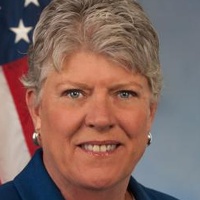
Julia Brownley
Representative
CA
Julia Brownley
Representative
CA
This resolution expresses support for designating September 9, 2025, as "National Firearm Suicide Prevention Day." The goal is to raise awareness about the growing crisis of firearm suicides across the United States. It emphasizes that safe and secure firearm storage is a critical component of suicide prevention efforts. The resolution encourages professionals to discuss gun safety and suicide prevention with their patients.
This bill aims to expand research, coordinate efforts across federal agencies, and launch targeted public education campaigns to address rising endometrial cancer rates and racial disparities in outcomes.
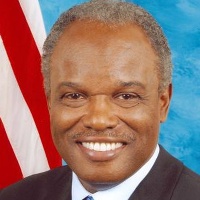
David Scott
Representative
GA
David Scott
Representative
GA
The Endometrial Cancer Research and Education Act of 2025 aims to address rising rates and racial disparities in endometrial cancer. This bill mandates the National Institutes of Health (NIH) to intensify research and ensure equitable inclusion of African-American women in clinical trials. Furthermore, it directs the CDC to launch targeted public education campaigns, specifically focusing on informing African-American women about risks and available treatments.
This Act prohibits companies from deceptively shrinking product sizes while maintaining similar packaging and requires clear consumer notification if downsizing occurs.
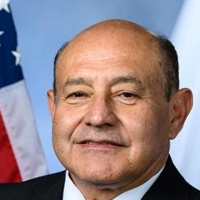
J. Correa
Representative
CA
J. Correa
Representative
CA
The Deceptive Downsizing Prohibition Act of 2025 aims to stop companies from secretly shrinking the size or quantity of consumer products while keeping the packaging the same, a practice known as "deceptive downsizing." This Act prohibits manufacturers from misleading consumers through this practice unless they provide clear, conspicuous notice of the reduced size on the product's principal display panel. The Federal Trade Commission (FTC) is tasked with writing the necessary regulations and enforcing compliance using its existing authority against unfair or deceptive business practices.
This bill redefines coordinated spending by Super PACs as direct contributions to candidates and prohibits federal officials from fundraising for political committees that accept non-compliant donations.
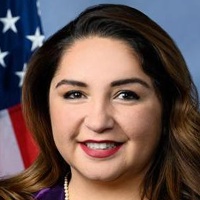
Delia Ramirez
Representative
IL
Delia Ramirez
Representative
IL
The Stop Super PAC-Candidate Coordination Act tightens campaign finance rules by redefining "coordinated expenditures" made with a candidate as direct contributions, subject to strict limits and severe penalties for violations. It also explicitly bans federal candidates and officeholders from soliciting funds for any political committee that accepts non-compliant donations. These changes aim to prevent candidates from indirectly influencing or benefiting from outside spending by Super PACs.
This bill eliminates the minimum contribution threshold, requiring political committees to report the name of every donor in federal elections.
Delia Ramirez
Representative
IL
Delia Ramirez
Representative
IL
The Campaign Transparency Act eliminates the existing dollar threshold for reporting donor names to political committees in federal elections. This change mandates that political committees must now disclose the identity of any individual who makes a contribution, regardless of the amount. Consequently, all donations, no matter how small, will be publicly reported starting immediately upon the Act's enactment.
The Mental Health in Aviation Act of 2025 mandates the FAA to update mental health regulations, improve medical clearance processes, fund more aviation medical examiners, and launch an anti-stigma campaign for aviation workers.

Sean Casten
Representative
IL
Sean Casten
Representative
IL
The Mental Health in Aviation Act of 2025 directs the FAA to update regulations to encourage aviation workers to seek mental health support without fear of stigma. The bill mandates annual reviews of the medical clearance process and allocates funding to hire more Aviation Medical Examiners. Furthermore, it requires the FAA to implement recommendations from a recent mental health task force and launch a public awareness campaign to reduce stigma.
This act updates the population threshold defining an "urban area" to maintain eligibility for Rural Health Clinics under the Medicare program, effective January 1, 2027.
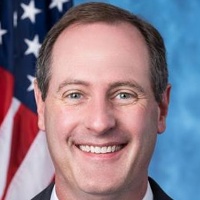
Tracey Mann
Representative
KS
Tracey Mann
Representative
KS
The Rural Health Clinic Location Modernization Act of 2025 updates the criteria for clinics to qualify as Rural Health Clinics (RHCs) under Medicare. This legislation revises the definition of an "urban area," setting a new population threshold of 50,000 people to determine eligibility. These changes to the location standards will take effect starting January 1, 2027.
This bill removes the Medicare exclusion for services provided in facilities primarily focused on mental disease treatment, effective January 1, 2027.

Jill Tokuda
Representative
HI
Jill Tokuda
Representative
HI
The Rural Behavioral Health Improvement Act of 2025 aims to enhance behavioral healthcare access in rural areas by modifying Medicare coverage rules. This bill specifically removes the existing exclusion that prevents Medicare payment for services provided in facilities primarily focused on treating mental diseases. This significant change is scheduled to take effect on January 1, 2027.
This bill extends Haiti's preferential trade benefits until 2037, enhances annual labor compliance reviews for producers, and mandates U.S. technical assistance to boost and diversify Haitian exports.

Stacey Plaskett
Representative
VI
Stacey Plaskett
Representative
VI
The HOPE for Haitian Prosperity Act of 2025 strengthens trade benefits for Haiti by extending preferential duty treatment until 2037 and increasing annual labor compliance reviews focusing on wages and working conditions. The bill also mandates the U.S. Trade Representative to provide targeted technical assistance aimed at increasing and diversifying Haitian exports to the United States. These measures seek to enhance Haiti's economic competitiveness while ensuring adherence to core labor standards.
This Act modernizes Medicare utilization requirements for rural facilities employing Physician Assistants and Nurse Practitioners by aligning their practice and oversight with state laws.
Tracey Mann
Representative
KS
Tracey Mann
Representative
KS
The Modernizing Rural Physician Assistant and Nurse Practitioner Utilization Act of 2025 updates Medicare payment requirements for facilities not directly directed by a physician. It mandates that these facilities must have formal arrangements with Physician Assistants (PAs) or Nurse Practitioners (NPs) whose practice adheres to state laws and regulations. These changes are set to take effect on January 1, 2027.
This Act enables states to establish specialized Medicaid health homes for individuals with sickle cell disease, mandating dental and vision coverage for enrollees.
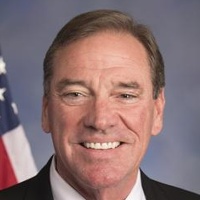
Neal Dunn
Representative
FL
Neal Dunn
Representative
FL
The Sickle Cell Disease Comprehensive Care Act enables states to establish specialized Medicaid health homes focused exclusively on individuals with sickle cell disease starting in 2026. If a state adopts this program, it must provide mandatory dental and vision coverage to enrolled patients, regardless of standard state Medicaid policies. States implementing these health homes will also be required to report on patient outcomes, access to care, and expenditures.
This resolution recognizes suicide as a serious public health crisis and expresses support for designating September 8, 2025, as "988 Day" to promote the vital 988 Suicide and Crisis Lifeline.

Wesley Bell
Representative
MO
Wesley Bell
Representative
MO
This resolution formally recognizes suicide as a serious public health crisis in the United States and expresses strong support for the 988 Suicide and Crisis Lifeline. It highlights the critical role of the 988 service in providing immediate, life-saving support to those in mental health distress. Furthermore, the resolution supports the designation of September 8th as "988 Day" to promote awareness of this essential resource.
This Act allocates \$2.165 billion in dedicated funding for the CDC's National Center for HIV, Viral Hepatitis, STD, and Tuberculosis Prevention for the 2026 fiscal year.

Maxine Waters
Representative
CA
Maxine Waters
Representative
CA
The HIV Prevention Now Act secures **\$2.165 billion** in dedicated funding for the CDC's National Center for HIV, Viral Hepatitis, STD, and Tuberculosis Prevention for Fiscal Year 2026. This appropriation is specifically earmarked to support the center's prevention programs and activities. This funding is supplemental to, and cannot be transferred from, other existing appropriations.
This Act mandates the Bureau of Prisons to issue a REAL ID-compliant identification card, valid for at least 18 months, to all departing federal prisoners to facilitate access to essential federal services and state IDs.
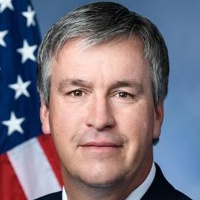
Barry Moore
Representative
AL
Barry Moore
Representative
AL
The BOP Release Card ID Act of 2025 mandates that the Bureau of Prisons issue a REAL ID-compliant photo identification card to all departing federal prisoners, valid for at least 18 months. This federal release card must be accepted for identity verification when accessing major federal benefits like Social Security, Medicaid, and SNAP. Furthermore, the BOP must establish agreements with states to help former inmates use this card to obtain standard state identification. The Attorney General will also issue guidance to states on creating similar release ID programs for state prisoners.