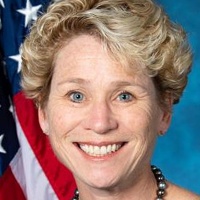
Legislative Activity
Track Chrissy's sponsored bills, co-sponsored legislation, and voting record
The REDI Act allows medical and dental interns and residents to defer both principal and interest payments on their student loans while in training.

Brian Babin
Representative
TX
Brian Babin
Representative
TX
The Resident Education Deferred Interest (REDI) Act amends federal student loan regulations to provide a specific deferment for medical and dental residents. This allows borrowers currently serving in an internship or residency program to pause principal payments and prevent interest accrual on their student loans during that training period.
This bill allows investors to defer taxes on capital gain dividends from mutual funds when those dividends are automatically reinvested until the shares are sold or the investor passes away.

Beth Van Duyne
Representative
TX
Beth Van Duyne
Representative
TX
This bill, the Generating Retirement Ownership through Long-Term Holding Act, allows individual investors to defer paying taxes on capital gain dividends from mutual funds if those dividends are automatically reinvested into more fund shares. Taxes on these deferred gains are only due when the investor sells the shares or upon death. This provision aims to encourage long-term investment in mutual funds by providing immediate tax relief on reinvested earnings.
This Act converts Transportation Security Administration (TSA) personnel to standard federal employment rules under Title 5, establishes transition protections, mandates workforce reviews, and addresses labor relations and employee safety.
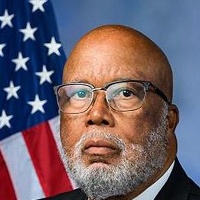
Bennie Thompson
Representative
MS
Bennie Thompson
Representative
MS
The Rights for the Transportation Security Administration Workforce Act transitions TSA personnel to standard federal employment rules under Title 5 of the U.S. Code by a set date no later than December 31, 2025. This mandates the freezing of current personnel policies during the transition while protecting current employee pay and benefits. The bill also requires extensive reviews by the Comptroller General on hiring, diversity, and workplace safety, and mandates consultation with employee representatives regarding labor relations. Finally, it ensures that screening agents retain collective bargaining rights and addresses specific concerns for Federal Air Marshals.
This bill reauthorizes and modifies the pilot program supporting state and regional medical stockpiles, extending funding through fiscal year 2030 and adding new requirements for sharing best practices and regional coordination.

Earl Carter
Representative
GA
Earl Carter
Representative
GA
The State Strategic Stockpile Act of 2025 primarily focuses on reauthorizing and refining the pilot program that supports state and regional medical supply stockpiles. This bill extends the program's operational timeline through 2025 and mandates increased coordination and sharing of best practices among participating states. Additionally, it updates reporting requirements for the Government Accountability Office (GAO) to specifically assess the effectiveness of regional stockpiling efforts.
This Act resets the probationary period for certain federal employees unfairly separated between January 20, 2025, and January 20, 2029, by crediting them for time already served.

Sarah Elfreth
Representative
MD
Sarah Elfreth
Representative
MD
The Protect Our Probationary Employees Act resets the probationary period for certain federal employees who were involuntarily separated between January 20, 2025, and January 20, 2029. If these employees are rehired into a similar role at the same agency, their new probationary period will be reduced by the time they already served previously. This provision is temporary and will expire on January 20, 2029.
This bill establishes significant tax credits to incentivize and reward companies for investing in and producing infant formula domestically within the United States.

Zachary (Zach) Nunn
Representative
IA
Zachary (Zach) Nunn
Representative
IA
The Infant Formula Made in America Act of 2025 establishes significant tax incentives to boost domestic infant formula production. It creates an investment credit for taxpayers building or expanding U.S. manufacturing facilities, alongside a per-pound production credit for formula sold domestically. These incentives are subject to caps and require certification to ensure a substantial portion of the formula is sold within the United States.
This act amends the tax code to give businesses the option to immediately deduct or amortize (spread out over at least five years) their research and experimental expenditures.

Ron Estes
Representative
KS
Ron Estes
Representative
KS
The American Innovation and R&D Competitiveness Act of 2025 revises how businesses treat research and experimental (R&E) expenditures for tax purposes. Taxpayers can now choose between immediately deducting R&E costs or amortizing them over a period of at least 60 months. This legislation also makes technical adjustments to ensure consistency between immediate deductions and claiming the research tax credit.
This bill reauthorizes and increases funding for efforts to prevent maternal deaths by updating review committees and mandating the annual sharing of best practices.
Earl Carter
Representative
GA
Earl Carter
Representative
GA
The Preventing Maternal Deaths Reauthorization Act of 2025 aims to reduce maternal mortality by strengthening Maternal Mortality Review Committees with new expertise requirements and improved data collection. This bill mandates the annual sharing of updated best practices for preventing maternal deaths and serious illness across the healthcare system. Furthermore, it significantly increases and extends federal funding for these critical maternal health initiatives through fiscal year 2029.
The TREAT PTSD Act mandates the Department of Veterans Affairs and TRICARE to provide stellate ganglion block (SGB) for veterans and active service members diagnosed with PTSD, and requires updating clinical guidelines to include SGB as a therapy option.

Scott Perry
Representative
PA
Scott Perry
Representative
PA
The TREAT PTSD Act mandates the Department of Veterans Affairs and the Department of Defense to provide stellate ganglion block (SGB) to veterans and members of the Armed Forces diagnosed with PTSD who elect to receive it after being fully informed of its risks and benefits. It allows the treatment to be furnished through VA or military medical facilities, or qualified healthcare providers. The bill also requires updating the VADOD Clinical Practice Guideline for PTSD management to include SGB as a therapy option.
The "Pay Our Troops Act of 2025" ensures continued pay and allowances for members of the Armed Forces, essential DOD civilians, and contractors during funding gaps until January 1, 2026, or when regular appropriations are enacted.
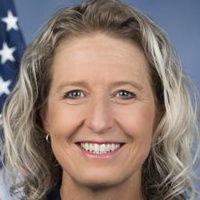
Jennifer Kiggans
Representative
VA
Jennifer Kiggans
Representative
VA
The "Pay Our Troops Act of 2025" ensures that members of the Armed Forces, essential Department of Defense civilians, and contractors continue to receive pay and allowances during periods when regular funding is disrupted. This act provides necessary appropriations to cover these costs for fiscal year 2025. The Act's provisions will terminate upon the enactment of regular appropriations, a continuing resolution that provides funding for the same purpose, or on January 1, 2026.
The John R. Lewis Voting Rights Advancement Act of 2025 aims to strengthen and update the Voting Rights Act of 1965 by addressing vote dilution and denial, establishing updated criteria for federal oversight of states and political subdivisions with a history of voting rights violations, and promoting transparency in election-related changes.
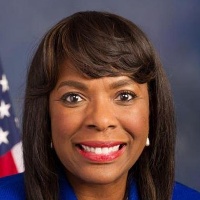
Terri Sewell
Representative
AL
Terri Sewell
Representative
AL
The John R. Lewis Voting Rights Advancement Act of 2025 amends the Voting Rights Act of 1965 to address vote dilution, denial, and abridgment claims, and to update which states and political subdivisions are subject to federal oversight based on a history of voting rights violations. It broadens the types of violations that allow a court to retain jurisdiction over a case, clarifies the Attorney General's authority to assign observers, and ensures transparency in voting-related changes. The Act also authorizes the Attorney General to demand documents and information to enforce voting rights and provides grants to small jurisdictions to assist with notification requirements.
The Richard L. Trumka Protecting the Right to Organize Act of 2025 strengthens protections for workers' rights to organize and collectively bargain by modernizing labor laws, addressing unfair labor practices, and enhancing enforcement mechanisms.
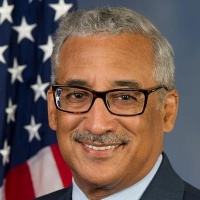
Robert Scott
Representative
VA
Robert Scott
Representative
VA
This bill, the Richard L. Trumka Protecting the Right to Organize Act of 2025, seeks to amend the National Labor Relations Act and other labor laws to strengthen protections for workers' rights to organize and collectively bargain. It aims to modernize labor regulations by clarifying definitions, addressing unfair labor practices, enhancing enforcement, and increasing transparency in labor-management relations. The bill introduces measures such as electronic voting in union elections, strengthens whistleblower protections, and mandates studies on collective bargaining practices. Ultimately, the goal is to ensure fair treatment of workers and promote equitable labor practices.
This bill expands eligibility for retirement and healthcare benefits for National Guard members who incur disabilities while performing State active duty.

Stephanie Bice
Representative
OK
Stephanie Bice
Representative
OK
The "Supporting Disabled National Guardsmen Act" allows National Guard members to be eligible for retirement from the Armed Forces due to disabilities incurred while performing State active duty. It also makes National Guard members eligible for Department of Veterans Affairs (VA) hospital care and medical services for disabilities incurred while performing State active duty, as well as for any illnesses or conditions resulting from these disabilities. The VA's ability to provide these services is limited to the extent and amount specifically allocated in advance through appropriations acts. Before the VA can reimburse for care or services, individuals or their healthcare providers are required to first exhaust all other available payment options.
The "Child Care Availability and Affordability Act" aims to make child care more accessible and affordable by expanding employer-provided child care credits, increasing tax-free dependent care assistance, and enhancing the household and dependent care tax credit.
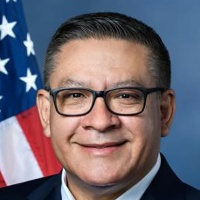
Salud Carbajal
Representative
CA
Salud Carbajal
Representative
CA
The Child Care Availability and Affordability Act aims to improve access to affordable child care by expanding employer-provided child care credits, increasing tax-free dependent care assistance, and creating a refundable household and dependent care tax credit. The employer provided child care credit is increased from 25% to 50% of qualified expenses, and the maximum credit amount is raised from $150,000 to $500,000. The amount of tax-free employer-provided dependent care assistance is increased from $5,000 to $7,500. A new tax credit is created for employment-related expenses paid for household and dependent care, with the applicable percentage starting at 50% and decreasing based on income, and the maximum creditable expenses are $5,000 for one qualifying individual and $8,000 for two or more.
The "Roberto Clemente Commemorative Coin Act" directs the Treasury to mint coins in 2027 honoring Roberto Clemente, with surcharges benefiting the Roberto Clemente Foundation.
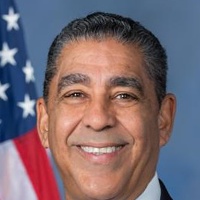
Adriano Espaillat
Representative
NY
Adriano Espaillat
Representative
NY
The Roberto Clemente Commemorative Coin Act directs the Department of Treasury to mint and issue gold, silver, and half-dollar coins in 2027 to commemorate the life and legacy of Roberto Clemente. The coins' designs will represent Clemente's life, including his baseball achievements and humanitarian work. Surcharges from the coin sales will benefit the Roberto Clemente Foundation, supporting their educational programs, youth sports initiatives, disaster relief efforts, and historic preservation projects. The Act ensures that the coin program will not incur any net cost to the United States government.
The "Safe Schools Improvement Act" amends the Elementary and Secondary Education Act of 1965, requiring states to establish policies that prevent and prohibit bullying and harassment in schools based on protected characteristics, ensuring a safe and inclusive learning environment for all students.

Linda Sánchez
Representative
CA
Linda Sánchez
Representative
CA
The Safe Schools Improvement Act aims to reduce bullying and harassment in schools by requiring states to establish policies prohibiting such conduct based on various characteristics, including race, sex, religion, and disability. It mandates annual notifications, data collection on incidents, biennial evaluations of programs, and regular reports to Congress to ensure accountability and effectiveness. This act does not infringe on existing nondiscrimination laws or freedom of speech but seeks to create a safer, more inclusive learning environment for all students.
The "Access to Reproductive Care for Servicemembers Act" ensures that members of the Armed Forces and their dependents can access leave and travel reimbursement for reproductive health care services, including abortion and fertility treatments, not covered by the Department of Defense, while safeguarding their privacy and prohibiting adverse actions.
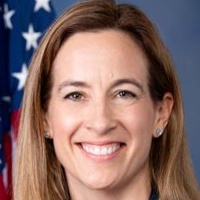
Mikie Sherrill
Representative
NJ
Mikie Sherrill
Representative
NJ
The "Access to Reproductive Care for Servicemembers Act" ensures that members of the Armed Forces and their dependents can access leave and reimbursement for travel expenses related to abortion services and assisted reproductive technology, such as in vitro fertilization, when these services are not available nearby. It protects the privacy of service members seeking such care and prohibits any adverse actions against them for utilizing these provisions. The bill aims to address barriers to reproductive healthcare created by state abortion restrictions and logistical challenges faced by military personnel.
This bill extends the tax credit deadline for quality fuel cell property construction starting after 2024 from 2025 to 2033.

Claudia Tenney
Representative
NY
Claudia Tenney
Representative
NY
The Technology for Energy Security Act extends the tax credit deadline for "quality fuel cell property" from January 1, 2025, to January 1, 2033. This extension applies only to fuel cell property where construction begins after December 31, 2024. The bill aims to promote energy security by incentivizing the development of fuel cell technology.
This bill amends the Social Security Act to eliminate consideration of a spouse's income and resources when determining SSI eligibility and benefits for married individuals with intellectual or developmental disabilities.
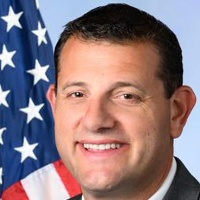
David Valadao
Representative
CA
David Valadao
Representative
CA
The "Eliminating the Marriage Penalty in SSI Act" amends the Social Security Act to revise eligibility rules for Supplemental Security Income (SSI) for individuals with intellectual or developmental disabilities. It ensures these individuals are eligible for SSI regardless of their spouse's income and resources. This change allows eligible individuals to receive the standard individual SSI rate, reduced only by their own income.
The SAFE Act of 2025 amends existing law to include equines (horses) in the prohibition of slaughtering animals for human consumption.

Vern Buchanan
Representative
FL
Vern Buchanan
Representative
FL
The SAFE Act of 2025 amends existing legislation to explicitly prohibit the slaughter of horses for human consumption, reinforcing protections for these animals. This bill seeks to prevent the inhumane treatment of American equines by closing loopholes that allow their slaughter and export for human consumption.