Legislative Activity
Track Steven's sponsored bills, co-sponsored legislation, and voting record
The Rural Veterans Transportation to Care Act expands transportation grants to include rural areas, broadens eligible recipients, increases grant amounts, and removes funding limits to improve healthcare access for veterans.

Marie Gluesenkamp Perez
Representative
WA
Marie Gluesenkamp Perez
Representative
WA
The Rural Veterans Transportation to Care Act expands the Department of Veterans Affairs' transportation grant program to include rural areas, not just highly rural ones. It broadens the range of eligible grant recipients to include county veterans service organizations and tribal organizations. The bill also increases the maximum grant amount to $60,000, with a possible increase to $80,000 for vehicle purchases needed to comply with the Americans with Disabilities Act and authorizes necessary funding by removing the previous funding limit.
The "Protect Veteran Jobs Act" allows wrongly terminated veteran civil service employees to be reinstated and requires executive agencies to report to Congress on veteran employee terminations.
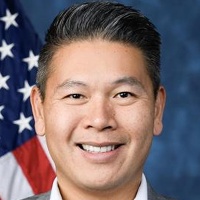
Derek Tran
Representative
CA
Derek Tran
Representative
CA
The Protect Veteran Jobs Act allows wrongly fired or dismissed veterans in civil service jobs between January 20, 2025, and the Act's enactment date to be reinstated to their previous position or a similar one. It mandates executive branch agencies to report to Congress every three months on all veteran employees who were fired or dismissed and the reasons for their termination, effective until January 20, 2029. The Act relies on existing U.S. Code definitions for key terms like "veteran" and "civil service."
The CROWN Act of 2025 prohibits discrimination based on hair texture and hairstyle in federally funded programs, housing, public accommodations, and employment.
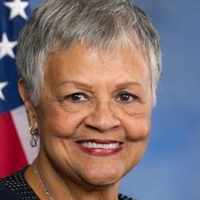
Bonnie Watson Coleman
Representative
NJ
Bonnie Watson Coleman
Representative
NJ
The CROWN Act of 2025 prohibits discrimination based on hair texture and hairstyle if that style is commonly associated with a particular race or national origin. This protection extends to federally funded programs, housing, public accommodations, and employment. The act aims to ensure equal opportunity and prevent discrimination based on hair, addressing historical biases and stereotypes. It clarifies that existing civil rights laws should be interpreted to include protection against hair-based discrimination.
To award a Congressional Gold Medal to the 761st Tank Battalion, the first Black soldiers to serve in an American armored unit, for their valor and crucial contributions to the Allied victory in Europe.
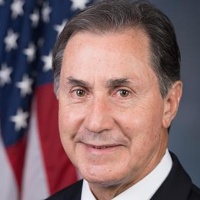
Gary Palmer
Representative
AL
Gary Palmer
Representative
AL
This bill authorizes the Speaker of the House and the President pro tempore of the Senate to award a Congressional Gold Medal to the 761st Tank Battalion, also known as the "Black Panthers," in recognition of their courageous service and crucial contributions during World War II. The medal will be given to the National Museum of African American History and Culture for display, honoring the 761st as the first Black soldiers to serve in an American armored unit and their significant role in the Allied victory in Europe. The bill also allows for the creation and sale of bronze duplicates of the medal to support the United States Mint Public Enterprise Fund.
The American Dream and Promise Act of 2025 provides a pathway to permanent residency for eligible individuals who came to the U.S. as children, or who have Temporary Protected Status (TPS) or Deferred Enforced Departure (DED) status.
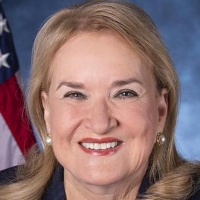
Sylvia Garcia
Representative
TX
Sylvia Garcia
Representative
TX
The American Dream and Promise Act of 2025 provides a pathway to permanent residency for eligible individuals who entered the United States as children and those with Temporary Protected Status (TPS) or Deferred Enforced Departure (DED). Title I, the Dream Act of 2025, establishes conditional permanent residency for eligible individuals who entered the U.S. as children. Title II, the American Promise Act of 2025, allows the Secretary of Homeland Security or the Attorney General to grant permanent resident status to eligible individuals from TPS or DED countries. Title III outlines general provisions, such as background checks, application processes, and fee exemptions, applicable to all seeking to adjust their status under this Act.
Ethan's Law establishes federal penalties for improperly storing firearms where minors or prohibited persons can access them and creates grant programs to incentivize states to adopt matching safe storage laws.
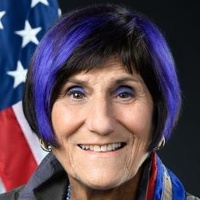
Rosa DeLauro
Representative
CT
Rosa DeLauro
Representative
CT
Ethan's Law establishes federal requirements for the secure storage of firearms to prevent unauthorized access by minors and prohibited persons, making improper storage a civil violation with escalating penalties if injury or death results. The bill also creates a federal grant program to incentivize states and Tribes to adopt matching safe storage laws. Furthermore, Congress declares that failing to comply with these storage requirements constitutes negligence and may be considered the direct cause of resulting firearm injuries.
The Federal Retirement Fairness Act allows temporary employees' service after 1988 to count toward retirement benefits under the Federal Employees Retirement System.

Gerald Connolly
Representative
VA
Gerald Connolly
Representative
VA
The Federal Retirement Fairness Act amends title 5 of the United States Code, allowing civilian service in a temporary position after December 31, 1988, to be creditable under the Federal Employees Retirement System. This change applies to current employees and Members of the United States Postal Service, and requires the Office of Personnel Management to notify eligible individuals and issue implementing regulations.
The "Equal and Uniform Treatment in the Military Act" prohibits discrimination in the Armed Forces based on race, color, religion, sex, national origin, gender identity, or sexual orientation, ensuring service and advancement are based on merit and ability.

Marilyn Strickland
Representative
WA
Marilyn Strickland
Representative
WA
The "Equal and Uniform Treatment in the Military Act" seeks to eliminate discrimination based on race, color, religion, sex, national origin, gender identity, or sexual orientation within the Department of Defense. It ensures that all members of the Armed Forces have the right to serve and advance based on merit, fitness, capability, and performance. The bill defines key terms such as "gender identity" and "sex" to provide clarity and protect individuals from discriminatory practices. This act aims to promote equality and inclusion in the military, ensuring that service members are judged solely on their ability to meet occupational standards.
The "Due Process Continuity of Care Act" enables states to provide Medicaid coverage for individuals awaiting charges in medical institutions and supports states in planning and expanding healthcare access for this population.
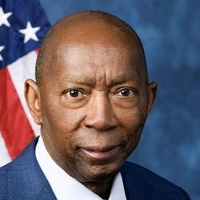
Sylvester Turner
Representative
TX
Sylvester Turner
Representative
TX
The "Due Process Continuity of Care Act" aims to provide Medicaid coverage for individuals in custody awaiting charges in a medical institution, removing the existing inmate limitation on benefits. It authorizes the Secretary to award planning grants to states to support providing Medicaid assistance to eligible individuals and to prepare an application that meets specific requirements. The Act requires states to develop plans for assessing health treatment needs, increasing healthcare provider participation, and ensuring quality of care for patients in custody. It allocates $50,000,000 for these planning grants.
The "Rare Earth Magnet Security Act of 2025" introduces a tax credit for U.S. manufacturers of rare earth magnets, with increased incentives for magnets using domestically sourced materials, phasing out after 2034, and restrictions on materials from non-allied foreign nations.
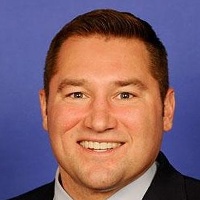
Guy Reschenthaler
Representative
PA
Guy Reschenthaler
Representative
PA
The "Rare Earth Magnet Security Act of 2025" introduces a tax credit for the production of rare earth magnets, incentivizing domestic manufacturing. The credit offers \$20 per kilogram for magnets made in the U.S. and \$30 per kilogram if 90% of the magnet's materials are U.S.-sourced. The credit phases out after 2034 and includes restrictions on sourcing materials from non-allied foreign nations, with some temporary exceptions. The act also allows manufacturers to elect to receive direct payments from the government in lieu of the tax credit.
The "Rural Historic Tax Credit Improvement Act" enhances the rehabilitation tax credit for historic buildings in rural areas, offering increased credit percentages for both affordable housing and other projects, while also enabling the transfer of these credits.

Mike Carey
Representative
OH
Mike Carey
Representative
OH
The "Rural Historic Tax Credit Improvement Act" enhances the rehabilitation credit for historic buildings in rural areas, offering increased credit percentages for both affordable housing and other projects. It allows taxpayers to transfer these credits and removes the basis adjustment, aiming to incentivize the revitalization of rural communities through historic preservation. The bill defines specific criteria for "applicable rural projects" and "affordable housing projects" and introduces recapture rules for non-compliance with affordable housing requirements. These provisions apply to properties placed in service after December 31, 2025.
The "Discriminatory Gaming Tax Repeal Act of 2025" eliminates federal excise taxes on wagering, starting in 2025.
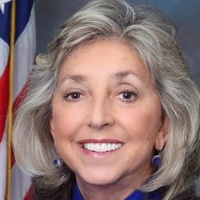
Dina Titus
Representative
NV
Dina Titus
Representative
NV
The "Discriminatory Gaming Tax Repeal Act of 2025" eliminates excise taxes on wagering, as specified in Chapter 35 of the Internal Revenue Code of 1986. This repeal is effective for taxable years starting after December 31, 2024.
This bill amends the Civilian Health and Medical Program of the Department of Veterans Affairs (CHAMPVA) to extend eligibility for medical care to children until their 26th birthday, regardless of marital status.
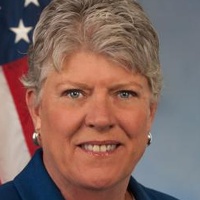
Julia Brownley
Representative
CA
Julia Brownley
Representative
CA
The CHAMPVA Children's Care Protection Act of 2025 amends the eligibility requirements for the Civilian Health and Medical Program of the Department of Veterans Affairs (CHAMPVA). This act increases the maximum age for eligible children to receive medical care under the program to 26 years old, regardless of their marital status. This change does not affect benefits for children incapable of self-support and takes effect for medical care provided on or after the enactment of this act.
This bill authorizes a Congressional Gold Medal for the Buffalo Soldier regiments, honoring their service and contributions to the U.S. military.
Marilyn Strickland
Representative
WA
Marilyn Strickland
Representative
WA
The Buffalo Soldiers Congressional Gold Medal Act of 2025 authorizes the Speaker of the House and the President pro tempore of the Senate to award a Congressional Gold Medal to the Buffalo Soldier regiments, recognizing their dedicated service to the United States. Following the award ceremony, the medal will be given to the Smithsonian Institution's National Museum of African American History and Culture for display and research. The Secretary of the Treasury is permitted to create and sell bronze duplicates of the gold medal. Funds from the sales will be deposited back into the Mint's Public Enterprise Fund.
This bill provides veterans who served at the Nevada Test and Training Range between 1972 and 2005 with presumptive service connection for certain conditions related to radiation and toxic exposure.
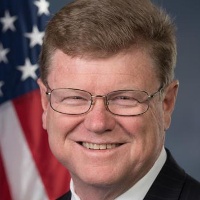
Mark Amodei
Representative
NV
Mark Amodei
Representative
NV
This bill amends Title 38 of the U.S. Code to establish presumptions regarding radiation and toxin exposure for veterans who served at the Nevada Test and Training Range between 1972 and 2005, excluding Nellis and Creech Air Force Bases. It recognizes certain activities at the range as radiation-risk activities and presumes exposure to toxins for veterans stationed there during the specified period. Additionally, it establishes a presumption of service connection for lipomas and tumor-related conditions for these veterans.
The Secure Rural Schools Reauthorization Act of 2025 extends federal funding and program authorities for states and counties containing national forest land through 2026.
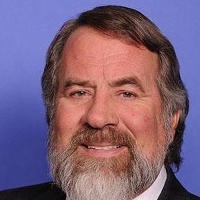
Doug LaMalfa
Representative
CA
Doug LaMalfa
Representative
CA
The Secure Rural Schools Reauthorization Act of 2025 extends critical federal funding for states and counties containing national forest land through 2026. This legislation ensures the continuation of essential community services and maintains the authority for resource advisory committees and local special projects.
The "More Homes on the Market Act" increases the tax exclusion for profit from the sale of a primary residence, incentivizing homeowners to sell and increasing housing supply.
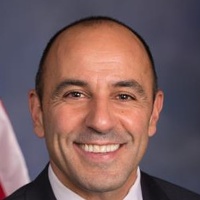
Jimmy Panetta
Representative
CA
Jimmy Panetta
Representative
CA
The "More Homes on the Market Act" increases the tax exclusion for profit from the sale of a primary residence, raising it to $500,000 for single filers and $1,000,000 for married couples filing jointly. These amounts will be adjusted for inflation starting in 2025. This change encourages homeowners to sell their properties, thereby increasing the availability of homes on the market.
The DRIVE Act of 2025 mandates that the VA increase veteran travel reimbursement rates to match the federal employee mileage rate and ensures veterans receive these payments within 90 days of submitting a complete claim.
Julia Brownley
Representative
CA
Julia Brownley
Representative
CA
The DRIVE Act of 2025 ensures that the Department of Veterans Affairs (VA) travel reimbursement rate for veterans' medical appointments will never fall below the standard federal employee mileage rate. This legislation mandates that the VA must process and pay these mileage allowances within 90 days of a veteran submitting a complete request. Essentially, the bill aims to increase equity and speed in compensating veterans for necessary travel to VA healthcare.
This bill authorizes a Congressional Gold Medal to be awarded to the First Rhode Island Regiment in recognition of their heroic service during the Revolutionary War, particularly highlighting their integrated composition and valor at the Battle of Rhode Island.

Gabe Amo
Representative
RI
Gabe Amo
Representative
RI
The "First Rhode Island Regiment Congressional Gold Medal Act" authorizes the creation of a Congressional Gold Medal to honor the First Rhode Island Regiment, a historically significant integrated unit that fought valiantly during the Revolutionary War. The medal will be presented to the Rhode Island State Library for public display and research. The Act also allows for the creation and sale of bronze duplicates of the medal to support the United States Mint Public Enterprise Fund.
The Honoring Our Fallen Heroes Act of 2025 expands public safety officer benefits to include disability and death coverage for certain cancers presumed to be caused by on-duty exposure to carcinogens, and clarifies "line of duty" definitions for first responder benefits.
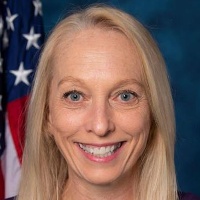
Mary Scanlon
Representative
PA
Mary Scanlon
Representative
PA
The Honoring Our Fallen Heroes Act of 2025 expands public safety officer benefits to include deaths and disabilities caused by exposure-related cancers, presuming that certain cancers diagnosed within 15 years of service are line-of-duty injuries if the officer served for at least 5 years. It defines "exposure-related cancer" and allows for updates to the list based on medical evidence, while also permitting individuals to petition for additions. The Act also clarifies "line of duty action" and applies retroactively to claims dating back to January 1, 2020, with a three-year window for filing claims based on these amendments.