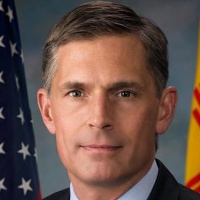
Legislative Activity
Track Martin's sponsored bills, co-sponsored legislation, and voting record
The Keep Billionaires Out of Social Security Act aims to protect Social Security from external government agencies, restrict political access to sensitive data, stabilize office operations, reestablish key oversight offices, and increase funding for customer service and disability applicant assistance.
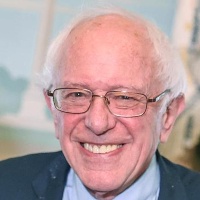
Bernard Sanders
Senator
VT
Bernard Sanders
Senator
VT
The Keep Billionaires Out of Social Security Act aims to protect Social Security from external government interference, specifically exempting it from the jurisdiction of the new Department of Government Efficiency (DOGE). The bill also tightens restrictions on political appointees accessing beneficiary data, mandates that only verified deceased individuals are added to the Death Master File, and locks in current SSA office levels. Finally, it allocates significant new funding for improving customer service, modernizing technology, and establishing state and community grants to assist disability applicants.
This Senate resolution declares a lack of confidence in Secretary of Health and Human Services Robert F. Kennedy Jr. due to alleged undermining of public health, scientific integrity, and unlawful actions, demanding his removal from office.

Angela Alsobrooks
Senator
MD
Angela Alsobrooks
Senator
MD
This Senate resolution expresses a profound lack of confidence in Secretary of Health and Human Services Robert F. Kennedy Jr., citing numerous actions that allegedly undermine public health, scientific integrity, and the legal duties of his office. The resolution details accusations of illegal funding cuts, mass firings of career staff, and the dismantling of key advisory committees. Therefore, the Senate declares that the Secretary should be removed from his position.
The FAIR Act of 2025 mandates that hospitals publicly report data on the acceptance rates of allopathic and osteopathic medical school graduates in their residency programs and requires them to accept either USMLE or COMLEX scores.
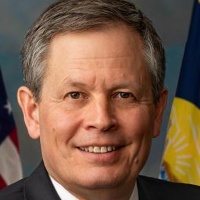
Steve Daines
Senator
MT
Steve Daines
Senator
MT
The Fair Access In Residency (FAIR) Act of 2025 aims to ensure equitable treatment of osteopathic (DO) and allopathic (MD) medical school graduates during residency applications. Hospitals must report detailed data on DO and MD applicant numbers and acceptances to avoid a 2% cut in Medicare payments. Furthermore, programs must affirm fair consideration and accept either COMLEX or USMLE exam scores if an exam is required. This collected data will be made publicly available by the Secretary of Health and Human Services.
This bill transfers command authority of the District of Columbia National Guard from the President of the United States to the Mayor of the District of Columbia and makes necessary conforming amendments across federal and local law.

Chris Van Hollen
Senator
MD
Chris Van Hollen
Senator
MD
This bill, the District of Columbia National Guard Home Rule Act, transfers primary command authority of the D.C. National Guard from the President of the United States to the Mayor of the District of Columbia. It updates outdated laws to officially name the Mayor as Commander-in-Chief, granting them authority over appointments, calling up the Guard, and disciplinary actions. The legislation also makes numerous technical amendments across federal military codes to ensure the Mayor is the recognized authority for the D.C. National Guard.
This Act extends key clean energy tax credits for homeowners and producers while adjusting the phase-out timeline for electricity production credits based on emissions targets.
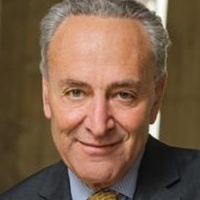
Charles Schumer
Senator
NY
Charles Schumer
Senator
NY
The Lowering Electric Bills Act extends crucial tax credits for residential clean energy installations until 2034. It also modifies the phase-out schedule for the Clean Electricity Production and Investment Credits, tying their continuation to achieving specific emissions reduction targets or the year 2032. These changes aim to provide long-term stability for clean energy investments.
This Act authorizes the President to impose asset freezes and visa bans on foreign individuals and groups whose actions threaten the peace, security, or stability of the West Bank.
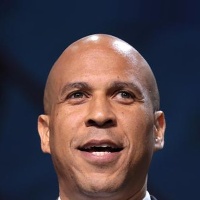
Cory Booker
Senator
NJ
Cory Booker
Senator
NJ
The West Bank Violence Prevention Act of 2025 mandates the President to impose targeted sanctions, including asset freezes and visa bans, on foreign individuals or groups whose actions threaten the peace and stability of the West Bank. These penalties specifically target those involved in violence against civilians, property destruction, or terrorism. The law requires regular reporting to Congress detailing those sanctioned and the steps being taken to mitigate violence in the region.
This act expands the Forest Service's ability to contract with diverse partners for collecting native seeds and growing seedlings for ecosystem restoration projects, including under the Collaborative Forest Landscape Restoration Program.
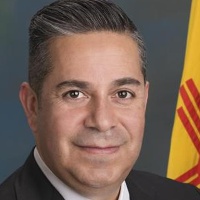
Ben Luján
Senator
NM
Ben Luján
Senator
NM
The Seedlings for Sustainable Habitat Restoration Act of 2025 expands the Forest Service's ability to fund ecosystem restoration by authorizing contracts and grants for collecting native seeds and growing seedlings. This funding can now go to a broader range of partners, including state agencies, tribes, and universities. Furthermore, the bill explicitly includes native seed collection and seedling production as eligible activities under the Collaborative Forest Landscape Restoration Program.
This bill establishes a National Integrated Heat Health Information System and a grant program to coordinate federal efforts, study heat-related risks, and fund community resilience projects to prevent illness and death from extreme heat.
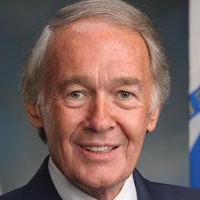
Edward Markey
Senator
MA
Edward Markey
Senator
MA
The Preventing HEAT Illness and Deaths Act of 2025 aims to combat the nation's leading weather-related killer by establishing a coordinated federal strategy to address extreme heat. The bill creates an Interagency Committee and a National Integrated Heat Health Information System (NIHHIS) within NOAA to improve data sharing, research, and response planning. Furthermore, it authorizes a new Community Heat Resilience Program to provide financial assistance for local projects focused on reducing heat-related health risks, prioritizing vulnerable communities.
This bill reauthorizes support for state maternal mortality review committees and directs the HHS Secretary to disseminate best practices for preventing maternal deaths.

Shelley Capito
Senator
WV
Shelley Capito
Senator
WV
This bill aims to strengthen efforts to prevent maternal deaths by reauthorizing support for State-based Maternal Mortality Review Committees. It directs the Secretary of Health and Human Services to regularly disseminate proven best practices for maternal mortality prevention to hospitals and professional societies. Furthermore, the legislation increases federal funding dedicated to these crucial prevention initiatives.
The Stop the SWARM Act of 2025 mandates a report detailing U.S. readiness, technology, and domestic production capacity for sterile flies to combat New World Screwworm outbreaks.

John Cornyn
Senator
TX
John Cornyn
Senator
TX
The Stop the SWARM Act of 2025 mandates that the Secretary of Agriculture submit a report to Congress within 30 days detailing the nation's readiness to combat a New World Screwworm outbreak. This report must specifically address domestic preparedness, including plans for building a domestic sterile fly production facility, current technology, and a comparison between domestic and international production capabilities. The goal is to ensure a robust national response strategy is in place against this serious pest.
This Act mandates the immediate public release of all unclassified Department of Justice records related to Jeffrey Epstein and Ghislaine Maxwell, with limited exceptions for victim privacy and active investigations.

Jeff Merkley
Senator
OR
Jeff Merkley
Senator
OR
The Epstein Files Transparency Act mandates the Attorney General to release all unclassified Department of Justice records related to Jeffrey Epstein and Ghislaine Maxwell within 30 days of enactment. This sweeping requirement covers investigations, travel logs, and communications, with limited exceptions primarily focused on protecting victim privacy and active cases. Any redactions must be publicly justified, and the Attorney General must report the details of the release and any withheld information to Congress.
This bill establishes comprehensive reproductive and fertility preservation assistance for active-duty service members and expands fertility treatment and adoption support for eligible veterans.
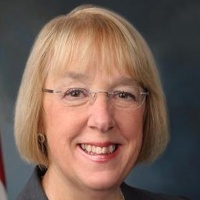
Patty Murray
Senator
WA
Patty Murray
Senator
WA
The Veteran Families Health Services Act of 2025 expands reproductive and fertility preservation assistance for active-duty service members and provides comprehensive fertility treatment and adoption support for eligible veterans through the VA. This bill mandates coverage for fertility services, including IVF, regardless of marital status or sexual orientation, for both current service members and veterans. It also requires proactive measures, such as pre-deployment material preservation for service members and seamless care coordination between the DoD and VA.
This Act repeals previous health subtitle changes and permanently extends enhanced, uncapped premium tax credits to lower the cost of health insurance.
Charles Schumer
Senator
NY
Charles Schumer
Senator
NY
The Protecting Health Care and Lowering Costs Act primarily repeals previous health subtitle changes and permanently extends enhanced premium tax credits for marketplace health insurance. This extension removes the income cap for receiving enhanced credits and updates the calculation method for determining an individual's required premium contribution. The bill aims to simplify the tax code related to health insurance affordability.
This resolution designates the week of August 3 through August 9, 2025, as "National Farmers Market Week" to recognize their vital role in local economies, community health, and food access.

Alejandro Padilla
Senator
CA
Alejandro Padilla
Senator
CA
This resolution officially designates the week of August 3 through August 9, 2025, as "National Farmers Market Week." It aims to celebrate the vital role farmers markets play in strengthening local economies and supporting farmers across the nation. Furthermore, the resolution recognizes how these markets improve community health by increasing access to fresh food and promoting sustainable agriculture.
The SAVES Act of 2025 establishes a five-year VA pilot program to award competitive grants, up to \$2 million each, to nonprofits providing service dogs and necessary veterinary insurance to eligible veterans with specific disabilities.
Thom Tillis
Senator
NC
Thom Tillis
Senator
NC
The SAVES Act of 2025 establishes a five-year pilot program within the VA to award competitive grants to nonprofits providing service dogs to eligible veterans with disabilities like PTSD or mobility issues. These grants, capped at $2 million per recipient, will cover the cost of training the dog and veteran, and the VA will also provide veterinary insurance for each service dog. The goal is to ensure veterans receive necessary support dogs without incurring any personal fees.
This Act repeals the previous ban preventing Medicaid payments to certain entities and validates retroactive payments for services provided during the prohibition period.

Tina Smith
Senator
MN
Tina Smith
Senator
MN
The Restoring Essential Healthcare Act repeals a previous ban that prohibited Medicaid payments to certain healthcare entities. This legislation retroactively validates and ensures payment for essential healthcare services provided by these now-unbanned organizations during the period the prohibition was in effect.
This Act establishes regulatory "AI Innovation Labs" allowing financial entities to test new AI projects under temporary, approved alternative compliance strategies.
Mike Rounds
Senator
SD
Mike Rounds
Senator
SD
The Unleashing AI Innovation in Financial Services Act establishes a framework for financial entities to test new Artificial Intelligence (AI) projects under regulatory supervision. This allows firms to apply for temporary waivers from specific rules by proposing an alternative compliance strategy that demonstrates public benefit and manages risk. Regulatory agencies must create "AI Innovation Labs" to review these applications, generally requiring approval within 120 days unless an immediate threat is identified. The goal is to foster responsible innovation in financial services while maintaining systemic stability and consumer protection.
This act authorizes \$50 million annually for the CDC to conduct research on firearms safety and gun violence prevention from fiscal years 2026 through 2031.
Edward Markey
Senator
MA
Edward Markey
Senator
MA
The Gun Violence Prevention Research Act of 2025 authorizes $50 million annually for fiscal years 2026 through 2031 to be appropriated to the Centers for Disease Control and Prevention (CDC). This funding is specifically designated for conducting or supporting research on firearms safety and gun violence prevention. This appropriation is in addition to any existing funds allocated for this purpose.
This bill mandates new data collection and analysis to update Medicare payment rates for air ambulance services and requires a GAO study on the true costs of these emergency transports.

Michael Bennet
Senator
CO
Michael Bennet
Senator
CO
The Protecting Air Ambulance Services for Americans Act of 2025 aims to reform how Medicare pays for emergency air ambulance services. It requires the Secretary of HHS to update the payment system using newly collected cost and usage data from providers. Furthermore, the bill mandates the timely finalization of data collection rules and directs the GAO to study the true costs of these essential emergency transports.
This act immediately enacts the Pipeline and Hazardous Materials Safety Administration's final rule for gas pipeline leak detection and repair, while preserving the authority to issue stricter future standards.
Ben Luján
Senator
NM
Ben Luján
Senator
NM
The Gas Pipeline Leak Detection and Repair Act of 2025 immediately enacts the final rule from PHMSA regarding gas pipeline leak detection and repair standards upon the bill's signing. This ensures stricter safety measures for finding and fixing leaks take effect without delay. Furthermore, the Act preserves the Secretary of Transportation's authority to issue stronger, more protective regulations in the future.