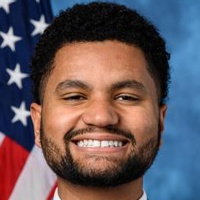
Legislative Activity
Track Maxwell's sponsored bills, co-sponsored legislation, and voting record
This act brings firearms under the regulatory authority of the Consumer Product Safety Commission by removing their exclusion from the definition of a "consumer product."
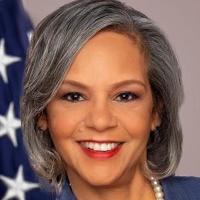
Robin Kelly
Representative
IL
Robin Kelly
Representative
IL
The Firearm Safety Act of 2025 removes the existing exclusion for firearms under the Consumer Product Safety Act. This action subjects firearms to regulation by the Consumer Product Safety Commission (CPSC) as consumer products.
This bill establishes a grant program to fund evidence-based initiatives connecting schools with community systems to improve trauma support and mental health services for students and staff.
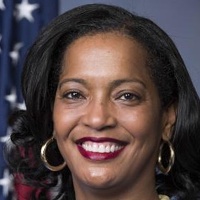
Jahana Hayes
Representative
CT
Jahana Hayes
Representative
CT
The Supporting Trauma-Informed Education Practices Act of 2026 establishes a grant program to enhance access to evidence-based trauma support and mental health services for students and school staff. This funding aims to foster stronger connections between schools and community mental health systems through collaboration, professional development, and direct student services. The bill authorizes $50 million annually from FY 2027 through 2031 to support these critical initiatives.
This bill establishes a comprehensive Transgender Bill of Rights to codify and protect the rights of transgender and nonbinary people across healthcare, employment, legal recognition, and safety.
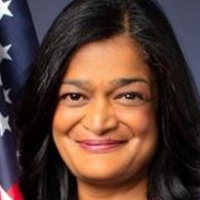
Pramila Jayapal
Representative
WA
Pramila Jayapal
Representative
WA
This resolution establishes a comprehensive Transgender Bill of Rights to codify and protect the rights of transgender and nonbinary people across the United States. It mandates federal action to ensure equal access to healthcare, employment, housing, legal recognition, and safety. The bill aims to eliminate discrimination and affirm bodily autonomy by amending existing federal civil rights laws.
This act directs the Federal Trade Commission to study and regulate unfair or deceptive advertising and marketing practices for firearms, including those targeting minors or promoting illegal use.
Robin Kelly
Representative
IL
Robin Kelly
Representative
IL
The Responsible Firearms Marketing Act directs the Federal Trade Commission (FTC) to study and regulate unfair or deceptive advertising and marketing practices related to firearms. This includes examining advertising that targets minors, encourages illegal use, or involves semiautomatic assault weapons. The FTC must issue regulations prohibiting these practices and enforce them using existing authority under the Federal Trade Commission Act.
This Act establishes new financial assistance and debt collection standards for Medicare hospitals while creating a federal grant program for nonprofits to purchase and eliminate eligible medical debt.
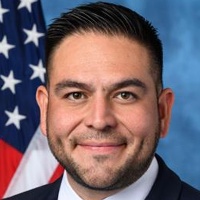
Gabriel (Gabe) Vasquez
Representative
NM
Gabriel (Gabe) Vasquez
Representative
NM
The Patient Debt Relief Act establishes new standards for hospitals participating in Medicare regarding financial assistance and medical debt collection practices, including limits on liens and wage garnishment. It also creates a grant program for eligible nonprofits to purchase and eliminate the medical debt of low-income individuals. These provisions aim to protect patients from aggressive debt collection and provide avenues for debt relief.
The PETSAFE Act of 2026 allows federal emergency preparedness grant funds to be used for companion animal support during disasters, with the federal government covering 90% of the costs.
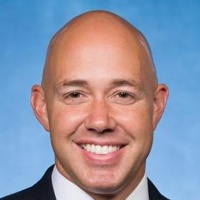
Brian Mast
Representative
FL
Brian Mast
Representative
FL
The PETSAFE Act of 2026 allows states, local, and tribal governments to use federal emergency preparedness grants to support companion animals during disasters. This funding can cover essential supplies, veterinary care, and emergency sheltering equipment. Furthermore, the bill increases the federal cost share for these specific animal preparedness activities to 90 percent.
This bill recognizes the historic significance of the Greensboro Four sit-in, which launched a nationwide movement against racial inequality, and encourages its inclusion in educational curricula.
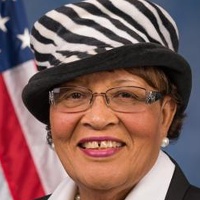
Alma Adams
Representative
NC
Alma Adams
Representative
NC
This bill recognizes the historic 1960 Greensboro Four sit-in, honoring the students whose peaceful protest launched a nationwide movement against segregation. It designates February 1, 2026, as the 66th anniversary, coinciding with the start of Black History Month. Furthermore, the bill encourages states to include the Greensboro Four's contributions in educational curricula.
This bill mandates a Congressional Budget Office study on the long-term economic and societal impacts of immigration policies implemented starting in 2025.
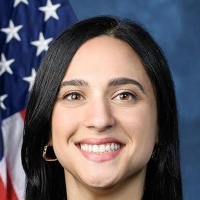
Yassamin Ansari
Representative
AZ
Yassamin Ansari
Representative
AZ
This act mandates the Congressional Budget Office, in collaboration with the Council of Economic Advisers, to conduct a comprehensive study on the long-term economic impacts of potential mass deportation policies enacted after January 20, 2025. The study will analyze effects on industries, public safety, GDP, tax revenue, and more over a 20 to 40-year period. Relevant federal agencies are required to provide necessary data to complete this analysis.
This Act establishes minimum humane standards for ICE detention facilities, mandates public reporting and real-time health tracking systems, and strengthens oversight to ensure detainee welfare.
Yassamin Ansari
Representative
AZ
Yassamin Ansari
Representative
AZ
The Stop Inhumane Conditions in ICE Detention Act of 2026 mandates minimum health, safety, and legal standards for all ICE detention facilities, prohibiting funding for non-compliant sites. It establishes rigorous, real-time health reporting systems and requires unannounced inspections with penalties, including contract termination, for facilities that fail to meet these standards. Furthermore, the bill creates anonymous complaint channels and mandates annual audits focusing on gender-related health protections.
The Drain ICE Act of 2026 seeks to repeal specific sections of a previous law and rescind related funding, citing concerns over the Trump Administration's immigration enforcement practices, detention conditions, and resource allocation.
Yassamin Ansari
Representative
AZ
Yassamin Ansari
Representative
AZ
The Drain ICE Act of 2026 aims to fundamentally reform immigration enforcement by repealing specific sections of a prior law (Public Law 11921) and rescinding associated funding. This legislation is introduced in response to Congressional findings detailing concerns over mass deportation policies, inhumane detention conditions, and the detention of non-criminal individuals under the Trump Administration. The bill seeks to end practices deemed contrary to constitutional protections and human rights in immigration enforcement.
This bill mandates that mail-in ballot envelopes for federal elections starting in 2026 must include a U.S. Postal Service barcode for tracking.
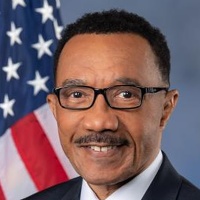
Kweisi Mfume
Representative
MD
Kweisi Mfume
Representative
MD
The Vote by Mail Tracking Act mandates that all mail-in ballot envelopes for federal elections starting in 2026 must include a U.S. Postal Service barcode for tracking. This ensures enhanced transparency and traceability for every mailed ballot. The bill also requires the Postal Service to provide necessary compliance information to election officials annually.
This bill establishes mandatory minimum humanitarian standards for health screening, water, sanitation, food, and shelter for all individuals in ICE and CBP custody.
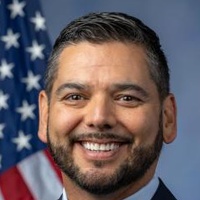
Raul Ruiz
Representative
CA
Raul Ruiz
Representative
CA
The Humanitarian Standards for Individuals in ICE and CBP Custody Act establishes minimum standards for health screening, nutrition, sanitation, and shelter for individuals detained by ICE and CBP. This bill mandates specific protocols for medical care, facility conditions, and personnel training to ensure humane treatment. It also requires regular inspections and public reporting on compliance and sexual abuse complaints.
This bill officially renames the United States Postal Service facility at 3135 1st Avenue North in St. Petersburg, Florida, as the "Poul Hornsleth Post Office."
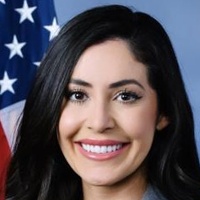
Anna Luna
Representative
FL
Anna Luna
Representative
FL
This bill officially designates the United States Postal Service facility at 3135 1st Avenue North in St. Petersburg, Florida, as the "Poul Hornsleth Post Office." The legislation ensures that all future official federal references to this location must use the newly established name.
This bill officially designates the United States Postal Service facility at 2600 Michigan Avenue in Kissimmee, Florida, as the "Robert Guevara Post Office Building."
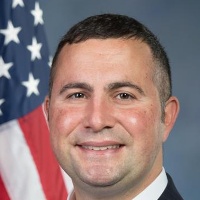
Darren Soto
Representative
FL
Darren Soto
Representative
FL
This bill officially designates the United States Postal Service facility located at 2600 Michigan Avenue in Kissimmee, Florida, as the "Robert Guevara Post Office Building." This action ensures the facility will be known by this new name in all official federal records and documents.
This bill establishes a civil remedy allowing individuals to sue the U.S. government for constitutional rights violations committed by ICE or CBP officers.
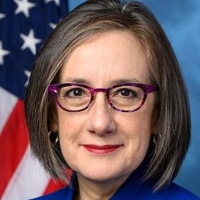
Andrea Salinas
Representative
OR
Andrea Salinas
Representative
OR
The ICE and CBP Constitutional Accountability Act establishes a civil remedy allowing individuals to sue the U.S. government for constitutional rights violations committed by ICE or CBP officers. This bill holds the government financially liable for unlawful enforcement actions, even if they contradict official policy. It specifically waives sovereign immunity for these claims and permits plaintiffs to seek punitive damages.
This act establishes new federal safety standards requiring motorcoaches to provide drivers with a minimally obstructed forward-facing view, allowing for compliance through camera technology.
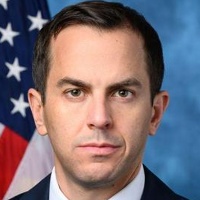
Robert Menendez
Representative
NJ
Robert Menendez
Representative
NJ
The Safe Intersections for Buses and Pedestrians Act mandates the creation of new federal safety standards to ensure bus drivers have a minimally obstructed forward-facing view. This requires the Secretary of Transportation to establish these standards within one year of enactment. Motorcoaches may meet this requirement through direct visibility or approved camera technology that enhances the driver's field of vision.
This bill seeks to disapprove and nullify the Department of Veterans Affairs' final rule regarding "Reproductive Health Services."
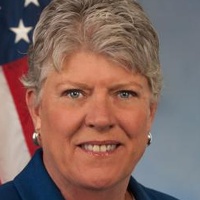
Julia Brownley
Representative
CA
Julia Brownley
Representative
CA
This resolution seeks to disapprove the Department of Veterans Affairs' final rule concerning "Reproductive Health Services" issued in September 2024. If enacted, this disapproval, made under the Congressional Review Act, would prevent the VA rule from taking legal effect.
This bill mandates the removal of U.S. Armed Forces from Venezuela unless explicitly authorized by Congress.
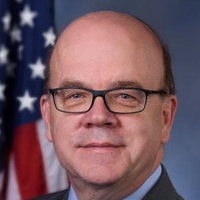
James McGovern
Representative
MA
James McGovern
Representative
MA
This bill mandates the President to withdraw all United States Armed Forces from Venezuela. This action is required unless Congress has formally declared war or passed specific legislation authorizing the use of military force in that country.
This resolution expresses the House's sense that protecting women's rights and leadership is critical for Haiti's stability while condemning current failures in centering their needs and calling for urgent human rights measures.
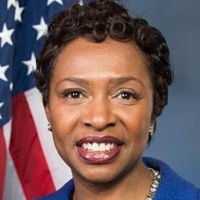
Yvette Clarke
Representative
NY
Yvette Clarke
Representative
NY
This resolution asserts that advancing the rights of women and girls in Haiti is crucial for the nation's stability and successful transition from crisis. It condemns the widespread gender-based violence and the exclusion of women from leadership roles in the transitional government. The bill calls for urgent measures to center women's needs, ensure their representation in government, and prioritize funding for survivor services and accountability for violence.
This Act mandates the translation of federal gun violence prevention materials and prioritizes grant funding for outreach to limited English proficient populations.
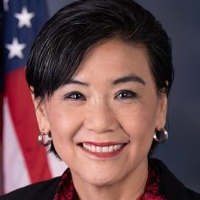
Judy Chu
Representative
CA
Judy Chu
Representative
CA
The Language Access to Gun Violence Prevention Strategies Act of 2026 mandates that federal agencies translate critical gun violence prevention materials into priority languages. It prioritizes federal grant funding for efforts that include targeted outreach to limited English proficient populations. The Act also establishes national public awareness campaigns by the DOJ and HHS specifically designed to increase language access to prevention strategies like Extreme Risk Protection Orders.