Legislative Activity
Track Mario's sponsored bills, co-sponsored legislation, and voting record
Streamlines the grant application process for school safety initiatives by creating a single, multipurpose application and offering technical assistance to applicants.
Jared Moskowitz
Representative
FL
Jared Moskowitz
Representative
FL
The SASS Act, or "Single Application for School Safety Act," streamlines the grant application process for school safety initiatives. It directs the Attorney General to establish a single application for grants authorized by the COPS Director and the BJA Director. The COPS and BJA Directors will also provide technical assistance to grant applicants.
The Honoring Our Fallen Heroes Act of 2025 expands public safety officer benefits to include disability and death coverage for certain cancers presumed to be caused by on-duty exposure to carcinogens, and clarifies "line of duty" definitions for first responder benefits.
Mary Scanlon
Representative
PA
Mary Scanlon
Representative
PA
The Honoring Our Fallen Heroes Act of 2025 expands public safety officer benefits to include deaths and disabilities caused by exposure-related cancers, presuming that certain cancers diagnosed within 15 years of service are line-of-duty injuries if the officer served for at least 5 years. It defines "exposure-related cancer" and allows for updates to the list based on medical evidence, while also permitting individuals to petition for additions. The Act also clarifies "line of duty action" and applies retroactively to claims dating back to January 1, 2020, with a three-year window for filing claims based on these amendments.
The "Ensuring Continuity in Veterans Health Act" amends the Veterans Community Care Program to prioritize continuous healthcare for veterans.
C. Franklin
Representative
FL
C. Franklin
Representative
FL
The "Ensuring Continuity in Veterans Health Act" prioritizes uninterrupted healthcare for veterans. It amends the Veterans Community Care Program to specifically consider continuity of care when making decisions about veterans' healthcare services. This ensures veterans can maintain consistent relationships with healthcare providers and receive seamless, ongoing treatment.
Prohibits designating Big Cypress National Preserve as wilderness.
C. Franklin
Representative
FL
C. Franklin
Representative
FL
This bill prohibits the Big Cypress National Preserve in Florida from being designated as wilderness or included in the National Wilderness Preservation System. This ensures the area will not receive the specific protections and management guidelines associated with wilderness areas.
The Freight RAILCAR Act of 2025 incentivizes freight railcar modernization by establishing a tax credit for qualified newly built replacement railcars and qualified railcar modernization expenditures.
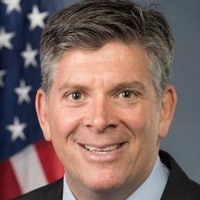
Darin LaHood
Representative
IL
Darin LaHood
Representative
IL
The "Freight RAILCAR Act of 2025" introduces a tax credit for modernizing freight railcars, encouraging investments in newer, more efficient railcars. Taxpayers can claim a credit equal to 10% of their freight railcar fleet modernization expenses, with a limit of 1,000 qualified freight railcars per year. The credit applies to railcars that increase capacity, improve fuel efficiency, or meet updated performance standards, and is available for three years after the Act's enactment. The Secretary of the Treasury is required to submit a report to Congress detailing the credit's usage and impact on railcar modernization and scrapping.
Permanently extends the New Markets Tax Credit, provides inflation adjustments, and includes it for alternative minimum tax relief.

Claudia Tenney
Representative
NY
Claudia Tenney
Representative
NY
The New Markets Tax Credit Extension Act of 2025 permanently extends the New Markets Tax Credit, which incentivizes investment in low-income communities. It removes the credit's expiration date and adjusts the credit amount for inflation after 2025. The act also provides alternative minimum tax relief for qualified equity investments made after December 31, 2024.
This bill establishes a federal standard requiring pasteurized orange juice to contain at least 10.0 percent orange juice soluble solids by weight.
C. Franklin
Representative
FL
C. Franklin
Representative
FL
The Defending Domestic Orange Juice Production Act of 2025 establishes a federal quality standard requiring pasteurized orange juice to contain at least 10.0 percent orange juice soluble solids by weight. This measure ensures product consistency by excluding added sweeteners from the calculation of these solids.
Recognizes and supports the contributions of Catholic schools in the U.S., celebrating their academic excellence, diverse communities, and the 51st annual National Catholic Schools Week.
Darin LaHood
Representative
IL
Darin LaHood
Representative
IL
Recognizes and supports Catholic schools in the United States for their academic excellence, diverse communities, and values-based education. Designates January 26, 2025, to February 1, 2025, as National Catholic Schools Week, celebrating the commitment of Catholic schools, students, parents, and teachers to academic excellence and community service.
The Born-Alive Abortion Survivors Protection Act requires health care practitioners to provide the same level of care to infants born alive after an abortion attempt as they would to any other newborn, mandating immediate hospitalization and imposing penalties for violations, while protecting the mother from prosecution. It also allows the mother of a child born alive to file a civil action against anyone who violated the act.
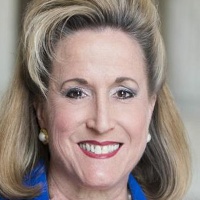
Ann Wagner
Representative
MO
Ann Wagner
Representative
MO
The "Born-Alive Abortion Survivors Protection Act" ensures that infants born alive after an abortion receive the same medical care as any other newborn, mandating immediate hospitalization and requiring healthcare practitioners to report any failures to comply. Violators face fines, imprisonment, and potential prosecution for homicide or attempted homicide, while the mother of the child cannot be prosecuted. The bill also allows the woman who had the abortion to file a civil action against anyone who violated the act. It defines abortion and attempts at abortion, and renames "Partial-Birth Abortions" to "Abortions" in relevant sections of the U.S. Code.
The Restoring Trade Fairness Act mandates the suspension of normal trade relations with China, establishes a comprehensive system of increased tariffs on Chinese imports, and creates a trust fund to compensate American producers harmed by retaliatory trade actions.

John Moolenaar
Representative
MI
John Moolenaar
Representative
MI
The Restoring Trade Fairness Act aims to protect U.S. national security and economic interests by revoking China’s Permanent Normal Trade Relations status. The bill mandates significant tariff increases on Chinese imports, eliminates duty-free "de minimis" exemptions for Chinese goods, and establishes a new valuation system for imports. Additionally, it creates a trust fund using collected tariff revenue to compensate American producers harmed by retaliatory trade actions and to support the defense of U.S. allies in the Indo-Pacific.
This bill prohibits federal funding for abortions and for health insurance plans that cover abortions, clarifies these prohibitions under the Affordable Care Act, and requires health plans to disclose the extent of their abortion coverage and any related surcharges.
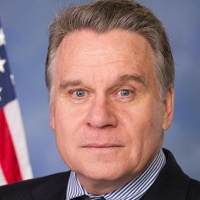
Christopher Smith
Representative
NJ
Christopher Smith
Representative
NJ
The "No Taxpayer Funding for Abortion and Abortion Insurance Full Disclosure Act of 2025" seeks to prohibit the use of federal funds for abortions and for health plans that cover abortions, while allowing individuals and entities to purchase separate abortion coverage with non-federal funds. It clarifies that premium tax credits and cost-sharing reductions under the Affordable Care Act (ACA) cannot be used for health plans that include abortion coverage. The Act also revises notice requirements for health plans, mandating clear disclosure of abortion coverage and any associated premium surcharges to enrollees. Exceptions to the funding restrictions are included for cases of rape, incest, or when the mother's life is in danger.
The Red Snapper Act of 2025 prohibits the Secretary of Commerce from closing South Atlantic bottom fishing areas until the Great Red Snapper Count study is completed and integrated into official stock assessments.
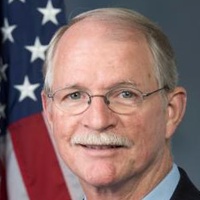
John Rutherford
Representative
FL
John Rutherford
Representative
FL
The Red Snapper Act of 2025 prohibits the Secretary of Commerce from closing South Atlantic fishing areas until the "Great Red Snapper Count" study is completed and its data is integrated into official stock assessments. This legislation aims to protect the regional economy and recreational fishing industry by ensuring management decisions are based on the most current and accurate scientific data.
This bill increases the railroad track maintenance tax credit, introduces annual inflation adjustments, and extends the eligibility period for qualifying expenditures.

Mike Kelly
Representative
PA
Mike Kelly
Representative
PA
This bill amends the Internal Revenue Code to expand the railroad track maintenance credit by increasing the per-mile tax credit to $6,100 and implementing annual inflation adjustments starting in 2026. It also extends the eligibility window for qualifying maintenance expenditures to include costs incurred through 2023. These updates aim to provide greater financial support for ongoing railroad infrastructure improvements.
The FORCE Act prohibits the removal of Cuba from the State Sponsors of Terrorism list until the country meets specific democratic and human rights requirements.

Maria Salazar
Representative
FL
Maria Salazar
Representative
FL
The FORCE Act prohibits the President and the Secretary of State from removing Cuba from the State Sponsors of Terrorism list. This restriction remains in effect until the administration certifies that Cuba has met the specific democratic and human rights requirements outlined in the LIBERTAD Act of 1996.
The Thin Blue Line Act amends federal law to include the killing or attempted killing of law enforcement officers, firefighters, and other first responders as an aggravating factor in capital sentencing cases.

Vern Buchanan
Representative
FL
Vern Buchanan
Representative
FL
The Thin Blue Line Act amends federal law to designate the killing or attempted killing of a law enforcement officer, firefighter, or first responder as an aggravating factor in capital sentencing. This legislation ensures that when a jury considers the death penalty, they must take into account whether the victim was targeted due to their status as a public servant or while performing their official duties.
This bill designates the United States Postal Service facility at 290 NW Peacock Boulevard in Port St. Lucie, Florida, as the "Trooper Zachary Fink Post Office Building."
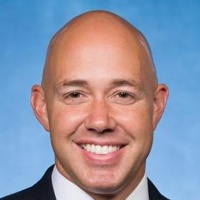
Brian Mast
Representative
FL
Brian Mast
Representative
FL
This bill designates the United States Postal Service facility located at 290 NW Peacock Boulevard in Port St. Lucie, Florida, as the "Trooper Zachary Fink Post Office Building." All official federal records and documents will be updated to reflect this new name in honor of Trooper Fink.