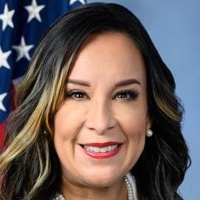
Legislative Activity
Track Mónica's sponsored bills, co-sponsored legislation, and voting record
This Act ensures the automatic continuation of pay for active duty military personnel and essential civilian support staff if Congress fails to pass a budget for fiscal year 2026.
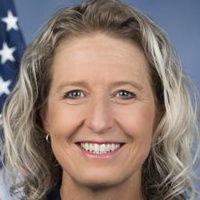
Jennifer Kiggans
Representative
VA
Jennifer Kiggans
Representative
VA
The Pay Our Troops Act of 2026 ensures that active duty military personnel and essential civilian support staff continue to receive their pay if Congress has not yet passed the full budget for fiscal year 2026. This act provides automatic continuing appropriations from the Treasury to prevent a lapse in military salaries due to budget delays. The funding automatically terminates once a new budget or continuing resolution is passed, or on January 1, 2027, whichever comes first.
The Food Farmacy Act of 2025 establishes a grant program to fund non-profit organizations and local governments in creating "healthy food pharmacies" that provide free nutritious food and nutritional counseling to low-income and food-insecure communities.
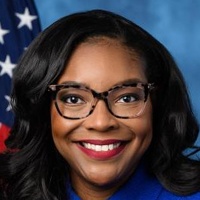
Emilia Sykes
Representative
OH
Emilia Sykes
Representative
OH
The Food Farmacy Act of 2025 establishes a federal grant program to fund the creation and operation of "healthy food pharmacies." These pharmacies will provide free, nutritious food and professional nutritional counseling, primarily targeting low-income and food-insecure communities. The goal is to improve public health outcomes by integrating access to healthy food with medical care. The program authorizes $10 million annually from 2026 through 2030 to support these efforts.
This bill prohibits federal funding for any entity that employs individuals who condone and celebrate political violence and domestic terrorism.
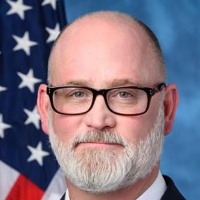
Derrick Van Orden
Representative
WI
Derrick Van Orden
Representative
WI
This bill prohibits the federal government from providing funding to any entity that employs individuals who openly condone or celebrate political violence and domestic terrorism. It directly restricts federal financial support to organizations whose employees publicly endorse such activities. The measure aims to ensure federal dollars do not flow to entities associated with the promotion of political violence.
This Act limits the sharing of consumer reports requested in connection with a residential mortgage loan to prevent unauthorized access to homebuyers' sensitive financial information.
John Rose
Representative
TN
John Rose
Representative
TN
The Homebuyers Privacy Protection Act limits how consumer reporting agencies can share a consumer's report when it is requested in connection with a residential mortgage loan. Reports can only be shared with entities directly involved in the consumer's current mortgage or those providing a firm offer of credit or insurance. The Act also mandates a study by the GAO regarding the use and impact of "trigger leads" derived from credit checks.
This bill extends enhanced financial assistance for purchasing health insurance through the Marketplace until the end of 2026.
Jennifer Kiggans
Representative
VA
Jennifer Kiggans
Representative
VA
The Bipartisan Premium Tax Credit Extension Act extends the enhanced financial assistance available for purchasing health insurance through the Marketplace. This legislation pushes the expiration date for these boosted premium tax credits, including those for higher earners, from the end of 2025 through the end of 2026. Essentially, it ensures continued, robust subsidies for Marketplace health coverage.
This resolution expresses the House's support for designating September 22nd as National Military and Veterans Suicide Awareness Day to highlight the mental health struggles of service members and veterans.
Keith Self
Representative
TX
Keith Self
Representative
TX
This resolution expresses the strong support of Congress for designating September 22nd as "National Military and Veterans Suicide Awareness Day." The goal is to formally recognize the sacrifices of service members and veterans while raising crucial awareness about the mental health challenges and suicide risks they face. By establishing this day, the resolution aims to reduce stigma and encourage greater focus on providing necessary support and resources to this population.
This Act directs the Departments of HUD and Agriculture to create a joint agreement to streamline environmental reviews and processes for housing projects funded by both agencies.
Marlin Stutzman
Representative
IN
Marlin Stutzman
Representative
IN
The Streamlining Rural Housing Act of 2025 mandates that the Departments of HUD and Agriculture create a joint agreement to speed up environmental reviews for federally funded rural housing projects. This partnership aims to designate a lead agency and streamline the acceptance of environmental documentation between the two departments. The Act also establishes an advisory group composed of diverse stakeholders to guide implementation and requires a final report to Congress suggesting further efficiency improvements without compromising resident safety or environmental standards.
This Act establishes a multi-sector Task Force, led by the Treasury Secretary, to study, recommend strategies for, and report on preventing evolving electronic payment scams.
Zachary (Zach) Nunn
Representative
IA
Zachary (Zach) Nunn
Representative
IA
The Taskforce for Recognizing and Averting Payment Scams Act (TRAPS Act) establishes a new Task Force led by the Secretary of the Treasury. This diverse group, including federal agencies, industry experts, and consumer advocates, will study evolving payment scams. The Task Force is charged with developing cross-sector prevention strategies and submitting comprehensive recommendations for new laws and improved coordination to combat these fraudulent activities.
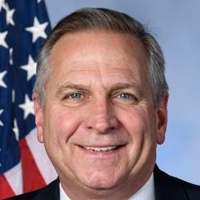
The Veterans’ ACCESS Act of 2025 improves veteran health care by establishing clear eligibility standards for community care, mandating timely mental health treatment, and streamlining administrative processes to ensure faster, more transparent access to services.
Mike Bost
Representative
IL
Mike Bost
Representative
IL
The Veterans’ ACCESS Act of 2025 strengthens the Veterans Community Care Program by establishing clear, enforceable standards for care eligibility and wait times while streamlining the referral process. The legislation also overhauls access to residential mental health and substance abuse treatment, ensuring veterans receive timely, localized care with robust oversight. Additionally, it mandates the development of digital tools and pilot programs to reduce bureaucratic hurdles and improve transparency across the VA healthcare system.
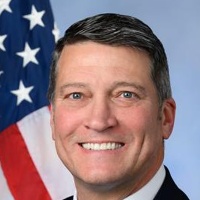
This bill officially renames the United States Postal Service facility at 505 East 9th Avenue in Amarillo, Texas, as the "Mayor Jerry H. Hodge Post Office Building."
Ronny Jackson
Representative
TX
Ronny Jackson
Representative
TX
This bill officially renames the United States Postal Service facility located at 505 East 9th Avenue in Amarillo, Texas. The building will now be known as the "Mayor Jerry H. Hodge Post Office Building." This designation requires all official records and documents to use the new name for this specific location.
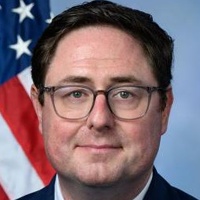
This Act requires local governments receiving certain federal housing grants to report every five years on their land use policies that affect housing supply, aiming to reduce regulatory barriers to building more homes.
Mike Flood
Representative
NE
Mike Flood
Representative
NE
The Identifying Regulatory Barriers to Housing Supply Act aims to address the national housing shortage by encouraging local governments to reform restrictive land use and zoning rules. Recipients of certain federal housing grants must now submit a report every five years detailing their policies on increasing housing types, reducing development restrictions, and streamlining permitting. This measure seeks to clear regulatory roadblocks that currently make building affordable housing too difficult or expensive.
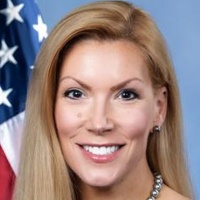
This bill amends federal law to include violations related to rioting within the definition of racketeering activity.
Beth Van Duyne
Representative
TX
Beth Van Duyne
Representative
TX
This bill amends federal law to explicitly include violations related to rioting within the definition of "racketeering activity." By adding this specific crime to the list under Title 18, Section 1961(1), the legislation makes participation in such activities subject to serious federal racketeering charges. This change treats rioting violations similarly to other established offenses like bribery or extortion for the purposes of federal prosecution.
This Act prohibits the Federal Reserve from directly or indirectly issuing a Central Bank Digital Currency (CBDC) and bars the Fed from developing or using one for monetary policy without explicit Congressional authorization.
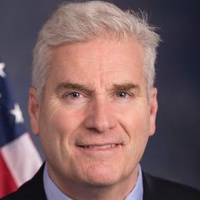
Tom Emmer
Representative
MN
Tom Emmer
Representative
MN
The Anti-CBDC Surveillance State Act strictly prohibits the Federal Reserve from directly or indirectly issuing a Central Bank Digital Currency (CBDC) to individuals. This legislation prevents the Fed from developing, testing, or implementing any digital currency that functions as a direct liability of the Federal Reserve. Furthermore, Congress asserts that any authority to create such a digital asset must explicitly come from Congress itself.
This bill doubles the dedicated annual funding for the Colonia Set-Aside Program under the Cranston-Gonzalez National Affordable Housing Act from $\$1,000,000$ to $\$2,000,000$.
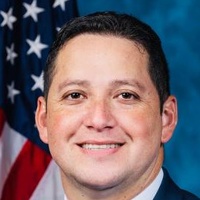
Ernest Gonzales
Representative
TX
Ernest Gonzales
Representative
TX
The Ensuring Continued Access to Funding for Colonias Act amends the Cranston-Gonzalez National Affordable Housing Act to increase federal support for colonias. Specifically, this legislation doubles the annual set-aside funding for the Colonia Set-Aside Program from $\$1,000,000$ to $\$2,000,000$. This action ensures greater financial resources are dedicated to housing assistance in these underserved communities.
The DIGNIDAD Act of 2025 comprehensively overhauls U.S. immigration policy by simultaneously increasing border security, establishing new pathways to legal status for certain long-term residents, mandating E-Verify for all employers, and reforming asylum and employment visa processes.

Maria Salazar
Representative
FL
Maria Salazar
Representative
FL
The DIGNIDAD Act of 2025 is a comprehensive bill that significantly overhauls U.S. immigration policy across five major divisions. Division A focuses on aggressive border security enhancements, infrastructure modernization, and increased criminal penalties for immigration offenses, while Division B establishes pathways to legal status for long-term residents who entered as children and creates a temporary protection program for others. Finally, Division C aims to improve legal immigration by reducing green card backlogs, streamlining employment and student visas, and providing new discretionary relief for family separation cases.
This bill authorizes the creation and sale of commemorative coins for the 2028 Los Angeles and 2034 Salt Lake City Olympic and Paralympic Games to help fund the events, with all surcharges going to the respective organizing committees after covering production costs.
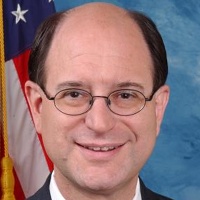
Brad Sherman
Representative
CA
Brad Sherman
Representative
CA
This Act authorizes the Secretary of the Treasury to mint and sell special commemorative coins for the 2028 Los Angeles Olympic and Paralympic Games and the 2034 Salt Lake City Winter Olympic and Paralympic Games. The coins will feature designs celebrating American athletes and the Games themselves. All surcharges collected from the sale of these coins will be directed to the respective organizing committees to help fund the events and related youth sports programs. The entire program must be conducted at no cost to the U.S. Government.
This resolution commends Petty Officer 3d Class Scott Ruskan for his heroic rescue of 165 people during the devastating central Texas floods and thanks all first responders involved.
Ernest Gonzales
Representative
TX
Ernest Gonzales
Representative
TX
This resolution officially commends Petty Officer 3d Class Scott Ruskan for his heroic actions during the devastating central Texas floods of July 2025. It specifically recognizes him for personally rescuing 165 individuals and coordinating triage efforts under hazardous conditions. Furthermore, the bill extends deep gratitude to all federal, state, and volunteer responders who risked their lives during this major natural disaster.
The Treat and Reduce Obesity Act of 2025 expands Medicare coverage for intensive behavioral therapy for obesity and mandates Part D coverage for certain weight management medications for eligible beneficiaries.
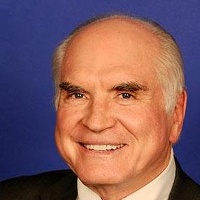
Mike Kelly
Representative
PA
Mike Kelly
Representative
PA
The Treat and Reduce Obesity Act of 2025 aims to combat the growing obesity epidemic, particularly among older adults, by expanding access to intensive behavioral therapy under Medicare. This bill mandates that Medicare Part D plans begin covering FDA-approved medications for obesity and weight management in individuals with related health conditions. Finally, it requires the Secretary of HHS to report regularly to Congress on the implementation and coordination of these new obesity treatment strategies.
The CONNECT for Health Act of 2025 permanently expands Medicare telehealth access by removing geographic restrictions, increasing practitioner flexibility, bolstering program integrity, and mandating supports for quality remote care delivery.
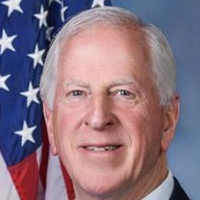
Mike Thompson
Representative
CA
Mike Thompson
Representative
CA
The CONNECT for Health Act of 2025 significantly expands and permanently secures access to Medicare telehealth services by eliminating outdated geographic restrictions and allowing more practitioners to offer remote care. The bill also strengthens program integrity by dedicating funds for telehealth oversight while clarifying rules around providing necessary technology to patients. Finally, it mandates the creation of tailored educational resources and public reporting to improve quality measurement and transparency in remote care delivery.
This bill officially renames the Anahuac National Wildlife Refuge in Texas to the Jocelyn Nungaray National Wildlife Refuge.
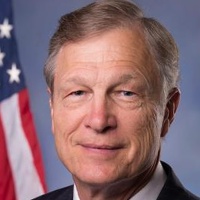
Brian Babin
Representative
TX
Brian Babin
Representative
TX
This bill officially renames the Anahuac National Wildlife Refuge in Texas to the **Jocelyn Nungaray National Wildlife Refuge**. The renaming honors the memory of 12-year-old Jocelyn Nungaray, who was tragically murdered near Houston. This legislation codifies the name change across all official government records and documents.