
Legislative Activity
Track Maria's sponsored bills, co-sponsored legislation, and voting record
This Act nullifies specific executive orders related to federal labor relations and ensures that existing federal collective bargaining agreements remain in effect until their expiration date.

Mark Warner
Senator
VA
Mark Warner
Senator
VA
The Protect America’s Workforce Act nullifies two specific Executive Orders related to federal labor-management programs and prohibits the use of federal funds to enforce them. Furthermore, the Act ensures that all existing collective bargaining agreements between the federal government and labor organizations remain fully in effect until their original expiration dates. This legislation solidifies current federal union contracts while removing the authority of the voided orders.
This resolution designates September 2025 as National Voting Rights Month to raise awareness, encourage voter registration, and urge Congress to pass legislation strengthening voting protections.

Ron Wyden
Senator
OR
Ron Wyden
Senator
OR
This resolution officially designates September 2025 as National Voting Rights Month to highlight ongoing threats to ballot access and encourage civic engagement. It urges Congress to pass legislation strengthening voting protections, like the John R. Lewis Voting Rights Advancement Act. Furthermore, the resolution encourages educational outreach to inform citizens about registration and the history of voting rights in America.
The Forced Arbitration Injustice Repeal Act voids pre-dispute agreements that force arbitration for employment, consumer, antitrust, and civil rights disputes, while protecting the right to join group legal actions.
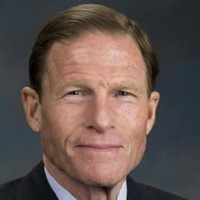
Richard Blumenthal
Senator
CT
Richard Blumenthal
Senator
CT
The Forced Arbitration Injustice Repeal Act invalidates pre-dispute agreements that force individuals into private arbitration for employment, consumer, antitrust, or civil rights claims. This legislation protects the right of individuals and groups to pursue legal action in court rather than being compelled into private arbitration before a dispute arises. It ensures that courts, not arbitrators, decide if this new law applies to a specific agreement. The Act takes effect immediately upon enactment.
This act exempts small businesses from import duties imposed under a national emergency declaration and mandates refunds for duties already paid.
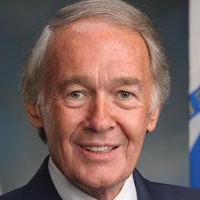
Edward Markey
Senator
MA
Edward Markey
Senator
MA
The Small Business RELIEF Act exempts qualifying small businesses from import duties imposed under Executive Order 14257 due to a national emergency declaration. This legislation also mandates refunds for any such duties already paid by these small businesses. The goal is to provide immediate financial relief to small businesses impacted by these specific emergency tariffs.
This Act mandates FCC reporting improvements after disaster system activations, reclassifies 911 dispatchers as protective service occupations, and requires a report on enforcing multi-line phone system safety rules.

Amy Klobuchar
Senator
MN
Amy Klobuchar
Senator
MN
The Enhancing First Response Act mandates the FCC to hold annual hearings and issue reports following major disaster communications outages to identify areas for improvement. It also requires the Office of Management and Budget to officially classify 911 dispatchers as a protective service occupation. Furthermore, the bill directs the FCC to report on the enforcement and effectiveness of existing laws regarding multi-line phone system compliance for emergency calls.
This Act extends key clean energy tax credits for homeowners and producers while adjusting the phase-out timeline for electricity production credits based on emissions targets.
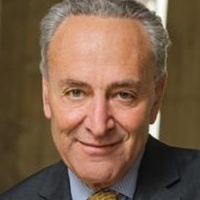
Charles Schumer
Senator
NY
Charles Schumer
Senator
NY
The Lowering Electric Bills Act extends crucial tax credits for residential clean energy installations until 2034. It also modifies the phase-out schedule for the Clean Electricity Production and Investment Credits, tying their continuation to achieving specific emissions reduction targets or the year 2032. These changes aim to provide long-term stability for clean energy investments.
This resolution officially designates July 30, 2025, as National Whistleblower Appreciation Day to honor those who report wrongdoing and encourages federal agencies to educate employees and the public about whistleblower rights.
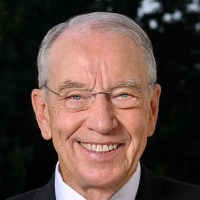
Charles Grassley
Senator
IA
Charles Grassley
Senator
IA
This resolution officially designates July 30, 2025, as "National Whistleblower Appreciation Day." It honors individuals who report waste, fraud, and abuse, recognizing their vital role in government accountability. Furthermore, the bill directs federal agencies to use this day to educate employees and the public about whistleblower rights and acknowledge the importance of their service.
This Act authorizes the President to impose asset freezes and visa bans on foreign individuals and groups whose actions threaten the peace, security, or stability of the West Bank.
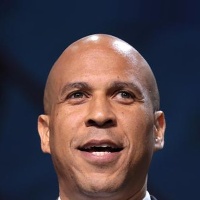
Cory Booker
Senator
NJ
Cory Booker
Senator
NJ
The West Bank Violence Prevention Act of 2025 mandates the President to impose targeted sanctions, including asset freezes and visa bans, on foreign individuals or groups whose actions threaten the peace and stability of the West Bank. These penalties specifically target those involved in violence against civilians, property destruction, or terrorism. The law requires regular reporting to Congress detailing those sanctioned and the steps being taken to mitigate violence in the region.
This bill modernizes the NOAA Weather Radio network for 24/7 reliability, establishes national flash flood warning standards for underserved areas, and protects key NOAA warning personnel from hiring freezes.

Ted Cruz
Senator
TX
Ted Cruz
Senator
TX
The NOAA Weather Radio Modernization Act aims to significantly upgrade the reliability and reach of the NOAA Weather Radio network through infrastructure modernization, expanded coverage in underserved areas, and improved alert specificity. It also establishes national standards for flash flood warning systems in high-risk zones, ensuring alerts function even without reliable internet or cell service. Furthermore, the bill protects critical NOAA warning-related positions from hiring freezes and mandates a 10-year staffing plan for the National Weather Service.
This Act repeals previous health subtitle changes and permanently extends enhanced, uncapped premium tax credits to lower the cost of health insurance.
Charles Schumer
Senator
NY
Charles Schumer
Senator
NY
The Protecting Health Care and Lowering Costs Act primarily repeals previous health subtitle changes and permanently extends enhanced premium tax credits for marketplace health insurance. This extension removes the income cap for receiving enhanced credits and updates the calculation method for determining an individual's required premium contribution. The bill aims to simplify the tax code related to health insurance affordability.
The SAVES Act of 2025 establishes a five-year VA pilot program to award competitive grants, up to \$2 million each, to nonprofits providing service dogs and necessary veterinary insurance to eligible veterans with specific disabilities.
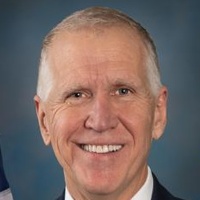
Thom Tillis
Senator
NC
Thom Tillis
Senator
NC
The SAVES Act of 2025 establishes a five-year pilot program within the VA to award competitive grants to nonprofits providing service dogs to eligible veterans with disabilities like PTSD or mobility issues. These grants, capped at $2 million per recipient, will cover the cost of training the dog and veteran, and the VA will also provide veterinary insurance for each service dog. The goal is to ensure veterans receive necessary support dogs without incurring any personal fees.
The John R. Lewis Voting Rights Advancement Act of 2025 strengthens federal protections against voting discrimination by updating oversight criteria, establishing new standards to challenge discriminatory practices, and creating federal penalties for interfering with election workers and processes.

Richard Durbin
Senator
IL
Richard Durbin
Senator
IL
The John R. Lewis Voting Rights Advancement Act of 2025 significantly strengthens the Voting Rights Act by establishing new standards to challenge discriminatory voting practices and updating federal oversight criteria for states. It mandates greater transparency for all changes to voting rules and implements "practice-based preclearance" for certain jurisdictions. Additionally, the bill creates new federal criminal penalties for using force or threats to intimidate voters or election workers.
This act authorizes \$50 million annually for the CDC to conduct research on firearms safety and gun violence prevention from fiscal years 2026 through 2031.
Edward Markey
Senator
MA
Edward Markey
Senator
MA
The Gun Violence Prevention Research Act of 2025 authorizes $50 million annually for fiscal years 2026 through 2031 to be appropriated to the Centers for Disease Control and Prevention (CDC). This funding is specifically designated for conducting or supporting research on firearms safety and gun violence prevention. This appropriation is in addition to any existing funds allocated for this purpose.
This Act promotes private employee ownership by extending tax deferrals for S corporation ESOP sales, establishing Treasury and Labor support offices, and ensuring ESOP-owned businesses retain small business eligibility.
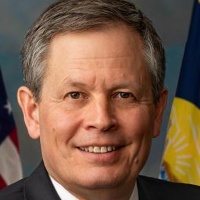
Steve Daines
Senator
MT
Steve Daines
Senator
MT
The Promotion and Expansion of Private Employee Ownership Act of 2025 aims to significantly boost employee ownership in S corporations through Employee Stock Ownership Plans (ESOPs). This bill extends crucial tax deferral benefits for stock sales to ESOPs and establishes new offices within the Treasury and Labor Departments to provide technical assistance and advocacy. Furthermore, it amends the Small Business Act to ensure ESOP-owned businesses do not automatically lose small business status when they transition to majority employee ownership.
This resolution recognizes the impact of the Americans with Disabilities Act and calls for strengthened federal action to expand healthcare and community support services, ensuring full independence and economic self-sufficiency for individuals with disabilities.

Tammy Duckworth
Senator
IL
Tammy Duckworth
Senator
IL
This resolution recognizes the foundational importance of the Americans with Disabilities Act (ADA) in promoting independent living and economic self-sufficiency for individuals with disabilities. It calls for strengthened federal action to dismantle remaining barriers, particularly by expanding vital community-based health care and support services. The bill urges various federal agencies to actively improve access to employment, housing, telecommunications, and emergency preparedness for this community. Ultimately, it declares that fulfilling the ADA's promise requires a committed, ongoing effort to ensure full inclusion.
The 340B PATIENTS Act of 2025 clarifies that drug manufacturers must provide 340B discounts regardless of where or how a covered entity dispenses the drugs, including through contract pharmacies, and establishes significant penalties for non-compliance.
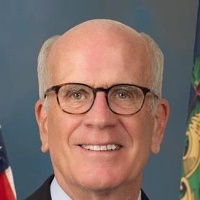
Peter Welch
Senator
VT
Peter Welch
Senator
VT
The 340B PATIENTS Act of 2025 clarifies that drug manufacturers must provide 340B discounts to covered entities regardless of how or where the drugs are dispensed, including through contract pharmacies. This legislation confirms the right of covered entities to use outside pharmacies to dispense discounted drugs without facing manufacturer restrictions. Furthermore, the Act establishes significant civil monetary penalties for manufacturers who violate these rules by imposing limiting conditions on the provision of 340B pricing.
The EACH Act of 2025 mandates that all federally funded health programs and plans must cover abortion services and prohibits federal interference with state or private insurance coverage for abortion.
Tammy Duckworth
Senator
IL
Tammy Duckworth
Senator
IL
The EACH Act of 2025 mandates that all federally funded health programs and insurance plans must cover abortion services without imposing restrictions based on income or insurance type. This legislation aims to eliminate existing federal bans and state-level restrictions that prevent access to comprehensive reproductive care. Furthermore, the bill prevents the federal government from interfering with state or private insurance plans that choose to cover abortion services. It explicitly repeals Section 1303 of the Affordable Care Act and establishes that this Act takes precedence over all conflicting federal laws.
The Child Care for Working Families Act establishes federal entitlements and grants to guarantee access to affordable, high-quality child care and universal preschool while mandating significant wage increases for early childhood educators.
Patty Murray
Senator
WA
Patty Murray
Senator
WA
The Child Care for Working Families Act establishes comprehensive federal programs to guarantee access to high-quality, affordable child care for young children of working families. It mandates significant investments to stabilize the child care workforce by requiring higher provider pay and sets strict caps on costs for parents based on income. Additionally, the bill creates a framework for universal, free preschool for three- and four-year-olds and extends service hours and raises compensation for Head Start staff.
This bill establishes grant programs and initiatives to expand education, training, research, and public awareness for palliative care and hospice services across the healthcare system.

Tammy Baldwin
Senator
WI
Tammy Baldwin
Senator
WI
The Palliative Care and Hospice Education and Training Act aims to significantly expand the palliative care and hospice workforce through new federal grant and award programs for education, training, and career incentives. The bill also mandates the dissemination of information about palliative care services to patients, families, and providers, while enhancing palliative care research efforts at the National Institutes of Health (NIH). Importantly, the legislation clarifies that funds cannot support activities intended to cause death, ensuring alignment with existing federal funding restrictions.
This resolution commemorates the 14th Dalai Lama's 90th birthday as a "Day of Compassion" while reaffirming strong U.S. support for the human rights and distinct identity of the Tibetan people against Chinese interference.

Jeff Merkley
Senator
OR
Jeff Merkley
Senator
OR
This resolution commemorates the 14th Dalai Lama's 90th birthday by designating July 6, 2025, as a "Day of Compassion." It strongly reaffirms U.S. support for the human rights and distinct cultural and religious identity of the Tibetan people. Furthermore, the resolution rejects any interference by the People's Republic of China in the selection of the next Dalai Lama. It underscores the U.S. commitment to a negotiated solution leading to meaningful autonomy for Tibet.