Legislative Activity
Track Jack's sponsored bills, co-sponsored legislation, and voting record
This Act provides $33.9 million in compensation to the Keweenaw Bay Indian Community to settle historical land claims while clearing titles for current landowners within the L’Anse Indian Reservation.
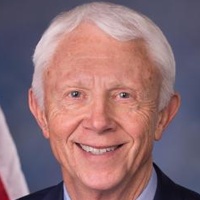
Jack Bergman
Representative
MI
Jack Bergman
Representative
MI
The Keweenaw Bay Indian Community Land Claim Settlement Act of 2025 provides $33.9 million in compensation to the Keweenaw Bay Indian Community for federal land takings that occurred between 1893 and 1937. This settlement resolves long-standing land claims by extinguishing the Community's title to the affected lands, thereby securing clear ownership for current landowners. The Act aims to rectify past federal errors while fostering the Community’s economic and cultural development.
The "Rural 340B Access Act of 2025" expands the 340B drug discount program to include qualifying rural emergency hospitals, ensuring they can access discounted drug prices.
Jack Bergman
Representative
MI
Jack Bergman
Representative
MI
The "Rural 340B Access Act of 2025" expands the 340B drug discount program to include rural emergency hospitals. To qualify, these hospitals must be owned/operated by a government entity or a non-profit with governmental powers, or have a contract to provide healthcare to low-income individuals ineligible for Medicare/Medicaid. This expansion aims to improve access to affordable medications in rural communities.
The "Rural Broadband Window of Opportunity Act" prioritizes the FCC's application processing for the Rural Digital Opportunity Fund Phase II, specifically targeting areas with short construction seasons to ensure fair opportunities for service providers.
Jack Bergman
Representative
MI
Jack Bergman
Representative
MI
The "Rural Broadband Window of Opportunity Act" aims to level the playing field for broadband service providers in the Rural Digital Opportunity Fund. It directs the Federal Communications Commission to prioritize processing applications from areas with short construction seasons. This ensures that these providers have a fair chance to deploy broadband in underserved rural areas.
The FIND Act prohibits federal agencies from contracting with entities that discriminate against the firearm and ammunition industry, ensuring fair access to government contracts for these businesses. Contractors must certify they do not discriminate against firearm entities, with violations leading to contract termination.
Jack Bergman
Representative
MI
Jack Bergman
Representative
MI
The FIND Act prohibits federal agencies from contracting with entities that discriminate against the firearm and ammunition industry. It requires federal contractors to certify they do not discriminate against firearm entities and prohibits them from awarding subcontracts to entities that do not provide a similar certification. Violations of these clauses will result in contract termination. The act defines "discriminate" as making judgments or refusing/limiting services based on biased criteria, rather than case-by-case evaluations, empirical data, financial risk, or legal non-compliance.
The "VOICE Restoration Act" would reestablish the Victims of Immigration Crime Engagement (VOICE) Office within US Immigration and Customs Enforcement to support victims of crimes committed by undocumented immigrants by providing resources, assistance, and information. The office would also be required to publish quarterly reports to Congress analyzing the impact of these crimes.
Jack Bergman
Representative
MI
Jack Bergman
Representative
MI
The "Victims Of Immigration Crime Engagement Restoration Act" or the "VOICE Restoration Act" re-establishes the Victims of Immigration Crime Engagement (VOICE) Office within US Immigration and Customs Enforcement to support victims of crimes committed by undocumented immigrants, witnesses, and their legal representatives by providing resources, referrals, and information. It mandates VOICE to offer a toll-free hotline, local contacts, and assistance with custody status updates, as well as requiring quarterly reports to Congress and executive leaders analyzing the impact of crimes committed by undocumented immigrants.