
Legislative Activity
Track Marsha's sponsored bills, co-sponsored legislation, and voting record
The RAPID Reserve Act establishes a program for the HHS Secretary to contract with companies to maintain rolling reserves of critical drugs and their active ingredients to bolster supply chain resilience.
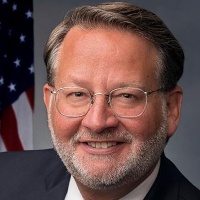
Gary Peters
Senator
MI
Gary Peters
Senator
MI
The RAPID Reserve Act establishes a new program requiring the Secretary of HHS to contract with companies to create and maintain rolling reserves of critical drugs and their active ingredients, focusing on those with vulnerable supply chains. These contracted entities must store a six-month supply, keep it fresh, and agree to surge production or transfer stock upon government direction. The goal is to strengthen domestic manufacturing capacity and ensure supply chain resiliency against shortages or national security threats.
This Act rescinds billions of dollars in previously appropriated budget authority from various State Department, foreign aid, and international programs, as well as future funding for the Corporation for Public Broadcasting.
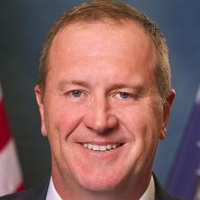
Eric Schmitt
Senator
MO
Eric Schmitt
Senator
MO
The Rescissions Act of 2025 immediately cancels previously allocated budget authority across various government accounts, primarily targeting State Department and foreign aid programs. This legislation rescinds billions of dollars designated for international organizations, global health initiatives, development assistance, and peacekeeping operations. Additionally, it cancels future funding set aside for the Corporation for Public Broadcasting in fiscal years 2026 and 2027.
The TERMS Act mandates that online service providers clearly disclose their account restriction policies beforehand and provide advance notice before suspending or terminating user accounts, subject to FTC enforcement.
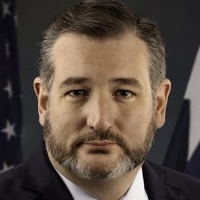
Ted Cruz
Senator
TX
Ted Cruz
Senator
TX
The TERMS Act mandates that online service providers clearly disclose their rules and processes for account termination or suspension *before* users sign up. This legislation requires providers to give advance written notice of most account restrictions, detailing the violation and appeal options. Furthermore, providers must publish annual transparency reports detailing enforcement actions taken against users. The Federal Trade Commission (FTC) is tasked with enforcing these new standards.
This resolution condemns former FBI Director James Comey for inciting violence against President Trump and demands investigations into his actions while barring him from future federal employment.
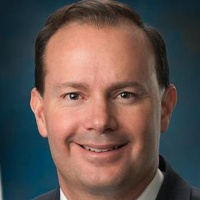
Mike Lee
Senator
UT
Mike Lee
Senator
UT
This resolution formally condemns former FBI Director James B. Comey for allegedly inciting violence against President Donald J. Trump through a social media post. Congress views this action as a dangerous threat to the President's security while abroad. Furthermore, the resolution demands investigations into Comey's actions and urges that he be permanently barred from future federal employment.
This resolution formally recognizes the 250th birthday of the United States Army, honoring its history, valor, and ongoing commitment to national security.

Jerry Moran
Senator
KS
Jerry Moran
Senator
KS
This resolution formally recognizes the 250th birthday of the United States Army, celebrating its long history of defending the nation since 1775. It honors the valor, dedication, and core values of the soldiers who have served across two and a half centuries. The Senate encourages all Americans to observe this significant anniversary with appropriate ceremonies and programs.
This Act expands Medicare coverage for intensive behavioral therapy for obesity by authorizing more providers and mandates future Part D coverage for obesity and weight management medications.
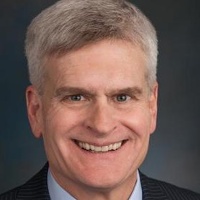
Bill Cassidy
Senator
LA
Bill Cassidy
Senator
LA
The Treat and Reduce Obesity Act of 2025 addresses the growing public health crisis of obesity, particularly among Medicare beneficiaries. This bill expands Medicare coverage for intensive behavioral therapy by allowing more types of qualified healthcare providers to furnish the treatment. Furthermore, it amends Medicare Part D to allow coverage for prescription medications used to treat obesity or weight management in individuals with related health conditions. Finally, the Act requires the Secretary of HHS to report regularly to Congress on the implementation and coordination of federal obesity-related efforts.
This bill awards the Congressional Gold Medal to the service members of MACVSOG to recognize their highly specialized and secret service during the Vietnam War.
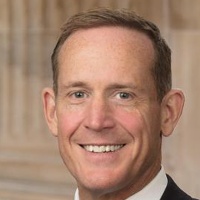
Ted Budd
Senator
NC
Ted Budd
Senator
NC
This bill officially authorizes the presentation of a Congressional Gold Medal to recognize the exceptional service and sacrifice of the members of the Military Assistance Command Vietnam – Studies and Observation Group (MACVSOG). Congress acknowledges MACVSOG's critical, highly secret missions during the Vietnam War, which set the standard for modern special operations forces. After presentation, the original medal will be given to the Smithsonian Institution for display and research. The Act also permits the creation and sale of bronze duplicates to cover production costs.
The Don't Miss Your Flight Act establishes a \$1 billion annual grant program to fund infrastructure projects connecting to public airports to reduce congestion and improve access.

Tammy Duckworth
Senator
IL
Tammy Duckworth
Senator
IL
The Don't Miss Your Flight Act establishes a new grant program administered by the Secretary of Transportation to fund infrastructure projects connecting to public airports. These grants aim to reduce traffic and improve access by focusing on roads, rail, and transit systems within five miles of an airport. The funding is specifically allocated, with at least 50% reserved for projects supporting large hub airports and 30% for medium hub airports. One billion dollars is authorized annually from 2027 through 2031 to support these critical connection improvements.
The Combating Violent and Dangerous Crime Act revises federal statutes to strengthen penalties for bank robbery and vehicle crimes, clarify intent requirements for assaulting federal officers, create a new offense for distributing candy-flavored drugs to minors, and update the definition and jurisdiction for federal kidnapping.
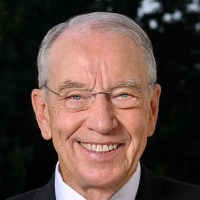
Charles Grassley
Senator
IA
Charles Grassley
Senator
IA
The Combating Violent and Dangerous Crime Act revises federal statutes concerning several serious offenses. This bill strengthens penalties for bank robbery and motor vehicle crimes, while also clarifying the intent required to convict individuals who assault federal officers. Furthermore, it establishes a new federal crime targeting the distribution of controlled substances disguised as candy or drinks to minors.
This Act stabilizes the Crime Victims Fund by expanding its revenue sources to include certain non-conviction settlements and temporary deposits from False Claims Act recoveries.

Lisa Murkowski
Senator
AK
Lisa Murkowski
Senator
AK
The Crime Victims Fund Stabilization Act of 2025 aims to strengthen the Crime Victims Fund by expanding the sources of deposits. This includes allowing the Fund to receive money from certain legal settlements that do not result in a criminal conviction. Additionally, the bill temporarily allows certain recoveries from False Claims Act settlements to fund victim services through 2030, while protecting payments to whistleblowers and the government's direct recovery.
This bill establishes the Adverse Childhood Experiences Response Team Grant Program to fund local efforts for responding to and mitigating childhood trauma.
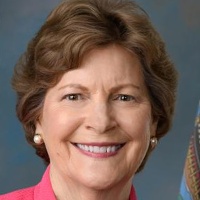
Jeanne Shaheen
Senator
NH
Jeanne Shaheen
Senator
NH
This bill establishes the Adverse Childhood Experiences (ACEs) Response Team Grant Program to fund local and tribal teams dedicated to responding to childhood trauma. Administered by the Attorney General and HHS Secretary, these grants will support coordinated responses, build partnerships with mental health services, and provide trauma-informed training. Congress has authorized $10 million annually for this program from Fiscal Years 2026 through 2029.
This bill mandates that all national cemeteries managed by the Department of Defense, VA, or National Park Service remain open to visitors on all federal legal public holidays.
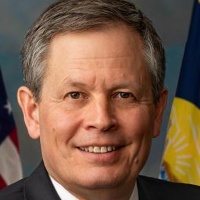
Steve Daines
Senator
MT
Steve Daines
Senator
MT
This bill mandates that all national cemeteries managed by the Department of Defense, the Department of Veterans Affairs, or the National Park Service must remain open to the public on all federal legal public holidays. This ensures continuous access for visitors wishing to honor service members and veterans on these significant days.
This Act expands veterans' access to timely community care for mental health and substance-use treatment when the VA cannot provide it quickly enough, while also increasing transparency in community care metrics.
Steve Daines
Senator
MT
Steve Daines
Senator
MT
The Protecting Veteran Community Care Act aims to expand veterans' access to timely community care, particularly for mental health and substance-use services when the VA cannot provide them quickly. This legislation prevents the VA from using its own scheduling delays as a reason to deny veterans access to outside care options. Furthermore, the bill mandates increased transparency by requiring the VA to report detailed metrics on all community care requests and limits the VA's ability to unilaterally change community care access standards without Congressional approval.
This act establishes a tax credit for businesses that use digitally traced, domestically grown U.S. cotton in their final products.

Cindy Hyde-Smith
Senator
MS
Cindy Hyde-Smith
Senator
MS
The Buying American Cotton Act of 2025 establishes a new tax credit to incentivize businesses to use cotton grown in the United States. This Domestic Cotton Consumption Credit is calculated based on the amount of qualified U.S. cotton in an eligible product sold, factoring in processing location and market price. The bill mandates strict digital tracing requirements to prove the origin of the cotton throughout the supply chain. Special enhanced credit multipliers are available for businesses that elect to claim the credit separately for qualified U.S. cotton yarn or fabric components.
This resolution formally honors the life, achievements, and legacy of former United States Senator Christopher "Kit" Bond of Missouri.
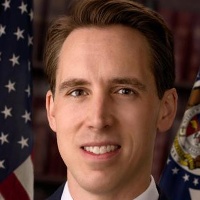
Joshua Hawley
Senator
MO
Joshua Hawley
Senator
MO
This resolution serves as a formal tribute honoring the life, achievements, and enduring legacy of former United States Senator Christopher "Kit" Bond of Missouri. It recognizes his decades of public service, including his terms as Missouri Governor and U.S. Senator, where he championed infrastructure, agriculture, and conservative values. The Senate expresses deep sadness over his passing and directs that official copies of this tribute be sent to his family.
This resolution reaffirms the deep and essential partnership between the United States and Canada across economic, security, and environmental fronts.

Kevin Cramer
Senator
ND
Kevin Cramer
Senator
ND
This resolution reaffirms the deep and steadfast partnership between the United States and Canada, recognizing its critical importance to both nations' economic prosperity and national security. It highlights the massive trade volume, integrated supply chains, and shared commitment to continental defense and energy independence. The bill emphasizes strengthening cooperation across security, technology, and environmental stewardship while ensuring the border remains secure for vital commerce. Ultimately, this is a strong statement of commitment to maintaining and deepening the essential U.S.-Canada relationship.
This bill establishes an expedited process for the Department of Homeland Security to deport non-citizens convicted of serious crimes, including gang membership, terrorism support, and specific violent offenses.

Ashley Moody
Senator
FL
Ashley Moody
Senator
FL
The Expedited Removal of Criminal Aliens Act establishes a new, faster process for the government to deport non-citizens who are members of criminal gangs or terrorist organizations, or who have been convicted of specific serious crimes. This process mandates detention and bars these individuals from seeking withholding of removal. The law specifically defines vulnerable groups for the purpose of determining which misdemeanor convictions qualify for this expedited action.
This bill mandates new electronic, transparent, and timely prior authorization requirements for Medicare Advantage plans to improve seniors' access to care.

Roger Marshall
Senator
KS
Roger Marshall
Senator
KS
The Improving Seniors’ Timely Access to Care Act of 2025 aims to modernize and increase transparency in the prior authorization process for Medicare Advantage plans. This bill mandates the adoption of electronic prior authorization systems and requires plans to publicly report detailed data on their approval, denial, and appeal rates. Furthermore, it establishes new standards to protect enrollees and grants the Secretary authority to enforce faster decision timelines for care requests.
This Act directs SelectUSA to coordinate with state economic development organizations to attract foreign investment for securing the domestic semiconductor supply chain.
Gary Peters
Senator
MI
Gary Peters
Senator
MI
The Securing Semiconductor Supply Chains Act directs the SelectUSA program to coordinate with state economic development organizations to attract foreign direct investment into U.S. semiconductor manufacturing. This effort aims to secure the critical supply chain for computer chips, which are vital for the economy and national security. The Act requires a report detailing strategies to boost investment while ensuring foreign adversaries do not benefit from these efforts. All activities under this law must be funded using existing operational budgets.
This resolution congratulates the students, parents, teachers, and leaders of charter schools nationwide while officially recognizing the goals of the 26th Annual National Charter Schools Week in May 2025.

Tim Scott
Senator
SC
Tim Scott
Senator
SC
This resolution congratulates the students, parents, teachers, and leaders of public charter schools for their ongoing contributions to American education. It highlights the growth, academic achievements, and parental choice offered by these tuition-free public schools. The measure officially recognizes and supports the goals of the 26th Annual National Charter Schools Week, scheduled for May 11–17, 2025.