Legislation
The PRIVACY Act mandates that federal law enforcement obtain a warrant to access state and local surveillance data, establishes strict retention and minimization standards, and prohibits the use of federal funds for certain invasive surveillance technologies.
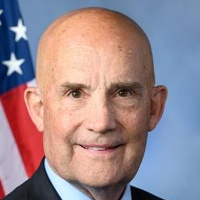
Keith Self
Representative
TX
Keith Self
Representative
TX
The PRIVACY Act establishes strict federal oversight for the use of state and local surveillance data, requiring federal law enforcement to obtain a warrant before accessing information from technologies like license plate readers and facial recognition cameras. The bill mandates strict data retention limits, prohibits the use of federal funds for certain surveillance technologies, and provides legal recourse for individuals whose privacy rights are violated. By increasing transparency and accountability, the Act ensures that federal agencies cannot bypass constitutional protections when utilizing local surveillance tools.
The Justice is BLIND Act of 2026 mandates that federal judges, their spouses, and dependent children place covered financial investments into qualified blind trusts to prevent conflicts of interest.

Henry Johnson
Representative
GA
Henry Johnson
Representative
GA
The Justice is BLIND Act of 2026 mandates that Supreme Court justices, federal judges, and their immediate families place certain financial investments into qualified blind trusts to prevent conflicts of interest. The bill establishes strict deadlines for asset transfers, prohibits the early dissolution of these trusts, and requires public disclosure of compliance. By limiting a judge's knowledge of their specific trust holdings, the legislation aims to ensure judicial impartiality and increase public transparency.
The Agricultural Worker Justice Act of 2026 mandates fair labor standards and corporate accountability for USDA contractors while implementing comprehensive safety and workplace protections for meat and poultry processing employees.
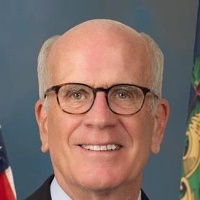
Peter Welch
Senator
VT
Peter Welch
Senator
VT
The Agricultural Worker Justice Act of 2026 aims to improve labor standards and corporate accountability within the food supply chain by tying USDA contracts to fair wages and strict labor law compliance. Additionally, the bill mandates comprehensive safety reforms for the meatpacking industry, including stricter line-speed regulations, enhanced whistleblower protections, and expanded OSHA oversight. Together, these measures seek to ensure safer working conditions, higher pay, and greater transparency for both food workers and the American public.
The Judicial Integrity Act expands federal conflict-of-interest prohibitions to include judicial branch officers and employees, while authorizing the Judicial Conference to establish specific regulatory exemptions.
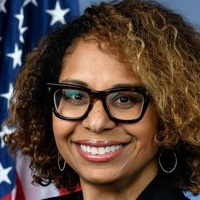
Sydney Kamlager-Dove
Representative
CA
Sydney Kamlager-Dove
Representative
CA
The Judicial Integrity Act amends federal law to prohibit judicial branch officers and employees from participating in government matters where they hold a personal financial interest. The bill also empowers the Judicial Conference of the United States to establish formal, transparent regulations for granting exemptions in cases where a financial interest is deemed too remote or inconsequential to impact judicial integrity.
This bill establishes a Chief Resilience Officer within the National Security Council to coordinate federal efforts, develop a national resilience strategy, and improve support for communities facing natural hazards.
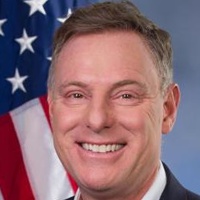
Scott Peters
Representative
CA
Scott Peters
Representative
CA
The National Coordination on Adaptation and Resilience for Security Act of 2026 establishes a Chief Resilience Officer within the National Security Council to lead a unified, whole-of-government approach to climate and natural hazard resilience. The bill mandates the creation of a National Resilience Strategy, an interagency working group, and a Partners Council to better support state, local, and Tribal communities. Additionally, it creates a centralized clearinghouse to improve access to federal resilience data, funding, and technical assistance.
The POPCaP Act of 2026 establishes a national precision oncology program within the Department of Veterans Affairs to improve prostate cancer care through specialized centers of excellence, advanced genetic research, and clinical trials.

Jerry Moran
Senator
KS
Jerry Moran
Senator
KS
The POPCaP Act of 2026 establishes a precision oncology program within the Department of Veterans Affairs to improve prostate cancer care for veterans. The bill mandates the creation of a national network of centers of excellence, supported by a centralized leadership team, to provide advanced genetic sequencing, clinical trials, and specialized research. This initiative aims to standardize care, expand access to cutting-edge treatments, and track patient outcomes through a comprehensive national registry.
The TRUTH in Coverage Act of 2026 requires health insurance plans that cover sex-rejecting procedures to provide equivalent coverage for restorative care to address the resulting medical and psychological complications.

Roger Marshall
Senator
KS
Roger Marshall
Senator
KS
The TRUTH in Coverage Act of 2026 mandates that health insurance plans covering sex-rejecting procedures must also provide coverage for restorative care to address the resulting physical and psychological harms. The bill establishes that such restorative care must be subject to the same financial requirements and treatment limitations as other standard medical and surgical benefits. These requirements apply to group and individual health plans for plan years beginning on or after January 1, 2027.
The Building Community in America Act expands national service opportunities by prioritizing the recruitment and training of underrepresented populations, including men, for essential community-building and mentorship roles.
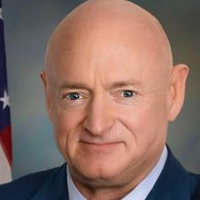
Mark Kelly
Senator
AZ
Mark Kelly
Senator
AZ
The Building Community in America Act aims to increase diversity in national service programs by prioritizing the recruitment and training of underrepresented populations, including men. The bill directs federal service initiatives to focus on essential community roles such as youth mentoring, disaster response, public safety, and workforce development. By expanding participation, the legislation seeks to strengthen community-building efforts across the country.
The Protecting Students from Worthless Degrees Act mandates that higher education programs meet strict licensure and debt-to-earnings standards to remain eligible for federal student aid.
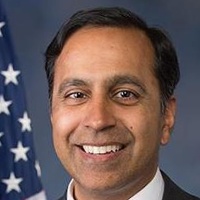
Raja Krishnamoorthi
Representative
IL
Raja Krishnamoorthi
Representative
IL
The Protecting Students from Worthless Degrees Act aims to ensure educational programs provide real value by holding institutions accountable for student outcomes and professional readiness. The bill mandates that programs meet strict debt-to-earnings standards to remain eligible for federal student aid and requires institutions to ensure their curricula fully qualify graduates for necessary professional licensure. Additionally, it strengthens oversight of distance education by requiring institutions to maintain legal authorization in every state where their students reside.
The Child Marriage Prevention Act of 2026 establishes a federal commission, provides state incentives, and reforms immigration policies to eliminate child marriage and protect minors from its associated health, safety, and economic risks.

Gwen Moore
Representative
WI
Gwen Moore
Representative
WI
The Child Marriage Prevention Act of 2026 aims to eliminate child marriage across the United States by establishing a national commission, incentivizing states to set the minimum marriage age at 18, and implementing stricter federal and immigration standards. The bill addresses the severe health, safety, and economic risks associated with child marriage by providing resources for state task forces and creating a model statute for uniform legal protections. Additionally, it mandates comprehensive reporting and public education campaigns to protect minors from forced or coerced unions.
The Welcome Back to the Health Care Workforce Act establishes a grant program to help internationally educated health care professionals enter and advance within the U.S. workforce, with a focus on addressing shortages in rural and underserved communities.
Raja Krishnamoorthi
Representative
IL
Raja Krishnamoorthi
Representative
IL
The "Welcome Back to the Health Care Workforce Act" establishes a federal grant program to help internationally educated health care professionals integrate into the U.S. workforce. By funding both system-level improvements and individual support services, the act aims to address critical staffing shortages, with a priority on serving rural and underserved communities.
This resolution establishes the procedural framework and debate rules for the House’s consideration and passage of H.R. 9586.
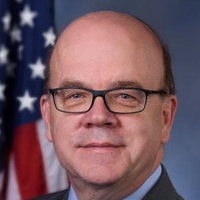
James McGovern
Representative
MA
James McGovern
Representative
MA
H.R. 9586 establishes the procedural framework for the House of Representatives to debate and vote on priority legislation. This resolution streamlines the legislative process by waiving specific procedural hurdles, setting debate parameters, and defining the requirements for submitting amendments. Additionally, it mandates that the House formally notify the Senate of the bill's passage within three days.
This bill amends the Federal Food, Drug, and Cosmetic Act to establish an expedited development and review process for priority nonprescription drugs that offer meaningful public health benefits.
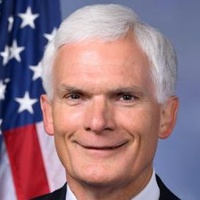
Robert Latta
Representative
OH
Robert Latta
Representative
OH
This bill amends the Federal Food, Drug, and Cosmetic Act to establish an expedited review process for "priority nonprescription drugs" that offer meaningful public health benefits. By streamlining development and communication between sponsors and the FDA, this initiative aims to accelerate the availability of new over-the-counter medications. This authority remains in effect through September 30, 2032.
The MAT Act of 2026 mandates that the Bureau of Prisons provide medication-assisted treatment to all pregnant, opioid-addicted inmates.
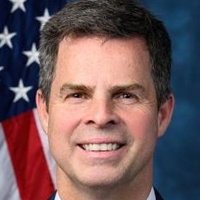
John McGuire
Representative
VA
John McGuire
Representative
VA
The Maternal Access to Treatment (MAT) Act of 2026 mandates that the Bureau of Prisons provide medication-assisted treatment to all pregnant, opioid-addicted women in federal custody. This legislation ensures access to essential care while allowing mentally competent individuals the right to refuse treatment.
This bill updates the official name, boundary map, and total acreage of Gateway Arch National Park.

Richard Durbin
Senator
IL
Richard Durbin
Senator
IL
The Gateway Arch National Park Boundary Revision Act of 2026 updates the park’s official legal designation and expands its authorized boundary from 100 acres to 102.18 acres. This legislation formally adopts a new boundary map, dated August 2023, to reflect these adjustments.
The Stop PRC Economic Espionage Act of 2026 expands federal economic espionage laws to include all entities domiciled in adversarial nations, regardless of their ownership or management structure.

John Cornyn
Senator
TX
John Cornyn
Senator
TX
The Stop PRC Economic Espionage Act of 2026 strengthens federal efforts to combat economic espionage by expanding the legal definition of a "foreign instrumentality." It ensures that any entity domiciled in countries such as China, Russia, Iran, and North Korea is subject to these prohibitions, regardless of their specific ownership or management structure.
This bill mandates an independent study on the performance of manufactured homes in high-risk areas to inform future safety standards and improve resilience against natural hazards.
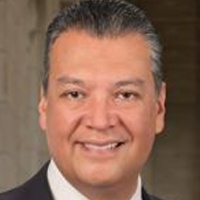
Alejandro Padilla
Senator
CA
Alejandro Padilla
Senator
CA
The Improving Housing Performance Act directs the Department of Housing and Urban Development to commission an independent study on the safety and durability of manufactured homes in areas prone to natural disasters and extreme weather. The resulting report will provide Congress with data-driven recommendations to update construction and installation standards while balancing safety improvements with housing affordability.
This bill mandates the withdrawal of the United States from international financial institutions if they provide debt relief to the People's Republic of China.
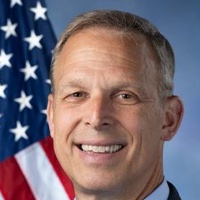
Scott Perry
Representative
PA
Scott Perry
Representative
PA
The "No More Debt Relief to China Act" mandates that the United States withdraw from the International Monetary Fund, the World Bank Group, and the Asian Development Bank if these institutions provide debt relief to the People's Republic of China. The bill further requires the Treasury Secretary to oppose such relief, mandates monthly reporting on these institutions' financial transactions, and reaffirms Congressional authority over U.S. policy within these international bodies.
This bill proposes a moratorium on the entry of foreign nationals from a specified list of countries into the United States, subject to certain exceptions and national interest waivers.
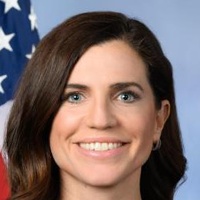
Nancy Mace
Representative
SC
Nancy Mace
Representative
SC
The Third World Immigration Moratorium Act proposes a suspension of entry into the United States for nationals of specific countries and those holding Palestinian Authority travel documents. The bill includes various exemptions for specific categories of travelers, such as lawful permanent residents, certain athletes, and individuals deemed to be in the critical national interest. Additionally, the legislation mandates periodic reporting to Congress to evaluate the ongoing necessity and application of these entry restrictions.
The BUFFER Act expands eligibility for the Conservation Reserve Program by streamlining criteria and including lands subject to state, local, or Tribal environmental protection mandates.
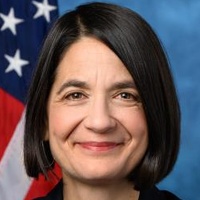
Becca Balint
Representative
VT
Becca Balint
Representative
VT
The BUFFER Act expands eligibility for the federal Conservation Reserve Program (CRP) to better support environmental stewardship on private and tribal lands. By streamlining enrollment criteria and including lands subject to local or state conservation mandates, the bill simplifies access to financial incentives for farmers and landowners. This initiative aims to increase the adoption of resource-conserving practices across diverse agricultural landscapes.