Legislation
This bill mandates increased transparency and imposes four-year operational restrictions on large private equity firms that acquire childcare providers to ensure the stability and quality of care.

Josh Riley
Representative
NY
Josh Riley
Representative
NY
The Protecting Childcare from Private Equity Act aims to increase transparency and stability in the childcare industry by requiring large private equity firms to disclose their ownership of childcare providers. The bill imposes four-year restrictions on the sale of these businesses and the extraction of profits to ensure long-term operational stability. Additionally, it mandates a comprehensive study to evaluate the impact of private equity ownership on the quality, cost, and accessibility of childcare services.
This bill honors the lives and ultimate sacrifice of four wildland firefighters who died in the line of duty in 2026 while expressing gratitude to all personnel who risk their lives protecting communities from wildfires.

Jeff Hurd
Representative
CO
Jeff Hurd
Representative
CO
This resolution honors the lives and ultimate sacrifice of wildland firefighters Emily Barker, Nick Hutcherson, Sydney Watson, and Nicholas Dale, who lost their lives in the line of duty during the 2026 wildfire season. It expresses deep gratitude to all wildland firefighters, aviation crews, and support personnel for their courage and continued commitment to protecting American communities. Furthermore, it recognizes the ongoing need to support these frontline responders and invites the nation to honor their service and sacrifice.
The GET THE LEAD OUT Act of 2026 mandates a comprehensive national strategy to eliminate lead-based pipe hazards in housing and public buildings while funding these initiatives through tax reforms on investment partnerships and estates.

Shontel Brown
Representative
OH
Shontel Brown
Representative
OH
The GET THE LEAD OUT Act of 2026 establishes a comprehensive national framework to identify and eliminate lead-based pipe hazards in housing, schools, and public buildings. The legislation mandates rigorous safety standards, worker certification, and disclosure requirements for property owners, while authorizing $9.5 billion in annual funding for abatement efforts. To support these initiatives, the bill also implements tax reforms targeting investment fund managers and high-value estates to generate necessary federal revenue.
The General Aviation Protection (GAP) Act strengthens national security by mandating rigorous federal reviews, supply chain audits, and investment restrictions for foreign-controlled entities operating within the U.S. general aviation sector.

Pat Harrigan
Representative
NC
Pat Harrigan
Representative
NC
The General Aviation Protection (GAP) Act strengthens national security by implementing rigorous oversight of foreign investments in the U.S. general aviation sector. The bill mandates stricter CFIUS reviews for aviation-related transactions, establishes supply chain integrity audits, and restricts federal financial assistance to entities controlled by foreign adversaries. By tightening controls on dual-use technologies and foreign ownership, the Act aims to protect critical aerospace infrastructure and manufacturing capabilities from exploitation.
This resolution establishes the legislative procedures for House consideration of the FY2027 National Defense Authorization Act, the FY2027 budget resolution, continuing appropriations, and bills concerning congressional stock restrictions, disability insurance, and federal banking laws.

Virginia Foxx
Representative
NC
Virginia Foxx
Representative
NC
This resolution establishes the procedural framework for the House of Representatives to consider several key pieces of legislation, including the FY2027 National Defense Authorization Act, the federal budget resolution, and a stopgap funding measure. It also sets terms for debating bills regarding Social Security disability insurance, congressional stock trading restrictions, and federal banking law improvements. These rules streamline floor proceedings by limiting debate, defining amendment processes, and waiving procedural objections to facilitate efficient voting.
This resolution formally establishes the majority party's committee assignments for the 119th Congress.

John Thune
Senator
SD
John Thune
Senator
SD
This resolution formally establishes the majority party's committee assignments for the 119th Congress. It designates the specific members and chairs for the Committees on Appropriations, Environment and Public Works, the Judiciary, and the Budget.
This resolution directs the Senate Legal Counsel to file a civil lawsuit against President Donald J. Trump to enforce the Foreign Emoluments Clause of the U.S. Constitution.

Richard Blumenthal
Senator
CT
Richard Blumenthal
Senator
CT
This resolution directs the Senate Legal Counsel to initiate a civil lawsuit against President Donald J. Trump to enforce the Foreign Emoluments Clause of the U.S. Constitution. The action seeks to prohibit the President from accepting unauthorized presents, titles, or financial emoluments from foreign states. The measure cites numerous alleged instances of corruption and conflicts of interest involving the President, his family, and foreign entities that undermine the integrity of his office.
This resolution recognizes July 21, 2026, as Black Women’s Equal Pay Day to highlight the persistent wage gap and reaffirm a commitment to achieving pay equity.

Lisa Blunt Rochester
Senator
DE
Lisa Blunt Rochester
Senator
DE
This resolution recognizes July 21, 2026, as Black Women’s Equal Pay Day to highlight the persistent and significant wage gap between Black women and white, non-Hispanic men. It details the economic impact of this disparity and reaffirms Congress's commitment to achieving pay equity through systemic change.
The NIH IMPROVE Act directs the National Institutes of Health to fund and conduct research aimed at reducing maternal mortality and addressing health disparities for pregnant and postpartum women.

Lauren Underwood
Representative
IL
Lauren Underwood
Representative
IL
The NIH IMPROVE Act directs the National Institutes of Health to continue and expand research aimed at reducing preventable maternal deaths and severe pregnancy-related complications. By prioritizing health equity and community-based interventions, the initiative seeks to address the biological and behavioral factors contributing to maternal health disparities across the United States. The bill authorizes $63.4 million in annual funding from 2026 through 2030 to support these critical research efforts.
This bill mandates that Medicare Advantage organizations report detailed data on supplemental benefits to increase transparency, improve research access, and ensure public accountability.

Mark Warner
Senator
VA
Mark Warner
Senator
VA
The Medicare Advantage Supplemental Benefits Transparency Act of 2026 mandates that Medicare Advantage organizations report detailed, enrollee-level data regarding the utilization and costs of supplemental benefits. This legislation aims to increase program oversight by requiring the Secretary of Health and Human Services to make this data publicly available for research and evaluation while maintaining strict privacy protections.
This bill authorizes $150 million annually through 2031 to modernize geothermal energy research, expand data sharing, and accelerate the development and commercial deployment of next-generation and supercritical geothermal technologies.
Pat Harrigan
Representative
NC
Pat Harrigan
Representative
NC
The Next-Generation Geothermal Research and Development Act modernizes federal geothermal energy programs by expanding research into advanced technologies like closed-loop and supercritical systems. The bill authorizes $150 million annually through 2031 to improve data collection, establish a center of excellence, and accelerate the commercial deployment of next-generation geothermal energy. Additionally, it mandates updated resource assessments and interagency cooperation to better map and utilize the nation's subsurface heat potential.
The National Coordination on Resilience for Security Act of 2026 establishes a Chief Resilience Officer within the National Security Council to coordinate federal efforts, develop a national resilience strategy, and improve support for communities facing natural hazards.

Christopher Coons
Senator
DE
Christopher Coons
Senator
DE
The National Coordination on Resilience for Security Act of 2026 establishes a Chief Resilience Officer within the National Security Council to lead a unified federal strategy against natural hazards. This legislation creates interagency working groups and a Partners Council to streamline federal resilience efforts, improve spending efficiency, and better support state, local, and tribal communities. Additionally, the Act mandates the development of a comprehensive National Resilience Strategy and an online clearinghouse to enhance national security through proactive, science-based adaptation.
This bill designates the Department of Veterans Affairs multispecialty clinic in Marietta, Georgia, as the "Colonel Michael H. Boyce Department of Veterans Affairs Multispecialty Clinic."

Barry Loudermilk
Representative
GA
Barry Loudermilk
Representative
GA
This bill designates the Department of Veterans Affairs multispecialty clinic in Marietta, Georgia, as the "Colonel Michael H. Boyce Department of Veterans Affairs Multispecialty Clinic." This renaming honors the late Colonel Michael H. Boyce for his distinguished military career and his dedicated service to the Cobb County veterans community.
The Judicial FOIA Expansion Act amends federal law to subject the judicial branch to Freedom of Information Act and Privacy Act requirements, increasing transparency regarding court operations, personnel, and administrative records.

Adam Schiff
Senator
CA
Adam Schiff
Senator
CA
The Judicial FOIA Expansion Act would extend the Freedom of Information Act and the Privacy Act to the federal judiciary, requiring courts and related judicial entities to provide public access to administrative and operational records. The bill mandates that these disclosures be provided in machine-readable formats and establishes specific transparency requirements for judicial conduct, committee activities, and court administration.
This bill authorizes federal agencies to offer employees a one-time lump-sum payment as an alternative to standard relocation benefits.
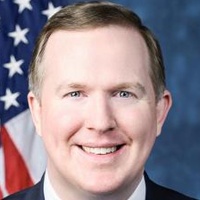
Brian Jack
Representative
GA
Brian Jack
Representative
GA
The Federal Relocation Payment Improvement Act authorizes federal agencies to offer employees a one-time lump-sum payment for work-related relocations as an alternative to standard reimbursement benefits. This legislation mandates the development of clear regulatory guidelines for these payments and establishes a formal process for employees to appeal denied claims. Additionally, the Act requires agencies to report on the program’s usage, cost savings, and overall effectiveness to ensure transparency and accountability.
This act strengthens and expands whistleblower protections against reprisal for employees and entities working on federal, defense, and NASA contracts, grants, and subgrants.
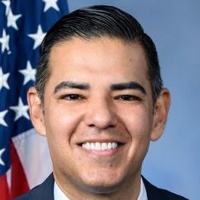
Robert Garcia
Representative
CA
Robert Garcia
Representative
CA
The Expanding Whistleblower Protections for Contractors Act of 2026 strengthens and broadens protections against retaliation for individuals and entities working on federal, defense, and NASA contracts and grants. The bill expands the definition of protected individuals, clarifies shielded activities, and prohibits the waiver of these rights through private agreements or arbitration. Additionally, it establishes new disciplinary consequences for executive branch officials who request or facilitate reprisal against whistleblowers.
This bill reauthorizes and updates federal vector-borne disease initiatives and grant programs through 2030 to improve the prevention, identification, and response to tick-borne illnesses.
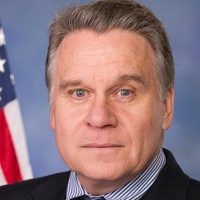
Christopher Smith
Representative
NJ
Christopher Smith
Representative
NJ
The Kay Hagan Tick Act reauthorization extends federal funding and support for vector-borne disease initiatives through 2030. This legislation updates national strategy requirements and enhances the capacity of regional centers and health departments to identify, prevent, and respond to tick-borne and other vector-borne illnesses.
The Choices for Increased Mobility Act of 2026 establishes new Medicare billing codes and payment standards for ultralightweight manual wheelchairs, including specific provisions for titanium and carbon fiber models.
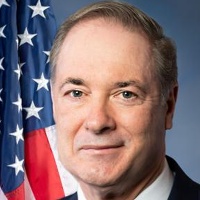
John Joyce
Representative
PA
John Joyce
Representative
PA
The Choices for Increased Mobility Act of 2026 updates Medicare coverage requirements for ultralightweight manual wheelchairs, effective January 1, 2028. The bill mandates the creation of distinct billing codes based on frame material, specifically allowing suppliers to charge patients the difference in cost for premium titanium or carbon fiber models. These provisions aim to provide clearer payment structures and enhanced transparency for patients selecting high-performance mobility equipment.
The Nucleic Acid Standards for Biosecurity Act directs NIST to develop technical standards, research, and industry best practices to improve the security and accuracy of nucleic acid synthesis screening.

Andrea Salinas
Representative
OR
Andrea Salinas
Representative
OR
The Nucleic Acid Standards for Biosecurity Act directs the National Institute of Standards and Technology (NIST) to develop technical standards and best practices for screening synthetic nucleic acids to mitigate biosecurity risks. By establishing a multi-stakeholder consortium and investing in research, the bill aims to improve the accuracy and security of biomanufacturing and synthetic biology. This legislation ensures that emerging technologies, including artificial intelligence, are managed through robust, consensus-driven safety protocols.
This bill reauthorizes the C.W. Bill Young Cell Transplantation Program and the National Cord Blood Inventory through 2031 to ensure a high-quality, scientifically managed supply of stem cell units for patients in need.
Christopher Smith
Representative
NJ
Christopher Smith
Representative
NJ
The Stem Cell Therapeutic and Research Reauthorization Act of 2025 extends critical funding and support for the C.W. Bill Young Cell Transplantation Program and the National Cord Blood Inventory through 2031. This legislation modernizes the management of cord blood supplies by prioritizing clinical utility, genetic diversity, and the use of the latest scientific standards. By streamlining inventory operations, the bill ensures that life-saving transplant resources remain accessible and effective for patients in need.