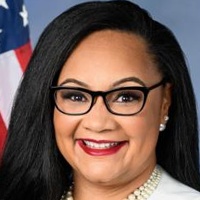
Legislative Activity
Track Nikema's sponsored bills, co-sponsored legislation, and voting record
This Act restores the right to sue over disparate impact discrimination under Title VI, mandates equity compliance officers in federally funded schools, and establishes a Special Assistant for Equity and Inclusion within the Department of Education.
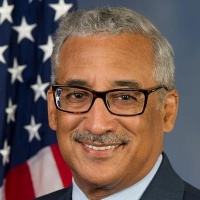
Robert Scott
Representative
VA
Robert Scott
Representative
VA
The Equity and Inclusion Enforcement Act of 2025 restores the right to sue for disparate impact violations under Title VI of the Civil Rights Act of 1964. It also mandates that all federally funded educational institutions designate an employee to coordinate Title VI compliance and publicly share their contact information. Finally, the Act establishes a new Special Assistant for Equity and Inclusion within the Department of Education to oversee and promote compliance efforts.
The College for All Act of 2025 establishes federal-state partnerships and grants to eliminate tuition and fees at public and tribal colleges, boosts Pell Grants, and increases funding for minority-serving institutions.
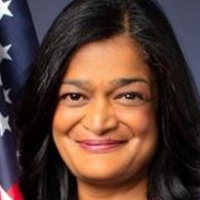
Pramila Jayapal
Representative
WA
Pramila Jayapal
Representative
WA
The College for All Act of 2025 establishes a Federal-State partnership to eliminate tuition and required fees at public and Tribal colleges for eligible students, while significantly increasing Federal Pell Grant maximum awards and expanding eligibility to include many "Dreamer students." The bill also creates new grant programs to cover tuition at private non-profit HBCUs and MSIs, and funds initiatives to improve student success and support for low-income and first-generation students. Finally, it increases overall appropriations for HBCUs, Tribal Colleges, and other Minority-Serving Institutions.
This bill prohibits high-ranking government officials and their families from trading, profiting from, or controlling digital assets while in office to prevent conflicts of interest.
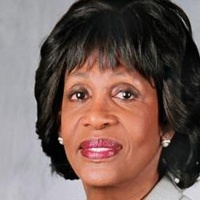
Maxine Waters
Representative
CA
Maxine Waters
Representative
CA
The Stop TRUMP in Crypto Act of 2025 prohibits covered government officials and their immediate families from trading, owning, or profiting from digital assets while in office. This legislation specifically bans insider trading of crypto and prevents officials from using intermediaries or complex ownership structures to bypass these restrictions. The Act aims to eliminate conflicts of interest by ensuring high-ranking officials cannot benefit financially from involvement with cryptocurrencies.
This bill protects striking and locked-out workers by preventing employers from terminating or altering their group health plan coverage during a labor dispute and establishes significant civil penalties for violations.
Chris Deluzio
Representative
PA
Chris Deluzio
Representative
PA
The Striking and Locked Out Workers Healthcare Protection Act ensures that employers cannot terminate or alter group health plan coverage for employees during a lawful strike or an employer-initiated lockout. This legislation aims to prevent employers from using health benefits as leverage during labor disputes. The bill also establishes significant civil penalties, including fines up to \$150,000 per violation, for employers who interfere with this coverage, and allows for individual liability for directors and officers involved in such violations.
This resolution expresses strong support for designating May 2025 as Mental Health Awareness Month to highlight the national mental health crisis and encourage greater action and access to care.
Andrea Salinas
Representative
OR
Andrea Salinas
Representative
OR
This resolution expresses strong support for designating May 2025 as Mental Health Awareness Month to combat a growing national crisis. It highlights alarming statistics regarding rising mental illness rates, significant barriers to accessing care, and disproportionate impacts on youth and marginalized communities. Ultimately, the bill declares mental health a national priority and encourages increased public awareness and support for mental health services.
This Act mandates the inclusion of Asian American, Native Hawaiian, and Pacific Islander history across federally supported K-12 American history and civics education programs and assessments.
Grace Meng
Representative
NY
Grace Meng
Representative
NY
This Act mandates the inclusion of Asian American, Native Hawaiian, and Pacific Islander (AANHPI) history across federally supported K-12 American history and civics education programs. It recognizes the vital, yet often omitted, contributions of AANHPI communities while addressing historical exclusion and systemic racism. The legislation directs educational programs to partner with the Smithsonian's Asian Pacific American Center to develop accurate and comprehensive curricula. This ensures AANHPI history is integrated into national assessments and teacher training.
This Act establishes mandatory ethics codes, recusal standards, and enhanced financial disclosure requirements for Supreme Court Justices and federal judges.
Henry Johnson
Representative
GA
Henry Johnson
Representative
GA
The Supreme Court Ethics, Recusal, and Transparency Act of 2025 establishes a mandatory, public code of conduct and a formal complaint process for Supreme Court Justices, modeled after procedures for lower federal judges. The bill also institutes stricter disclosure requirements for gifts and financial ties, and mandates judicial disqualification in cases involving recent lobbying contact or significant financial relationships with involved parties. Furthermore, it creates new review panels for disqualification motions and requires parties and *amici* to disclose financial supporters connected to the case.
This Act establishes a grant program for installing suicide deterrents on public structures and clarifies funding eligibility for bridge safety barriers.
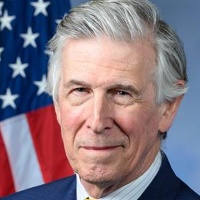
Donald Beyer
Representative
VA
Donald Beyer
Representative
VA
The Barriers to Suicide Act of 2025 establishes a new grant program through the Department of Transportation to fund the installation of suicide deterrents like nets and barriers at high-risk locations such as bridges and rail stations. The bill also amends existing law to explicitly allow National Highway System funds to be used for these safety barriers on bridges. Finally, it mandates a study on the effectiveness of suicide prevention measures for structures other than bridges.
This bill posthumously awards a Congressional Gold Medal to Henrietta Lacks to recognize the monumental contributions of her immortal HeLa cells to science and medicine.
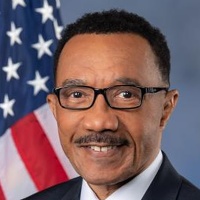
Kweisi Mfume
Representative
MD
Kweisi Mfume
Representative
MD
This bill, the Henrietta Lacks Congressional Gold Medal Act, posthumously awards a Congressional Gold Medal to Henrietta Lacks to recognize her foundational contributions to science and medicine through her immortal HeLa cells. The legislation directs the Secretary of the Treasury to strike the medal, which will ultimately be housed at the Smithsonian Institution. Furthermore, the Act authorizes the creation and sale of bronze duplicates to cover production costs.
This Act establishes a new federal grant program to provide operating support for high-quality public transit that prioritizes service improvements in underserved communities, while also increasing the federal share for rural transit operating costs.
Henry Johnson
Representative
GA
Henry Johnson
Representative
GA
The Stronger Communities through Better Transit Act establishes a new federal grant program to provide operating support for high-quality public transit services. This funding is specifically targeted to improve mobility and environmental outcomes, with a requirement that the majority of funds benefit underserved communities or areas of persistent poverty. The Act also increases the federal share for rural transit operating assistance up to 80%.
This resolution commemorates the National Science Foundation's 75th anniversary by recognizing its vital contributions to U.S. science, engineering, and education while reaffirming Congress's commitment to its future support.
Donald Beyer
Representative
VA
Donald Beyer
Representative
VA
This resolution commemorates the 75th anniversary of the National Science Foundation (NSF), recognizing its vital role in advancing U.S. science, engineering, and education since 1950. Congress acknowledges the NSF's foundational support for groundbreaking innovations, including the internet and advancements in medical technology. The bill reaffirms Congress's commitment to ensuring the NSF continues to lead in scientific discovery for decades to come.
This resolution asserts the Federal Government's moral and legal obligation to provide comprehensive reparations, including financial compensation, to descendants of enslaved Black people for centuries of systemic harm.
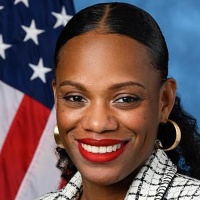
Summer Lee
Representative
PA
Summer Lee
Representative
PA
This resolution formally asserts the United States' moral and legal obligation to provide comprehensive reparations to descendants of enslaved Africans for the enduring harm caused by chattel slavery and subsequent systemic discrimination. It details centuries of state-sanctioned injustice, including economic exclusion, violence, and wealth theft. Ultimately, the bill calls for the Federal Government to take concrete actions, including financial compensation, systemic legal reform, and a formal apology, to achieve holistic repair and reconciliation.
This bill prohibits civilians from purchasing, owning, or possessing enhanced body armor, with exceptions for government entities and law enforcement personnel.
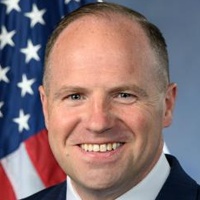
Timothy Kennedy
Representative
NY
Timothy Kennedy
Representative
NY
The Aaron Salter, Jr., Responsible Body Armor Possession Act prohibits civilians from purchasing, owning, or possessing "enhanced body armor," defined as gear meeting or exceeding NIJ RF1 protection standards. This ban includes exceptions for federal, state, and local government agencies, as well as covered law enforcement officers. Knowingly violating this new federal prohibition carries penalties including fines and up to five years in prison.
This resolution condemns Hamas for its brutal October 7th terrorist attacks on Israel and demands the immediate release of all remaining hostages.

Haley Stevens
Representative
MI
Haley Stevens
Representative
MI
This resolution strongly condemns Hamas for its premeditated and brutal terrorist attacks against Israel on October 7, 2023. It details the resulting casualties and the ongoing hostage crisis, emphasizing the severe mistreatment of those held captive. The bill demands that Hamas immediately release all remaining hostages and allow them safe return.
This Act mandates the delivery of documents and a report regarding the proposed transfer of an aircraft from Qatar to a Trump-controlled entity, while prohibiting federal funding for such transfers.
Gregory Meeks
Representative
NY
Gregory Meeks
Representative
NY
This bill mandates the Secretary of State to immediately provide Congress with all documents and a detailed report concerning the proposed transfer of an aircraft from Qatar to an entity controlled by former President Trump. Furthermore, it prohibits the use of any federal funding for aircraft transfers involving foreign governments to the U.S. Government, the President, or the Trump Presidential Library. The Act aims to ensure transparency and halt federal financial support for these specific property transfers.
This bill mandates that school food service worker training must be paid, occur during work hours when possible, and prohibits penalizing staff for non-attendance.
Mark Pocan
Representative
WI
Mark Pocan
Representative
WI
The Improving Training for School Food Service Workers Act of 2025 establishes new federal standards for required training programs for school food service personnel. This bill mandates that all required training must be paid for by the employer, conducted during regular work hours whenever possible, and offered at no cost to the employee. Furthermore, the Act strictly prohibits employers from penalizing staff who are unable to attend training sessions.
This bill prohibits the use of federal funds to implement Executive Order 14160, which sought to limit birthright citizenship guaranteed by the Fourteenth Amendment.
Delia Ramirez
Representative
IL
Delia Ramirez
Representative
IL
The Born in the USA Act of 2025 declares that Executive Order 14160, which attempted to restrict birthright citizenship, is unconstitutional and contrary to the 14th Amendment. This Act prohibits the use of any federal funds to implement or enforce that Executive Order. It affirms the established constitutional right to birthright citizenship for nearly everyone born on U.S. soil.
This act simplifies the employment requirement for the Public Service Loan Forgiveness program by clarifying that qualifying employment time is counted as long as borrowers were employed in a qualifying job while making required payments.
Chrissy Houlahan
Representative
PA
Chrissy Houlahan
Representative
PA
The PSLF Payment Completion Fairness Act simplifies the requirements for the Public Service Loan Forgiveness (PSLF) program. This bill removes the confusing dual requirement that previously mandated simultaneous qualifying employment and payment status for service time to count. Moving forward, the focus is simply on having been employed in a qualifying job while making the required payments.
The VA Employee Fairness Act of 2025 streamlines collective bargaining rules for Veterans Health Administration employees by modifying existing statutes while preserving the Secretary's authority regarding incentive pay and expedited hiring.
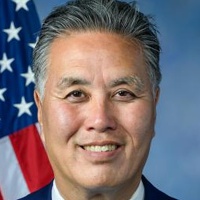
Mark Takano
Representative
CA
Mark Takano
Representative
CA
The VA Employee Fairness Act of 2025 modifies the collective bargaining rules for employees of the Veterans Health Administration (VHA) by streamlining existing statutes. This act removes outdated subsections related to bargaining and renumbers the remaining relevant section. Importantly, these changes do not affect the Secretary of Veterans Affairs' existing authority regarding incentive pay or expedited hiring processes.
This Act prohibits the advertising and provision of paid conversion therapy intended to change an individual's sexual orientation or gender identity, empowering the FTC and State Attorneys General to enforce these prohibitions.
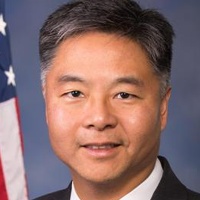
Ted Lieu
Representative
CA
Ted Lieu
Representative
CA
The Therapeutic Fraud Prevention Act of 2025 declares that practices attempting to change an individual's sexual orientation or gender identity for payment constitute an unfair and deceptive business practice. Citing professional consensus on the ineffectiveness and harm of such "conversion therapy," the bill prohibits its provision and advertising. Enforcement authority is granted to the Federal Trade Commission (FTC), and the law allows both the U.S. Attorney General and State Attorneys General to file civil actions against violators.