Legislative Activity
Track Thom's sponsored bills, co-sponsored legislation, and voting record
The "National Right-to-Work Act" prohibits mandatory union membership as a condition of employment, protecting employees' rights to choose whether or not to join or support a labor union.

Rand Paul
Senator
KY
Rand Paul
Senator
KY
The "National Right-to-Work Act" aims to protect individual employees' rights to choose whether or not to join or support a labor union. It amends the National Labor Relations Act and the Railway Labor Act to eliminate mandatory union membership or fees as a condition of employment. This ensures that employees cannot be forced to join or contribute to a union against their will. The changes apply to agreements made or renewed after the Act's enactment.
The Pharmacy Benefit Manager Transparency Act of 2025 aims to increase transparency and prohibit unfair practices by pharmacy benefit managers (PBMs) in prescription drug pricing.

Charles Grassley
Senator
IA
Charles Grassley
Senator
IA
The Pharmacy Benefit Manager Transparency Act of 2025 aims to regulate pharmacy benefit managers (PBMs) by prohibiting unfair pricing practices, requiring transparency in pricing and reporting, and protecting whistleblowers who report violations. It mandates PBMs to disclose drug costs, fees, and payments received from drug manufacturers, and it empowers the FTC and state attorneys general to enforce the Act. The Act also requires reports and studies on PBM practices to promote competition and lower drug costs. This law does not override existing state laws.
The "Credit Union Board Modernization Act" amends the Federal Credit Union Act to reduce the frequency of required board meetings for well-managed federal credit unions from monthly to at least six times per year after the first five years of operation.
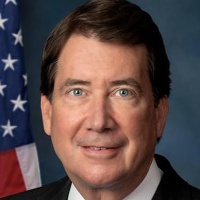
Bill Hagerty
Senator
TN
Bill Hagerty
Senator
TN
The "Credit Union Board Modernization Act" amends the Federal Credit Union Act to reduce the frequency of board of directors meetings for well-managed federal credit unions. New federal credit unions are required to meet monthly for the first five years, while those with strong ratings must meet at least six times annually after the initial period. Credit unions with lower ratings will still be required to meet monthly.
The "Protect Small Businesses from Excessive Paperwork Act of 2025" extends the filing deadline to January 1, 2026, for pre-existing reporting companies formed before January 1, 2024.

Tim Scott
Senator
SC
Tim Scott
Senator
SC
The "Protect Small Businesses from Excessive Paperwork Act of 2025" amends the filing deadline for pre-existing reporting companies. Companies in existence before January 1, 2024, now have until January 1, 2026, to file their reports.
Reauthorizes funding for coastal recreation water quality monitoring and requires the EPA to update guidance with the latest testing technologies.

Ron Wyden
Senator
OR
Ron Wyden
Senator
OR
The BEACH Act of 2025 amends the Federal Water Pollution Control Act to improve coastal recreation water quality monitoring by including nearby upstream waters and requiring states to provide data on contamination sources. It authorizes grants for identifying contamination sources and reauthorizes $30,000,000 annually through 2029 for coastal water quality monitoring and notification programs. The bill also directs the EPA to update guidance to state and local governments on the latest water contamination testing technologies.
Prohibits the Department of Veterans Affairs from sending veterans' personal information to the national instant criminal background check system based only on the fact that the veteran requires assistance managing their benefits, unless a court determines the veteran is a danger to themselves or others.

John Kennedy
Senator
LA
John Kennedy
Senator
LA
The "Veterans 2nd Amendment Protection Act of 2025" prevents the Department of Veterans Affairs from sharing veterans' personal information with the national instant criminal background check system (NICS) based solely on the appointment of a fiduciary to manage their benefits. Information can only be shared if a judicial authority determines the veteran poses a danger to themselves or others.
The White Oak Resiliency Act of 2025 aims to restore and protect white oak forests through collaborative initiatives, research, and support for landowners and nurseries.

Mitch McConnell
Senator
KY
Mitch McConnell
Senator
KY
The White Oak Resiliency Act of 2025 aims to restore and enhance white oak populations and habitats across the United States through collaborative efforts between federal, state, private, and non-governmental organizations. This act establishes the White Oak Restoration Initiative Coalition, pilot programs within the Forest Service and Department of Interior, and a grant program to support white oak regeneration and research. It also addresses white oak tree nursery shortages and promotes research into the species' resilience and preservation. Ultimately, this act seeks to ensure the long-term health and sustainability of white oak ecosystems.
This joint resolution proposes a constitutional amendment to permanently fix the number of U.S. Supreme Court justices at nine.

Ted Cruz
Senator
TX
Ted Cruz
Senator
TX
This joint resolution proposes a constitutional amendment to permanently set the number of U.S. Supreme Court justices at nine. If ratified by three-fourths of the states within seven years, this amendment would constitutionally mandate the current size of the Court.
Excludes from gross income any gain from the sale of real property interests to qualified organizations for military readiness and environmental protection purposes, promoting conservation and military readiness.

Ted Budd
Senator
NC
Ted Budd
Senator
NC
The "Incentivizing Readiness and Environmental Protection Integration Sales Act of 2025" incentivizes land conservation by excluding from gross income the gains from sales of real property to qualified organizations for the purposes of the Readiness and Environmental Protection Integration (REPI) program. This exclusion applies to various real property interests, including remainder interests and restrictions on property use, as long as the sale aligns with Department of Defense REPI program goals. There are limitations to prevent short-term property speculation by pass-through entities, with exceptions for family-owned entities. This act aims to promote both military readiness and environmental protection through strategic land conservation.
Exempts family farms and small businesses from being considered as assets when calculating eligibility for federal financial aid.

Joni Ernst
Senator
IA
Joni Ernst
Senator
IA
The "Family Farm and Small Business Exemption Act" exempts family farms and small businesses from being considered as assets when calculating eligibility for federal financial aid under the Higher Education Act of 1965. This exemption applies to family farms where the family resides and small businesses with 100 or fewer employees that the family owns and controls. These changes will apply to financial aid award years starting after the enactment of this Act.
This resolution honors the 67 victims of the January 29, 2025, mid-air collision between American Airlines Flight 5342 and a U.S. Army helicopter while commending the first responders who managed the recovery efforts.

Jerry Moran
Senator
KS
Jerry Moran
Senator
KS
This resolution honors the memory of the 67 victims who lost their lives in the tragic mid-air collision between American Airlines Flight 5342 and a U.S. Army helicopter on January 29, 2025. It extends heartfelt condolences to the grieving families and expresses profound gratitude to the numerous first responder organizations that provided dedicated rescue and recovery efforts.
This resolution designates February 2025 as Career and Technical Education Month to recognize the vital role of CTE programs in developing a skilled workforce and preparing students for high-demand careers.

Timothy Kaine
Senator
VA
Timothy Kaine
Senator
VA
This resolution designates February 2025 as "Career and Technical Education Month" to recognize the vital role of CTE in preparing students for high-demand, skilled careers. It highlights the importance of workforce training in meeting modern economic needs and encourages educators, parents, and administrators to promote CTE as a valuable and respected educational pathway.
The TAILOR Act of 2025 requires federal financial regulators to tailor regulations to the risk profile and business model of financial institutions, reducing the regulatory burden on lower-risk institutions.
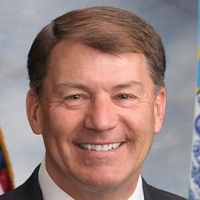
Mike Rounds
Senator
SD
Mike Rounds
Senator
SD
The TAILOR Act of 2025 aims to tailor financial regulations to the risk profile and business models of financial institutions, reducing the regulatory burden on lower-risk institutions. It requires agencies to consider the impact of regulations, disclose their decision-making process, and report to Congress annually. The act also mandates simpler reporting rules for community banks and a report on modernizing bank supervision.
The "Retirement Fairness for Charities and Educational Institutions Act of 2025" modifies regulations to enhance 403(b) retirement plans for employees of charities and educational institutions by adjusting securities laws.

Katie Britt
Senator
AL
Katie Britt
Senator
AL
The "Retirement Fairness for Charities and Educational Institutions Act of 2025" modifies regulations for 403(b) plans under the Investment Company Act of 1940, the Securities Act of 1933, and the Securities Exchange Act of 1934. These modifications broaden exemptions from registration provisions for certain interests, participations, or securities related to 403(b) plans, especially those subject to Title I of the Employee Retirement Income Security Act of 1974, or where the employer acts as a fiduciary, or are governmental plans as defined in section 414. The goal is to expand the types of trusts, plans, and accounts that are excluded from being defined as investment companies. It also updates a section regarding exemptions from registration requirements for securities, adding a reference to plans described in section 3(a)(12)(C)(iv) of the Act.
This joint resolution seeks to nullify the EPA’s rule regarding waste emissions charges for petroleum and natural gas systems.
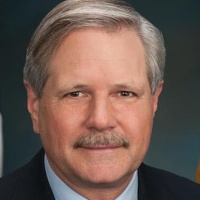
John Hoeven
Senator
ND
John Hoeven
Senator
ND
This joint resolution seeks to exercise congressional disapproval of the EPA’s "Waste Emissions Charge for Petroleum and Natural Gas Systems" rule. If passed, the resolution would nullify the rule, rendering it without force or effect.
The "Stop GREED Act of 2025" limits critical skill incentives for Department of Veterans Affairs Senior Executive Service employees, particularly those at the VA Central Office, requiring individual justification and approval for incentives provided to those not based at the Central Office, and mandating an annual report to Congress.
Jerry Moran
Senator
KS
Jerry Moran
Senator
KS
The "Stop GREED Act of 2025" limits the Department of Veteran Affairs' ability to provide critical skill incentives to Senior Executive Service employees, especially those at the VA Central Office. It mandates individual approvals for incentives to senior executives not based at the Central Office and requires an annual report to Congress on these incentives. The goal of the act is to limit incentives for senior level employees.
The JOBS Act of 2025 expands Federal Pell Grant eligibility to students enrolled in high-quality, short-term career and technical education programs that lead to recognized industry credentials.
Timothy Kaine
Senator
VA
Timothy Kaine
Senator
VA
The JOBS Act of 2025 expands Federal Pell Grant eligibility to include students enrolled in high-quality, short-term career and technical education programs. By supporting training that leads to industry-recognized credentials, the bill aims to better align postsecondary education with the needs of high-demand job sectors. Additionally, the legislation lowers the minimum Pell Grant threshold to increase financial aid accessibility for students pursuing these career-focused pathways.
This bill mandates periodic reviews of Servicemembers' and Veterans' Group Life Insurance coverage amounts to ensure they keep pace with inflation.

John Cornyn
Senator
TX
John Cornyn
Senator
TX
The Fairness for Servicemembers and their Families Act of 2025 mandates that the Secretary of Veterans Affairs conduct periodic reviews of the maximum coverage amounts for Servicemembers’ and Veterans’ Group Life Insurance. Beginning in 2026, these reviews must occur every five years to compare current coverage against inflation-adjusted benchmarks. The findings will be reported to Congress to help ensure that life insurance benefits remain aligned with economic changes for military families.
This bill enhances the paid family and medical leave tax credit for employers, modifies eligibility criteria, and mandates outreach programs to increase awareness and utilization of the credit.

Deb Fischer
Senator
NE
Deb Fischer
Senator
NE
The "Paid Family and Medical Leave Tax Credit Extension and Enhancement Act" enhances the existing paid family and medical leave credit by allowing the credit to be calculated based on wages paid or total premiums paid for qualifying insurance policies. It modifies eligibility criteria for both employers and employees, and requires outreach programs to increase awareness of the credit. This bill also ensures that employers cannot deduct the portion of paid premiums equal to the credit amount.
The Fair Access to Banking Act aims to prevent financial institutions from denying services to individuals or businesses based on subjective or political reasons, ensuring fair and impartial access to financial services.

Kevin Cramer
Senator
ND
Kevin Cramer
Senator
ND
The Fair Access to Banking Act aims to ensure equal access to financial services by preventing banks and credit unions from denying services to individuals or entities engaged in lawful activities based on subjective or politically motivated reasons. It sets requirements for banks with over $10 billion in assets, prohibiting them from denying services based on reputational risk and requiring them to justify denials with documented, risk-based standards. The act also allows individuals to sue financial institutions that violate these requirements, with the potential for treble damages and attorney fees awarded to successful plaintiffs. Furthermore, it restricts access to Federal Reserve lending programs and the Automated Clearing House Network for institutions that fail to comply with the Act.