
Legislative Activity
Track Elissa's sponsored bills, co-sponsored legislation, and voting record
This bill mandates the Department of Veterans Affairs to provide eligible veterans with adaptive prostheses and terminal devices for sports and recreational activities.
Jim Banks
Senator
IN
Jim Banks
Senator
IN
The Veterans SPORT Act mandates that the Department of Veterans Affairs (VA) must now provide eligible veterans with coverage for adaptive prostheses and terminal devices specifically designed for sports and other recreational activities. This amendment expands the medical services the VA furnishes, ensuring veterans have access to necessary equipment for physical recreation.
The Supplemental Security Income Restoration Act of 2026 updates the SSI program by increasing benefit amounts, raising income and resource eligibility limits, eliminating marriage penalties, and expanding coverage to additional U.S. territories.
Elizabeth Warren
Senator
MA
Elizabeth Warren
Senator
MA
The Supplemental Security Income (SSI) Restoration Act of 2026 aims to modernize and expand the SSI program by increasing income and resource limits, adjusting benefit amounts, and eliminating outdated penalties. The bill also simplifies eligibility rules, excludes specific assets like retirement accounts from calculations, and extends full SSI program coverage to U.S. territories.
The Democracy Is Strengthened by Casting Light On Spending in Elections Act of 2026 enhances election integrity by closing foreign funding loopholes, increasing transparency in political and judicial spending, and mandating clear disclosure requirements for political advertisements.

Sheldon Whitehouse
Senator
RI
Sheldon Whitehouse
Senator
RI
The **Democracy Is Strengthened by Casting Light On Spending in Elections (DISCLOSE) Act of 2026** aims to increase transparency and accountability in U.S. elections by closing loopholes that allow foreign spending and requiring greater disclosure of political donors. The legislation mandates that organizations report significant political expenditures, forces leaders to take personal responsibility for political advertisements, and streamlines the legal process for campaign finance challenges. Ultimately, these reforms seek to provide voters with clearer information about who is funding political campaigns and judicial nominations.
This bill increases educational assistance benefits for veterans pursuing apprenticeships and on-job training while waiving attendance requirements for those in the construction industry.
Tim Sheehy
Senator
MT
Tim Sheehy
Senator
MT
The Reducing Arbitrary Barriers to Apprenticeship Act of 2026 increases financial support for veterans pursuing apprenticeships and on-the-job training by boosting monthly housing and educational stipends. The bill also removes specific attendance requirements for veterans entering the construction industry, making it easier for them to utilize their earned benefits while gaining hands-on career experience.
This bill strengthens the Community Development Financial Institutions (CDFI) Fund by improving bond guarantee programs, enhancing liquidity assistance, and establishing a new relending program to expand homeownership opportunities for Native communities.
Steve Daines
Senator
MT
Steve Daines
Senator
MT
The Access to Fair Financing for Opportunity and Resilient Development Act strengthens Community Development Financial Institutions (CDFIs) by improving the bond guarantee program and establishing new liquidity and capitalization initiatives. The bill also creates a dedicated relending program to expand homeownership opportunities within Native American, Alaska Native, and Native Hawaiian communities. Additionally, it mandates increased congressional oversight and reporting regarding the effectiveness of these federal financial programs.
This resolution officially designates the week of February 23 through February 27, 2026, as National Public Schools Week.

Susan Collins
Senator
ME
Susan Collins
Senator
ME
This resolution officially designates the week of February 23 through February 27, 2026, as National Public Schools Week. The purpose is to recognize and celebrate the importance of public education in the United States during that specific timeframe.
The Living Donor Protection Act of 2025 prohibits insurance discrimination against living organ donors and guarantees job-protected leave for those undergoing donation surgery.

Tom Cotton
Senator
AR
Tom Cotton
Senator
AR
The Living Donor Protection Act of 2025 prohibits insurance companies from discriminating against living organ donors regarding life, disability, or long-term care coverage. The bill also amends the Family and Medical Leave Act (FMLA) to explicitly classify organ donation surgery as a serious health condition, ensuring job-protected leave for donors. Additionally, it mandates that the Department of Health and Human Services update public educational materials to reflect these new protections and the realities of organ donation.
The Enhanced Cybersecurity for SNAP Act of 2026 mandates the transition to chip-enabled EBT cards, strengthens digital security standards, and improves fraud protection and card replacement services for SNAP recipients.

Ron Wyden
Senator
OR
Ron Wyden
Senator
OR
The Enhanced Cybersecurity for SNAP Act of 2026 mandates a transition to secure, chip-enabled EBT cards to better protect SNAP recipients from fraud and benefit theft. The bill requires states to modernize their digital account management tools, improves online transaction security, and establishes a grant program to help small retailers upgrade their payment terminals. Additionally, it streamlines the card replacement process and prohibits states from charging fees for replacing cards compromised by fraud or technical malfunctions.
This resolution commemorates the historic achievement of both the U.S. Women's and Men's Ice Hockey Teams winning gold medals at the 2026 Olympic Winter Games.
Gary Peters
Senator
MI
Gary Peters
Senator
MI
This resolution commends the historic accomplishments of both the United States Women's and Men's Ice Hockey Teams for winning gold medals at the Olympic Winter Games Milano Cortina 2026. It specifically honors key players for their game-winning contributions and recognizes this as the first time both U.S. teams have achieved gold in the same Games. The resolution affirms that these victories will inspire future generations of athletes.
The Specialty CROP Act of 2026 mandates an annual report to Congress analyzing foreign trade barriers impacting the competitiveness of United States specialty crop exports.
Ron Wyden
Senator
OR
Ron Wyden
Senator
OR
The Specialty CROP Act of 2026 mandates an annual report from the Secretary of Agriculture to Congress regarding the competitiveness of U.S. specialty crop exports. This legislation requires an analysis of foreign trade barriers, their economic impact, and the executive branch’s ongoing efforts to eliminate these obstacles. By incorporating public input and ensuring transparency, the Act aims to strengthen the global market position of American specialty crop producers.
This resolution supports the United States Olympic and Paralympic Teams competing in the 2026 Winter Games and expresses pride in Team USA's history of excellence.

Amy Klobuchar
Senator
MN
Amy Klobuchar
Senator
MN
This resolution expresses strong support for the United States Olympic and Paralympic Teams competing in the 2026 Winter Games in Milano Cortina, Italy. It applauds the athletes for their dedication and sportsmanship while recognizing the historical significance of the Olympic and Paralympic Movements. Furthermore, the resolution reaffirms the U.S. commitment to hosting safe and successful Games in Los Angeles (2028) and Utah (2034).
The Respect for Local Communities Act requires the Department of Homeland Security to obtain formal consent from local and state officials before acquiring, building, or modifying any new immigration processing site or detention center.
Jeanne Shaheen
Senator
NH
Jeanne Shaheen
Senator
NH
The Respect for Local Communities Act requires the Department of Homeland Security to obtain formal consent from local government officials and state leadership before acquiring, building, or modifying any immigration processing site or detention center. The bill mandates comprehensive impact assessments, public notice periods, and economic reviews to ensure transparency and local oversight. Ultimately, federal agencies are prohibited from proceeding with such projects without a signed agreement from the affected local jurisdiction.
The Healthy Families Act establishes a national standard requiring most employers to provide employees with earned paid sick time for personal or family health needs, domestic violence, sexual assault, or stalking.
Bernard Sanders
Senator
VT
Bernard Sanders
Senator
VT
The Healthy Families Act establishes a national standard requiring most employers to provide employees with earned paid sick time, accruing at a rate of one hour for every 30 hours worked. This protected leave can be used for the employee's or a family member's illness, medical care, or for reasons related to domestic violence, sexual assault, or stalking. The Act strictly prohibits employers from retaliating against employees for using or requesting this time and mandates clear notice requirements regarding these new rights.
This act establishes the Spotted Wing Abatement Trust (SWAT) Fund within the USDA to finance research and mitigation efforts against the invasive spotted wing drosophila pest impacting U.S. fruit crops.
Gary Peters
Senator
MI
Gary Peters
Senator
MI
The Spotted Wing Abatement Trust Act of 2026, or SWAT Act, addresses the significant damage caused by the invasive spotted wing drosophila to U.S. fruit crops. This bill establishes a dedicated research and mitigation fund within the USDA, administered by APHIS. The fund is authorized to receive $6.5 million annually for five years to support efforts to reduce the pest's harmful effects.
This resolution recognizes the 15th anniversary of the January 8, 2011, Tucson shooting, honoring the victims, survivors, and the ongoing courage of former Congresswoman Gabby Giffords in the fight against gun violence.

Kirsten Gillibrand
Senator
NY
Kirsten Gillibrand
Senator
NY
This concurrent resolution commemorates the 15th anniversary of the tragic January 8, 2011, Tucson, Arizona, shooting. It honors the six individuals who lost their lives and recognizes the survivors, including former Congresswoman Gabby Giffords. The resolution reaffirms the importance of civility in democracy and Congress's dedication to preventing gun violence.
This resolution condemns the decision to export advanced AI chips to the UAE amidst concerns over a secret, large-scale financial deal with the Trump family's crypto company.
Elizabeth Warren
Senator
MA
Elizabeth Warren
Senator
MA
This resolution condemns the decision to export advanced AI chips to the United Arab Emirates, citing significant national security risks. It highlights a potential conflict of interest stemming from a recent, large financial deal between the UAE and a Trump family crypto company. The resolution calls for the immediate reversal of the chip export approval.
This act prohibits the taking or transmitting of video recordings of defense information.

Ashley Moody
Senator
FL
Ashley Moody
Senator
FL
The Drone Espionage Act strengthens federal law to explicitly prohibit the unauthorized recording or transmission of video of sensitive defense information. This amendment updates existing statutes to specifically cover video recordings, addressing modern surveillance capabilities.
This Act establishes a tiered tax on large investors purchasing single-family homes, with revenues dedicated to increasing funding for the Housing Trust Fund and the Capital Magnet Fund.
John Reed
Senator
RI
John Reed
Senator
RI
The Affordable Housing and Homeownership Protection Act of 2026 establishes a tiered tax on large investors who purchase single-family homes. Revenues generated from this tax will be allocated to bolster the Housing Trust Fund and the Capital Magnet Fund. Additionally, the bill modifies the minimum funding formula for small states within the Housing Trust Fund.
This bill establishes a recurring, comprehensive National Veterans Strategy, developed in consultation with stakeholders, to measure and promote veteran success across multiple well-being metrics.

Jerry Moran
Senator
KS
Jerry Moran
Senator
KS
The National Veterans Strategy Act of 2026 mandates the establishment of clear metrics to define and measure veteran success across physical, mental, and economic well-being. It requires the President to formulate and submit a comprehensive, recurring National Veterans Strategy to Congress, aligning government and private sector resources to meet these goals. This strategy must consider diverse veteran needs and can be disapproved by Congress through a joint resolution.
This resolution supports designating 2026 as the "International Year of the Woman Farmer" to recognize the critical role of women in agriculture.
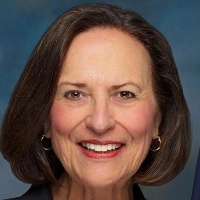
Deb Fischer
Senator
NE
Deb Fischer
Senator
NE
This resolution supports designating 2026 as the "International Year of the Woman Farmer." It recognizes the vital and critical role women play in agriculture both in the United States and globally. The designation aims to honor their contributions to food systems and encourage future participation in the agricultural workforce.