Legislative Activity
Track Thomas's sponsored bills, co-sponsored legislation, and voting record
The bill modifies and extends funding for the World Trade Center Health Program, expands the types of healthcare providers who can certify mental health conditions, and requires a report to Congress on the program's budget.
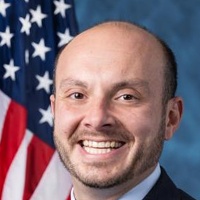
Andrew Garbarino
Representative
NY
Andrew Garbarino
Representative
NY
The 9/11 Responder and Survivor Health Funding Correction Act of 2025 amends the Public Health Service Act to improve the World Trade Center (WTC) Health Program by expanding the types of healthcare providers who can conduct mental health evaluations, modifying provider credentialing, clarifying enrollment calculations, and extending the time frame for adding health conditions for WTC responders. The act adjusts the funding formula for fiscal years 2026 through 2090 and requires the Secretary of Health and Human Services to report to Congress on the program's budget, including projected needs through 2090 and recommendations for changes to the funding formula. It also stipulates that remaining funds in the Supplemental Fund, Special Fund, and Pentagon-Shanksville Fund will revert to the Treasury.
The "Make American Flags in America Act of 2025" mandates that U.S. flags displayed on Federal property or bought by Federal agencies be made entirely in the U.S., and requires a study on country-of-origin labeling enforcement for flags.
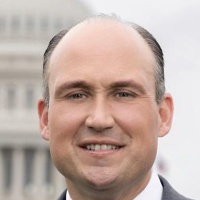
Nicholas Langworthy
Representative
NY
Nicholas Langworthy
Representative
NY
The "Make American Flags in America Act of 2025" mandates that U.S. flags displayed on Federal property or bought by Federal agencies be entirely manufactured in the U.S. using 100% U.S.-made materials, in accordance with international agreements. It also directs the Federal Trade Commission to study and report on country-of-origin labeling enforcement for U.S. flags, aiming to improve enforcement and deter violations.
The "Strengthening Cooperation and Security in the Middle East Act" directs the Secretary of State and Secretary of Defense to develop a report and strategy to expand membership in the Comprehensive Security Integration and Prosperity Agreement (CSIPA) to bolster regional security and cooperation.
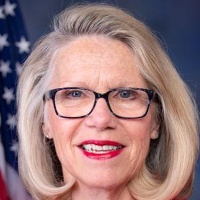
Carol Miller
Representative
WV
Carol Miller
Representative
WV
The "Strengthening Cooperation and Security in the Middle East Act" requires the Secretary of State and Secretary of Defense to develop a report and strategy to expand membership in the Comprehensive Security Integration and Prosperity Agreement (CSIPA). This includes analyzing CSIPA's strategic benefits, its role in responding to regional threats, and ways to enhance cooperation in security, commerce, science, and technology. The Act aims to strengthen regional alliances and counter threats in the Middle East through increased participation in CSIPA.
This bill authorizes a Congressional Gold Medal to be awarded to the First Rhode Island Regiment in recognition of their heroic service during the Revolutionary War, particularly highlighting their integrated composition and valor at the Battle of Rhode Island.
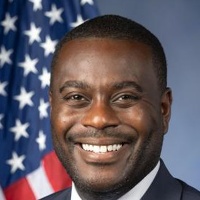
Gabe Amo
Representative
RI
Gabe Amo
Representative
RI
The "First Rhode Island Regiment Congressional Gold Medal Act" authorizes the creation of a Congressional Gold Medal to honor the First Rhode Island Regiment, a historically significant integrated unit that fought valiantly during the Revolutionary War. The medal will be presented to the Rhode Island State Library for public display and research. The Act also allows for the creation and sale of bronze duplicates of the medal to support the United States Mint Public Enterprise Fund.
The "More Homes on the Market Act" increases the tax exclusion for profit from the sale of a primary residence, incentivizing homeowners to sell and increasing housing supply.
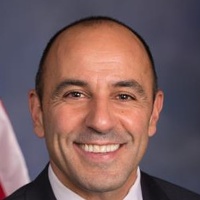
Jimmy Panetta
Representative
CA
Jimmy Panetta
Representative
CA
The "More Homes on the Market Act" increases the tax exclusion for profit from the sale of a primary residence, raising it to $500,000 for single filers and $1,000,000 for married couples filing jointly. These amounts will be adjusted for inflation starting in 2025. This change encourages homeowners to sell their properties, thereby increasing the availability of homes on the market.
This act authorizes the creation of the Smithsonian National Museum of the American Latino on the National Mall, ensuring diverse representation in its exhibits and programs.
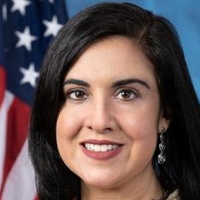
Nicole Malliotakis
Representative
NY
Nicole Malliotakis
Representative
NY
The Smithsonian National Museum of the American Latino Act authorizes the creation of the Smithsonian National Museum of the American Latino on the National Mall. It ensures the museum's exhibits and programs accurately represent the diverse cultures, histories, events, and values of Hispanic and Latino communities, seeking guidance from diverse sources. The Act also mandates regular reports to Congress on the museum's efforts to meet these diversity requirements.
This resolution expresses Congressional opposition to imposing new performance fees or royalties on local radio stations and businesses for broadcasting or playing music.
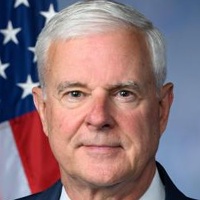
Steve Womack
Representative
AR
Steve Womack
Representative
AR
The Local Radio Freedom Act expresses Congressional opposition to imposing new performance fees, taxes, or royalties on local radio stations and businesses for playing music. It argues that the current system of free airplay provides essential promotional value to artists and that new fees would threaten the financial viability of local broadcasters and the vital community services they provide.
The Honoring Our Fallen Heroes Act of 2025 expands public safety officer benefits to include disability and death coverage for certain cancers presumed to be caused by on-duty exposure to carcinogens, and clarifies "line of duty" definitions for first responder benefits.
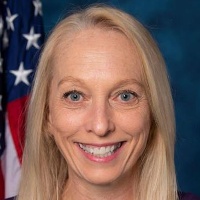
Mary Scanlon
Representative
PA
Mary Scanlon
Representative
PA
The Honoring Our Fallen Heroes Act of 2025 expands public safety officer benefits to include deaths and disabilities caused by exposure-related cancers, presuming that certain cancers diagnosed within 15 years of service are line-of-duty injuries if the officer served for at least 5 years. It defines "exposure-related cancer" and allows for updates to the list based on medical evidence, while also permitting individuals to petition for additions. The Act also clarifies "line of duty action" and applies retroactively to claims dating back to January 1, 2020, with a three-year window for filing claims based on these amendments.
Mandates the creation of a national registry for Korean American divided families to facilitate potential reunions and requires the Secretary of State to advocate for these reunions in dialogues with North Korea.
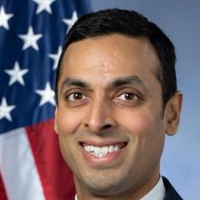
Suhas Subramanyam
Representative
VA
Suhas Subramanyam
Representative
VA
The Korean American Divided Families National Registry Act mandates the State Department to create a national registry of Korean Americans separated from family in North Korea since 1953, in order to prepare for potential family reunions. It requires the Secretary of State to include progress toward these reunions in any dialogue with North Korea, consult with South Korea, and submit annual reports to Congress on the registry's status and reunion efforts. The registry will serve as a private internal database to organize reunions and maintain information on divided families, including those who may have passed away.
The United States-Israel Defense Partnership Act of 2025 bolsters defense cooperation between the U.S. and Israel through joint programs, funding increases, and extended authorities related to countering unmanned systems, anti-tunnel technology, emerging technologies, and war reserve stockpiles, while also exploring Israel's inclusion in the national technology and industrial base and assessing integrated air and missile defense in the CENTCOM region.
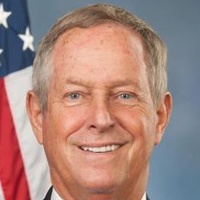
Joe Wilson
Representative
SC
Joe Wilson
Representative
SC
The United States-Israel Defense Partnership Act of 2025 seeks to bolster the defense relationship between the United States and Israel through joint initiatives and increased cooperation. It establishes programs to counter unmanned systems, extend anti-tunnel and counter-UAS cooperation, and promote collaboration in emerging technologies like AI and cybersecurity. The act also mandates the establishment of a Defense Innovation Unit office in Israel and assesses integrated air and missile defense in the U.S. Central Command region. Finally, it explores Israel's potential inclusion in the national technology and industrial base.
This Act allows schools participating in the National School Lunch Program to offer organic or non-organic whole milk alongside other options, while clarifying saturated fat accounting and restricting milk sourcing from China state-owned enterprises.
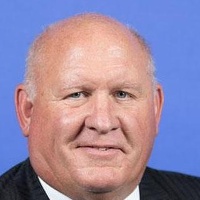
Glenn Thompson
Representative
PA
Glenn Thompson
Representative
PA
The Whole Milk for Healthy Kids Act of 2025 expands milk options available to students in the National School Lunch Program by allowing schools to offer organic or non-organic whole milk. This legislation provides greater flexibility for schools in providing fluid milk choices while maintaining accommodations for students with special dietary needs. Importantly, the saturated fat content of these offered milk options will not count toward the meal's overall saturated fat limits.
The "Alternatives to PAIN Act" aims to improve Medicare Part D coverage for non-opioid pain management drugs by reducing cost-sharing and removing barriers like step therapy and prior authorization, starting in 2026.
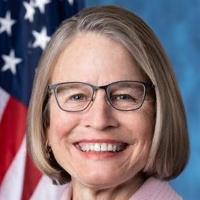
Mariannette Miller-Meeks
Representative
IA
Mariannette Miller-Meeks
Representative
IA
The "Alternatives to PAIN Act" amends Medicare Part D to improve access to non-opioid pain management drugs by waiving deductibles and ensuring they are placed on the lowest cost-sharing tier starting in 2026. The Act also prohibits the use of step therapy and prior authorization requirements for these drugs, further easing access for patients. These changes aim to provide more accessible alternatives for pain management, reducing reliance on opioids.
This bill transfers the functions, assets, and responsibilities of the Food for Peace Act from the U.S. Agency for International Development to the Department of Agriculture.
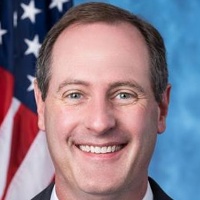
Tracey Mann
Representative
KS
Tracey Mann
Representative
KS
This bill transfers the functions, assets, and responsibilities for implementing the Food for Peace Act from the U.S. Agency for International Development (USAID) to the Department of Agriculture (USDA). The Secretary of Agriculture will now administer the program, though the Famine Early Warning Systems Network will remain under USDA control. This change allows the USDA to quickly update necessary rules to ensure a smooth transition of the program.
The "National Plan for Epilepsy Act" aims to create a comprehensive national strategy to improve epilepsy prevention, diagnosis, treatment, and research through coordinated federal efforts and an advisory council.

Jim Costa
Representative
CA
Jim Costa
Representative
CA
The "National Plan for Epilepsy Act" aims to address the significant impact of epilepsy by establishing a comprehensive national plan for its prevention, diagnosis, treatment, and cure. This act mandates the creation of an Advisory Council on Epilepsy Research, Care, and Services, composed of federal and non-federal experts, to evaluate and improve federally funded epilepsy efforts. The council will provide recommendations to enhance coordination, diagnosis, treatment, research, and public awareness, and reduce the financial burden of epilepsy on families. Ultimately, the act seeks to improve the lives of individuals with epilepsy and their caregivers through coordinated research, improved access to care, and enhanced public awareness.
The PREEMIE Reauthorization Act of 2025 extends funding for research and programs aimed at preventing premature births and improving the health outcomes of preterm infants, while also mandating a comprehensive study on preterm birth in the U.S.
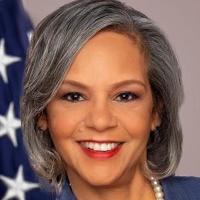
Robin Kelly
Representative
IL
Robin Kelly
Representative
IL
The "PREEMIE Reauthorization Act of 2025" extends funding for research on preterm births and infant care through 2029. It directs the Department of Health and Human Services to establish an interagency working group to address premature birth issues and mandates a comprehensive study by the National Academies of Sciences, Engineering, and Medicine on preterm births, including cost analysis, risk factor identification, and best practices for prevention and treatment. A report on the study's findings must be submitted to Congress and the Secretary of Health and Human Services within 24 months.
This bill directs the Treasury Secretary to leverage U.S. influence at the International Monetary Fund to compel greater transparency and accountability regarding China’s exchange rate policies and currency market interventions.
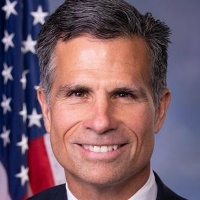
Daniel Meuser
Representative
PA
Daniel Meuser
Representative
PA
The China Exchange Rate Transparency Act of 2025 directs the U.S. Treasury to leverage its influence within the International Monetary Fund (IMF) to demand greater transparency regarding China’s exchange rate policies and market interventions. The bill aims to hold China accountable for its lack of disclosure, which currently complicates international assessments of potential currency manipulation. These requirements remain in effect until China achieves substantial compliance or a period of seven years has elapsed.
This bill would recognize alpha-gal as a major food allergen, requiring food labels to disclose its presence.

Jefferson Van Drew
Representative
NJ
Jefferson Van Drew
Representative
NJ
The Alpha-gal Allergen Inclusion Act amends the Federal Food, Drug, and Cosmetic Act to include alpha-gal, a sugar found in non-catarrhine primate mammals and red algae, as a major food allergen. This will require food labels to clearly identify the presence of alpha-gal. The amendment will take effect 18 months after the enactment of this Act, with an exception for mammal-derived ingredients where alpha-gal is below a detectable limit as determined by the Secretary.
This bill creates a 20-year demonstration project waiving certain Social Security disability benefit rules for blind Americans to encourage their return to work.

Pete Sessions
Representative
TX
Pete Sessions
Representative
TX
The Blind Americans Return to Work Act of 2025 initiates a 20-year demonstration project aimed at helping blind Americans receiving Social Security disability benefits return to work. For the first 10 years, eligibility for benefits will be determined without considering substantial gainful activity, and benefits will be reduced based on earnings above a set amount, incentivizing employment without immediate loss of support. The project waives certain benefit requirements to facilitate successful employment, with participants having the option to opt out after the initial 10-year period. This act aims to support blind individuals in their transition back to the workforce while maintaining a safety net.
The "Freedom First Lend Lease Act" authorizes the U.S. President to lend or lease defense articles to Ukraine and Eastern European countries for fiscal years 2026 and 2027, streamlining the process for timely delivery.
Joe Wilson
Representative
SC
Joe Wilson
Representative
SC
The "Freedom First Lend Lease Act" empowers the President to lend or lease defense articles to Ukraine and Eastern European countries impacted by Russia's invasion, for fiscal years 2026 and 2027, temporarily waiving certain restrictions related to foreign assistance and arms export control for Ukraine. The bill requires expedited procedures for the delivery of defense articles and stipulates that standard laws regarding return, reimbursement, and repayment will apply. Presidential authority can only be delegated to Senate-confirmed officials.
The "Improve and Enhance the Work Opportunity Tax Credit Act" modifies the Work Opportunity Tax Credit by adjusting wage limitations, removing age restrictions for certain beneficiaries, and revising credit calculations to incentivize employment.
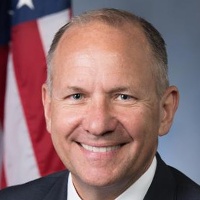
Lloyd Smucker
Representative
PA
Lloyd Smucker
Representative
PA
The "Improve and Enhance the Work Opportunity Tax Credit Act" amends the Internal Revenue Code to modify the Work Opportunity Tax Credit, changing the calculation and wage limitations based on employee categories and hours worked. It increases wage limitations for qualified veterans and revises rules for summer youth employees and long-term family assistance recipients. Additionally, the act removes the age limit for qualified supplemental nutrition assistance program benefits recipients, with these changes taking effect for individuals starting work after December 31, 2024.