Legislative Activity
Track Bernie's sponsored bills, co-sponsored legislation, and voting record
This resolution solemnly marks the anniversary of the attempted assassination of President Trump, condemns political violence, and honors the victims and first responders involved.
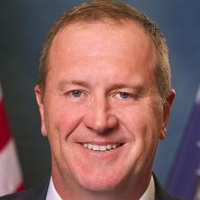
Eric Schmitt
Senator
MO
Eric Schmitt
Senator
MO
This resolution solemnly marks the one-year anniversary of the attempted assassination of former President Donald J. Trump. It condemns the multiple attempts against his life and other political officials, while honoring the victims and first responders involved in the July 2024 shooting. The measure further calls for an end to the incitement of political violence that threatens the democratic process.
This bill prohibits Members of Congress and their spouses from owning or trading most individual stocks and similar investments during their term of service.
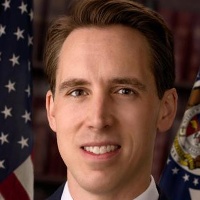
Joshua Hawley
Senator
MO
Joshua Hawley
Senator
MO
This bill, the PELOSI Act, prohibits Members of Congress and their spouses from owning or trading most individual stocks and similar investments while in office. Members must divest prohibited assets within 180 days of taking office or the law's enactment. Violations result in disgorgement of profits and potential civil fines assessed by ethics committees, whose compliance certifications must be made public.
The Federal Firefighters Families First Act aims to improve pay equity, enhance retirement benefits by including overtime in annuity calculations, and establish a maximum average workweek for federal firefighters.

Ruben Gallego
Senator
AZ
Ruben Gallego
Senator
AZ
The Federal Firefighters Families First Act aims to improve compensation and retirement benefits for federal firefighters to ensure pay equity and improve recruitment and retention. This legislation updates pay calculation formulas and mandates that overtime hours be included when determining retirement annuities. Furthermore, the Act establishes a maximum average workweek for federal firefighters, not to exceed 60 hours.
This bill adjusts the boundary of the Dayton Aviation Heritage National Historical Park by adding approximately one acre of land.
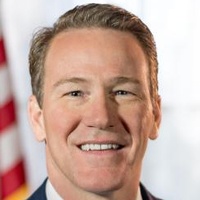
Jon Husted
Senator
OH
Jon Husted
Senator
OH
This bill amends the Dayton Aviation Heritage Preservation Act of 1992 to adjust the boundary of the Dayton Aviation Heritage National Historical Park. Specifically, it authorizes the addition of approximately one acre of land to the park's official boundaries in Dayton, Ohio. This adjustment incorporates a specifically mapped parcel into the historical park.
This Act increases investment limits for national banks and Federal Reserve Banks from 15% to 20% to promote public welfare.

Tim Scott
Senator
SC
Tim Scott
Senator
SC
The Community Investment and Prosperity Act amends federal banking laws to increase investment limits for national banks and Federal Reserve Banks. Specifically, this legislation raises the applicable investment threshold from 15% to 20%. This change is intended to promote public welfare through increased investment capacity.
This Act limits the Consumer Financial Protection Bureau's authority over entities already regulated by state insurance regulators concerning the business of insurance.
Tim Scott
Senator
SC
Tim Scott
Senator
SC
The Business of Insurance Regulatory Reform Act of 2025 clarifies and limits the authority of the Consumer Financial Protection Bureau (CFPB) over entities already regulated by state insurance authorities. This bill specifically restricts the CFPB's ability to enforce federal consumer protection rules against state-regulated insurers operating within the business of insurance. The legislation ensures that state insurance regulators maintain primary oversight for these entities.
This bill amends federal law to include rioting as a form of racketeering activity under the RICO Act.
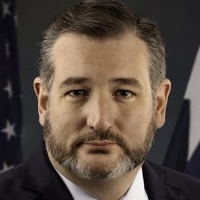
Ted Cruz
Senator
TX
Ted Cruz
Senator
TX
This bill proposes amending federal law to explicitly include the crime of arson and bombing threats within the definition of "racketeering activity" under the RICO Act. By adding this offense to Title 18, U.S. Code, the legislation makes it easier to prosecute individuals involved in such acts under federal racketeering statutes.
This bill establishes grants for local entities to create pre-approved, standardized building designs to accelerate the construction of mixed-income housing.
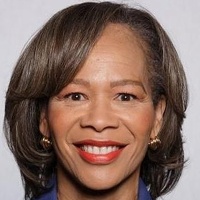
Lisa Blunt Rochester
Senator
DE
Lisa Blunt Rochester
Senator
DE
The Accelerating Home Building Act of 2025 aims to combat the national housing shortage by streamlining the construction of new homes. This bill establishes a grant program to fund local entities in creating and pre-reviewing standardized building designs for smaller, mixed-income housing projects. By using these pre-approved plans, the goal is to significantly speed up local permitting and approval processes, making housing development faster and more predictable. The program prioritizes areas with high needs and ensures a portion of funding is reserved for rural communities.
The GENIUS Act establishes a comprehensive federal framework for the issuance, backing, custody, and supervision of payment stablecoins to ensure financial stability and consumer protection.
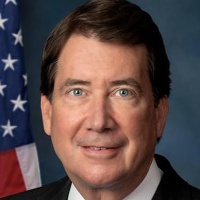
Bill Hagerty
Senator
TN
Bill Hagerty
Senator
TN
The GENIUS Act establishes a comprehensive federal framework for the issuance and management of "payment stablecoins" in the United States. It mandates strict reserve requirements, capital standards, and regulatory oversight for approved issuers to ensure consumer protection and financial stability. The bill also clarifies the legal status of these stablecoins, explicitly stating they are not securities or commodities, while setting penalties for non-compliance.
This Act prohibits disparate-impact liability claims in employment and housing discrimination cases and nullifies related federal regulations.
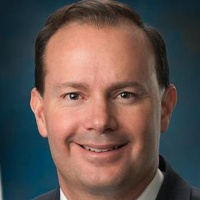
Mike Lee
Senator
UT
Mike Lee
Senator
UT
The Restoring Equal Opportunity Act seeks to eliminate the use of "disparate-impact liability" in federal law. This bill specifically prohibits lawsuits claiming employment or housing discrimination based on disparate impact, meaning challenges against seemingly neutral policies that disproportionately harm protected groups are no longer permitted. Furthermore, the Act nullifies specific prior Presidential approvals of regulations related to the Civil Rights Act of 1964.
This Act clarifies that automatic citizenship at birth does not apply to children born in the U.S. to parents who are unlawfully present, present for diplomatic purposes, or engaged in hostile operations.
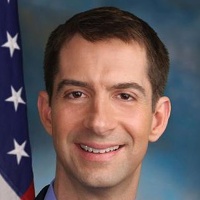
Tom Cotton
Senator
AR
Tom Cotton
Senator
AR
The Constitutional Citizenship Clarification Act of 2025 seeks to amend federal law regarding birthright citizenship under the 14th Amendment. It codifies existing exceptions, stating that automatic citizenship does not apply to children born in the U.S. to parents who are unlawfully present, present solely for diplomatic purposes, or engaged in hostile operations. This legislation aims to clarify that U.S. citizenship at birth is contingent upon allegiance, not solely physical location.
This bill authorizes the creation and sale of commemorative coins for the 2028 Los Angeles Olympic and Paralympic Games and the 2034 Salt Lake City Winter Olympic and Paralympic Games to help fund their hosting and legacy programs.
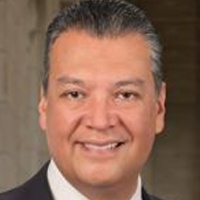
Alejandro Padilla
Senator
CA
Alejandro Padilla
Senator
CA
This Act authorizes the creation and sale of commemorative coins to celebrate the upcoming 2028 Summer Olympic and Paralympic Games in Los Angeles and the 2034 Winter Olympic and Paralympic Games in Salt Lake City. The Secretary of the Treasury is empowered to mint various denominations of gold, silver, and clad coins for each event, with designs reflecting American participation. A mandatory surcharge on each coin sold will directly fund the respective organizing committees for the Games and their legacy programs, provided the government recovers all minting costs first.
The PART Act establishes new federal requirements for marking catalytic converters, creates a grant program for VIN stamping to deter theft, and imposes strict record-keeping and payment restrictions on sales, alongside new criminal penalties for theft and trafficking.

Amy Klobuchar
Senator
MN
Amy Klobuchar
Senator
MN
The PART Act aims to combat catalytic converter theft by mandating new federal standards for permanently marking these devices on all new vehicles. It establishes a grant program to fund the visible stamping of identification numbers onto existing converters to deter theft. Furthermore, the bill strengthens tracking requirements for sellers of used converters and introduces new federal criminal penalties for theft and trafficking of these components.
This Act establishes a federal process for trafficking survivors to seek expungement of criminal records or sentence reductions, creates a duress defense based on trafficking, and mandates reporting on the implementation of these new relief measures.

Kirsten Gillibrand
Senator
NY
Kirsten Gillibrand
Senator
NY
The Trafficking Survivors Relief Act of 2025 establishes a new federal process for trafficking survivors to seek the expungement of arrest records or the vacation of certain criminal convictions resulting from their victimization. It also creates a specific "duress" defense for defendants charged with serious federal crimes if they committed the offense while being trafficked. Furthermore, the bill mandates reporting on the use of these new relief mechanisms and clarifies that federal grants for legal aid can be used for post-conviction representation.
This act increases the maximum investment percentage the Small Business Administration can make in certain small business investment companies from 5% to 15%.

Todd Young
Senator
IN
Todd Young
Senator
IN
The Investing in Main Street Act of 2025 aims to boost support for small businesses by increasing the Small Business Administration's (SBA) investment limits in certain Small Business Investment Companies (SBICs). This legislation raises the maximum percentage the SBA can invest in these vehicles from 5 percent to 15 percent. The goal is to channel more capital toward small businesses through these established investment programs.
This joint resolution disapproves the Office of the Comptroller of the Currency's rule regarding the review of applications under the Bank Merger Act.
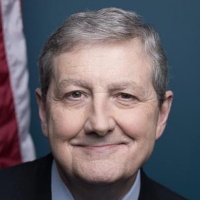
John Kennedy
Senator
LA
John Kennedy
Senator
LA
This joint resolution expresses Congress's disapproval of a recent rule issued by the Office of the Comptroller of the Currency (OCC) concerning the review of applications under the Bank Merger Act. By invoking the Congressional Review Act, this measure nullifies the specific OCC regulation regarding bank mergers. If enacted, the disapproved rule will have no legal force or effect.
This bill mandates the Committee on Foreign Investment in the United States (CFIUS) to annually review, update, and report on U.S. Government facilities and property deemed national security sensitive for real estate transaction reviews.
Tim Scott
Senator
SC
Tim Scott
Senator
SC
This bill mandates that the Committee on Foreign Investment in the United States (CFIUS) annually review and update a specific list of U.S. Government facilities and property deemed sensitive for national security. CFIUS must also report on any real estate transaction reviews involving these sensitive sites. This ensures the list remains current based on agency-specific annual reviews.
This concurrent resolution expresses Congress's strong support for America's law enforcement professionals, recognizing their risks, advocating for better safety measures, and calling for increased government resources.
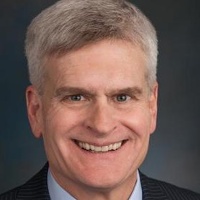
Bill Cassidy
Senator
LA
Bill Cassidy
Senator
LA
This concurrent resolution expresses Congress's strong support and deep appreciation for America's law enforcement professionals. It recognizes the increasing dangers, high trauma exposure, and current staffing shortages facing officers nationwide. The resolution calls for enhanced safety measures, better resources, increased penalties for assaulting officers, and improved mental health support for law enforcement personnel. Ultimately, it urges all levels of government to provide the necessary support for officers to effectively protect their communities.
This Act restricts consumer reporting agencies from sharing mortgage loan applicant reports with third parties unless the request is tied to a firm offer of credit or the recipient is directly involved in the applicant's existing mortgage or has explicit authorization.
John Reed
Senator
RI
John Reed
Senator
RI
The Homebuyers Privacy Protection Act restricts how consumer reporting agencies can share your credit report when you are seeking a residential mortgage loan. Specifically, it limits the sharing of these reports unless they are connected to a firm offer of credit or are being sent to parties directly involved in your current mortgage, such as the originator or servicer. This ensures that your sensitive financial information is only accessed by relevant parties during the home loan process.
This Act establishes the Office of Information and Communications Technology and Services within the Commerce Department to review and mitigate national security risks posed by foreign entities in connected vehicle technology transactions.

Elissa Slotkin
Senator
MI
Elissa Slotkin
Senator
MI
The Connected Vehicle National Security Review Act establishes a new office within the Department of Commerce to review and mitigate national security risks posed by "covered transactions" involving connected vehicles and technology from "jurisdictions of concern." This office is empowered to investigate deals, impose mitigation measures, or prohibit transactions that present an undue risk of sabotage or harm to U.S. critical infrastructure. The law grants significant investigative and enforcement authority, including severe criminal and civil penalties for willful violations.