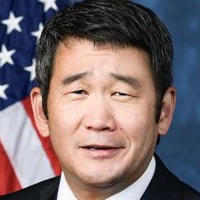
Legislative Activity
Track Dave's sponsored bills, co-sponsored legislation, and voting record
This bill officially renames the Robert E. Lee Memorial as the Arlington House National Historic Site.
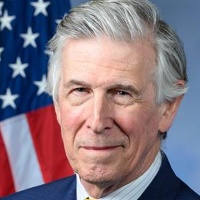
Donald Beyer
Representative
VA
Donald Beyer
Representative
VA
This bill officially redesignates the site currently known as the Robert E. Lee Memorial as the "Arlington House National Historic Site." It mandates that all official U.S. records, maps, and documents be updated to reflect this new name and repeals the previous joint resolutions that established the former designation.
This Act mandates increased transparency and accountability for the enforcement of Hatch Act political activity restrictions, particularly through enhanced reporting to Congress and public disclosure of enforcement statistics broken down by employee type and demographics.
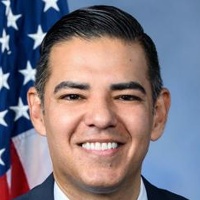
Robert Garcia
Representative
CA
Robert Garcia
Representative
CA
This bill, the Hatch Act Enforcement Transparency and Accountability Act, aims to increase public oversight of how the Office of Special Counsel enforces political activity restrictions for federal employees. It mandates new, detailed reporting to Congress regarding investigations and disciplinary actions against both career and non-career appointees. Furthermore, the legislation requires the OSC to publish anonymized, demographic statistics on Hatch Act allegations on its website.
This bill regulates large capacity ammunition feeding devices, making it illegal to import, sell, manufacture, transfer, or possess them, with certain exceptions for law enforcement and other entities, and allows for Byrne grants to be used for buy-back programs.

Diana DeGette
Representative
CO
Diana DeGette
Representative
CO
The "Keep Americans Safe Act" aims to regulate large capacity ammunition feeding devices by making it illegal to import, sell, manufacture, transfer, or possess magazines holding more than 15 rounds, with exceptions for law enforcement, government entities, and devices lawfully possessed before the law's enactment. It also permits the use of Byrne grants for buy-back programs of these devices and mandates that newly manufactured devices be marked with identifying information. Violators of this Act will face penalties under existing provisions of Title 18 of the U.S. Code.
This bill expands Medicare coverage to include services provided by qualified acupuncturists.
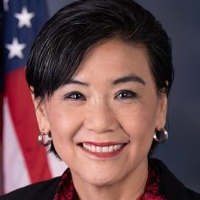
Judy Chu
Representative
CA
Judy Chu
Representative
CA
The "Acupuncture for Our Seniors Act of 2025" expands Medicare coverage to include services provided by qualified acupuncturists, as defined by state licensure or criteria set by the Secretary of Health and Human Services. This ensures seniors have access to acupuncture services, with payment rules established under the physician fee schedule and separate payment options for institutional providers. It defines qualified acupuncturist services as those legally allowed under state law, including related services and supplies. These changes will apply to services furnished 270 days after the Act's enactment.
The "Protect Veteran Jobs Act" allows wrongly terminated veteran civil service employees to be reinstated and requires executive agencies to report to Congress on veteran employee terminations.
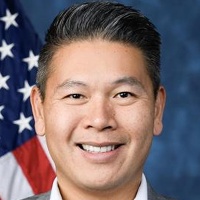
Derek Tran
Representative
CA
Derek Tran
Representative
CA
The Protect Veteran Jobs Act allows wrongly fired or dismissed veterans in civil service jobs between January 20, 2025, and the Act's enactment date to be reinstated to their previous position or a similar one. It mandates executive branch agencies to report to Congress every three months on all veteran employees who were fired or dismissed and the reasons for their termination, effective until January 20, 2029. The Act relies on existing U.S. Code definitions for key terms like "veteran" and "civil service."
The American Dream and Promise Act of 2025 provides a pathway to permanent residency for eligible individuals who came to the U.S. as children, or who have Temporary Protected Status (TPS) or Deferred Enforced Departure (DED) status.
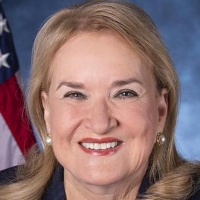
Sylvia Garcia
Representative
TX
Sylvia Garcia
Representative
TX
The American Dream and Promise Act of 2025 provides a pathway to permanent residency for eligible individuals who entered the United States as children and those with Temporary Protected Status (TPS) or Deferred Enforced Departure (DED). Title I, the Dream Act of 2025, establishes conditional permanent residency for eligible individuals who entered the U.S. as children. Title II, the American Promise Act of 2025, allows the Secretary of Homeland Security or the Attorney General to grant permanent resident status to eligible individuals from TPS or DED countries. Title III outlines general provisions, such as background checks, application processes, and fee exemptions, applicable to all seeking to adjust their status under this Act.
The "Taxpayer Funds Oversight and Accountability Act" enhances financial management and oversight in federal agencies by updating CFO responsibilities, mandating 4-year government-wide financial management plans, and requiring rigorous audits of internal controls.

Gerald Connolly
Representative
VA
Gerald Connolly
Representative
VA
The Taxpayer Funds Oversight and Accountability Act enhances financial management and transparency in federal agencies by updating the duties of Chief Financial Officers (CFOs) to include stronger oversight of financial reporting and internal controls. It replaces the government-wide 5-year financial management plan with a 4-year plan, requiring detailed strategies for improving financial management systems and workforce development. The Act also mandates annual financial management status reports to Congress and the Comptroller General, along with rigorous audits of internal controls to ensure effective financial management across the government.
Ethan's Law establishes federal penalties for improperly storing firearms where minors or prohibited persons can access them and creates grant programs to incentivize states to adopt matching safe storage laws.

Rosa DeLauro
Representative
CT
Rosa DeLauro
Representative
CT
Ethan's Law establishes federal requirements for the secure storage of firearms to prevent unauthorized access by minors and prohibited persons, making improper storage a civil violation with escalating penalties if injury or death results. The bill also creates a federal grant program to incentivize states and Tribes to adopt matching safe storage laws. Furthermore, Congress declares that failing to comply with these storage requirements constitutes negligence and may be considered the direct cause of resulting firearm injuries.
The Public Safety Employer-Employee Cooperation Act establishes collective bargaining rights for public safety officers nationwide, ensuring fair labor practices and cooperation between employers and employees.
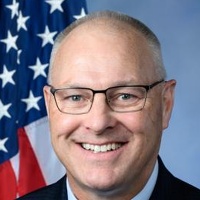
Pete Stauber
Representative
MN
Pete Stauber
Representative
MN
The Public Safety Employer-Employee Cooperation Act establishes a framework for collective bargaining rights for public safety officers (law enforcement, firefighters, and emergency medical services personnel) at the state level. It directs the Federal Labor Relations Authority to determine if states substantially protect these rights, and if not, the Authority will establish collective bargaining procedures. The Act aims to promote cooperation between public safety employers and employees while respecting existing state laws and prohibiting strikes and lockouts. This law does not override state laws that provide similar or stronger protections for public safety officers.
The "MODERN WIC Act of 2025" expands remote access to WIC benefits by allowing virtual certification appointments, remote benefit issuance, and requires a report to Congress on the use of remote technologies within the WIC program.
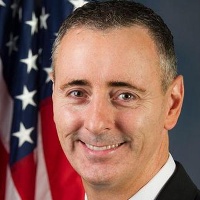
Brian Fitzpatrick
Representative
PA
Brian Fitzpatrick
Representative
PA
The MODERN WIC Act of 2025 aims to modernize the WIC program by expanding options for remote certification appointments, including telephone and video calls, and allowing for remote delivery of food benefits. It requires state agencies to offer various formats for certification appointments, ensuring accessibility for individuals with disabilities. The Act also mandates a report to Congress on the use of remote technologies in WIC, focusing on their impact and best practices.
The "Gun Trafficker Detection Act" mandates reporting lost or stolen firearms, establishes penalties for violations, and enhances data management and background check systems.
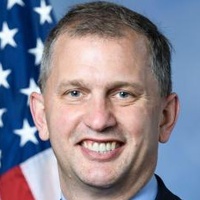
Sean Casten
Representative
IL
Sean Casten
Representative
IL
The Gun Trafficker Detection Act requires non-licensed firearm owners to report lost or stolen firearms to the Attorney General and local law enforcement within 48 hours, and it mandates the Attorney General to establish a web-based portal for such reporting. States must allocate a portion of their grant funding to manage data on lost or stolen firearms. The act also establishes penalties for failing to report or for falsely reporting the loss or theft of a firearm, and it updates the national criminal background check system accordingly.
This bill requires the FAA to collaborate with the National Academies to produce a report detailing the health impacts of air traffic noise and pollution.
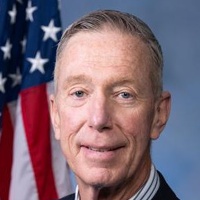
Stephen Lynch
Representative
MA
Stephen Lynch
Representative
MA
The "Air Traffic Noise and Pollution Expert Consensus Act of 2025" directs the FAA to collaborate with the National Academies to study and report on the health impacts of air traffic noise and pollution. This report will consolidate current scientific knowledge and be delivered to key government officials and congressional committees.
The bill modifies and extends funding for the World Trade Center Health Program, expands the types of healthcare providers who can certify mental health conditions, and requires a report to Congress on the program's budget.
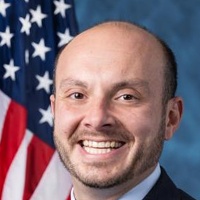
Andrew Garbarino
Representative
NY
Andrew Garbarino
Representative
NY
The 9/11 Responder and Survivor Health Funding Correction Act of 2025 amends the Public Health Service Act to improve the World Trade Center (WTC) Health Program by expanding the types of healthcare providers who can conduct mental health evaluations, modifying provider credentialing, clarifying enrollment calculations, and extending the time frame for adding health conditions for WTC responders. The act adjusts the funding formula for fiscal years 2026 through 2090 and requires the Secretary of Health and Human Services to report to Congress on the program's budget, including projected needs through 2090 and recommendations for changes to the funding formula. It also stipulates that remaining funds in the Supplemental Fund, Special Fund, and Pentagon-Shanksville Fund will revert to the Treasury.
The DRIVE Act of 2025 mandates that the VA increase veteran travel reimbursement rates to match the federal employee mileage rate and ensures veterans receive these payments within 90 days of submitting a complete claim.
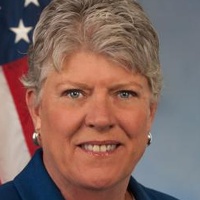
Julia Brownley
Representative
CA
Julia Brownley
Representative
CA
The DRIVE Act of 2025 ensures that the Department of Veterans Affairs (VA) travel reimbursement rate for veterans' medical appointments will never fall below the standard federal employee mileage rate. This legislation mandates that the VA must process and pay these mileage allowances within 90 days of a veteran submitting a complete request. Essentially, the bill aims to increase equity and speed in compensating veterans for necessary travel to VA healthcare.
This bill establishes an Office of Gun Violence Prevention within the Department of Justice to coordinate gun violence prevention efforts, evaluate related programs and policies, recommend evidence-based strategies, and assist communities affected by gun violence.
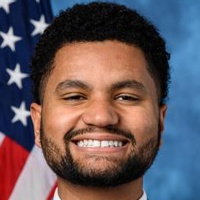
Maxwell Frost
Representative
FL
Maxwell Frost
Representative
FL
The "Office of Gun Violence Prevention Act of 2025" establishes an Office of Gun Violence Prevention within the Department of Justice, led by a Director appointed by the Attorney General, to coordinate gun violence prevention efforts, evaluate related laws and programs, and recommend evidence-based policies to Congress and the President. The Director will also convene an advisory council comprising various officials and at least 12 additional individuals representing gun violence survivors, community violence intervention service providers, and other relevant groups. The Office will also assist communities affected by gun violence with crisis response activities, such as providing access to mental health services and suicide prevention resources. Finally, the act authorizes the appropriation of necessary funds to carry out the provisions of the bill.
Mandates the creation of a national registry for Korean American divided families to facilitate potential reunions and requires the Secretary of State to advocate for these reunions in dialogues with North Korea.
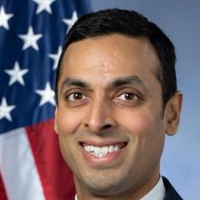
Suhas Subramanyam
Representative
VA
Suhas Subramanyam
Representative
VA
The Korean American Divided Families National Registry Act mandates the State Department to create a national registry of Korean Americans separated from family in North Korea since 1953, in order to prepare for potential family reunions. It requires the Secretary of State to include progress toward these reunions in any dialogue with North Korea, consult with South Korea, and submit annual reports to Congress on the registry's status and reunion efforts. The registry will serve as a private internal database to organize reunions and maintain information on divided families, including those who may have passed away.
The Honoring Our Fallen Heroes Act of 2025 expands public safety officer benefits to include disability and death coverage for certain cancers presumed to be caused by on-duty exposure to carcinogens, and clarifies "line of duty" definitions for first responder benefits.
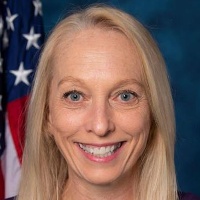
Mary Scanlon
Representative
PA
Mary Scanlon
Representative
PA
The Honoring Our Fallen Heroes Act of 2025 expands public safety officer benefits to include deaths and disabilities caused by exposure-related cancers, presuming that certain cancers diagnosed within 15 years of service are line-of-duty injuries if the officer served for at least 5 years. It defines "exposure-related cancer" and allows for updates to the list based on medical evidence, while also permitting individuals to petition for additions. The Act also clarifies "line of duty action" and applies retroactively to claims dating back to January 1, 2020, with a three-year window for filing claims based on these amendments.
Extends federal death benefits to retired law enforcement officers who die or are disabled from targeted attacks related to their service.
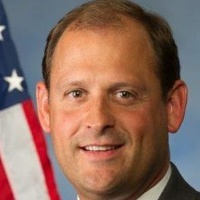
Garland Barr
Representative
KY
Garland Barr
Representative
KY
The "Chief Herbert D. Proffitt Act of 2025" amends the Omnibus Crime Control and Safe Streets Act of 1968 to extend death benefits to retired law enforcement officers who die or are disabled from targeted attacks due to their service. The bill applies retroactively to pending matters before the Bureau of Justice Assistance, or those filed/accruing after the enactment date, with exceptions for actions against retired law enforcement officers that occurred on or after August 28, 2012.
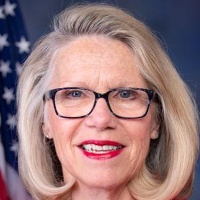
The SAFE Act amends the Social Security Act to include physical and occupational therapy benefits in Medicare annual wellness visits and initial preventive physical exams and requires the Secretary of Health and Human Services to submit an annual report to Congress regarding falls experienced by individuals aged 65 and older.
Carol Miller
Representative
WV
Carol Miller
Representative
WV
The SAFE Act amends the Social Security Act to include physical and occupational therapy benefits in Medicare annual wellness visits and initial preventive physical exams starting in 2026 for individuals determined to have fallen in the previous year. It mandates that these individuals receive falls risk assessments, fall prevention services, and outpatient therapy services. Additionally, the Act requires the Secretary of Health and Human Services to submit annual reports to Congress on falls experienced by individuals aged 65 and older.
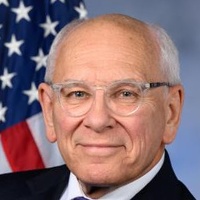
The Scientific Integrity Act mandates federal agencies to establish and enforce scientific integrity policies that protect scientific research from political interference, ensure open communication of scientific findings, and provide whistleblower protection for scientists.
Paul Tonko
Representative
NY
Paul Tonko
Representative
NY
The Scientific Integrity Act mandates that federal agencies that fund, conduct, or oversee scientific research establish and enforce scientific integrity policies. These policies aim to protect scientists from political interference, ensure the open communication of scientific findings, and establish clear processes for reporting and addressing scientific misconduct. The Act requires agencies to appoint Scientific Integrity Officers, provide regular training, and report on misconduct complaints, with oversight from the Office of Science and Technology Policy and Congress. It also protects the rights of federal employees and contractors to share their findings and prevents the suppression or distortion of scientific data.