Legislative Activity
Track Blake's sponsored bills, co-sponsored legislation, and voting record
This act confirms that the University of Utah's use of specified land in Salt Lake City as a research park constitutes a valid public purpose under federal law.
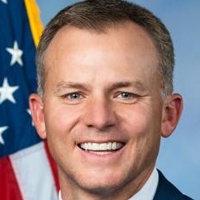
Blake Moore
Representative
UT
Blake Moore
Representative
UT
This act officially confirms that the University of Utah's use of approximately 593.54 acres of land in Salt Lake City for its research park constitutes a valid public purpose under federal law. It validates the existing use established by the 1970 Department of the Interior approval and any consistent future uses related to the university research park.
This bill mandates more frequent budget baseline updates from the CBO and requires the President to submit annual technical budget data to Congress.
Blake Moore
Representative
UT
Blake Moore
Representative
UT
The Increasing Baseline Updates Act mandates more frequent budget baseline reports from the Congressional Budget Office (CBO), requiring at least two updates annually unless otherwise directed. Additionally, the bill requires the President to submit updated technical budget data to Congress alongside the annual budget submission. These changes aim to provide Congress with more current economic and budgetary information throughout the year.
This bill mandates the regular publication of evidence-based physical activity recommendations by the Secretary of Health and Human Services for the American public.
Blake Moore
Representative
UT
Blake Moore
Representative
UT
The Promoting Physical Activity for Americans Act mandates the Secretary of Health and Human Services to regularly publish evidence-based physical activity recommendations for the public. These reports must include specific guidance for various population subgroups and be updated at least every ten years. The legislation ensures federal health programs consider these national guidelines while protecting existing research authority and preventing the establishment of binding federal fitness standards.
This bill creates an exception to the prohibition on offering remuneration to influence healthcare decisions, allowing payments to information service providers for bookable directories, provided strict consumer protection and fairness criteria are met.
Blake Moore
Representative
UT
Blake Moore
Representative
UT
The Health ACCESS Act amends federal law to create an exception to prohibitions against offering remuneration to influence healthcare decisions. This change specifically allows providers to pay information service platforms for participation, provided the platform adheres to strict guidelines ensuring unbiased consumer choice. These guidelines prohibit steering patients, targeted marketing, and sharing consumer contact information outside of a confirmed selection. Ultimately, this bill aims to facilitate easier consumer access to healthcare providers through regulated self-scheduling platforms.
This Act establishes the BECCS Advancement Commission within the Department of Agriculture to develop policy recommendations for expanding Bioenergy with Carbon Capture and Storage (BECCS) development and its community benefits.
Blake Moore
Representative
UT
Blake Moore
Representative
UT
The BECCS Advancement Commission Act of 2025 establishes a new commission within the Department of Agriculture to study and recommend improvements to federal policy regarding Bioenergy with Carbon Capture and Storage (BECCS). This group, composed of government, industry, and community representatives, will assess how BECCS development impacts local economies, forest health, and wildfire management. The Commission must deliver a comprehensive report to Congress within one year outlining policy suggestions to expand BECCS use, including its role in powering data centers.
This Act conveys approximately 295.89 acres of National Forest System land in Utah to the City of Fruit Heights for public use, subject to certain conditions and the reservation of public trail access.
Blake Moore
Representative
UT
Blake Moore
Representative
UT
The Fruit Heights Land Conveyance Act of 2025 directs the Secretary of Agriculture to transfer approximately 295.89 acres of National Forest System land to the City of Fruit Heights, Utah. This conveyance is made without monetary cost to the City, subject to existing rights and the reservation of public access for the Bonneville Shoreline Trail. The City must use the transferred land exclusively for public purposes, or the ownership interest will revert back to the U.S. government.
The MAP Roads Act establishes a pilot program to provide federal grants to states for digitizing and publicly mapping their county road systems to improve access and safety.
Blake Moore
Representative
UT
Blake Moore
Representative
UT
The MAP Roads Act establishes a pilot program to help states digitally map their unmapped county roads, aiming to improve rural business, safety, and navigation. The Secretary of Transportation will award grants to states that commit to creating a centralized, public repository for this standardized road data. Participating states must ensure the collected data is publicly accessible and updated annually. This grant authority is set to expire in 2031.
This bill ensures Medicare coverage for certain breakthrough medical devices during a four-year transitional period while accelerating the final coverage decision process.
Blake Moore
Representative
UT
Blake Moore
Representative
UT
This Act, the Ensuring Patient Access to Critical Breakthrough Products Act, aims to speed up Medicare coverage for innovative, FDA-approved "breakthrough devices." It establishes a process for manufacturers to gain a four-year transitional coverage period for these devices, ensuring patients have timely access while long-term coverage decisions are finalized. The bill also allocates funding to CMS to manage these expedited reviews and allows for oversight of provider billing practices related to these new technologies.
This bill directs the Air Force to integrate depot-level maintenance coordination planning into at least one annual multinational exercise within the U.S. Indo-Pacific Command area of operations with key allies.
Blake Moore
Representative
UT
Blake Moore
Representative
UT
This bill directs the Secretary of the Air Force to integrate specific depot-level maintenance coordination planning into at least one annual multinational exercise within the U.S. Indo-Pacific Command area of operations. The goal is to enhance cooperation with key allies on deep repair work to improve logistical resilience and reduce shipping needs during contingencies. Furthermore, the Secretary must report to Congress on maintenance partnership progress specifically with Australia and the Republic of Korea.
This bill reauthorizes and restructures the Bureau of Land Management Foundation, renaming it the Foundation for America's Public Lands, adjusting its board composition, and setting spending restrictions and funding levels.
Blake Moore
Representative
UT
Blake Moore
Representative
UT
This bill officially renames the Bureau of Land Management Foundation to the Foundation for America’s Public Lands and modifies its governing structure. It increases the size of the Board of Directors over four years while mandating specific expertise from various public land users and resource managers. Furthermore, the Act places strict prohibitions on the Foundation using funds for lobbying or litigation and authorizes $10 million annually for five fiscal years.
This bill establishes a 25% tax credit for purchasing U.S.-made circuit boards and substrates while also creating a $3 billion federal incentive program to boost domestic manufacturing and research in these critical electronic components.
Blake Moore
Representative
UT
Blake Moore
Representative
UT
The Protecting Circuit Boards and Substrates Act establishes a 25% tax credit for purchasing U.S.-made printed circuit boards and integrated circuit substrates starting in 2026. It also creates a federal incentive program, managed by the Commerce Department, to provide up to $3 billion in funding to boost domestic manufacturing and research and development in these critical electronic components. The program prioritizes national security needs, workforce development, and supports for small and diverse-owned businesses.
The Money Accounts for Growth and Advancement Act establishes new tax-advantaged MAGA savings accounts for children under age eight, funded by annual cash contributions and potentially a one-time $1,000 government credit, with withdrawals restricted until age 18 for qualified expenses.
Blake Moore
Representative
UT
Blake Moore
Representative
UT
The Money Accounts for Growth and Advancement (MAGA) Act establishes a new tax-advantaged savings vehicle, the MAGA account, designed for individuals under age 8 with strict contribution and withdrawal rules. These accounts feature tax-exempt growth, with distributions taxed favorably if used for qualified expenses like education or a first home purchase. Furthermore, the Act creates a pilot program offering a one-time, non-refundable $1,000 tax credit for eligible children, which the Treasury must deposit directly into a newly established MAGA account.
The American Ownership and Resilience Act establishes a Department of Commerce-run facility to leverage government backing for investment companies that finance the sale of businesses to Employee Stock Ownership Plans (ESOPs) or worker-owned cooperatives.
Blake Moore
Representative
UT
Blake Moore
Representative
UT
The American Ownership and Resilience Act establishes an Ownership Investment Facility within the Department of Commerce to provide government-backed leverage to investment companies. This facility is designed to encourage capital investments that support the sale of businesses to Employee Stock Ownership Plans (ESOPs) or worker-owned cooperatives. The bill sets strict oversight, fairness, and control requirements for these employee-centric transactions while establishing licensing and capital standards for the participating investment companies.
This bill mandates that states dedicate at least 25% of their federal TANF block grant funds to core work support activities starting in fiscal year 2027.
Blake Moore
Representative
UT
Blake Moore
Representative
UT
The Restoring Temporary to TANF Act mandates that states dedicate a minimum of 25% of their federal Temporary Assistance for Needy Families (TANF) block grant funds specifically toward core work support activities. These required expenditures cover job training, education, work supports, and short-term benefits designed to help recipients find and maintain employment. This new spending requirement is set to take effect starting October 1, 2026.
This Act permits tax-exempt charities to fund collegiate housing and infrastructure projects for college social or athletic organizations without jeopardizing their charitable status, provided the housing primarily serves full-time students.
Blake Moore
Representative
UT
Blake Moore
Representative
UT
The Collegiate Housing and Infrastructure Act of 2025 permits qualifying charities to provide grants to college social or athletic organizations specifically for collegiate housing and infrastructure projects without jeopardizing their tax-exempt status. This legislation clarifies that such grants remain eligible for donor deductions, provided the housing primarily serves full-time students. The Act specifically excludes funding for physical fitness facilities from these provisions.
The Health Out-of-Pocket Expense (HOPE) Act of 2025 establishes tax-exempt trust accounts to help eligible individuals save for and pay qualified medical expenses.
Blake Moore
Representative
UT
Blake Moore
Representative
UT
The Health Out-of-Pocket Expense (HOPE) Act of 2025 establishes tax-exempt trust accounts designed to help individuals cover qualified medical expenses. These accounts allow for tax-advantaged contributions from employers and state programs, provided the account holder meets specific eligibility and coverage requirements. Distributions used for qualified medical expenses are tax-free, while non-medical withdrawals are subject to income tax and a 30 percent penalty.
The Charitable Act extends and modifies tax deductions for charitable contributions, allowing individuals who take the standard deduction to claim additional tax benefits for donations made in 2026 and 2027.
Blake Moore
Representative
UT
Blake Moore
Representative
UT
The Charitable Act allows individuals who take the standard deduction to also claim a deduction for charitable contributions during the 2026 and 2027 tax years. This legislation permits non-itemizers to deduct donations up to one-third of their standard deduction amount while removing previous penalties for overstatements.
The STAR Act of 2025 establishes a 25 percent tax credit for qualified semiconductor design expenditures to incentivize domestic research and technological innovation.
Blake Moore
Representative
UT
Blake Moore
Representative
UT
The Semiconductor Technology Advancement and Research (STAR) Act of 2025 establishes a 25 percent tax credit for qualified semiconductor design expenditures conducted within the United States. This legislation aims to bolster domestic innovation by incentivizing both in-house and contract design costs for advanced semiconductor technology. The credit is available through 2036 and is designed to complement existing manufacturing investment incentives.
The Hershel Woody Williams National Medal of Honor Monument Location Act allows the National Medal of Honor Monument to be built on federal land near the Lincoln Memorial in Washington, D.C., honoring Medal of Honor recipients.
Blake Moore
Representative
UT
Blake Moore
Representative
UT
The "Hershel Woody Williams National Medal of Honor Monument Location Act" allows the National Medal of Honor Museum Foundation to build a monument on federal land in Washington, D.C., to honor Medal of Honor recipients. It places the National Medal of Honor Monument near the Lincoln Memorial, and overrides location restrictions to allow it to be within the Reserve, as defined in section 8902. All other provisions regarding commemorative works still apply.
This bill formally elects specific members to serve on the House of Representatives' Committees on Armed Services, the Judiciary, Oversight and Government Reform, and Veterans Affairs.
Blake Moore
Representative
UT
Blake Moore
Representative
UT
This bill formally elects specific members to serve on the House of Representatives' standing committees for Armed Services, the Judiciary, Oversight and Government Reform, and Veterans Affairs. It confirms the representatives who will participate in these committees.