Legislative Activity
Track Darin's sponsored bills, co-sponsored legislation, and voting record
Makes permanent the exclusion of employer student loan payments from an employee's gross income.
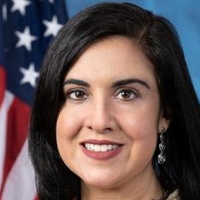
Nicole Malliotakis
Representative
NY
Nicole Malliotakis
Representative
NY
The "Employer Participation in Repayment Act" permanently extends the tax exclusion for employer-provided student loan repayment assistance. This allows employers to contribute to their employees' student loan debt without the contribution being considered taxable income for the employee. This provision was previously set to expire before January 1, 2026, but is now a permanent part of the tax code. The change is applicable for payments made after the enactment of this law.
The Truck Parking Safety Improvement Act establishes a grant program to expand commercial truck parking and improve safety on Federal-aid highways.
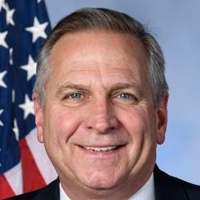
Mike Bost
Representative
IL
Mike Bost
Representative
IL
The Truck Parking Safety Improvement Act establishes a grant program to expand commercial truck parking and improve safety. The program provides funds to states, local governments, and tribal entities for projects that increase parking availability, improve existing facilities, and use technology to manage parking. The Act also requires a biennial report to Congress on the availability of truck parking and the effectiveness of funded projects. It authorizes $151 million per fiscal year from 2025 through 2029 for these initiatives.
The UNITED Act aims to enhance U.S. economic competitiveness by authorizing the President to negotiate a comprehensive trade agreement with the United Kingdom, while also requiring adherence to congressional oversight and trade priorities.

Adrian Smith
Representative
NE
Adrian Smith
Representative
NE
The "UNITED Act" aims to enhance U.S. economic strength and strategic interests by directing the President to pursue trade negotiations with the United Kingdom and authorizing the President to enter into a comprehensive trade agreement. It sets specific parameters for tariff modifications and requires ongoing consultation with Congress throughout the negotiation and implementation processes. The Act also ensures adherence to existing trade priorities and accountability standards, while preventing unilateral changes to the agreement without Congressional approval.
The "Grown in America Act of 2025" establishes a tax credit for businesses that use domestically produced agricultural commodities in their products, aiming to incentivize the use of American-grown ingredients.
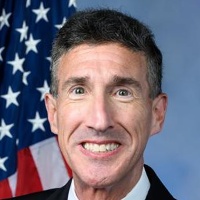
David Kustoff
Representative
TN
David Kustoff
Representative
TN
The "Grown in America Act of 2025" introduces a tax credit for businesses that use domestic agricultural commodities in their products for human consumption. This credit, capped at $100,000,000, aims to incentivize the use of U.S.-produced agricultural inputs by offering a tax benefit based on the percentage of domestic agricultural commodities used. The percentage of domestic inputs required to receive the full credit increases over time, with the Secretary of Agriculture maintaining a list of agricultural commodities that cannot be produced domestically. These provisions will be effective for taxable years starting after December 31, 2025.
This bill directs the Joint Committee on the Library to procure and install a statue of Benjamin Franklin in the United States Capitol by the end of 2026.
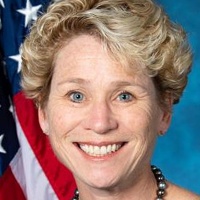
Chrissy Houlahan
Representative
PA
Chrissy Houlahan
Representative
PA
This bill directs the Joint Committee on the Library to procure a statue of Benjamin Franklin for permanent display within the United States Capitol. The statue is required to be acquired by the end of 2025 and installed in a publicly accessible location by December 31, 2026.
This resolution condemns the Iranian regime’s terrorism and human rights abuses while affirming support for the Iranian people’s right to establish a democratic, secular, and non-nuclear republic.
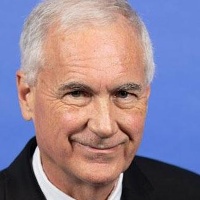
Tom McClintock
Representative
CA
Tom McClintock
Representative
CA
This resolution condemns the Iranian regime for its ongoing human rights abuses, state-sponsored terrorism, and regional instability. It expresses strong support for the Iranian people's struggle for a democratic, secular, and non-nuclear republic. Furthermore, the bill advocates for international accountability for the regime's crimes and calls for the protection of Iranian political refugees.
The "Supporting Farm Operations Act of 2025" freezes wage rates for H-2A nonimmigrant workers at 2023 levels through 2026 and clarifies job classification for wage determination.

John Moolenaar
Representative
MI
John Moolenaar
Representative
MI
The "Supporting Farm Operations Act of 2025" freezes the wage rate for H-2A nonimmigrant workers at the level it was on December 31, 2023, through December 31, 2026. Additionally, the bill directs the Secretary of Labor to use a primary duties evaluation when deciding the required wage for employees who perform multiple duties or tasks.
Prohibits the purchase of real estate near U.S. federal lands by agents or businesses associated with the government of the People's Republic of China with 25% or more equity interest.
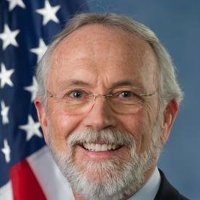
Dan Newhouse
Representative
WA
Dan Newhouse
Representative
WA
The "No American Land for Communist China Act" prohibits the President from allowing individuals or entities associated with the Chinese government from purchasing real estate near covered federal lands. Covered lands include those managed by the Departments of Interior, Defense, Agriculture (Forest Service), and Energy, as well as Indian country. This restriction applies to entities with at least 25% equity interest held by Chinese government-affiliated individuals or businesses. The Act defines "United States" broadly to include states, territories, and other U.S. possessions.
The "Protect and Serve Act of 2025" establishes federal penalties for intentionally causing serious harm or death to law enforcement officers because of their position, under certain circumstances, and requires Attorney General certification for federal prosecution in many cases.
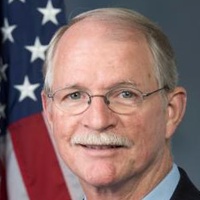
John Rutherford
Representative
FL
John Rutherford
Representative
FL
The "Protect and Serve Act of 2025" creates federal offenses for intentionally causing serious injury or death to law enforcement officers because of their status as officers. It sets penalties including imprisonment and fines, with increased penalties if death results or if kidnapping or attempted killing is involved. Federal prosecution requires certification from the Attorney General, based on a request from the state or if it is in the public interest to ensure substantial justice. The act defines "law enforcement officer" and "State" for the purposes of the new offenses.
This bill adds the Secretary of Agriculture to the Committee on Foreign Investment in the United States (CFIUS) and requires CFIUS to review agricultural land transactions, especially those involving entities from China, North Korea, Russia, or Iran.
Dan Newhouse
Representative
WA
Dan Newhouse
Representative
WA
The "Protecting American Agriculture from Foreign Adversaries Act of 2025" adds the Secretary of Agriculture to the Committee on Foreign Investment in the United States (CFIUS) for agricultural matters. It mandates CFIUS review of agricultural land transactions, particularly those involving entities from China, North Korea, Russia, or Iran, to safeguard American agriculture. This ensures scrutiny of foreign investments in agricultural land and related industries, addressing potential threats to national security. The requirements for a specific country will end if that country is removed from the list of foreign adversaries in section 791.4 of title 15, Code of Federal Regulations.
The "DOC Access Act of 2025" aims to improve dental and vision care coverage by ensuring fair payment practices, protecting providers' choices, and upholding state regulatory authority.
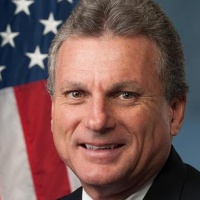
Earl Carter
Representative
GA
Earl Carter
Representative
GA
The "DOC Access Act of 2025" aims to enhance health care coverage under vision and dental plans by ensuring fair payment practices, protecting doctors' choices in labs and suppliers, and respecting state laws. It allows optometrists and dentists to charge their standard rate for non-covered services if the plan's payment is unreasonable, while ensuring they can only charge the contracted rate for dental cleanings. The bill also gives doctors more control over agreement extensions with limited benefit plans and allows them to opt out of certain provisions. Ultimately, this act seeks to balance federal guidelines with state oversight in regulating health insurance issuers and dental or vision benefit plans.
The "Access Technology Affordability Act of 2025" creates a tax credit of up to $2,000 every three years for blind individuals who purchase qualified access technology.
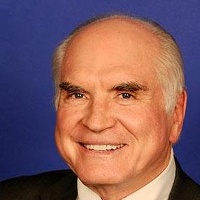
Mike Kelly
Representative
PA
Mike Kelly
Representative
PA
The "Access Technology Affordability Act of 2025" introduces a tax credit for blind individuals who purchase qualified access technology, such as hardware or software that converts visual information into accessible formats. The credit is capped at $2,000 per blind individual over any three consecutive tax years and will be adjusted for inflation after 2026. This credit is effective for tax years starting after December 31, 2025, and expires after December 31, 2030. It ensures that individuals cannot claim double benefits for the same expenses.
The "Sporting Goods Excise Tax Modernization Act" clarifies that marketplace providers are responsible for excise taxes on certain imported sporting goods sold through their platforms.
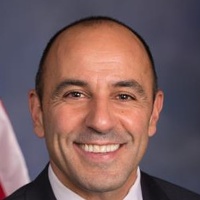
Jimmy Panetta
Representative
CA
Jimmy Panetta
Representative
CA
The "Sporting Goods Excise Tax Modernization Act" modifies excise tax regulations by treating marketplace providers as the importer and seller for excise tax purposes on taxable sporting goods sold through their platform if the goods are shipped from outside the U.S. This applies when the marketplace provider lists the product, collects payments, and the manufacturer is not the marketplace provider. The regulations will be applied to sales in calendar quarters starting 60 days after the enactment of this Act.
This bill authorizes the creation of a Congressional Gold Medal to honor the volunteers and communities involved with the North Platte Canteen during World War II.
Adrian Smith
Representative
NE
Adrian Smith
Representative
NE
The North Platte Canteen Congressional Gold Medal Act recognizes and honors the volunteers and donors of the North Platte Canteen in Nebraska during World War II with a Congressional Gold Medal. This medal will be presented by the Speaker of the House and the President pro tempore of the Senate, and then displayed at the Lincoln County Historical Museum. The Act also authorizes the creation and sale of bronze duplicates of the gold medal to cover production costs, with proceeds deposited into the Mint's Public Enterprise Fund.
The "Permanent Telehealth from Home Act" permanently expands Medicare telehealth access by removing geographic restrictions and originating site requirements after the COVID-19 emergency period.
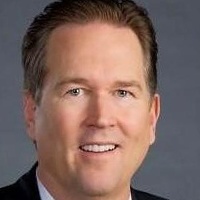
Vern Buchanan
Representative
FL
Vern Buchanan
Representative
FL
The "Permanent Telehealth from Home Act" aims to make telehealth access easier and more permanent for Medicare recipients. It eliminates the current expiration dates for telehealth services, ensuring that patients can continue to receive care at home. By removing geographic restrictions, the bill broadens access to telehealth services, allowing more individuals to benefit from remote healthcare options. These changes will remain in effect even after the end of the COVID-19 public health emergency.
This bill expands Medicare coverage for FDA-approved lung cancer screening tests, streamlining the approval process and allowing the Secretary to consider expert recommendations.
Vern Buchanan
Representative
FL
Vern Buchanan
Representative
FL
The "Lung Cancer Screening and Prevention Act of 2025" expands Medicare coverage to include additional FDA-approved lung cancer screening tests. This allows the Secretary to cover these new tests as preventive services, using expert recommendations for coverage decisions. These changes will be effective immediately upon the enactment of the Act.
This resolution expresses Congressional opposition to imposing new performance fees or royalties on local radio stations and businesses for broadcasting or playing music.
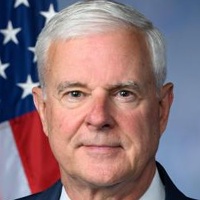
Steve Womack
Representative
AR
Steve Womack
Representative
AR
The Local Radio Freedom Act expresses Congressional opposition to imposing new performance fees, taxes, or royalties on local radio stations and businesses for playing music. It argues that the current system of free airplay provides essential promotional value to artists and that new fees would threaten the financial viability of local broadcasters and the vital community services they provide.
The AIMM Act permanently extends the allowance for depreciation, amortization, or depletion when calculating the limitation on business interest, starting after December 31, 2021.
Adrian Smith
Representative
NE
Adrian Smith
Representative
NE
The AIMM Act permanently extends a tax provision related to how businesses calculate their interest expense deductions. This extension allows businesses to include depreciation, amortization, and depletion when determining the limitation on business interest expenses. This change applies to taxable years beginning after December 31, 2021. Formally, the bill is called the American Investment in Manufacturing and Main Street Act.
The "Death Tax Repeal Act" eliminates estate and generation-skipping transfer taxes, adjusts gift tax calculations, and sets a $10,000,000 lifetime gift exemption.
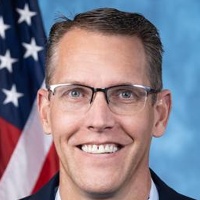
Randy Feenstra
Representative
IA
Randy Feenstra
Representative
IA
The "Death Tax Repeal Act" eliminates both estate and generation-skipping transfer taxes, effective from the date of enactment. It adjusts gift tax calculations by setting the lifetime gift exemption at $10,000,000, with inflation adjustments after 2011. The Act also includes transitional rules for applying certain sections of the Internal Revenue Code during the enactment year.
The "More Homes on the Market Act" increases the tax exclusion for profit from the sale of a primary residence, incentivizing homeowners to sell and increasing housing supply.
Jimmy Panetta
Representative
CA
Jimmy Panetta
Representative
CA
The "More Homes on the Market Act" increases the tax exclusion for profit from the sale of a primary residence, raising it to $500,000 for single filers and $1,000,000 for married couples filing jointly. These amounts will be adjusted for inflation starting in 2025. This change encourages homeowners to sell their properties, thereby increasing the availability of homes on the market.