Legislative Activity
Track Ted's sponsored bills, co-sponsored legislation, and voting record
The Climate Solutions Act of 2025 establishes a national renewable energy standard, mandates energy efficiency targets for suppliers, and sets science-based targets for the U.S. to reach net-zero greenhouse gas emissions by 2050.
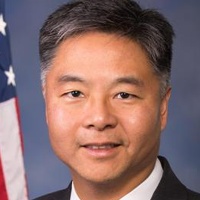
Ted Lieu
Representative
CA
Ted Lieu
Representative
CA
The Climate Solutions Act of 2025 establishes aggressive, science-based targets to reduce U.S. net greenhouse gas emissions by 50-52% below 2005 levels by 2030, reaching net zero by 2050. To achieve this, the bill mandates a national renewable energy standard and sets cumulative national energy efficiency savings targets for utility suppliers. Furthermore, it requires regular scientific review by the National Academies to ensure targets remain sufficient to avoid dangerous climate change.
This bill establishes an Office of Subnational Diplomacy within the Department of State to coordinate and support international engagement by U.S. local and state governments.
Ted Lieu
Representative
CA
Ted Lieu
Representative
CA
This bill establishes a new Office of Subnational Diplomacy within the Department of State, led by a Special Representative. This office will coordinate federal support for U.S. state and local governments engaging internationally. Its primary goals are to help local entities attract foreign investment, counter foreign influence, and align local diplomacy with broader U.S. foreign policy objectives.
This Act mandates statewide policies and training for K-12 school personnel on sexual abuse prevention and requires the Secretary of Education to report on the prevalence and solutions for student sexual abuse.
Ted Lieu
Representative
CA
Ted Lieu
Representative
CA
The Preventing Sexual Abuse of K–12 Students Act of 2025 aims to strengthen student safety by requiring states receiving federal funding to establish statewide policies mandating clear codes of conduct and comprehensive sexual abuse awareness training for all school personnel. This legislation addresses documented gaps in existing prevention efforts and staff training across the nation. Furthermore, the bill directs the Secretary of Education to conduct a study on the prevalence of sexual abuse in schools and report recommendations for prevention to Congress.
The HEALTH AI Act establishes a grant program through HHS to fund research on using generative artificial intelligence to improve healthcare quality and efficiency.
Ted Lieu
Representative
CA
Ted Lieu
Representative
CA
The HEALTH AI Act establishes a new grant program through the Department of Health and Human Services (HHS) to fund research on using generative artificial intelligence in healthcare. These grants will support projects aimed at improving clinical efficiency, reducing administrative burdens, and processing claims faster. Priority will be given to research that focuses on workforce training, reducing staff burnout, and improving health equity for underserved populations.
This Act generally prohibits the use of cell-site simulators by law enforcement and intelligence agencies unless a specific, narrowly tailored warrant is obtained, with limited exceptions for emergencies.
Ted Lieu
Representative
CA
Ted Lieu
Representative
CA
The Cell-Site Simulator Warrant Act of 2025 generally prohibits law enforcement and intelligence agencies from using cell-site simulators (devices that mimic cell towers) without obtaining a warrant. Warrants require agencies to prove other tracking methods failed and must narrowly define the scope and duration of use. The Act also establishes strict requirements for emergency use, mandates public notification after monitoring, and blocks evidence obtained through illegal simulator use from being admitted in court.
The Facial Recognition Act of 2025 establishes federal regulations requiring court orders for most law enforcement use of facial recognition, mandates accuracy and bias testing, and requires public reporting to protect civil liberties.
Ted Lieu
Representative
CA
Ted Lieu
Representative
CA
The Facial Recognition Act of 2025 establishes comprehensive federal regulations governing law enforcement's use of facial recognition technology, primarily requiring court orders for most searches and mandating the purging of certain outdated arrest records. The bill enforces strict limits to protect civil liberties, prohibits using the technology as the sole basis for probable cause, and institutes rigorous annual testing for accuracy and bias. Furthermore, it mandates public reporting on usage and allows citizens to sue for violations of these new privacy and accountability standards.
This Act mandates increased public disclosure of workplace discrimination and harassment data, requires independent third-party investigations for claims, and enforces mandatory, externally managed training and annual safety surveys for covered companies.
Ted Lieu
Representative
CA
Ted Lieu
Representative
CA
The Protections and Transparency in the Workplace Act mandates that publicly traded companies significantly increase disclosure regarding workplace discrimination and harassment claims in their SEC filings. The bill also requires these companies to hire independent outside counsel to investigate all such claims and implement mandatory annual training for all employees on prevention and reporting. Furthermore, covered issuers must conduct annual employee safety surveys and establish an anonymous whistleblower tip line.
This Act establishes a renewable energy grant program for U.S. territories and mandates a GAO study on clean energy options for those regions.
Ted Lieu
Representative
CA
Ted Lieu
Representative
CA
The Renewable Energy for U.S. Territories Act establishes a new grant program, administered by the Secretary of Agriculture, to fund renewable energy projects and efficiency improvements in U.S. territories. The bill also mandates a study by the Government Accountability Office (GAO) to assess clean energy potential and grid modernization options across these territories. This legislation aims to boost clean energy infrastructure and resilience in American territories by providing dedicated funding and technical support.
The Stop Hate Crimes Act of 2025 revises federal law to define a hate crime as one where bias was a "contributory motivating factor" in causing injury or death, rather than requiring the crime to be committed solely "because of" the victim's protected characteristic.
Ted Lieu
Representative
CA
Ted Lieu
Representative
CA
The Stop Hate Crimes Act of 2025 revises federal hate crime standards by changing the required causation element for crimes motivated by bias. This legislation lowers the threshold for prosecution by requiring that bias only needs to be a "contributory motivating factor" in the commission of the crime, rather than the sole or primary reason. This adjustment applies to crimes motivated by race, religion, national origin, and disability.
This bill mandates the Secretary of State to submit an annual report to Congress detailing security clearance denials, appeals, and decision criteria, broken down by employee type and demographic information.
Ted Lieu
Representative
CA
Ted Lieu
Representative
CA
The Transparency in Security Clearance Denials Act mandates that the Secretary of State submit an annual report to Congress detailing adverse security clearance decisions made by the Bureau of Diplomatic Security. This report must include statistics on denials, revocations, and the outcomes of appeals. Furthermore, the data must be broken down by the employee's job type, ethnicity, race, and gender to ensure greater oversight.
This resolution reaffirms the importance of U.S. leadership in promoting the safety and well-being of refugees globally while criticizing recent administrative actions that restricted refugee admissions and asylum access.
Ted Lieu
Representative
CA
Ted Lieu
Representative
CA
This resolution strongly reaffirms the United States' commitment to promoting the safety and well-being of refugees globally. It criticizes recent administrative actions that suspended refugee admissions and travel bans, arguing they violate U.S. and international law. The bill calls for the immediate restoration of the U.S. Refugee Admissions Program and demands federal agencies uphold due process for asylum seekers. Ultimately, it asserts that welcoming oppressed people is central to American values and legal obligations.
This Act prohibits the advertising and provision of paid conversion therapy intended to change an individual's sexual orientation or gender identity, empowering the FTC and State Attorneys General to enforce these prohibitions.
Ted Lieu
Representative
CA
Ted Lieu
Representative
CA
The Therapeutic Fraud Prevention Act of 2025 declares that practices attempting to change an individual's sexual orientation or gender identity for payment constitute an unfair and deceptive business practice. Citing professional consensus on the ineffectiveness and harm of such "conversion therapy," the bill prohibits its provision and advertising. Enforcement authority is granted to the Federal Trade Commission (FTC), and the law allows both the U.S. Attorney General and State Attorneys General to file civil actions against violators.
This Act restricts law enforcement from using intercepted communications or compelled records containing reproductive or sexual health information to investigate or prosecute individuals seeking or providing related care.
Ted Lieu
Representative
CA
Ted Lieu
Representative
CA
The Reproductive Data Privacy and Protection Act restricts law enforcement from using intercepted communications or compelled records that contain reproductive or sexual health information to investigate or prosecute individuals seeking or providing related care. This bill mandates specific sworn statements in wiretap applications and court orders, and in demands for electronic records, affirming that sensitive health details will not be used for such purposes. The Act broadly defines reproductive and sexual health information to ensure comprehensive protection.
This resolution officially supports designating May 2nd as "National Space Day" to recognize the profound impact of the United States aerospace community on the nation's progress and future.
Ted Lieu
Representative
CA
Ted Lieu
Representative
CA
This resolution officially supports the designation of May 2nd as "National Space Day" to recognize the significant positive impact of the aerospace community on the United States. It celebrates decades of American leadership in space exploration, from the Moon landing to the James Webb Space Telescope, and acknowledges the resulting technological benefits like GPS. Furthermore, the bill emphasizes the importance of these achievements in inspiring future generations in STEM fields.
This Act significantly increases the civil and criminal penalties, including fines and jail time, for causing oil spills under federal law.
Ted Lieu
Representative
CA
Ted Lieu
Representative
CA
The Increasing Penalties for Offshore Polluters Act significantly strengthens federal enforcement against oil spills. This legislation revises the Federal Water Pollution Control Act to establish much higher minimum and maximum civil fines for polluters. Furthermore, it substantially increases the criminal penalties, doubling the maximum jail time and fines associated with various levels of oil spill violations.
The Housing for All Act of 2025 is a comprehensive bill that dramatically increases federal funding and establishes new programs to expand affordable housing, guarantee rental assistance, combat homelessness, and promote community-driven solutions.
Ted Lieu
Representative
CA
Ted Lieu
Representative
CA
The Housing for All Act of 2025 is a comprehensive bill designed to aggressively combat the national housing shortage and homelessness crisis through massive federal investment. It establishes long-term funding for housing development, dramatically expands rental assistance programs like Section 8 vouchers, and creates new grants for supportive services and community-driven solutions. Ultimately, the Act aims to increase the supply of affordable and supportive housing while providing legal and crisis intervention resources for vulnerable populations.
This Act mandates that the government must obtain a warrant to access both the content and metadata records held by electronic communication and remote computing service providers.
Ted Lieu
Representative
CA
Ted Lieu
Representative
CA
The Warrant for Metadata Act mandates that the government must obtain a warrant to access both the content and associated metadata records held by electronic communication and remote computing service providers. This legislation eliminates previous exceptions that allowed access to older stored communications without a warrant. Essentially, it standardizes the requirement for a judicially approved warrant for nearly all government requests for customer data.
The Protecting Data at the Border Act establishes warrant requirements for U.S. government searches of digital data on electronics and online accounts at the border, while setting strict limits on data retention and use in legal proceedings.
Ted Lieu
Representative
CA
Ted Lieu
Representative
CA
The Protecting Data at the Border Act establishes strict new rules requiring U.S. government agencies to obtain a warrant based on probable cause before searching the digital contents of U.S. persons' electronic devices at the border. The bill prohibits coercion for access credentials and mandates detailed annual reporting on all digital searches conducted by the Department of Homeland Security. Furthermore, any digital evidence obtained in violation of these new procedures is inadmissible in any legal proceeding.
The ENCRYPT Act of 2025 preempts state and local governments from mandating technology companies to weaken security or provide decryption access to user data.
Ted Lieu
Representative
CA
Ted Lieu
Representative
CA
The ENCRYPT Act of 2025 establishes federal preemption over state laws regarding technology security. This bill explicitly prevents state and local governments from mandating that technology companies build security backdoors or provide decryption capabilities for user data. It also prohibits states from banning the sale of products or services solely because they utilize strong encryption.
The New Collar Jobs Act of 2025 aims to strengthen the cybersecurity workforce by offering tax credits for employee training, providing student loan repayment for workers in distressed areas, increasing scholarship funding, and incentivizing federal contractors to invest in cybersecurity education.
Ted Lieu
Representative
CA
Ted Lieu
Representative
CA
The New Collar Jobs Act of 2025 aims to strengthen the nation's cybersecurity workforce by addressing the growing skills gap in high-tech manufacturing. This bill establishes a tax credit for employers providing qualified cybersecurity education and creates a student loan repayment benefit for workers in distressed areas. Furthermore, it increases funding for technology education programs and incentivizes government contractors to invest in employee cybersecurity training.