Legislative Activity
Track Ted's sponsored bills, co-sponsored legislation, and voting record
This act extends eligibility for various Department of Veterans Affairs benefits to former service members discharged solely due to their sexual orientation or gender identity.
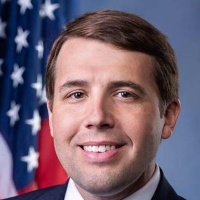
Chris Pappas
Representative
NH
Chris Pappas
Representative
NH
The Securing the Rights our Veterans Earned Act (SERVE Act) extends eligibility for key Department of Veterans Affairs (VA) benefits to former service members who were discharged based on their sexual orientation or gender identity. This includes access to hospital care, mental health services, national cemetery burial, Post-9/11 GI Bill education assistance, and housing loans. The bill also mandates the VA Secretary to conduct outreach regarding these newly available benefits.
This resolution affirms housing as a fundamental human right and opposes policies that would force families with mixed immigration status to separate or lose federal housing assistance.
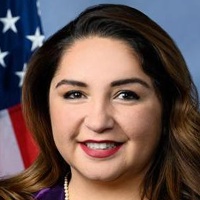
Delia Ramirez
Representative
IL
Delia Ramirez
Representative
IL
This resolution affirms that stable housing is a fundamental human right essential for all families, regardless of immigration status. It strongly condemns a proposed rule that would force families with mixed immigration status to separate or lose vital housing assistance. The bill calls for protecting families in federal housing programs and demands increased investment to address the national housing crisis.
This resolution expresses support for recognizing open water lifeguards as first responders and emergency response providers.
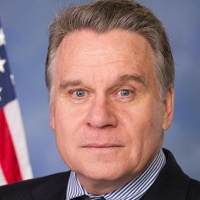
Christopher Smith
Representative
NJ
Christopher Smith
Representative
NJ
This resolution expresses strong support for open water lifeguards, recognizing their critical role as first responders and emergency response providers. It urges federal agencies to formally acknowledge the essential, lifesaving work these individuals perform, often at great personal risk. The bill calls for lifeguards to be treated as emergency responders, including eligibility for priority access to resources during public health emergencies.
This resolution censures President Trump and Special Envoy Witkoff for violating the Foreign Emoluments Clause by accepting undisclosed payments from the UAE and demands they divest from related foreign business interests.
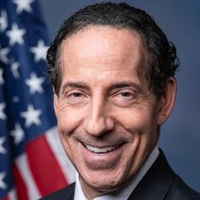
Jamie Raskin
Representative
MD
Jamie Raskin
Representative
MD
This resolution expresses the sense of the House that President Trump and Special Envoy Witkoff violated the Foreign Emoluments Clause by accepting undisclosed payments linked to a secret deal with an entity substantially funded by the UAE. It demands they immediately turn over all such payments to the Treasury and divest from any business interests connected to foreign governments. The bill cites specific financial transactions and subsequent U.S. policy actions favoring the UAE as evidence of a grave conflict of interest.
This resolution expresses the House's view that the Department of Justice must refuse to administratively settle President Trump's personal legal claims against the U.S. government due to the Domestic Emoluments Clause.
Jamie Raskin
Representative
MD
Jamie Raskin
Representative
MD
This resolution expresses the sense of the House that the Department of Justice must comply with the Domestic Emoluments Clause. It specifically calls for the DOJ to refuse to administratively settle the billions of dollars in legal claims filed against the United States by President Donald Trump. The bill asserts that allowing the President to settle his own personal claims against the government constitutes an unconstitutional conflict of interest.
This Act establishes grants to help local educational agencies and partners transform schoolyards into ecological, educational, and community-accessible outdoor learning environments.
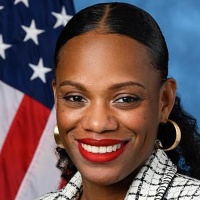
Summer Lee
Representative
PA
Summer Lee
Representative
PA
The Revitalizing America’s Schoolyards Act of 2026 establishes grants for local educational agencies and partners to transform school outdoor spaces into "revitalized schoolyards." These park-like environments must strengthen ecology, provide hands-on learning, and promote health, while remaining open for shared public use outside of school hours. The program prioritizes funding for schools serving high percentages of low-income students and directs the Department of Education to create a clearinghouse for best practices in outdoor learning spaces.
This bill establishes a commission of medical and former government experts to evaluate a President's physical or mental capacity to discharge the duties of the office when directed by Congress.
Jamie Raskin
Representative
MD
Jamie Raskin
Representative
MD
This bill establishes the Commission on Presidential Capacity to Discharge the Powers and Duties of the Office, a body tasked with evaluating the physical or mental fitness of the President. The Commission, composed of medical experts and former high-ranking officials, can be directed by Congress to examine the President. Its findings regarding the President's ability to execute their duties are then reported to Congress and the Vice President.
This resolution seeks to nullify the Department of Education’s recent rule regarding the William D. Ford Federal Direct Loan Program.
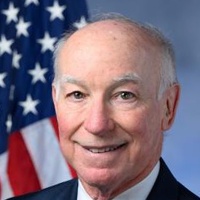
Joe Courtney
Representative
CT
Joe Courtney
Representative
CT
This resolution seeks to exercise congressional disapproval of the Department of Education’s recent rule regarding the William D. Ford Federal Direct Loan Program. If passed, the resolution would nullify the rule, rendering it without force or effect.
This bill mandates gender-neutral occupational standards across the U.S. Armed Forces and establishes new reporting requirements for military assignments and performance criteria.
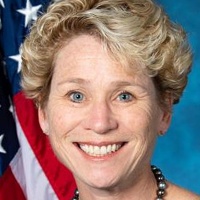
Chrissy Houlahan
Representative
PA
Chrissy Houlahan
Representative
PA
This bill mandates gender-neutral assignment standards across all branches of the U.S. Armed Forces, effective September 30, 2026. It requires that all occupational performance standards be based on scientifically rigorous, job-specific criteria rather than gender. Additionally, the legislation establishes new annual reporting requirements for Congress and mandates a formal review of ground combat unit effectiveness.
This resolution honors the service, sacrifices, and vital contributions of Cambodian veterans of the Khmer National Armed Forces who supported United States efforts in Southeast Asia.
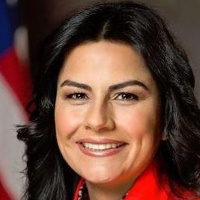
Nanette Barragán
Representative
CA
Nanette Barragán
Representative
CA
This resolution honors the Cambodian veterans of the Khmer National Armed Forces (FANK) for their vital support of U.S. forces and their courageous defense of freedom during the Vietnam War. It recognizes their critical contributions, including the evacuation of U.S. personnel, and acknowledges the immense sacrifices made by these veterans and the Cambodian people. The bill expresses profound gratitude for their partnership and celebrates the enduring impact of the Cambodian-American community.
This resolution designates April as "National Language Access Month" to promote awareness of and equitable access to essential public services for individuals with limited English proficiency.
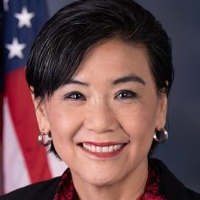
Judy Chu
Representative
CA
Judy Chu
Representative
CA
This resolution designates April as "National Language Access Month" to highlight the critical importance of providing language services for individuals with limited English proficiency. It encourages federal, state, and local entities to promote awareness of language rights and ensure equitable access to essential public programs and services for all Americans.
This resolution supports the goals and ideals of International Transgender Day of Visibility by celebrating the achievements of the transgender community and recognizing their ongoing fight for equality and dignity.
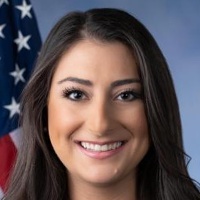
Sara Jacobs
Representative
CA
Sara Jacobs
Representative
CA
This resolution formally recognizes International Transgender Day of Visibility to celebrate the achievements and bravery of the transgender community. It highlights the ongoing challenges of discrimination and legislative threats faced by transgender individuals while honoring their significant historical and contemporary contributions to society. The bill encourages all Americans to observe the day and reaffirms a commitment to the fight for equal dignity and respect.
This Act mandates the implementation of security mechanisms on advanced integrated circuit products before export to protect U.S. technology and enhance national security.
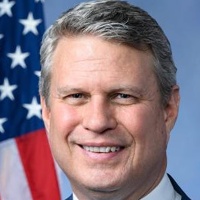
Bill Huizenga
Representative
MI
Bill Huizenga
Representative
MI
The Chip Security Act mandates the installation of security mechanisms on advanced integrated circuit products before they are exported from the United States. These requirements aim to verify chip location, prevent diversion, and protect U.S. technological leadership. The Secretary of Commerce must also study and implement additional security features to enhance export control enforcement and national security.
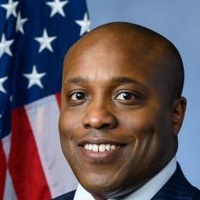
This bill prohibits U.S. courts from enforcing foreign judgments or arbitral awards based on actions taken by persons complying with U.S. sanctions.
Wesley Hunt
Representative
TX
Wesley Hunt
Representative
TX
This bill, the Protecting Americans from Russian Litigation Act of 2025, aims to shield U.S. persons from lawsuits attempting to enforce foreign judgments or arbitral awards based on compliance with U.S. sanctions. It prohibits U.S. courts from recognizing or enforcing such foreign rulings when they stem from actions taken to adhere to U.S. sanctions or export controls. The legislation ensures that foreign entities cannot use U.S. courts to gain compensation when U.S. persons acted in good faith to comply with federal law.
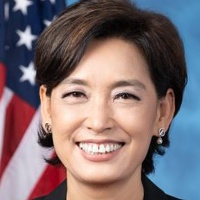
This resolution condemns China's coercive actions against Japan following statements on Taiwan and reaffirms the U.S. commitment to its Indo-Pacific allies.
Young Kim
Representative
CA
Young Kim
Representative
CA
This resolution condemns the People's Republic of China's coercive military and economic actions against Japan following statements regarding Taiwan. It reaffirms the strong U.S.-Japan alliance and commitment to regional stability. Furthermore, the bill calls on the PRC to cease its pressure tactics and urges the U.S. to work with allies to counter such coercion in the Indo-Pacific.
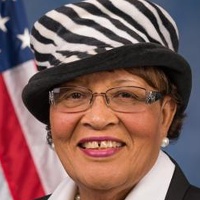
The Kira Johnson Act establishes grant programs and research initiatives to advance maternal health equity, reduce bias and discrimination in maternity care, and improve health outcomes for high-risk demographic groups.
Alma Adams
Representative
NC
Alma Adams
Representative
NC
The Kira Johnson Act aims to eliminate maternal health disparities by funding community-based organizations that provide evidence-based support to high-risk populations. The legislation also establishes grant programs to implement anti-bias training for maternity care providers and creates compliance programs to address racism and discrimination in clinical settings. Through these initiatives, the bill seeks to ensure respectful, culturally congruent care and improve health outcomes for pregnant and postpartum individuals.
This bill eliminates interest on existing federal student loans, sets new federal loans to 0% interest starting in 2026, and establishes a Trust Fund to support zero-interest loans and supplemental Pell Grants.
Joe Courtney
Representative
CT
Joe Courtney
Representative
CT
The Student Loan Interest Elimination Act aims to significantly reduce student debt burdens by automatically stopping interest accrual on existing federal loans starting in 2026 and setting interest rates for new federal loans to 0%. The bill also establishes a dedicated Trust Fund, funded by loan repayments, to support zero-interest loans and provide supplemental Pell Grants to eligible students. Furthermore, it allows certain borrowers to refinance non-federal loans into interest-free federal consolidation loans, while granting the Secretary of Education expedited authority to implement these sweeping changes.
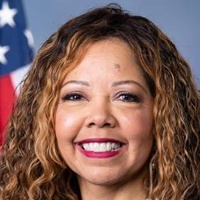
This bill extends WIC eligibility and enhanced food benefits for postpartum and breastfeeding mothers from one year to 24 months.
Lucy McBath
Representative
GA
Lucy McBath
Representative
GA
The Extending WIC for New Moms Act increases the duration of WIC eligibility for postpartum mothers from six months to 24 months. It also extends the period for receiving enhanced breastfeeding food packages to 24 months. Additionally, the bill mandates a comprehensive report to Congress evaluating the impact of these extensions on maternal and infant health outcomes.
The GUARDRAILS Act repeals the December 2025 executive order on artificial intelligence and prohibits the use of federal funds for its implementation.
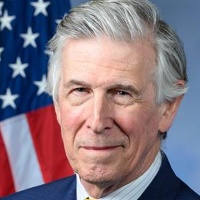
Donald Beyer
Representative
VA
Donald Beyer
Representative
VA
The GUARDRAILS Act repeals the December 11, 2025, Executive Order regarding national AI policy. This legislation prohibits the use of federal funds to implement or enforce the mandates set forth in that order.
This bill requires Medicare to provide separate payments for certain high-cost cancer drugs in hospital outpatient departments rather than bundling them into a single service fee.
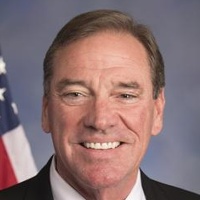
Neal Dunn
Representative
FL
Neal Dunn
Representative
FL
The Facilitating Access to Innovation in Cancer Care (FAIC) Act mandates that Medicare provide separate payments for high-cost cancer drugs administered in hospital outpatient departments, rather than bundling them into general service fees. By establishing a specific cost threshold for these treatments, the bill aims to improve reimbursement accuracy for innovative cancer therapies. To maintain fiscal responsibility, the legislation requires that these payment adjustments remain budget-neutral within the outpatient system.