Legislative Activity
Track Doug's sponsored bills, co-sponsored legislation, and voting record
This act provides tax relief to disaster victims by allowing deductions for qualified disaster-related casualty losses for non-itemizers and excluding certain wildfire relief payments from gross income.
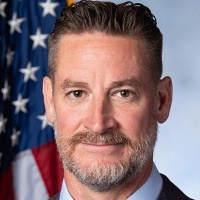
W. Steube
Representative
FL
W. Steube
Representative
FL
The Doug LaMalfa Federal Disaster Tax Relief Certainty Act provides tax relief to individuals affected by federally declared disasters occurring between 2019 and 2027. The bill allows taxpayers to deduct qualified disaster-related casualty losses even if they do not itemize and excludes certain wildfire relief payments from gross income. These measures aim to reduce the financial burden on disaster victims by simplifying the deduction process and preventing the taxation of recovery compensation.
This bill authorizes a seven-year grant program for the National Law Enforcement Officers Memorial Fund to support the National Law Enforcement Museum’s educational, community outreach, and officer wellness initiatives.
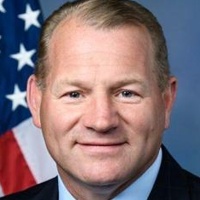
Troy Nehls
Representative
TX
Troy Nehls
Representative
TX
The National Law Enforcement Officers Remembrance, Support, and Community Outreach Act authorizes $6 million in annual grants over seven years to the National Law Enforcement Officers Memorial Fund. These funds will support the National Law Enforcement Museum’s public education, community outreach, and officer safety and wellness programs. As a condition of the grant, the museum must provide free admission to law enforcement officers and their families, as well as dedicated free hours for the general public.
This bill designates the Department of Veterans Affairs community-based outpatient clinic in San Jose, California, as the "Corporal Patrick D. Tillman VA Clinic."
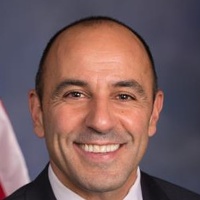
Jimmy Panetta
Representative
CA
Jimmy Panetta
Representative
CA
This bill designates the Department of Veterans Affairs community-based outpatient clinic in San Jose, California, as the "Corporal Patrick D. Tillman VA Clinic." This renaming honors the legacy of Pat Tillman, a San Jose native and former NFL player who left his professional career to serve as an Army Ranger and made the ultimate sacrifice for his country.
This Act prohibits payment card networks and processors from assigning specific merchant category codes to identify firearms retailers, protecting the privacy of firearm and ammunition purchases.
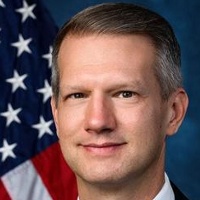
Riley Moore
Representative
WV
Riley Moore
Representative
WV
The Protecting Privacy in Purchases Act prohibits payment card networks and processors from assigning specific merchant category codes to firearms retailers. This legislation aims to protect consumer privacy by preventing the tracking of firearm and ammunition purchases through specialized financial classification. The Attorney General is tasked with enforcing these provisions and reporting annually on compliance.
The SHARE Act of 2025 establishes federal requirements for the FBI to share criminal history record information with states participating in interstate professional licensing compacts, while strictly limiting how those states can use and further disseminate that data.
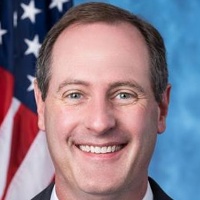
Tracey Mann
Representative
KS
Tracey Mann
Representative
KS
The SHARE Act of 2025 establishes new federal requirements for the FBI to share criminal history record information with states participating in professional licensing interstate compacts. This information sharing is strictly for the purpose of conducting background checks on applicants seeking to practice a profession in another compact state. States receiving this data are severely restricted on how they can use or further disseminate the detailed criminal history, generally only being permitted to report a binary "satisfactory" or "unsatisfactory" determination back to the compact's Commission.
This Act enhances accountability and transparency for Small Business Administration (SBA) disaster loans through expanded reporting requirements, detailed budget submissions, low-funding notifications, and independent GAO reviews.
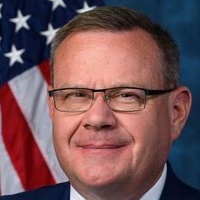
Tim Moore
Representative
NC
Tim Moore
Representative
NC
The Disaster Loan Accountability and Reform Act (DLARA) aims to increase transparency and oversight of Small Business Administration (SBA) disaster loan programs. It mandates expanded monthly reporting on loan funding levels, requires detailed breakdowns in future Presidential budget requests, and imposes new notification requirements when disaster loan funds become critically low. Additionally, the bill directs the GAO to report on loan disbursement rates and the financial impact of recent program changes.
This bill amends the Immigration and Nationality Act to make noncitizens associated with criminal gangs inadmissible and deportable, while mandating their detention and restricting their eligibility for immigration relief.
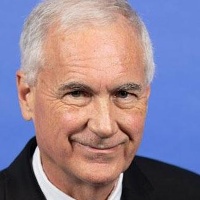
Tom McClintock
Representative
CA
Tom McClintock
Representative
CA
The Deport Alien Gang Members Act amends the Immigration and Nationality Act to establish new grounds for inadmissibility and deportability for noncitizens associated with criminal gangs. The bill authorizes the Secretary of Homeland Security to formally designate criminal organizations, mandates the detention of identified gang members, and restricts their eligibility for various forms of immigration relief.
This bill establishes the Smithsonian American Women's History Museum, designates its site on the National Mall, and sets requirements for its mission, construction, and diverse representation of viewpoints.

Nicole Malliotakis
Representative
NY
Nicole Malliotakis
Representative
NY
This act officially establishes the Smithsonian American Women’s History Museum and designates its location on the National Mall, requiring the transfer of land jurisdiction to the Smithsonian Institution. The museum is mandated to preserve and present the history and achievements of biological women in the United States. Furthermore, the legislation requires that exhibits and programs reflect diverse political viewpoints and authentic experiences of women, as guided by a broad array of knowledgeable sources.
This Act repeals the federal beneficial ownership information reporting requirements for domestic persons and entities, limiting them only to foreign individuals and foreign-connected companies, and mandates the deletion of existing domestic data.
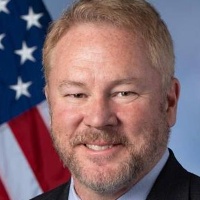
Warren Davidson
Representative
OH
Warren Davidson
Representative
OH
The Repealing Big Brother Overreach Act significantly narrows the federal beneficial ownership information reporting requirements. This legislation limits reporting obligations exclusively to foreign individuals and foreign-connected companies. Furthermore, it mandates the deletion of all previously collected data pertaining to domestic persons and entities.
This Act mandates federal agencies to establish clear guidelines for recognizing special districts as eligible recipients for federal financial assistance.
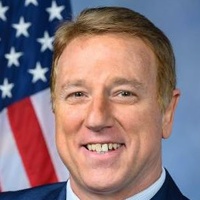
Patrick Fallon
Representative
TX
Patrick Fallon
Representative
TX
The Special District Fairness and Accessibility Act ensures that specialized local government entities, known as special districts, are explicitly recognized as eligible recipients for federal financial assistance. This legislation mandates the Office of Management and Budget (OMB) to issue clear guidance on recognizing these districts for grants and loans. The goal is to standardize how federal agencies distribute financial aid to these essential local service providers.
The North Rim Restoration Act authorizes the National Park Service to implement reforestation programs and utilize expedited contracting procedures to accelerate recovery efforts in areas of the Grand Canyon damaged by the Dragon Bravo Fire.
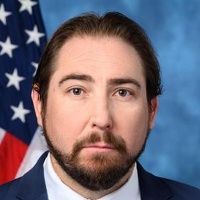
Eli Crane
Representative
AZ
Eli Crane
Representative
AZ
The North Rim Restoration Act establishes a comprehensive program to restore and reforest areas of the Grand Canyon National Park damaged by the Dragon Bravo Fire. To expedite recovery, the bill grants the Secretary of the Interior emergency contracting and limited sole-source procurement authorities to repair essential infrastructure and visitor facilities. These measures are supported by strict reporting requirements to ensure transparency and accountability throughout the restoration process.
The Save Our Sequoias Act establishes a comprehensive federal framework to protect, restore, and manage giant sequoia groves through collaborative partnerships, emergency response programs, and long-term reforestation strategies.
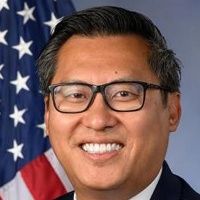
Vince Fong
Representative
CA
Vince Fong
Representative
CA
The Save Our Sequoias Act establishes a comprehensive, multi-agency framework to protect and restore giant sequoia groves from the escalating threats of wildfire, insects, and drought. The legislation creates a collaborative coalition to assess grove health, streamlines emergency protection projects, and authorizes dedicated funding and strike teams to accelerate reforestation and forest management efforts. By fostering partnerships between federal, state, and Tribal entities, the Act aims to ensure the long-term resilience and survival of these iconic trees.
The Enhanced Iran Sanctions Act of 2025 mandates broad economic and immigration sanctions on foreign individuals, entities, and financial institutions that support Iran’s nuclear, missile, drone, or terrorist activities, while specifically targeting the country's petroleum and petrochemical sectors.
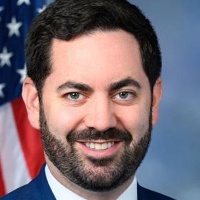
Michael Lawler
Representative
NY
Michael Lawler
Representative
NY
The Enhanced Iran Sanctions Act of 2025 strengthens U.S. policy by imposing mandatory sanctions on foreign persons and financial institutions that support Iran’s nuclear, ballistic missile, drone, and terrorist activities. The bill specifically targets Iran’s petroleum and petrochemical sectors to cut off funding for these malign programs. Additionally, it expands the State Department’s "Rewards for Justice" program to incentivize the reporting of individuals who evade these sanctions.
This bill expands the leasing authority for the Confederated Tribes of the Chehalis Reservation to allow 99-year leases of their trust lands to other federally recognized Indian Tribes.
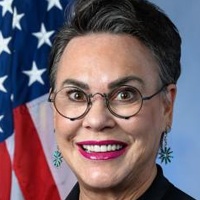
Harriet Hageman
Representative
WY
Harriet Hageman
Representative
WY
This bill expands the leasing authority for the Confederated Tribes of the Chehalis Reservation. It allows the tribe to lease its trust lands for up to 99 years not only to the U.S. or the State of Washington, but also to any other federally recognized Indian tribe.
This bill exempts specific less-than-lethal projectile devices from federal firearm restrictions, excise taxes, and National Firearms Act regulations to promote de-escalation innovation in law enforcement.
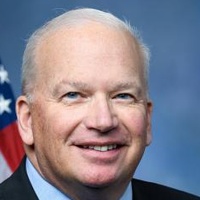
Scott Fitzgerald
Representative
WI
Scott Fitzgerald
Representative
WI
The Law-Enforcement Innovate to De-Escalate Act aims to promote de-escalation by exempting specific, clearly defined less-than-lethal projectile devices from federal firearm restrictions and excise taxes. This legislation provides a formal process for determining which devices qualify for these exemptions under both federal law and the National Firearms Act. The bill also modernizes tax regulations by exempting qualifying less-than-lethal devices and their ammunition from federal excise taxes.
This bill establishes eligibility requirements for amateur athletic organizations based on biological sex, prohibiting individuals whose sex is male from competing in female-designated amateur athletic competitions.
W. Steube
Representative
FL
W. Steube
Representative
FL
This Act establishes specific definitions for "female," "male," and "sex" based on biological reproductive systems for amateur athletics. It mandates that organizations recognized by the U.S. Olympic & Paralympic Committee must prohibit individuals identified as male from competing in competitions designated for females. This aims to protect competitive opportunities specifically for biological females in amateur sports.
This bill removes the Mexican wolf from the endangered species list, nullifies previous related regulations, and mandates that future recovery decisions focus solely on the U.S. wolf population.

Paul Gosar
Representative
AZ
Paul Gosar
Representative
AZ
The Enhancing Safety for Animals Act of 2025 officially delists the Mexican wolf from the list of threatened and endangered species. This legislation voids previous management rules and mandates that future recovery plans for the species in the U.S. must exclude consideration of the wolf population in Mexico. The bill also addresses concerns regarding compensation standards for ranchers suffering livestock losses due to wolf predation.
This act removes the gray wolf from the endangered and threatened wildlife list and prohibits judicial review of that decision.

Lauren Boebert
Representative
CO
Lauren Boebert
Representative
CO
The Pet and Livestock Protection Act officially removes the gray wolf from the federal list of endangered and threatened wildlife. This legislation mandates the reissuance of the November 3, 2020, final rule concerning the gray wolf's delisting within 60 days of enactment. Furthermore, the reissuance of this rule is explicitly barred from judicial review.
The ESA Amendments Act of 2025 seeks to modernize the Endangered Species Act by prioritizing resource allocation, incentivizing private land conservation, increasing state involvement, and streamlining federal permitting and regulatory processes.
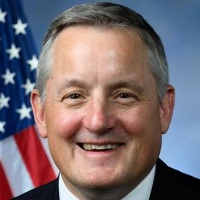
Bruce Westerman
Representative
AR
Bruce Westerman
Representative
AR
The ESA Amendments Act of 2025 proposes comprehensive reforms to the Endangered Species Act, aiming to shift the focus toward state-led conservation, voluntary private land agreements, and streamlined federal permitting. The bill introduces a prioritized, schedule-based approach for listing species while increasing transparency regarding agency data, litigation, and economic impacts. By narrowing the scope of federal regulatory authority and environmental reviews, the legislation seeks to balance species protection with infrastructure development and economic interests.
This bill authorizes Congress to award Congressional Gold Medals to the 1980 U.S. Men's Olympic Ice Hockey team for their historic "Miracle on Ice" victory.
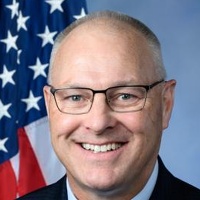
Pete Stauber
Representative
MN
Pete Stauber
Representative
MN
This bill, the Miracle on Ice Congressional Gold Medal Act, officially authorizes Congress to award Congressional Gold Medals to the 1980 U.S. Men's Olympic Ice Hockey Team for their historic "Miracle on Ice" victory. The medals will be struck by the Treasury and permanently displayed at specific national sports museums. The Act also permits the sale of duplicate bronze medals to cover production costs.