Legislative Activity
Track Ro's sponsored bills, co-sponsored legislation, and voting record
This Act promotes private employee ownership by extending tax deferrals for S corporation ESOP sales, ensuring ESOP-owned businesses retain small business status, and establishing new Treasury and Labor offices to provide assistance and advocacy.
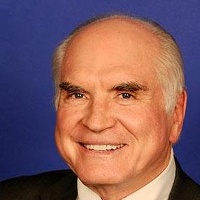
Mike Kelly
Representative
PA
Mike Kelly
Representative
PA
The Promotion and Expansion of Private Employee Ownership Act of 2025 aims to significantly boost employee ownership in S corporations through Employee Stock Ownership Plans (ESOPs). The bill extends key tax deferral benefits for stock sales to ESOPs and removes a major restriction on this tax treatment. Furthermore, it establishes new government offices and an Advocate for Employee Ownership to provide technical assistance and resolve disputes, while ensuring ESOP-owned businesses retain small business status for federal programs.
This resolution recognizes the 50th anniversary of the Fall of Saigon, honoring the history, service, and contributions of Vietnamese Americans while reaffirming U.S. commitment to democracy and human rights.
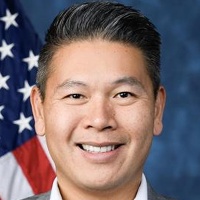
Derek Tran
Representative
CA
Derek Tran
Representative
CA
This resolution commemorates the 50th anniversary of the Fall of Saigon and recognizes the profound contributions of Vietnamese Americans to the United States. It honors those who fled the communist regime after April 30, 1975, and reaffirms American commitment to democracy and human rights. The bill encourages all citizens to observe this anniversary and remember the sacrifices made in the pursuit of freedom.
The Better CARE for Animals Act of 2025 strengthens the enforcement of the Animal Welfare Act by expanding investigative authority, establishing new civil penalties up to \$10,000 per day, and explicitly granting the Attorney General power to file civil actions, including seeking seizure and forfeiture of animals.
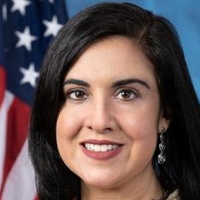
Nicole Malliotakis
Representative
NY
Nicole Malliotakis
Representative
NY
The Better CARE for Animals Act of 2025 significantly strengthens enforcement of the Animal Welfare Act by clarifying definitions and expanding the scope of investigations. It grants the Attorney General explicit authority to file civil actions seeking penalties up to $10,000 per day, and mandates that collected fines help cover temporary animal care costs. The bill also requires the Secretary of Agriculture and the Attorney General to establish a formal agreement for coordinated enforcement.
This Act imposes sanctions, counters online censorship, and addresses religious freedom concerns in Vietnam by integrating human rights standards into U.S. policy and trade relations.
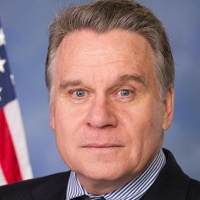
Christopher Smith
Representative
NJ
Christopher Smith
Representative
NJ
The Vietnam Human Rights Act aims to integrate human rights concerns into the U.S.-Vietnam relationship by imposing sanctions on officials involved in abuses and corruption. The bill mandates actions to combat Vietnamese government censorship and surveillance while pushing for stronger religious freedom protections. It also establishes detailed reporting requirements to track progress on these critical human rights issues.
This bill bans the manufacture, sale, and transfer of specific semiautomatic assault weapons and large-capacity ammunition feeding devices while grandfathering existing possessions and establishing new transfer requirements.
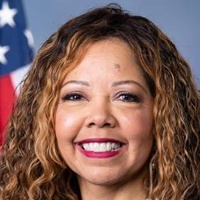
Lucy McBath
Representative
GA
Lucy McBath
Representative
GA
The Assault Weapons Ban of 2025 comprehensively defines and bans the manufacture, sale, and transfer of specific semiautomatic assault weapons and large capacity ammunition feeding devices. The bill grandfathers existing weapons but imposes new requirements for their secure storage and mandates dealer involvement for future private transfers. It also allows federal grant money to be used by states for buy-back programs targeting these banned items.
The Agriculture Resilience Act of 2025 mandates aggressive national goals to achieve net-zero agricultural emissions by 2040 through sweeping changes in research funding, soil management, livestock practices, and conservation programs.

Chellie Pingree
Representative
ME
Chellie Pingree
Representative
ME
The Agriculture Resilience Act of 2025 establishes aggressive national goals for the agricultural sector to achieve net-zero greenhouse gas emissions by 2040, mandating rapid changes in farming practices, research funding, and land management. It significantly reforms federal conservation and insurance programs to prioritize soil health, climate adaptation, and the development of resilient food systems. The bill also boosts support for on-farm renewable energy, strengthens local food infrastructure, and standardizes food labeling to reduce waste. Overall, it directs substantial federal resources toward transforming agriculture to meet ambitious climate targets while supporting farmers through new incentives and research.
This bill repeals the Arctic National Wildlife Refuge oil and gas program and designates over 1.5 million acres of the refuge as protected wilderness.
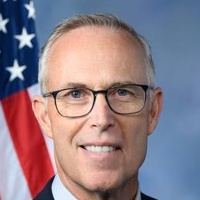
Jared Huffman
Representative
CA
Jared Huffman
Representative
CA
The Arctic Refuge Protection Act officially repeals the previous law authorizing oil and gas leasing in the Arctic National Wildlife Refuge. This legislation simultaneously designates approximately 1.56 million acres within the Refuge as protected wilderness under the National Wilderness Preservation System. The Secretary of the Interior is now required to manage this newly designated land according to strict wilderness preservation standards.
The Equality Act comprehensively prohibits discrimination based on sex, sexual orientation, and gender identity across key areas including public accommodations, employment, housing, credit, and jury service.
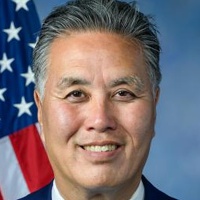
Mark Takano
Representative
CA
Mark Takano
Representative
CA
The Equality Act comprehensively expands federal civil rights protections against discrimination based on sex, sexual orientation, and gender identity across key areas of American life. It amends existing laws to prohibit discrimination in public accommodations, housing, credit, employment, and federal funding. The purpose of the bill is to provide consistent, explicit, and comprehensive remedies for individuals facing bias in these essential sectors.
This bill establishes a universal, comprehensive national health insurance program called "Medicare for All" that eliminates patient cost-sharing and transitions the nation away from private insurance duplication.

Pramila Jayapal
Representative
WA
Pramila Jayapal
Representative
WA
The Medicare for All Act establishes a universal, nationwide health insurance program providing comprehensive coverage for all U.S. residents with no out-of-pocket costs. It fundamentally restructures healthcare financing by implementing global budgets for institutions and a new fee schedule for individuals, while phasing out existing federal programs like Medicare and Medicaid. The legislation also sets strict quality standards for providers and creates a dedicated Trust Fund to manage the system's finances.
This bill mandates the FCC to create and maintain a public list of entities holding communications licenses that have ownership or control by foreign adversaries.

Robert Wittman
Representative
VA
Robert Wittman
Representative
VA
The Foreign Adversary Communications Transparency Act requires the FCC to create and maintain a public list of entities holding FCC authorizations or licenses that have ownership or control by entities linked to designated foreign adversaries. This process begins with an initial list based on existing reporting requirements and expands through new rulemaking to capture a broader range of potentially influenced companies. The goal is to increase transparency regarding foreign influence over critical communications infrastructure licensed by the U.S. government.
The Agent Orange Relief Act of 2025 expands benefits for children of male Vietnam veterans, funds health studies for affected Vietnamese Americans, and mandates research into the ongoing health effects of Agent Orange exposure.
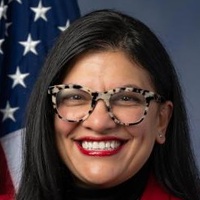
Rashida Tlaib
Representative
MI
Rashida Tlaib
Representative
MI
The Agent Orange Relief Act of 2025 aims to address the ongoing health crises stemming from the U.S. use of herbicides during the Vietnam War. This legislation expands benefits for children of male veterans born with certain birth defects and mandates new research into intergenerational health effects. Furthermore, the Act requires the Department of Health and Human Services to fund health studies and establish treatment centers for affected Vietnamese Americans. Agencies are given 18 months to fully implement these provisions, followed by mandatory quarterly progress reports to Congress.
This Act establishes comprehensive assistance programs through USAID for Vietnamese individuals affected by Agent Orange exposure and mandates HHS to conduct health assessments and establish support centers for Vietnamese Americans.
Rashida Tlaib
Representative
MI
Rashida Tlaib
Representative
MI
The Victims of Agent Orange Act of 2025 aims to address the ongoing health and environmental damage caused by the use of herbicides, including Agent Orange, during the Vietnam War. This legislation establishes comprehensive assistance programs through USAID for affected individuals and environmental cleanup in Vietnam. Furthermore, it mandates health assessments and the creation of dedicated health centers by HHS to support Vietnamese Americans impacted by the toxic exposure.
This Act authorizes the President to impose sanctions, including asset freezes and visa bans, on foreign individuals involved in violence, property destruction, or displacement in the West Bank.
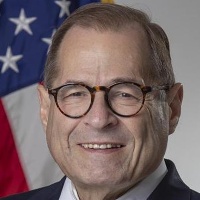
Jerrold Nadler
Representative
NY
Jerrold Nadler
Representative
NY
The West Bank Violence Prevention Act of 2025 declares extreme settler violence and displacement in the West Bank a threat to U.S. national security interests. This Act mandates the President to impose sanctions, including asset freezes and visa bans, on foreign individuals responsible for undermining peace and stability in the region. The Treasury Department must report to Congress on the implementation of these sanctions every 90 days.
This bill significantly enhances the Child and Dependent Care Tax Credit by raising expense limits, adjusting income phase-outs, and making the credit partially refundable.
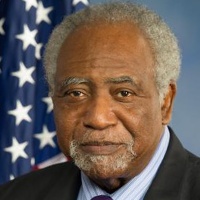
Danny Davis
Representative
IL
Danny Davis
Representative
IL
The Child and Dependent Care Tax Credit Enhancement Act of 2025 significantly increases the maximum expenses eligible for the Child and Dependent Care Tax Credit to \$8,000 for one child and \$16,000 for two or more. This legislation also modifies the income-based calculation for the credit percentage and makes the credit partially or fully refundable for eligible taxpayers. Furthermore, key dollar limits will be adjusted annually for inflation starting in 2026.
The Deafblind DATA Act mandates the Census Bureau to cross-reference existing survey data to produce annual, state-level demographic and economic statistics on the U.S. deafblind population.
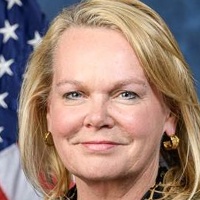
April McClain Delaney
Representative
MD
April McClain Delaney
Representative
MD
The Deafblind DATA Act aims to establish a more accurate count of Americans who are deafblind by directing the Census Bureau to cross-reference existing survey data. This new law mandates the annual publication of a public table detailing the demographic and economic characteristics of the deafblind population by state, starting in 2026. The goal is to provide essential data to ensure these individuals receive necessary support and resources.
This resolution recognizes the vital contributions of linemen, often acting as first responders, and supports designating April 18, 2025, as "National Lineman Appreciation Day."
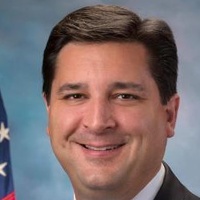
David Rouzer
Representative
NC
David Rouzer
Representative
NC
This resolution officially recognizes the vital and dangerous work performed by power linemen who maintain our electrical infrastructure and ensure public safety. It highlights their crucial role as first responders, often working in hazardous conditions after disasters. Furthermore, the resolution supports the designation of April 18, 2025, as "National Lineman Appreciation Day" to formally honor their service.
This resolution supports designating Black Maternal Health Week to highlight the urgent need to address the severe and preventable maternal health crisis disproportionately affecting Black women and birthing people in the United States.
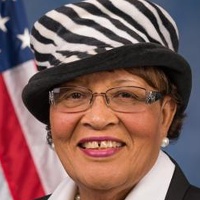
Alma Adams
Representative
NC
Alma Adams
Representative
NC
This resolution officially designates the week of April 11–17, 2025, as the eighth annual Black Maternal Health Week to raise national awareness of the severe maternal and reproductive health crisis facing Black women and birthing people. It highlights the unacceptable disparity where Black women are significantly more likely to die from pregnancy-related causes, emphasizing that most of these deaths are preventable. The bill calls for targeted investments, policy changes addressing systemic barriers, and the centering of Black women's voices in developing solutions to achieve equitable maternal health outcomes.
This bill eliminates the federal income tax on Social Security benefits while adjusting the Social Security payroll tax cap and increasing future benefit calculations for high earners starting in 2026.
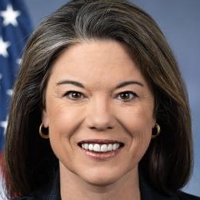
Angie Craig
Representative
MN
Angie Craig
Representative
MN
The You Earned It, You Keep It Act eliminates federal income tax on Social Security benefits while ensuring trust funds remain whole through Treasury appropriations. Starting in 2026, the bill significantly alters the Social Security payroll tax cap for high earners, introducing a new $\$250,000$ threshold for both wage taxation and benefit calculation. Furthermore, it adjusts the benefit formula for future retirees by adding a small bonus based on earnings above $\$250,000$, while protecting access to needs-based programs like SSI and Medicaid.
This bill grants enhanced due process protections and potential reinstatement rights to certain federal employees removed during their probationary period following a promotion.
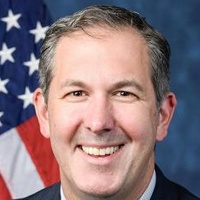
Johnny Olszewski
Representative
MD
Johnny Olszewski
Representative
MD
This bill provides enhanced employment protections and reinstatement options for certain Federal career employees who were serving under a probationary period following a promotion. It grants these employees standard due process rights against unfair removal while on probation. Furthermore, it allows employees removed between January 20, 2025, and the date of enactment to elect reinstatement to their former or an equivalent position with back pay. These protections generally exclude those promoted into or removed from political positions.
This Act establishes an Advisory Council to survey needs, identify best practices, and disseminate comprehensive resources for victims of all forms of gun violence.
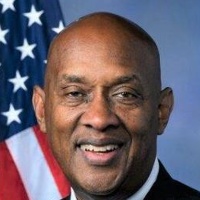
Dwight Evans
Representative
PA
Dwight Evans
Representative
PA
The Resources for Victims of Gun Violence Act of 2025 establishes an Advisory Council, led by HHS, to assess the needs of gun violence victims and service providers. This Council will survey stakeholders, review existing support programs, and identify best practices for medical, financial, and mental health assistance. Its primary function is to compile and widely distribute a comprehensive list of available federal, state, and nonprofit resources to ensure victims can easily access necessary aid.