Legislative Activity
Track John's sponsored bills, co-sponsored legislation, and voting record
This resolution officially designates November 1, 2025, as National Bison Day to recognize the historical, cultural, and economic significance of the North American bison.
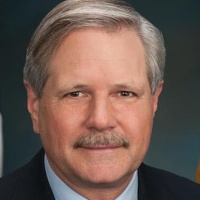
John Hoeven
Senator
ND
John Hoeven
Senator
ND
This resolution officially designates November 1, 2025, as National Bison Day to recognize the historical, cultural, and economic significance of the North American bison. It honors the bison's status as the national mammal, its importance to Indian Tribes, and its role in conservation and rural economies. The resolution encourages nationwide observance of this day annually on the first Saturday of November.
This bill ensures uninterrupted funding for SNAP and WIC benefits through fiscal year 2026, covering any missed payments during a funding lapse.
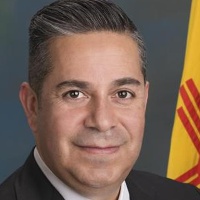
Ben Luján
Senator
NM
Ben Luján
Senator
NM
The Keep SNAP and WIC Funded Act of 2025 ensures that essential nutrition programs, including SNAP and WIC, continue to provide benefits without interruption if full appropriations for the Department of Agriculture are not enacted for Fiscal Year 2026. This legislation immediately makes funds available to cover benefits and state operating costs during any funding lapse, retroactive to September 30, 2025. These special appropriations terminate once the standard FY 2026 funding bill is passed or by September 30, 2026.
This resolution calls on educational bodies to recognize the significant educational implications of dyslexia and designates October 2025 as National Dyslexia Awareness Month.
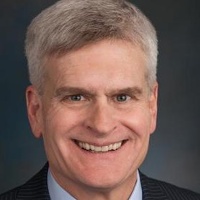
Bill Cassidy
Senator
LA
Bill Cassidy
Senator
LA
This resolution calls on Congress and educational agencies to recognize the significant educational implications of dyslexia, the most common learning disability. It emphasizes the need for early screening and evidence-based intervention for affected individuals. Finally, the resolution designates October 2025 as National Dyslexia Awareness Month.
This resolution designates October 30, 2025, as a national day of remembrance to honor the contributions, services, and sacrifices of United States nuclear weapons program workers.

Marsha Blackburn
Senator
TN
Marsha Blackburn
Senator
TN
This resolution designates October 30, 2025, as a national day of remembrance to honor the hundreds of thousands of individuals who contributed to the United States nuclear weapons program since World War II. It specifically recognizes the service and sacrifices of workers like uranium miners, plutonium processors, and atmospheric test participants. The day serves to acknowledge those who developed serious illnesses as a result of their patriotic service to the nation's defense.
This resolution condemns President Trump's pardon of Binance founder Changpeng Zhao for violating anti-money laundering laws and calls on Congress to prevent such corruption.
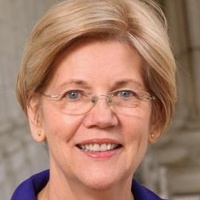
Elizabeth Warren
Senator
MA
Elizabeth Warren
Senator
MA
This resolution formally condemns President Trump's pardon of Binance founder Changpeng Zhao, who previously pleaded guilty to violating U.S. anti-money laundering laws. The measure expresses strong disapproval of the pardon, citing potential conflicts of interest related to the Trump family's financial dealings with Binance. Finally, it calls upon Congress to utilize its authority to prevent similar acts of corruption in the pardon process moving forward.
This bill appropriates funds to ensure military and federal employees and contractors receive full compensation for work performed or time furloughed during a lapse in government appropriations between October 1, 2025, and the date of enactment.
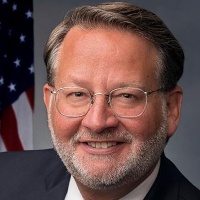
Gary Peters
Senator
MI
Gary Peters
Senator
MI
The Military and Federal Employee Protection Act ensures that federal employees, military members, and covered contractors receive their full standard compensation for work performed or time furloughed during a lapse in government appropriations occurring after September 30, 2025. This bill appropriates necessary funds for agencies to make these retroactive payments. Payments must be made promptly, generally within seven days of enactment for furloughed individuals. This legislation guarantees that no covered individual loses pay due to a government shutdown during the specified period.
The TREATS Act allows a single telehealth evaluation to satisfy the in-person requirement for prescribing certain Schedule III, IV, or V controlled substances approved for substance use disorder treatment.

Lisa Murkowski
Senator
AK
Lisa Murkowski
Senator
AK
The TREATS Act modifies existing law to expand access to medication-assisted treatment for substance use disorders. Specifically, it allows a single telehealth evaluation to satisfy the prior in-person evaluation requirement for prescribing certain Schedule III, IV, or V controlled substances approved for addiction treatment. This change aims to improve the delivery of necessary therapy services via remote care.
The Fix Our Forests Act accelerates hazardous fuel reduction and community wildfire defense by streamlining environmental reviews, enhancing interagency coordination, and establishing new support programs for affected communities and fallen firefighters.
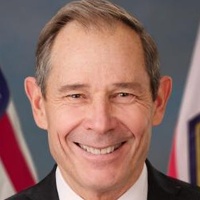
John Curtis
Senator
UT
John Curtis
Senator
UT
The Fix Our Forests Act is comprehensive legislation designed to aggressively reduce catastrophic wildfire risk through landscape-scale restoration and streamlined management of high-risk federal lands. It establishes new centralized intelligence centers, accelerates hazardous fuel reduction projects by reforming environmental reviews, and bolsters community resilience through new risk reduction programs. Furthermore, the bill enhances support for firefighters' families and promotes technological innovation and transparency in forest management practices.
This joint resolution directs the President to immediately remove U.S. Armed Forces from hostilities within or against Venezuela unless explicitly authorized by Congress.
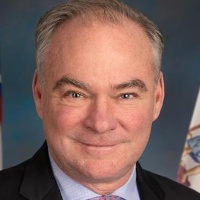
Timothy Kaine
Senator
VA
Timothy Kaine
Senator
VA
This joint resolution directs the President to immediately remove United States Armed Forces from any hostilities within or against Venezuela that lack explicit authorization from Congress. It asserts that only Congress has the constitutional authority to declare war or approve such military actions. The bill ensures that U.S. forces can only remain if acting in self-defense against an armed attack.
This resolution expresses the Senate's support for designating the second Monday in October 2025 as Indigenous Peoples' Day to honor the history, culture, and contributions of Indigenous Peoples.
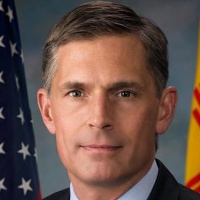
Martin Heinrich
Senator
NM
Martin Heinrich
Senator
NM
This resolution expresses the Senate's support for designating the second Monday in October 2025 as "Indigenous Peoples' Day." It formally recognizes the invaluable contributions of Indigenous Peoples to the United States and encourages public observance to celebrate their history and culture. The measure also voices support for establishing this day as an official Federal holiday.
This Act expands employee ownership representation on an existing ERISA council, establishes a new Office of Employee Ownership, creates an Advisory Council on Employee Ownership, and appoints an Advocate for Employee Ownership within the Department of Labor.
Bill Cassidy
Senator
LA
Bill Cassidy
Senator
LA
The Employee Ownership Representation Act of 2025 aims to significantly boost employee ownership in the U.S. by expanding the ERISA Advisory Council to include employee ownership representatives. The bill establishes a new, independent Office of Employee Ownership within the Department of Labor to carry out the Employee Ownership Initiative. Finally, it creates the role of Advocate for Employee Ownership to advise the Secretary of Labor, facilitate education, and resolve disputes related to employee stock ownership plans (ESOPs).
This resolution designates October 1, 2025, as "Energy Efficiency Day" to celebrate the significant economic and environmental benefits driven by energy efficiency achievements.
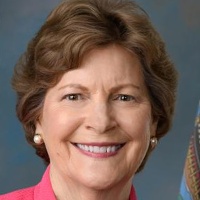
Jeanne Shaheen
Senator
NH
Jeanne Shaheen
Senator
NH
This resolution officially designates October 1, 2025, as "Energy Efficiency Day" to celebrate the significant economic and environmental benefits driven by energy efficiency efforts. It recognizes decades of bipartisan support, major legislative achievements, and the resulting savings for consumers and taxpayers. The resolution encourages all Americans to observe the day with appropriate activities recognizing the importance of energy efficiency.
This bill extends the authority for government and private sector cybersecurity information sharing for ten years, renaming the underlying act to the "Protecting America from Cyber Threats Act."
Gary Peters
Senator
MI
Gary Peters
Senator
MI
The Extending Expired Cybersecurity Authorities Act ensures the continuation of vital cybersecurity information sharing between the government and private industry. This bill extends the authority for sharing cyber threat information for an additional ten years, pushing the expiration date from 2025 to 2035. Furthermore, it retroactively applies this extension to prevent any lapse in coverage and officially renames the program to the "Protecting America from Cyber Threats Act."
This bill mandates the U.S. Postal Service to assign a single, unique ZIP Code to 69 specified communities within 270 days of enactment.
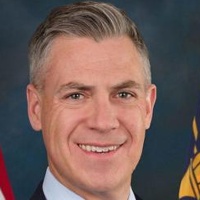
Jim Banks
Senator
IN
Jim Banks
Senator
IN
This bill directs the United States Postal Service (USPS) to establish a single, unique ZIP Code for 69 specific communities across the nation. The USPS must complete this designation for the listed locations within 270 days of the bill's enactment. This measure aims to improve mail sorting and clarity for residents in these designated areas.
This bill waives the 10% early withdrawal tax penalty for federal workers taking up to \$30,000 from their Thrift Savings Plan during a government shutdown and adjusts TSP loan rules during such lapses in appropriations.
Timothy Kaine
Senator
VA
Timothy Kaine
Senator
VA
The Emergency Relief for Federal Workers Act of 2025 provides financial relief to federal employees affected by government shutdowns. This bill waives the 10% early withdrawal penalty on Thrift Savings Plan (TSP) distributions up to \$30,000 taken due to a shutdown. Furthermore, it establishes rules allowing furloughed or non-paid employees to take TSP loans and prevents missed loan payments during a shutdown from being treated as a taxable distribution.
This resolution condemns the September 10, 2025, school violence in Evergreen, Colorado, while honoring the victims, survivors, responders, and affected communities.

Michael Bennet
Senator
CO
Michael Bennet
Senator
CO
This resolution formally condemns the tragic act of violence at Evergreen High School on September 10, 2025, and extends condolences to the victims, survivors, and their families. It specifically recognizes the swift and heroic response of law enforcement, school personnel, medical teams, and community members. Ultimately, this measure affirms the profound impact of the event and honors the resilience shown by the entire Evergreen community.
This joint resolution seeks to disapprove and nullify the recent CMS rule concerning the Patient Protection and Affordable Care Act's Market Integrity and Affordability.

Mark Warner
Senator
VA
Mark Warner
Senator
VA
This joint resolution seeks to disapprove and nullify a specific rule published by the Centers for Medicare & Medicaid Services concerning the "Patient Protection and Affordable Care Act; Market Integrity and Affordability." If enacted, this measure would prevent the CMS rule from having any legal force or effect.
This resolution officially recognizes Hispanic Heritage Month (September 15 - October 15, 2025) while celebrating the immense and growing cultural, economic, and civic contributions of Latinos to the United States.

Catherine Cortez Masto
Senator
NV
Catherine Cortez Masto
Senator
NV
This resolution officially recognizes Hispanic Heritage Month, running from September 15 to October 15, 2025. It celebrates the immense and vital contributions of Latinos to the United States across culture, the economy, and civic life. The bill encourages all Americans to observe this month with appropriate programs and activities honoring this heritage.
The STARS Act waives entrance and standard amenity recreation fees at designated federal sites on September 17, 2026, to celebrate the 250th anniversary of the United States.
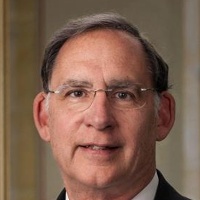
John Boozman
Senator
AR
John Boozman
Senator
AR
The Semiquincentennial Tourism and Access to Recreation Sites Act, or STARS Act, designates September 17, 2026, as a national day of free access to federal recreation sites. This celebration of the U.S. 250th anniversary waives entrance fees for National Park and Wildlife Refuge System units. Additionally, standard amenity recreation fees will be waived at sites managed by the Bureau of Land Management, Bureau of Reclamation, and the Forest Service on that day.
The Safe Step Act establishes mandatory exceptions processes and timelines for group health plans that use step therapy protocols for prescription drugs.
Lisa Murkowski
Senator
AK
Lisa Murkowski
Senator
AK
The Safe Step Act establishes mandatory exception processes for group health plans and insurance issuers that utilize step therapy protocols for prescription drugs. This ensures patients and doctors have a clear, timely pathway to request coverage for medically necessary alternatives when required initial treatments are inappropriate or ineffective. Plans must provide rapid decisions for urgent requests and adhere to specific reporting requirements detailing exception outcomes.