Legislative Activity
Track Laura's sponsored bills, co-sponsored legislation, and voting record
Allows Members of the House of Representatives, Delegates, and the Resident Commissioner to designate a proxy to vote on their behalf in the House, in committee, and in the Committee of the Whole for a period of 12 weeks following the birth of a child or in the event of a pregnancy-related serious medical condition.

Brittany Pettersen
Representative
CO
Brittany Pettersen
Representative
CO
The "Proxy Voting for New Parents Resolution" allows Members of the House, Delegates, and the Resident Commissioner who have recently given birth or whose spouse has given birth to designate another Member to vote on their behalf in the House, in committee, and in the Committee of the Whole for a period of 12 weeks. This proxy voting authority can begin before the birth if a doctor advises that the pregnancy presents a serious medical condition or that she is unable to travel safely. The resolution outlines specific procedures for designating, changing, and revoking proxy designations, ensuring transparency and adherence to instructions. Members whose votes are cast by proxy will not be counted for quorum purposes.
The Health Care Affordability Act of 2025 expands access to premium tax credits by removing income eligibility caps and implementing a new sliding-scale contribution formula.

Lauren Underwood
Representative
IL
Lauren Underwood
Representative
IL
The Health Care Affordability Act of 2025 expands access to health insurance by removing the 400% federal poverty level income cap for premium tax credits. It also introduces a new sliding-scale contribution formula to ensure that insurance costs remain affordable for households across all income levels. These changes are set to take effect for taxable years beginning after December 31, 2025.
The Veterans Infertility Treatment Act of 2025 mandates that the VA provide comprehensive infertility treatments and fertility preservation services to enrolled veterans and their chosen partners.
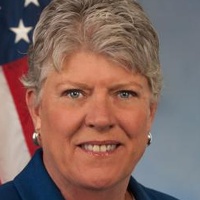
Julia Brownley
Representative
CA
Julia Brownley
Representative
CA
The Veterans Infertility Treatment Act of 2025 mandates that the VA provide comprehensive infertility treatments and fertility preservation services to enrolled veterans and their chosen partners. This legislation expands access to assisted reproductive technology, including IVF and gamete storage, regardless of marital status. It also provides coverage for partner travel expenses and establishes clear guidelines for consent and implementation.
The "Dental Care for Veterans Act" expands dental care benefits for veterans, phasing in eligibility over four years to mirror the provision of other medical services within the Department of Veterans Affairs.
Julia Brownley
Representative
CA
Julia Brownley
Representative
CA
The Dental Care for Veterans Act aims to improve veterans' access to dental care by integrating it more closely with other medical services provided by the Department of Veterans Affairs. This bill removes specific limitations and updates existing code to allow the Secretary to provide comprehensive dental care, including dentures and appliances. The implementation of these expanded benefits will be phased in over four years, prioritizing veterans based on existing eligibility criteria. Additionally, the bill makes necessary clerical updates to reflect these changes in the U.S. Code.
The "Equal Access to Contraception for Veterans Act" ensures veterans do not overpay for contraception, aligning their costs with what the Secretary pays or providing it without cost-sharing if required by the Public Health Service Act.
Julia Brownley
Representative
CA
Julia Brownley
Representative
CA
The Equal Access to Contraception for Veterans Act ensures veterans do not pay more for contraception than the Secretary of Veterans Affairs pays for the medication. Additionally, it eliminates copayments for contraceptive items if health insurance coverage is required without cost-sharing under the Public Health Service Act.
The Washington, D.C. Admission Act provides for the admission of the State of Washington, Douglass Commonwealth into the Union while establishing a reduced federal Capital district and outlining the legal framework for the transition.

Eleanor Norton
Representative
DC
Eleanor Norton
Representative
DC
The Washington, D.C. Admission Act proposes admitting the State of Washington, Douglass Commonwealth into the Union, while maintaining a reduced federal district to serve as the nation’s capital. The bill establishes a comprehensive framework for the transition, including the election of congressional representatives, the transfer of local government authority, and the gradual shift of federal responsibilities to the new state. This legislation aims to grant D.C. residents full voting representation in Congress while ensuring the continued security and operation of the federal seat of government.