
Legislative Activity
Track James's sponsored bills, co-sponsored legislation, and voting record
This resolution designates February 15–22, 2025, as "National FFA Week" to celebrate the organization's impact on agricultural education and its historic milestones.
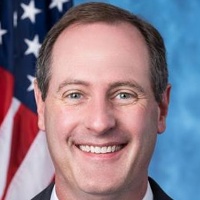
Tracey Mann
Representative
KS
Tracey Mann
Representative
KS
This resolution designates February 15–22, 2025, as "National FFA Week" to honor the National FFA Organization’s vital role in cultivating the next generation of agricultural leaders. It celebrates the organization’s commitment to personal growth and career readiness while commemorating the 90th anniversary of the New Farmers of America and the 75th anniversary of the FFA’s federal charter.
The "Death Tax Repeal Act" eliminates estate and generation-skipping transfer taxes, adjusts gift tax calculations, and sets a $10,000,000 lifetime gift exemption.
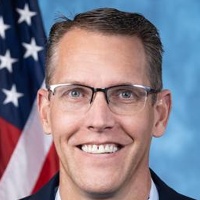
Randy Feenstra
Representative
IA
Randy Feenstra
Representative
IA
The "Death Tax Repeal Act" eliminates both estate and generation-skipping transfer taxes, effective from the date of enactment. It adjusts gift tax calculations by setting the lifetime gift exemption at $10,000,000, with inflation adjustments after 2011. The Act also includes transitional rules for applying certain sections of the Internal Revenue Code during the enactment year.
This Act allows schools participating in the National School Lunch Program to offer organic or non-organic whole milk alongside other options, while clarifying saturated fat accounting and restricting milk sourcing from China state-owned enterprises.
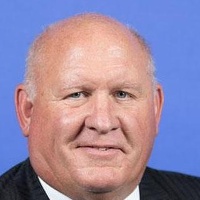
Glenn Thompson
Representative
PA
Glenn Thompson
Representative
PA
The Whole Milk for Healthy Kids Act of 2025 expands milk options available to students in the National School Lunch Program by allowing schools to offer organic or non-organic whole milk. This legislation provides greater flexibility for schools in providing fluid milk choices while maintaining accommodations for students with special dietary needs. Importantly, the saturated fat content of these offered milk options will not count toward the meal's overall saturated fat limits.
Extends federal death benefits to retired law enforcement officers who die or are disabled from targeted attacks related to their service.
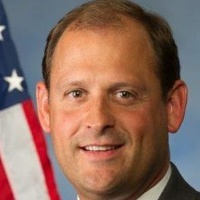
Garland Barr
Representative
KY
Garland Barr
Representative
KY
The "Chief Herbert D. Proffitt Act of 2025" amends the Omnibus Crime Control and Safe Streets Act of 1968 to extend death benefits to retired law enforcement officers who die or are disabled from targeted attacks due to their service. The bill applies retroactively to pending matters before the Bureau of Justice Assistance, or those filed/accruing after the enactment date, with exceptions for actions against retired law enforcement officers that occurred on or after August 28, 2012.
The Fair Access to Banking Act prohibits large financial institutions and payment networks from denying services to law-abiding businesses based on subjective, non-financial, or political criteria.
Garland Barr
Representative
KY
Garland Barr
Representative
KY
The Fair Access to Banking Act prohibits large financial institutions and payment networks from denying services to law-abiding businesses based on subjective, politically motivated, or reputational criteria. The bill mandates that financial institutions use impartial, quantitative, risk-based standards to evaluate customers rather than category-based exclusions. To ensure compliance, the legislation establishes enforcement mechanisms through federal regulators and provides a legal pathway for businesses to sue for damages if they are unfairly denied access to financial services.
The Born-Alive Abortion Survivors Protection Act requires health care practitioners to provide the same level of care to infants born alive after an abortion attempt as they would to any other newborn, mandating immediate hospitalization and imposing penalties for violations, while protecting the mother from prosecution. It also allows the mother of a child born alive to file a civil action against anyone who violated the act.

Ann Wagner
Representative
MO
Ann Wagner
Representative
MO
The "Born-Alive Abortion Survivors Protection Act" ensures that infants born alive after an abortion receive the same medical care as any other newborn, mandating immediate hospitalization and requiring healthcare practitioners to report any failures to comply. Violators face fines, imprisonment, and potential prosecution for homicide or attempted homicide, while the mother of the child cannot be prosecuted. The bill also allows the woman who had the abortion to file a civil action against anyone who violated the act. It defines abortion and attempts at abortion, and renames "Partial-Birth Abortions" to "Abortions" in relevant sections of the U.S. Code.
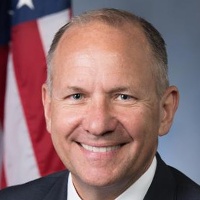
The Main Street Tax Certainty Act makes the 20% pass-through business income deduction permanent by removing its scheduled expiration after 2025.
Lloyd Smucker
Representative
PA
Lloyd Smucker
Representative
PA
The Main Street Tax Certainty Act makes the 20% pass-through business income deduction permanent. By removing the current 2025 expiration date, this legislation ensures long-term tax relief for owners of qualified pass-through entities.
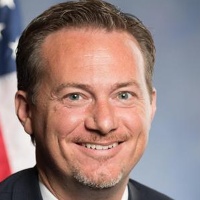
This bill mandates the destruction of existing firearm transaction records from closed businesses and prohibits the ATF from collecting such records in the future.
Michael Cloud
Representative
TX
Michael Cloud
Representative
TX
The "No Retaining Every Gun In a System That Restricts Your Rights Act" mandates the destruction of all firearm transaction records currently held by the ATF from discontinued businesses. Furthermore, it amends federal law to prohibit the future collection and transfer of these records to the government when a firearms business ceases operations. The bill also requires the ATF to submit a formal report to Congress confirming the number of records destroyed.
This bill increases the railroad track maintenance tax credit, introduces annual inflation adjustments, and extends the eligibility period for qualifying expenditures.

Mike Kelly
Representative
PA
Mike Kelly
Representative
PA
This bill amends the Internal Revenue Code to expand the railroad track maintenance credit by increasing the per-mile tax credit to $6,100 and implementing annual inflation adjustments starting in 2026. It also extends the eligibility window for qualifying maintenance expenditures to include costs incurred through 2023. These updates aim to provide greater financial support for ongoing railroad infrastructure improvements.
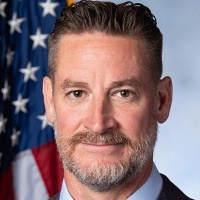
The Chiropractic Medicare Coverage Modernization Act of 2025 expands Medicare coverage to include all services provided by doctors of chiropractic that are within the scope of their state licensure.
W. Steube
Representative
FL
W. Steube
Representative
FL
The Chiropractic Medicare Coverage Modernization Act of 2025 expands Medicare coverage to include all services legally authorized under a chiropractor’s state license, moving beyond the current restriction limited to manual spinal manipulation. This legislation aligns Medicare benefits with private insurance and other federal health programs to better reflect modern chiropractic practice. To provide these expanded services, chiropractors will be required to complete a one-time training program verified by the Secretary of Health and Human Services.
This bill reclassifies silencers under federal tax law, removes federal registration requirements for legally transferred silencers, preempts state taxation and registration of silencers in commerce, and mandates the destruction of existing federal silencer registration records.

Ben Cline
Representative
VA
Ben Cline
Representative
VA
The Hearing Protection Act aims to remove silencers from the purview of the National Firearms Act (NFA) by treating them similarly to standard firearms under federal tax law. This legislation preempts certain state and local taxes and registration requirements related to silencers involved in interstate commerce. Furthermore, the bill mandates the destruction of existing federal silencer registration records and updates federal marking requirements for manufacturers.
This bill amends Title IX to prohibit schools receiving federal funds from allowing males to participate in female athletic programs, defining "sex" as determined at birth, while allowing males to train with female teams if it doesn't deprive females of opportunities or benefits. It also requires a study on the impact of male participation in female sports.
W. Steube
Representative
FL
W. Steube
Representative
FL
The "Protection of Women and Girls in Sports Act of 2025" amends Title IX to prohibit schools receiving federal funds from allowing males to participate in female athletic programs. Sex is defined as based on reproductive biology and genetics at birth. The bill allows males to train with female teams if it doesn't deprive females of opportunities. It also requires a study on the benefits lost to women when males participate in female sports.
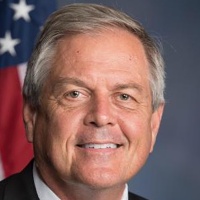
This bill proposes a constitutional amendment to limit members of the House of Representatives to three terms and Senators to two terms, with specific provisions for partial terms. Terms served before the amendment's ratification would not be counted towards these limits, and the amendment must be ratified within seven years to be valid.
Ralph Norman
Representative
SC
Ralph Norman
Representative
SC
This bill proposes a constitutional amendment to limit the number of terms a member of Congress can serve. Representatives would be limited to 3 terms and Senators to 2 terms, with specific rules for partial terms. Terms served before the amendment's ratification would not be counted. The amendment must be ratified by three-fourths of the states within seven years to be valid.
The Finish the Wall Act mandates the immediate resumption and completion of U.S.-Mexico border wall construction by September 2026 while ensuring full compliance with federal DNA collection requirements for detained individuals.
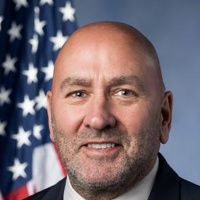
Clay Higgins
Representative
LA
Clay Higgins
Representative
LA
The "Finish the Wall Act" mandates the immediate resumption of border wall construction along the U.S.-Mexico border, requiring completion by September 30, 2026, using previously appropriated funds. The bill directs the Department of Homeland Security to execute comprehensive infrastructure and technology plans while honoring existing construction contracts. Additionally, it requires the agency to certify full compliance with federal DNA collection requirements for individuals in Customs and Border Protection custody.
The FIND Act prohibits federal agencies from contracting with entities that discriminate against the firearm and ammunition industry, ensuring fair access to government contracts for these businesses. Contractors must certify they do not discriminate against firearm entities, with violations leading to contract termination.
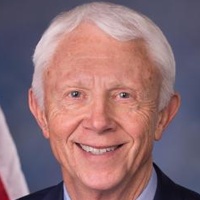
Jack Bergman
Representative
MI
Jack Bergman
Representative
MI
The FIND Act prohibits federal agencies from contracting with entities that discriminate against the firearm and ammunition industry. It requires federal contractors to certify they do not discriminate against firearm entities and prohibits them from awarding subcontracts to entities that do not provide a similar certification. Violations of these clauses will result in contract termination. The act defines "discriminate" as making judgments or refusing/limiting services based on biased criteria, rather than case-by-case evaluations, empirical data, financial risk, or legal non-compliance.