
Legislative Activity
Track Katherine's sponsored bills, co-sponsored legislation, and voting record
The Paycheck Fairness Act strengthens equal pay enforcement by tightening defenses against pay discrimination, expanding protections against retaliation, increasing penalties for violations, and requiring comprehensive data collection and training initiatives.

Rosa DeLauro
Representative
CT
Rosa DeLauro
Representative
CT
The Paycheck Fairness Act significantly strengthens federal equal pay protections by broadening definitions of sex discrimination, tightening employer defenses against pay disparities, and increasing penalties for violations. It also prohibits employers from using salary history in hiring decisions and mandates new data collection by the EEOC to better enforce anti-discrimination laws. Furthermore, the bill establishes new training and outreach programs to combat systemic wage bias.
This bill officially ratifies the Equal Rights Amendment, validating its inclusion in the Constitution regardless of any prior ratification deadlines.

Ayanna Pressley
Representative
MA
Ayanna Pressley
Representative
MA
This bill officially ratifies the Equal Rights Amendment, declaring it a valid part of the U.S. Constitution. It specifically removes any previously imposed deadlines for state ratification. If three-fourths of the states have approved the amendment, this law confirms its official status regardless of past time constraints.
The House of Representatives affirms every person's basic right to emergency health care, including abortion care.

Emilia Sykes
Representative
OH
Emilia Sykes
Representative
OH
This bill affirms the House of Representatives' belief that every person has the right to emergency health care, including abortion care. It argues that abortion restrictions endanger lives, force doctors to make impossible choices, and disproportionately harm people of color, low-income individuals, and LGBTQI individuals. The bill emphasizes that delays in emergency care due to abortion bans can lead to life-threatening situations and that everyone, including pregnant individuals, should have access to necessary medical care without discrimination.
The Richard L. Trumka Protecting the Right to Organize Act of 2025 strengthens protections for workers' rights to organize and collectively bargain by modernizing labor laws, addressing unfair labor practices, and enhancing enforcement mechanisms.
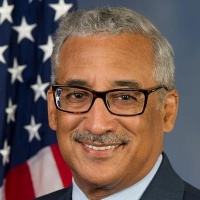
Robert Scott
Representative
VA
Robert Scott
Representative
VA
This bill, the Richard L. Trumka Protecting the Right to Organize Act of 2025, seeks to amend the National Labor Relations Act and other labor laws to strengthen protections for workers' rights to organize and collectively bargain. It aims to modernize labor regulations by clarifying definitions, addressing unfair labor practices, enhancing enforcement, and increasing transparency in labor-management relations. The bill introduces measures such as electronic voting in union elections, strengthens whistleblower protections, and mandates studies on collective bargaining practices. Ultimately, the goal is to ensure fair treatment of workers and promote equitable labor practices.
The John R. Lewis Voting Rights Advancement Act of 2025 aims to strengthen and update the Voting Rights Act of 1965 by addressing vote dilution and denial, establishing updated criteria for federal oversight of states and political subdivisions with a history of voting rights violations, and promoting transparency in election-related changes.
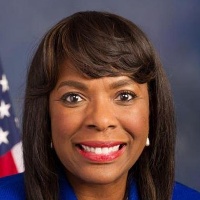
Terri Sewell
Representative
AL
Terri Sewell
Representative
AL
The John R. Lewis Voting Rights Advancement Act of 2025 amends the Voting Rights Act of 1965 to address vote dilution, denial, and abridgment claims, and to update which states and political subdivisions are subject to federal oversight based on a history of voting rights violations. It broadens the types of violations that allow a court to retain jurisdiction over a case, clarifies the Attorney General's authority to assign observers, and ensures transparency in voting-related changes. The Act also authorizes the Attorney General to demand documents and information to enforce voting rights and provides grants to small jurisdictions to assist with notification requirements.
The American Dream and Promise Act of 2025 provides a pathway to permanent residency for eligible individuals who came to the U.S. as children, or who have Temporary Protected Status (TPS) or Deferred Enforced Departure (DED) status.

Sylvia Garcia
Representative
TX
Sylvia Garcia
Representative
TX
The American Dream and Promise Act of 2025 provides a pathway to permanent residency for eligible individuals who entered the United States as children and those with Temporary Protected Status (TPS) or Deferred Enforced Departure (DED). Title I, the Dream Act of 2025, establishes conditional permanent residency for eligible individuals who entered the U.S. as children. Title II, the American Promise Act of 2025, allows the Secretary of Homeland Security or the Attorney General to grant permanent resident status to eligible individuals from TPS or DED countries. Title III outlines general provisions, such as background checks, application processes, and fee exemptions, applicable to all seeking to adjust their status under this Act.
The "Taxpayer Data Protection Act" limits access to the Treasury Department's payment systems to authorized personnel and requires investigation and reporting of unauthorized access.

Haley Stevens
Representative
MI
Haley Stevens
Representative
MI
The Taxpayer Data Protection Act limits access to the Treasury Department's payment systems to Treasury employees or contractors with satisfactory performance reviews and security clearances. It sets specific criteria for individuals accessing the system, including conflict of interest restrictions, training, and ethics agreements. The Act also mandates the Treasury Department's Inspector General to investigate and report to Congress on any unauthorized system use.
The Right to Contraception Act establishes a federal right to obtain and use contraception and prohibits government interference with access to contraceptive services and information.

Lizzie Fletcher
Representative
TX
Lizzie Fletcher
Representative
TX
The Right to Contraception Act establishes a federal right for individuals to access and use contraception without government interference. It prohibits federal and state governments from enacting laws that restrict access to contraceptives or the provision of related services. The Act provides clear enforcement mechanisms, allowing individuals and the Attorney General to sue to strike down any rule that violates these protections.
This Act directs the Secretary of the Treasury to mint commemorative coins in 2028 to honor the diverse women who served on the Home Front during World War II, with proceeds supporting the Rosie the Riveter WWII Home Front National Historical Park.

John Garamendi
Representative
CA
John Garamendi
Representative
CA
The Rosie the Riveter Commemorative Coin Act directs the Secretary of the Treasury to mint and issue a series of commemorative coins in 2028 to honor the diverse women who served on the Home Front during World War II. Proceeds from the sale of these coins will support the Rosie the Riveter Trust in its efforts to maintain the Rosie the Riveter/WWII Home Front National Historical Park and fund educational programs. This initiative ensures the legacy of these essential workers is preserved and recognized through a national numismatic program.
The Washington, D.C. Admission Act provides for the admission of the State of Washington, Douglass Commonwealth into the Union while establishing a reduced federal Capital district and outlining the legal framework for the transition.

Eleanor Norton
Representative
DC
Eleanor Norton
Representative
DC
The Washington, D.C. Admission Act proposes admitting the State of Washington, Douglass Commonwealth into the Union, while maintaining a reduced federal district to serve as the nation’s capital. The bill establishes a comprehensive framework for the transition, including the election of congressional representatives, the transfer of local government authority, and the gradual shift of federal responsibilities to the new state. This legislation aims to grant D.C. residents full voting representation in Congress while ensuring the continued security and operation of the federal seat of government.