
Legislative Activity
Track Mike's sponsored bills, co-sponsored legislation, and voting record
This resolution officially designates April 2025 as Financial Literacy Month to promote essential personal finance education across the nation.
John Reed
Senator
RI
John Reed
Senator
RI
This resolution officially designates April 2025 as "Financial Literacy Month" to raise national awareness about the critical need for personal finance education. It highlights current financial struggles, such as high household debt and lack of banking access, while emphasizing that financial education leads to better economic outcomes. The resolution encourages federal, state, and local entities to observe the month with programs promoting essential skills like budgeting, saving, and debt management.
This Act restricts government subpoena power, enhances confidentiality protections for data shared with the Federal Insurance Office, and limits the Office of Financial Research's ability to subpoena insurance companies while establishing strict data-sharing and confidentiality rules for other financial regulators collecting information from insurers.
Katie Britt
Senator
AL
Katie Britt
Senator
AL
The Insurance Data Protection Act aims to revise how federal agencies interact with insurance company data. This bill removes certain government subpoena powers and strengthens confidentiality protections when the Federal Insurance Office shares sensitive information. Furthermore, it limits the Office of Financial Research's ability to subpoena insurance companies directly and requires financial regulators to coordinate data collection to avoid duplication.
This bill prohibits U.S. funding for any United Nations entity that takes action to expel, suspend, or otherwise restrict Israel's full and equal participation.
James Risch
Senator
ID
James Risch
Senator
ID
The Stand with Israel Act prohibits the U.S. government from contributing funds to any United Nations entity that takes action to expel, suspend, or otherwise restrict Israel's full and equal participation. This measure ensures U.S. financial support is withheld from UN bodies that discriminate against Israel.
This resolution formally celebrates the 153rd anniversary of Arbor Day, recognizing its importance in promoting tree planting, sustainable forestry, and community greening efforts.
James Risch
Senator
ID
James Risch
Senator
ID
This resolution formally celebrates the 153rd anniversary of Arbor Day, recognizing its historical importance in encouraging tree planting and civic engagement. It highlights the value of sustainable forestry practices in combating climate change and supporting biodiversity. The resolution encourages all Americans to participate in activities marking National Arbor Day, observed annually on the last Friday of April.
The BE GONE Act expands the definition of aggravated felonies under immigration law to specifically include sexual assault and aggravated sexual violence.

Joni Ernst
Senator
IA
Joni Ernst
Senator
IA
The BE GONE Act, or Better Enforcement of Grievous Offenses by unNaturalized Emigrants Act, amends the Immigration and Nationality Act to expand the list of crimes considered "aggravated felonies." Specifically, this bill adds "sexual assault and aggravated sexual violence" to the list of offenses that trigger severe immigration consequences. This change broadens the scope of crimes that can lead to deportation or inadmissibility for non-citizens.
This resolution supports National Fentanyl Awareness Day in 2025 to increase public awareness about the deadly impact of counterfeit fentanyl pills, especially on young people.
Charles Grassley
Senator
IA
Charles Grassley
Senator
IA
This resolution officially supports the mission of National Fentanyl Awareness Day in 2025 to combat the deadly counterfeit pill crisis. It highlights the severe danger posed by fake pills containing lethal doses of fentanyl, which are increasingly accessible to young people. The bill aims to increase public awareness regarding this threat and applauds law enforcement efforts to stop the spread of illicit drugs.
This Act excludes specific VA disability payments from being counted as income when unhoused disabled veterans apply for certain housing assistance programs.
Alejandro Padilla
Senator
CA
Alejandro Padilla
Senator
CA
The Housing Unhoused Disabled Veterans Act aims to increase housing assistance eligibility for disabled veterans by excluding specific VA disability benefits from income calculations for certain housing programs. This ensures that compensation received for service-connected disabilities does not prevent veterans from qualifying for supportive housing assistance. However, these excluded benefits will still be considered when calculating the final adjusted rent amount.
This bill strengthens federal law enforcement tools and establishes a new coordination center to combat organized retail and supply chain crime.
Charles Grassley
Senator
IA
Charles Grassley
Senator
IA
The Combating Organized Retail Crime Act aims to combat sophisticated criminal gangs engaged in large-scale retail and supply chain theft. This bill strengthens federal law by updating money laundering and stolen property statutes, including establishing a $5,000 aggregate value threshold for certain offenses. Crucially, it mandates the creation of a specialized federal Coordination Center within Homeland Security to unify efforts across all levels of law enforcement and private industry against these transnational criminal organizations.
This bill amends mining laws to allow hardrock mining operations to locate multiple, non-patented mill sites necessary for their operations and establishes a fund for abandoned hardrock mines funded by associated claim maintenance fees.
Catherine Cortez Masto
Senator
NV
Catherine Cortez Masto
Senator
NV
The Mining Regulatory Clarity Act amends existing law to allow hardrock mining operations to locate multiple, necessary mill sites on public land, provided each site does not exceed five acres. This legislation establishes the Abandoned Hardrock Mine Fund, funded by maintenance fees from these new mill sites, to support remediation efforts under existing infrastructure law. The bill includes several savings provisions to ensure it does not override existing land use restrictions or claimant rights.
The Jobs in the Woods Act establishes a competitive grant program through the Secretary of Agriculture to fund forestry workforce training in eligible low-income rural areas with reliable internet access.
Angus King
Senator
ME
Angus King
Senator
ME
The Jobs in the Woods Act establishes a new competitive grant program administered by the Secretary of Agriculture to fund forestry workforce development. These grants aim to support training programs for forestry jobs specifically within eligible, low-income rural communities that meet certain broadband standards. Eligible entities can apply for grants between $\$500,000$ and $\$2$ million over four years, with priority given to programs addressing workforce shortages and ensuring job placement.
The REPAIR Act of 2025 establishes strict deadlines and a mandatory mediation process overseen by the Federal Permitting Improvement Steering Council to resolve court-ordered remands of project authorizations.
Bill Cassidy
Senator
LA
Bill Cassidy
Senator
LA
The REPAIR Act of 2025 establishes new rules and strict deadlines for challenging federal project authorizations in court. It mandates a mediation and remediation process overseen by the Federal Permitting Improvement Steering Council if a court remands an authorization due to procedural errors. Furthermore, the Act clarifies that completing an environmental review under NEPA does not automatically grant an individual the right to sue over the project approval.
This resolution honors the life, distinguished public service, and significant legislative contributions of the late former Louisiana Senator, John Bennett Johnston, Jr.
Bill Cassidy
Senator
LA
Bill Cassidy
Senator
LA
This resolution formally honors the life and extensive public service of the late Honorable John Bennett Johnston, Jr., former U.S. Senator for Louisiana. It details his career, highlighting his significant tenure on key Senate committees, particularly his leadership on energy policy. The resolution recognizes his legislative achievements benefiting Louisiana, including flood control and conservation efforts. Finally, the Senate adjourns immediately in his memory as a final tribute to his service.
This joint resolution expresses Congress's disapproval of the EPA's rule concerning California's Advanced Clean Cars II pollution control standards.

Shelley Capito
Senator
WV
Shelley Capito
Senator
WV
This joint resolution expresses Congress's disapproval of a specific Environmental Protection Agency (EPA) rule concerning California's "Advanced Clean Cars II" pollution control standards. By invoking the Congressional Review Act, Congress is effectively vetoing this EPA regulation. This action prevents the EPA's rule regarding California's vehicle emission standards from taking effect.
This joint resolution disapproves the Environmental Protection Agency's rule concerning California's low NOx vehicle and engine pollution control standards.
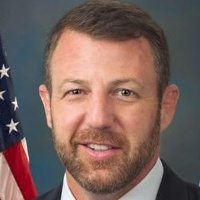
Markwayne Mullin
Senator
OK
Markwayne Mullin
Senator
OK
This joint resolution expresses Congress's disapproval of a specific rule submitted by the Environmental Protection Agency (EPA) concerning California's vehicle and engine pollution control standards, known as the "Omnibus" Low NOx Regulation. By disapproving the rule, Congress immediately cancels the EPA's submission, preventing it from taking legal effect. This action effectively rejects the EPA's attempt to implement those specific California standards.
This joint resolution disapproves the EPA's recently enacted rule setting new pollution control standards for heavy-duty vehicles and engines in California.
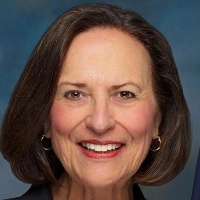
Deb Fischer
Senator
NE
Deb Fischer
Senator
NE
This joint resolution expresses Congress's formal disapproval of a recent rule issued by the Environmental Protection Agency (EPA) concerning California's pollution control standards for heavy-duty vehicles and engines. By invoking the Congressional Review Act, this measure nullifies the EPA's proposed regulations regarding emission standards, warranty provisions, and zero-emission vehicle requirements. Consequently, the specific EPA rule published on April 11, 2023, will not take legal effect.
The DETERRENT Act mandates increased federal and institutional transparency regarding foreign gifts and contracts for colleges, bans certain contracts with "countries of concern," and establishes strict enforcement penalties for non-compliance.
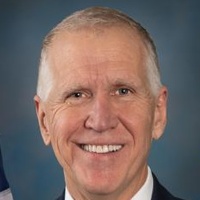
Thom Tillis
Senator
NC
Thom Tillis
Senator
NC
The DETERRENT Act significantly tightens reporting requirements for colleges and universities regarding foreign gifts and contracts, mandating public disclosure databases and imposing strict new prohibitions on agreements with "foreign countries or entities of concern." It establishes severe financial penalties and potential ineligibility for federal aid for institutions that knowingly violate these transparency and compliance rules. The bill also requires institutions to implement internal policies and designate compliance officers to manage risks associated with foreign influence.
This Act extends nonimmigrant status, grants limited job flexibility, and waives the foreign residence requirement for religious workers facing long green card backlogs.
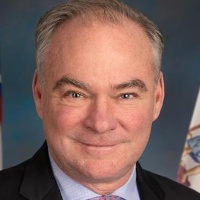
Timothy Kaine
Senator
VA
Timothy Kaine
Senator
VA
The Religious Workforce Protection Act aims to support religious workers facing long delays in obtaining lawful permanent residence. It extends nonimmigrant status for those stuck in green card backlogs, even past the normal five-year limit for R-1 visas. Furthermore, the bill modifies job flexibility rules for certain long-waiting religious workers and exempts those who left the U.S. due to the R-1 visa time limit from the usual one-year foreign residence requirement before reapplying.
The Housing Supply Frameworks Act directs the federal government to create guidelines for state and local governments to reform restrictive zoning rules to increase housing supply for all income levels.
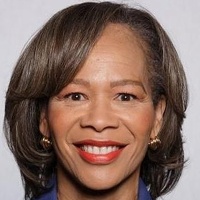
Lisa Blunt Rochester
Senator
DE
Lisa Blunt Rochester
Senator
DE
The Housing Supply Frameworks Act aims to address the severe national housing shortage by encouraging states and localities to reform restrictive zoning and land-use regulations. It directs the federal government to develop and publish best-practice guidelines for updating state and local zoning frameworks to promote housing construction across all income levels. The bill also establishes reporting requirements to track the adoption of these new guidelines and authorizes funding for the Act's implementation.
This act exempts specific, low-velocity, less-than-lethal projectile devices from certain federal restrictions under Title 18 of the U.S. Code.
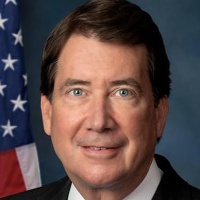
Bill Hagerty
Senator
TN
Bill Hagerty
Senator
TN
The Innovate to De-Escalate Modernization Act exempts specific less-than-lethal projectile devices from certain federal restrictions under Title 18 of the U.S. Code. This exemption applies only to devices that cannot fire standard ammunition, are designed to minimize serious injury, and meet specific design criteria regarding ammunition feeding mechanisms. The bill also establishes a process for manufacturers to seek a ruling from the Attorney General on whether their device qualifies for this exemption.
This Act amends the National Labor Relations Act to explicitly include Indian Tribes and their enterprises operating on tribal lands as "employers."
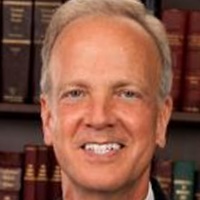
Jerry Moran
Senator
KS
Jerry Moran
Senator
KS
The Tribal Labor Sovereignty Act of 2025 amends the National Labor Relations Act (NLRA) to clarify the definition of "employer." This bill explicitly includes Indian Tribes and their tribally owned enterprises operating on tribal lands under the scope of the NLRA for labor relations purposes. It also establishes clear definitions for "Indian Tribe," "Indian," and "Indian Lands" within this context.