Legislative Activity
Track Jim's sponsored bills, co-sponsored legislation, and voting record
This bill allows small tax-exempt organizations to apply certain retirement plan startup and auto-enrollment tax credits directly against their Social Security payroll tax obligations.

James Lankford
Senator
OK
James Lankford
Senator
OK
The Small Nonprofit Retirement Security Act of 2025 modifies existing retirement plan startup and auto-enrollment tax credits for tax-exempt organizations. This legislation allows eligible small non-profits to claim these credits directly against their Social Security payroll tax obligations. The goal is to make it easier for small tax-exempt employers to afford and establish retirement plans for their employees.
This Act prohibits disparate-impact liability claims in employment and housing discrimination cases and nullifies related federal regulations.
Mike Lee
Senator
UT
Mike Lee
Senator
UT
The Restoring Equal Opportunity Act seeks to eliminate the use of "disparate-impact liability" in federal law. This bill specifically prohibits lawsuits claiming employment or housing discrimination based on disparate impact, meaning challenges against seemingly neutral policies that disproportionately harm protected groups are no longer permitted. Furthermore, the Act nullifies specific prior Presidential approvals of regulations related to the Civil Rights Act of 1964.
This bill authorizes the creation and sale of commemorative coins for the 2028 Los Angeles Olympic and Paralympic Games and the 2034 Salt Lake City Winter Olympic and Paralympic Games to help fund their hosting and legacy programs.

Alejandro Padilla
Senator
CA
Alejandro Padilla
Senator
CA
This Act authorizes the creation and sale of commemorative coins to celebrate the upcoming 2028 Summer Olympic and Paralympic Games in Los Angeles and the 2034 Winter Olympic and Paralympic Games in Salt Lake City. The Secretary of the Treasury is empowered to mint various denominations of gold, silver, and clad coins for each event, with designs reflecting American participation. A mandatory surcharge on each coin sold will directly fund the respective organizing committees for the Games and their legacy programs, provided the government recovers all minting costs first.
This bill prohibits the operation of connected vehicles designed, developed, manufactured, or supplied by entities of concern on Department of Defense property.

Elissa Slotkin
Senator
MI
Elissa Slotkin
Senator
MI
This Act prohibits the operation of specific "connected vehicles" on Department of Defense (DoD) property starting in 2028. The Secretary of Defense must establish a list of banned vehicles designed, developed, or supplied by entities linked to a "foreign entity of concern." This measure aims to mitigate risks of sabotage, disruption to U.S. information technology, and threats to national security.
This Act prevents the government from classifying independent workers as employees solely based on the provision of portable or standard benefits.

Bill Cassidy
Senator
LA
Bill Cassidy
Senator
LA
The Unlocking Benefits for Independent Workers Act ensures that offering portable or standard employee benefits will not, by itself, cause a worker to be classified as an employee under federal law. This change allows companies to offer valuable benefits to independent workers without automatically triggering employee status for tax or labor purposes. The legislation aims to encourage the provision of portable benefits to the independent workforce.
The GOLDEN DOME Act of 2025 establishes a comprehensive, next-generation missile defense system by creating a dedicated Program Manager, accelerating the development of space-based and non-kinetic defenses, and authorizing over $23 billion in funding to counter evolving global missile and drone threats.
Dan Sullivan
Senator
AK
Dan Sullivan
Senator
AK
The GOLDEN DOME Act of 2025 establishes a comprehensive, next-generation missile defense shield to counter rapidly evolving global threats from ballistic, hypersonic, and unmanned systems. The bill creates a powerful, direct-reporting Program Manager to oversee the rapid development, testing, and deployment of integrated defense capabilities across space, air, land, and sea domains. It authorizes over $23 billion in funding, prioritizing the acceleration of space-based sensors, advanced interceptors, and non-kinetic defense technologies. Furthermore, the Act streamlines acquisition processes and enhances the Department of Defense's authority to protect assets against incursions by unmanned aerial systems.
This resolution supports designating a week in June 2025 as "National Women's Sports Week" to celebrate the anniversary of Title IX and advocate for the protection of female-only athletic opportunities.

Joni Ernst
Senator
IA
Joni Ernst
Senator
IA
This resolution supports designating the week of June 23–29, 2025, as "National Women's Sports Week." The observance aims to celebrate the anniversary of Title IX and the significant growth of women's sports participation since its enactment. Furthermore, the resolution emphasizes the importance of protecting fair and safe athletic opportunities exclusively for female athletes. This week will honor the achievements of women in sports and promote equal access for all sexes.
This bill mandates the Committee on Foreign Investment in the United States (CFIUS) to annually review, update, and report on U.S. Government facilities and property deemed national security sensitive for real estate transaction reviews.

Tim Scott
Senator
SC
Tim Scott
Senator
SC
This bill mandates that the Committee on Foreign Investment in the United States (CFIUS) annually review and update a specific list of U.S. Government facilities and property deemed sensitive for national security. CFIUS must also report on any real estate transaction reviews involving these sensitive sites. This ensures the list remains current based on agency-specific annual reviews.
This Act rescinds billions of dollars in previously appropriated budget authority from various State Department, foreign aid, and international programs, as well as future funding for the Corporation for Public Broadcasting.
Eric Schmitt
Senator
MO
Eric Schmitt
Senator
MO
The Rescissions Act of 2025 immediately cancels previously allocated budget authority across various government accounts, primarily targeting State Department and foreign aid programs. This legislation rescinds billions of dollars designated for international organizations, global health initiatives, development assistance, and peacekeeping operations. Additionally, it cancels future funding set aside for the Corporation for Public Broadcasting in fiscal years 2026 and 2027.
This Act restricts consumer reporting agencies from sharing mortgage loan applicant reports with third parties unless the request is tied to a firm offer of credit or the recipient is directly involved in the applicant's existing mortgage or has explicit authorization.
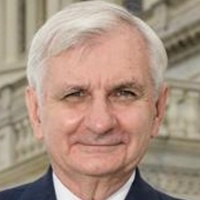
John Reed
Senator
RI
John Reed
Senator
RI
The Homebuyers Privacy Protection Act restricts how consumer reporting agencies can share your credit report when you are seeking a residential mortgage loan. Specifically, it limits the sharing of these reports unless they are connected to a firm offer of credit or are being sent to parties directly involved in your current mortgage, such as the originator or servicer. This ensures that your sensitive financial information is only accessed by relevant parties during the home loan process.
This Act authorizes the Army to begin early production contracts for up to 24 Future Long Range Assault Aircraft to accelerate fielding, stabilize the industrial base, and reduce long-term costs.
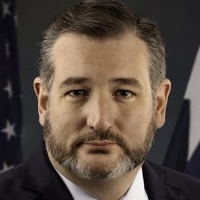
Ted Cruz
Senator
TX
Ted Cruz
Senator
TX
The FLRAA Production Acceleration Act of 2025 authorizes the Army to immediately begin early production contracts for up to 24 Future Long Range Assault Aircraft. This measure aims to speed up fielding the new aircraft, maintain production momentum, and realize long-term cost savings. The Secretary of the Army must also submit a detailed production and procurement plan to Congress within 180 days.
This act mandates the deportation and immediate visa cancellation for non-citizens convicted of specific violent or destructive crimes committed during protests.

Tom Cotton
Senator
AR
Tom Cotton
Senator
AR
The No Visas for Violent Criminals Act establishes new grounds for the deportation of non-citizens convicted of certain crimes committed during protests, specifically those involving property destruction or blocking critical infrastructure. Conviction under these provisions results in the immediate cancellation of any existing visa. Furthermore, the bill mandates the swift removal of the individual from the United States within 60 days of the conviction.
The DETERRENCE Act enhances federal penalties for serious crimes like kidnapping, murder-for-hire, stalking, and attacks on federal officials when those acts are directed or coordinated by foreign governments.
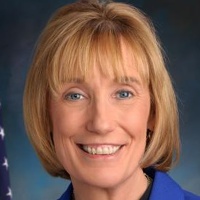
Margaret Hassan
Senator
NH
Margaret Hassan
Senator
NH
The DETERRENCE Act significantly increases federal penalties for several serious crimes, including kidnapping, murder-for-hire, stalking, and assaults against federal officials and their families. These enhanced sentences are specifically triggered when the criminal activity is knowingly directed by, or coordinated with, a foreign government or its agents. The bill aims to provide stronger legal tools to counter threats orchestrated by external state actors.
This resolution formally establishes an annual "Life Month" to affirm the inherent value of all human life, especially the unborn, and to encourage legislative action and support for life-affirming resources.
Ted Cruz
Senator
TX
Ted Cruz
Senator
TX
This resolution formally declares the nation's foundational belief in the inherent right to life for every human being, including the unborn. It recognizes the Supreme Court's decision to return authority over life protection laws to the people and their elected officials. Furthermore, the bill establishes an annual "Life Month" to commend organizations supporting life and urge lawmakers to enact protections for the unborn.
This bill establishes federal programs, data collection, and reporting requirements to enhance the national response to sepsis, focusing on prevention, early detection, and improved patient outcomes.
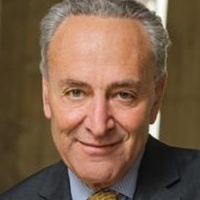
Charles Schumer
Senator
NY
Charles Schumer
Senator
NY
The Securing Enhanced Programs, Systems, and Initiatives for Sepsis Act (SEPSIS Act) aims to combat the high rates of death and cost associated with sepsis nationwide. This bill directs the CDC to enhance national sepsis programs, focusing on education, data collection, and the development of outcome measures for both adults and children. It also authorizes funding to support these critical efforts and allows for a voluntary program to recognize hospitals demonstrating excellence in sepsis management.
This resolution formally honors the life, achievements, and legacy of former United States Senator Christopher "Kit" Bond of Missouri.

Joshua Hawley
Senator
MO
Joshua Hawley
Senator
MO
This resolution serves as a formal tribute honoring the life, achievements, and enduring legacy of former United States Senator Christopher "Kit" Bond of Missouri. It recognizes his decades of public service, including his terms as Missouri Governor and U.S. Senator, where he championed infrastructure, agriculture, and conservative values. The Senate expresses deep sadness over his passing and directs that official copies of this tribute be sent to his family.
This Act expands the ability for certain associations of employers and self-employed individuals to band together to offer group health plans under ERISA, while setting specific structural and rating requirements.

Rand Paul
Senator
KY
Rand Paul
Senator
KY
The Association Health Plans Act expands the ability for certain groups or associations of employers to band together to offer health plans under federal law (ERISA). This allows broader groups, including self-employed individuals, to qualify as a single employer for offering coverage. The bill also provides these associations with flexibility in setting premium rates based on the risk profile of each participating employer. However, these plans must still adhere to existing federal protections against discrimination based on health status or pre-existing conditions.
This Act amends SEC reporting requirements to allow certain investment companies to exclude indirect fees paid through investments in business development companies from their acquired fund fees and expenses disclosure.
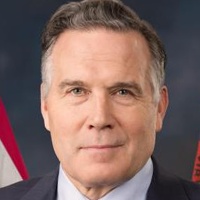
Dave McCormick
Senator
PA
Dave McCormick
Senator
PA
The Access to Small Business Investor Capital Act modifies how certain investment companies report their fees to the SEC. Specifically, it allows registered investment companies to exclude indirect fees and expenses paid through investments in business development companies from their "acquired fund fees and expenses" disclosure. This change aims to streamline the reporting process for funds investing in these specific entities.
This bill mandates new electronic, transparent, and timely prior authorization requirements for Medicare Advantage plans to improve seniors' access to care.

Roger Marshall
Senator
KS
Roger Marshall
Senator
KS
The Improving Seniors’ Timely Access to Care Act of 2025 aims to modernize and increase transparency in the prior authorization process for Medicare Advantage plans. This bill mandates the adoption of electronic prior authorization systems and requires plans to publicly report detailed data on their approval, denial, and appeal rates. Furthermore, it establishes new standards to protect enrollees and grants the Secretary authority to enforce faster decision timelines for care requests.
This act terminates specific, unused regulatory authorities granted to the Securities and Exchange Commission under the Dodd-Frank Act if rulemaking was not initiated by January 1, 2025.
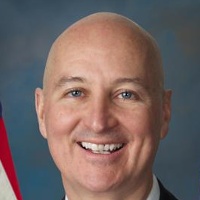
Pete Ricketts
Senator
NE
Pete Ricketts
Senator
NE
The Business Owners Protection Act of 2025 terminates specific, unused regulatory authorities granted to the Securities and Exchange Commission (SEC) under the Dodd-Frank Act. If the SEC failed to initiate rulemaking for these discretionary powers by January 1, 2025, those authorities automatically expire upon the enactment of this Act. The SEC is required to publicly report to Congress on all terminated authorities within 180 days.