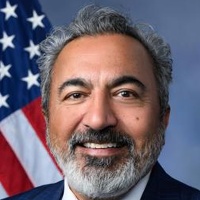
Legislative Activity
Track Ami's sponsored bills, co-sponsored legislation, and voting record
This Act bans Members of Congress and their immediate families from trading or owning specific investments while in office, requiring divestment within 90 to 180 days or facing significant financial penalties.
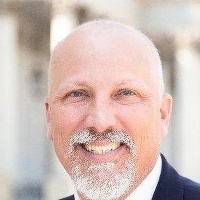
Chip Roy
Representative
TX
Chip Roy
Representative
TX
The Restore Trust in Congress Act establishes strict new rules prohibiting Members of Congress and their immediate families from owning or trading specific financial assets, referred to as "covered investments," while in office. Covered individuals must divest existing prohibited holdings within a set timeframe or face significant financial penalties, including fines and forfeiture of profits. The legislation aims to eliminate conflicts of interest arising from personal financial trading while serving in federal office.
This Act establishes a comprehensive U.S. policy to condemn China's repression of Uyghurs and other minorities in Xinjiang, demands international access to detention facilities, and directs the State Department to prioritize protecting their rights and combating transnational harassment.
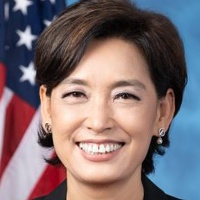
Young Kim
Representative
CA
Young Kim
Representative
CA
The Uyghur Policy Act of 2025 formally condemns the People's Republic of China's repression and cultural erasure of Uyghurs and other minorities in the Xinjiang Uyghur Autonomous Region. It directs the U.S. government to prioritize protecting Uyghur identity, demanding immediate access to detention facilities, and coordinating international pressure to secure the release of political prisoners. Furthermore, the Act mandates strengthening State Department efforts, including Uyghur language training and public diplomacy funding, to counter transnational harassment and raise global awareness of these human rights abuses.
This Act amends the Community Development Block Grant Program to explicitly allow federal funds to be used for the new construction of affordable housing while maintaining existing income eligibility requirements.
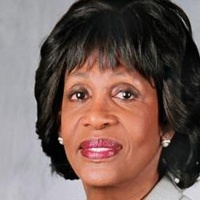
Maxine Waters
Representative
CA
Maxine Waters
Representative
CA
The Strengthening Housing Supply Act of 2025 amends the Community Development Block Grant (CDBG) Program to explicitly allow federal funds to be used for the **new construction of affordable housing**. This change broadens the eligible uses for CDBG funds while maintaining existing requirements that the housing benefits low- and moderate-income persons. These new provisions only apply to funds appropriated by Congress after the Act's enactment.
The HEALTH AI Act establishes a grant program through HHS to fund research on using generative artificial intelligence to improve healthcare quality and efficiency.
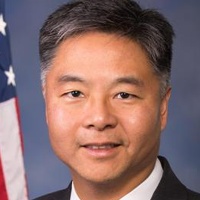
Ted Lieu
Representative
CA
Ted Lieu
Representative
CA
The HEALTH AI Act establishes a new grant program through the Department of Health and Human Services (HHS) to fund research on using generative artificial intelligence in healthcare. These grants will support projects aimed at improving clinical efficiency, reducing administrative burdens, and processing claims faster. Priority will be given to research that focuses on workforce training, reducing staff burnout, and improving health equity for underserved populations.
This bill establishes a mandatory two-step approval process, requiring both executive branch sign-off and subsequent Congressional joint resolution, for exporting advanced AI chips to the People's Republic of China.
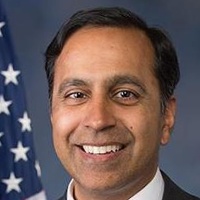
Raja Krishnamoorthi
Representative
IL
Raja Krishnamoorthi
Representative
IL
The No Advanced Chips for the CCP Act of 2025 establishes a stringent, two-step approval process for exporting advanced AI semiconductors to China, requiring both executive branch approval and specific Congressional resolution. This process mandates a thorough national security review by multiple federal agencies before any transfer can be considered. The Act defines "advanced AI semiconductor" based on specific performance thresholds and includes a three-year sunset provision.
The Enduring Welcome Act of 2025 establishes a permanent Office of the Coordinator for Afghan Relocation Efforts within the State Department to streamline and support the resettlement of Afghan allies and their families.
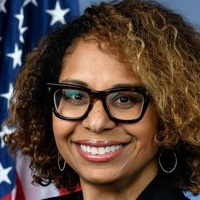
Sydney Kamlager-Dove
Representative
CA
Sydney Kamlager-Dove
Representative
CA
The Enduring Welcome Act of 2025 establishes a permanent Office of the Coordinator for Afghan Relocation Efforts within the State Department to streamline and support the resettlement of Afghan allies. This Act mandates the creation of a secure, centralized database to track all applicants, beneficiaries, and relocation progress, ensuring accountability to Congress. The Coordinator will manage interagency efforts, resolve family reunification roadblocks, and provide integration support for covered persons. This entire framework is set to automatically expire five years after enactment unless otherwise specified.
This Act directs the Departments of HUD and Agriculture to create a joint agreement to streamline environmental reviews and processes for housing projects funded by both agencies.
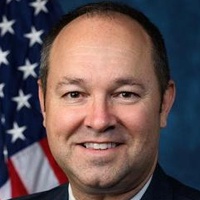
Marlin Stutzman
Representative
IN
Marlin Stutzman
Representative
IN
The Streamlining Rural Housing Act of 2025 mandates that the Departments of HUD and Agriculture create a joint agreement to speed up environmental reviews for federally funded rural housing projects. This partnership aims to designate a lead agency and streamline the acceptance of environmental documentation between the two departments. The Act also establishes an advisory group composed of diverse stakeholders to guide implementation and requires a final report to Congress suggesting further efficiency improvements without compromising resident safety or environmental standards.
This bill extends the federal regulations governing High Occupancy Vehicle (HOV) facilities from September 30, 2025, to September 30, 2031.
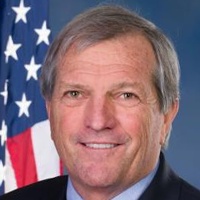
Mark DeSaulnier
Representative
CA
Mark DeSaulnier
Representative
CA
The High Occupancy Vehicle Lane Exemption Reauthorization Act extends the federal regulations governing High Occupancy Vehicle (HOV) facilities. Specifically, this bill pushes back the expiration date for these existing HOV facility rules from September 30, 2025, to September 30, 2031. This ensures the current federal guidelines remain in effect for an additional six years.
The CLEAN Pacific Act of 2025 establishes the Pacific Counternarcotics Initiative to fund and coordinate efforts with Pacific island nations to seize, destroy, and prevent the diversion of illegal drug production chemicals.
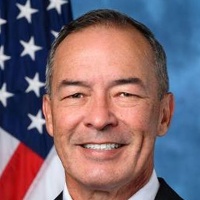
James (Jim) Moylan
Representative
GU
James (Jim) Moylan
Representative
GU
The CLEAN Pacific Act of 2025 establishes the Pacific Counternarcotics Initiative to help partner nations in the Pacific combat illegal drug production chemicals. This program focuses on improving the seizure, destruction, and safe disposal of seized chemicals while boosting international law enforcement cooperation. The Secretary of State must submit a detailed five-year implementation plan to Congress outlining strategy, benchmarks, and funding, followed by annual progress reports. Funding for the initiative will be redirected from existing authorizations under the Foreign Assistance Act of 1961.
This Act establishes a multi-sector Task Force, led by the Treasury Secretary, to study, recommend strategies for, and report on preventing evolving electronic payment scams.
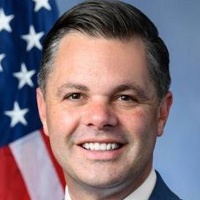
Zachary (Zach) Nunn
Representative
IA
Zachary (Zach) Nunn
Representative
IA
The Taskforce for Recognizing and Averting Payment Scams Act (TRAPS Act) establishes a new Task Force led by the Secretary of the Treasury. This diverse group, including federal agencies, industry experts, and consumer advocates, will study evolving payment scams. The Task Force is charged with developing cross-sector prevention strategies and submitting comprehensive recommendations for new laws and improved coordination to combat these fraudulent activities.
The Afghan Adjustment Act creates pathways to conditional permanent residency for eligible Afghans already in the U.S. and establishes special refugee processing for at-risk Afghan allies who worked with U.S. interests.
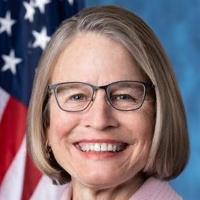
Mariannette Miller-Meeks
Representative
IA
Mariannette Miller-Meeks
Representative
IA
The Afghan Adjustment Act establishes new pathways for certain Afghan nationals already in the U.S. to obtain conditional permanent resident status, contingent upon rigorous security vetting. It also creates a special referral process for at-risk Afghan allies still outside the U.S. to access the U.S. Refugee Admissions Program remotely. Furthermore, the bill extends deadlines and expands eligibility for existing Special Immigrant Visas (SIVs) while mandating significant interagency coordination and reporting to Congress on processing efficiency.
This bill repeals specific prior health reconciliation provisions and expands eligibility for the Premium Tax Credit by removing the 400% income cap and adjusting the subsidy calculation formula.
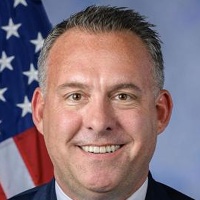
Adam Gray
Representative
CA
Adam Gray
Representative
CA
The Protecting Health Care and Lowering Costs Act of 2025 repeals specific prior reconciliation health provisions. This bill significantly expands eligibility for the Premium Tax Credit by eliminating the 400% Federal Poverty Level income cap. It also updates the subsidy calculation formula to ensure a smoother, linear adjustment of assistance across various income levels.
The EATS Act of 2025 expands eligibility for SNAP benefits by removing previous restrictions for students enrolled at least half-time in recognized educational programs.
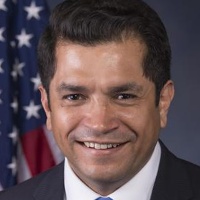
Jimmy Gomez
Representative
CA
Jimmy Gomez
Representative
CA
The EATS Act of 2025 significantly updates eligibility for the Supplemental Nutrition Assistance Program (SNAP) by removing previous restrictions that often disqualified students. This legislation explicitly includes bona fide students enrolled at least half-time in recognized educational programs as eligible participants for food assistance. These changes take effect on January 2, 2026.
This Act establishes the "Local Farmers Feeding Our Communities" program to strengthen local food security by funding agreements that support local producers and distribute fresh food to communities.
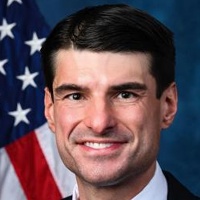
Robert Bresnahan
Representative
PA
Robert Bresnahan
Representative
PA
The Local Farmers Feeding our Communities Act establishes a new program to support local food producers and strengthen regional food security. This initiative requires the Secretary of Agriculture to fund agreements that ensure nutritious, locally sourced food is purchased and distributed widely, prioritizing small and beginning farmers. Funds must be used to buy minimally processed local products and provide technical assistance to producers. The program is backed by mandatory funding starting in Fiscal Year 2026.
The BUILD Housing Act streamlines HUD environmental reviews for certain housing assistance and allows federally recognized Indian Tribes to assume these review obligations.
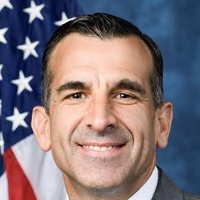
Sam Liccardo
Representative
CA
Sam Liccardo
Representative
CA
The BUILD Housing Act streamlines environmental reviews for certain HUD housing assistance programs by allowing the Secretary to designate them as "special projects." This change enables the use of specific, established review procedures under the Multifamily Housing Property Disposition Reform Act of 1994. Furthermore, the bill expands the authority for environmental review responsibilities to include federally recognized Indian Tribes alongside states and local governments.
This Act establishes programs to facilitate educational exchanges for international scholars at U.S. community colleges and vocational schools while also building the capacity of these U.S. institutions to expand their own study abroad offerings.
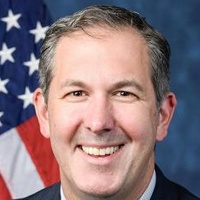
Johnny Olszewski
Representative
MD
Johnny Olszewski
Representative
MD
The Community College Educational Exchange Act aims to expand international educational opportunities by establishing new programs for foreign scholars to study at U.S. community and vocational colleges. It also creates a capacity-building initiative to help these U.S. institutions develop more study abroad options, particularly in STEM and technical fields. The legislation mandates increased outreach and technical assistance to ensure eligible colleges can successfully participate in federal exchange programs.
This Act establishes a new reciprocal temporary work visa category for South Korean nationals in specialty occupations, subject to an annual cap of 15,000 principal applicants.
Young Kim
Representative
CA
Young Kim
Representative
CA
The Partner with Korea Act establishes a new reciprocal temporary work visa category specifically for South Korean nationals seeking employment in specialty occupations within the United States. This program is subject to an annual cap of 15,000 principal applicants. The legislation updates immigration procedures to incorporate this dedicated visa stream, contingent upon employer attestations approved by the Secretary of Labor.
This bill updates the eligibility requirements for creating records of lawful admission for long-term residents by changing the qualifying entry date to a minimum of seven years of U.S. residency prior to application.
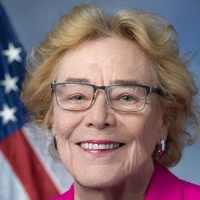
Zoe Lofgren
Representative
CA
Zoe Lofgren
Representative
CA
This bill, the Renewing Immigration Provisions of the Immigration Act of 1929, updates the eligibility requirements for creating records of lawful admission for long-term residents. It replaces a fixed entry date with a new standard requiring applicants to have resided in the U.S. for at least seven years prior to applying. These revised provisions will take effect 60 days after the Act is enacted.
The VISIBLE Act mandates that federal immigration officers clearly display their agency and identifying information when conducting public-facing enforcement activities.
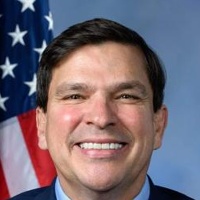
Vicente Gonzalez
Representative
TX
Vicente Gonzalez
Representative
TX
The VISIBLE Act mandates that federal immigration enforcement officers, such as those from CBP and ICE, must clearly display their agency name and either their last name or badge number during all public-facing civil immigration enforcement activities. This requirement ensures officers are easily identifiable to the public from a distance, promoting transparency and public trust. The law also establishes disciplinary procedures for non-compliance and requires annual reporting to Congress on enforcement activities and violations.
This bill establishes a new system for distributing up to 2,000 additional Medicare-funded residency positions annually from 2026 through 2032, prioritizing hospitals serving underserved areas, and mandates a study on strategies to increase workforce diversity.
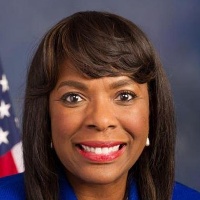
Terri Sewell
Representative
AL
Terri Sewell
Representative
AL
The Resident Physician Shortage Reduction Act of 2025 establishes a structured process for distributing up to 2,000 additional, federally funded residency positions annually between fiscal years 2026 and 2032. This distribution prioritizes hospitals serving in underserved areas, those already training above their limit, and those committed to primary care and general surgery training. The bill also mandates a study and report by the Comptroller General on effective strategies to increase diversity within the health professional workforce.