
Legislative Activity
Track Lauren's sponsored bills, co-sponsored legislation, and voting record
This bill eliminates the tax exclusion limits on capital gains from selling a principal residence and allows for gain exclusion when selling to a first-time homebuyer.

Nancy Mace
Representative
SC
Nancy Mace
Representative
SC
The Making Homeownership Affordable Again Act eliminates the current tax exclusion limits on the profit made from selling a principal residence. Additionally, it allows homeowners to exclude this gain entirely if they sell their home to a qualified first-time homebuyer. This legislation aims to boost housing market activity and affordability.
This bill mandates that unspent federal agency funds be split, with most going to debt reduction, some rolled over for one year, and a small portion used for employee retention bonuses, while also limiting future budget requests.
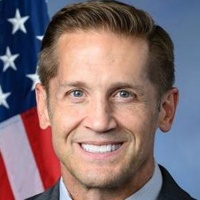
Rich McCormick
Representative
GA
Rich McCormick
Representative
GA
The Incentivize Savings Act mandates how federal agencies must handle unspent appropriations by dedicating the majority to debt reduction and allowing a portion for employee retention bonuses. This legislation also restricts future budget requests to only account for inflation unless the agency fully spends its prior allocation. Ultimately, the bill aims to encourage fiscal responsibility by linking unspent funds to debt reduction and limiting budget growth.
This bill establishes federal standards for voter identification, registration, election administration, and mail-in ballot procedures for federal elections.
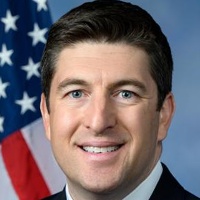
Bryan Steil
Representative
WI
Bryan Steil
Representative
WI
The Make Elections Great Again Act establishes new federal standards for voter identification, citizenship verification for registration, and statewide voter list maintenance for federal elections. It also standardizes election administration by mandating paper ballots, banning ranked-choice voting, and implementing strict new rules for requesting and returning mail-in ballots. The bill aims to increase election integrity through enhanced documentation and procedural uniformity across states.
The FRAMER Act requires states to reimburse builders for the added construction costs of meeting state energy codes above federal standards when building homes in Opportunity Zones.
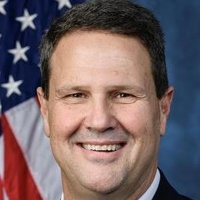
Jeff Crank
Representative
CO
Jeff Crank
Representative
CO
The FRAMER Act establishes a program requiring states to reimburse builders for the added cost of meeting state energy codes that exceed federal standards when constructing homes in designated Opportunity Zones. To maintain eligibility for federal community development funds, states must make this payment within 30 days of occupancy. Builders receiving this reimbursement must disclose the cost difference and the reimbursement amount to the home's first buyer. This program is set to expire seven years after enactment.
This bill mandates proof of U.S. citizenship for federal voter registration and requires photo identification showing citizenship status for voting in federal elections.

Chip Roy
Representative
TX
Chip Roy
Representative
TX
The Safeguard American Voter Eligibility Act (SAVE America Act) mandates that individuals must provide documentary proof of U.S. citizenship to register to vote in federal elections. It also establishes a federal requirement for voters to present a photo ID indicating U.S. citizenship when casting a ballot in federal elections. The bill outlines specific acceptable forms of proof and requires states to implement verification programs to ensure only citizens are registered and voting.
This Act mandates that federal agencies use specific sex-based terms like "female" or "mother" instead of "birthing person" in official communications.
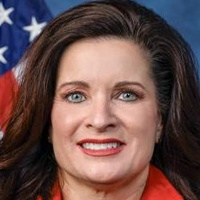
Sheri Biggs
Representative
SC
Sheri Biggs
Representative
SC
The Protecting Motherhood Act mandates that federal agencies use specific, sex-based terminology such as "mother," "woman," or "female" instead of the term "birthing person" in all official documents. This legislation defines the required terms to ensure consistency in federal communications regarding pregnancy and parenthood.
This bill removes the Mexican wolf from the endangered species list, nullifies previous related regulations, and mandates that future recovery decisions focus solely on the U.S. wolf population.

Paul Gosar
Representative
AZ
Paul Gosar
Representative
AZ
The Enhancing Safety for Animals Act of 2025 officially delists the Mexican wolf from the list of threatened and endangered species. This legislation voids previous management rules and mandates that future recovery plans for the species in the U.S. must exclude consideration of the wolf population in Mexico. The bill also addresses concerns regarding compensation standards for ranchers suffering livestock losses due to wolf predation.
This bill mandates that U.S. citizenship or nationality, verified through documentation submitted to the SSA and DHS, is required for most federal public assistance benefits.
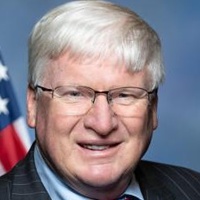
Glenn Grothman
Representative
WI
Glenn Grothman
Representative
WI
The Safeguarding Benefits for Americans Act of 2026 establishes U.S. citizenship or nationality as a mandatory requirement for receiving most federal public assistance benefits. This law mandates that applicants must attest to their citizenship status and provide documentation for verification against Social Security Administration and Department of Homeland Security records. These new citizenship verification rules will supersede existing eligibility laws unless those laws are more restrictive. Eligibility determinations under this new standard will begin one year after enactment.
This act prohibits large investment companies with over $100 billion in assets from purchasing single-family residences.

Mary Miller
Representative
IL
Mary Miller
Representative
IL
The American Family Housing Act aims to increase housing availability by prohibiting large investment companies, defined as those with over \$100 billion in assets, from purchasing single-family residences. This restriction applies to direct purchases and limits ownership stakes in companies whose primary assets are single-family homes. The goal is to curb large-scale corporate acquisition of residential properties.
This bill streamlines the New Source Review permitting process by setting strict timelines, consolidating permits, adjusting emissions baselines, and narrowly defining what constitutes a "modification" under the Clean Air Act.
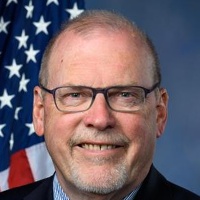
H. Griffith
Representative
VA
H. Griffith
Representative
VA
This bill aims to streamline the New Source Review (NSR) permitting process for industrial facilities under the Clean Air Act by setting strict deadlines and consolidating permit requirements. It revises the definition of a "modification" to focus on actual hourly emission rate increases and excludes certain efficiency, safety, or reliability projects from triggering new reviews. Furthermore, the legislation narrows the definition of "construction" to primarily mean the physical building of emissions units, limiting when preconstruction review requirements apply.
This bill delays the implementation of certain 2026 amendments to the hemp production provisions of the Agricultural Marketing Act of 1946 by extending the current delay period from one year to three years.
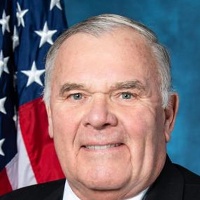
James Baird
Representative
IN
James Baird
Representative
IN
This bill, the Hemp Planting Predictability Act, seeks to amend the Agriculture Appropriations Act of 2026. Specifically, it delays the implementation of recent amendments affecting hemp production under the Agricultural Marketing Act of 1946. The delay for these changes is extended from one year to three years.
This bill modifies deposits into the Crime Victims Fund by excluding certain False Claims Act recoveries and mandates an Inspector General audit of the Fund's sustainability.

Ann Wagner
Representative
MO
Ann Wagner
Representative
MO
This bill amends the Victims of Crime Act of 1984 to temporarily exclude certain False Claims Act recoveries from being deposited into the Crime Victims Fund through fiscal year 2029. It also mandates a comprehensive audit by the Department of Justice Inspector General on the Fund's sustainability and the impact of recent legislative changes. The resulting report will provide recommendations for improving the Fund's effectiveness and oversight.
This bill proposes awarding a Congressional Gold Medal to investigative journalist Nick Shirley for his work uncovering significant fraud against taxpayers in Minnesota.
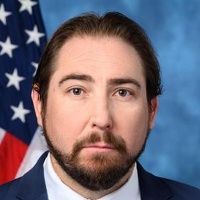
Eli Crane
Representative
AZ
Eli Crane
Representative
AZ
This bill, the Nick Shirley Congressional Gold Medal Act, proposes awarding a Congressional Gold Medal to investigative journalist Nick Shirley. This recognition is in honor of his work uncovering significant fraud against U.S. taxpayers in Minnesota. The Act authorizes the production and presentation of this high honor by Congress.
This act increases the standard tax deduction for tax years 2026 and 2027 based on a calculated tariff rebate amount.

Tim Burchett
Representative
TN
Tim Burchett
Representative
TN
The Trump Tariff Rebate Act temporarily increases the standard tax deduction for the 2026 and 2027 tax years. This increase is intended to provide a rebate to taxpayers based on the impact of tariffs. The specific increase varies depending on the filer's status, such as joint filers or heads of households.
This bill mandates that hospitals participating in Medicare must collect and report the citizenship status of patients and the associated costs of uncompensated care provided to non-citizens.
Nancy Mace
Representative
SC
Nancy Mace
Representative
SC
The American Citizenship Healthcare Integrity Act of 2025 mandates that hospitals participating in Medicare must ask patients about their U.S. citizenship status during intake. This legislation requires hospitals to annually report data on care provided to non-citizens and the associated uncompensated costs. The Secretary of Health and Human Services will then issue a public report detailing the total national costs of this uncompensated care.
The ESA Amendments Act of 2025 seeks to modernize the Endangered Species Act by prioritizing resource allocation, incentivizing private land conservation, increasing state involvement, and streamlining federal permitting and regulatory processes.

Bruce Westerman
Representative
AR
Bruce Westerman
Representative
AR
The ESA Amendments Act of 2025 proposes comprehensive reforms to the Endangered Species Act, aiming to shift the focus toward state-led conservation, voluntary private land agreements, and streamlined federal permitting. The bill introduces a prioritized, schedule-based approach for listing species while increasing transparency regarding agency data, litigation, and economic impacts. By narrowing the scope of federal regulatory authority and environmental reviews, the legislation seeks to balance species protection with infrastructure development and economic interests.
This bill exempts qualifying less-than-lethal projectile devices and their ammunition from federal excise taxes and the regulations of the National Firearms Act.
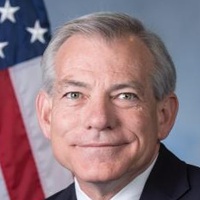
David Schweikert
Representative
AZ
David Schweikert
Representative
AZ
This bill exempts specific, carefully defined less-than-lethal projectile devices and their ammunition from the federal excise tax on firearms and ammunition. It also removes these qualifying devices from regulation under the National Firearms Act. The legislation establishes clear criteria, including velocity limits and design restrictions, to ensure the exemption applies only to tools intended for de-escalation rather than lethal force. Manufacturers can request official classification for their products to confirm eligibility for these tax and regulatory benefits.
This bill mandates that states provide SNAP recipient data to the Secretary of Agriculture upon request to enhance program oversight and enforcement.
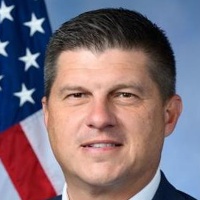
Brad Finstad
Representative
MN
Brad Finstad
Representative
MN
The SNAP Data Transparency and Oversight Act of 2025 mandates that states provide recipient-level SNAP data to the Secretary of Agriculture upon request as a condition of program participation. This ensures greater federal oversight and strengthens the ability to enforce program integrity and investigate potential fraud. Failure to comply may result in the withholding of federal administrative funds.
The FAIR Act amends the Food and Nutrition Act of 2008 to mandate photo identification on all Electronic Benefit Transfer (EBT) cards used for SNAP benefits.
Nancy Mace
Representative
SC
Nancy Mace
Representative
SC
The FAIR Act amends the Food and Nutrition Act of 2008 to mandate that all Electronic Benefit Transfer (EBT) cards used for SNAP benefits must feature a photograph of the authorized cardholder. This change requires both recipients and retailers to verify the identity of the person using the card during transactions. The legislation also includes provisions for caregivers accessing benefits on behalf of minors, the elderly, or disabled individuals.
This act prohibits state and local governments from enacting regulations that restrict energy service based on the type or source of energy sold in interstate commerce.

Nicholas Langworthy
Representative
NY
Nicholas Langworthy
Representative
NY
The Energy Choice Act places federal restrictions on state and local governments, preventing them from enacting regulations that prohibit or limit energy service based on its type or source. This means local governments cannot ban or restrict access to energy services sold in interstate commerce. The legislation aims to ensure consistent access to various energy sources across jurisdictions.