Legislative Activity
Track Dave's sponsored bills, co-sponsored legislation, and voting record
This bill authorizes the creation and sale of commemorative coins for the 2028 Los Angeles Olympic and Paralympic Games and the 2034 Salt Lake City Winter Olympic and Paralympic Games to help fund their hosting and legacy programs.
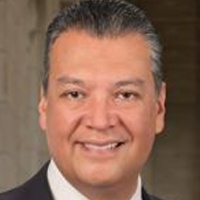
Alejandro Padilla
Senator
CA
Alejandro Padilla
Senator
CA
This Act authorizes the creation and sale of commemorative coins to celebrate the upcoming 2028 Summer Olympic and Paralympic Games in Los Angeles and the 2034 Winter Olympic and Paralympic Games in Salt Lake City. The Secretary of the Treasury is empowered to mint various denominations of gold, silver, and clad coins for each event, with designs reflecting American participation. A mandatory surcharge on each coin sold will directly fund the respective organizing committees for the Games and their legacy programs, provided the government recovers all minting costs first.
This Act mandates the collection and public release of citizenship data in the decennial census, and requires that only U.S. citizens be counted for the purpose of apportioning congressional representatives and electoral votes starting with the 2030 count.
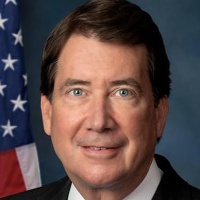
Bill Hagerty
Senator
TN
Bill Hagerty
Senator
TN
The Equal Representation Act mandates the inclusion of a citizenship question on the decennial census starting in 2030. It requires the public release of state-by-state citizenship data following the count. Crucially, this act stipulates that non-citizens will be excluded from the population totals used to determine congressional apportionment and electoral votes.
This Senate resolution expresses strong support for recent United States and Israeli military strikes aimed at degrading Iran's nuclear program and condemning its sponsorship of terrorism.
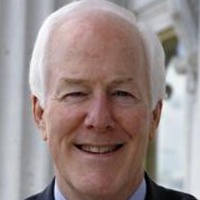
John Cornyn
Senator
TX
John Cornyn
Senator
TX
This Senate resolution expresses strong support for the recent U.S. and Israeli military strikes against Iran's nuclear and military infrastructure. It affirms that Iran must be prevented from acquiring nuclear weapons due to its history of proliferation and support for terrorism. The resolution commends the military actions taken to degrade Iran's capabilities and reaffirms the U.S. right to act decisively to ensure regional security.
This act rescinds unclaimed federal grant funds and directs that money to reduce the national deficit.
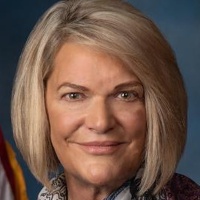
Cynthia Lummis
Senator
WY
Cynthia Lummis
Senator
WY
The Pay Down the Debt Act mandates that any federal grant funds voluntarily declined by states or local governments must be rescinded. All rescinded funds will be directly deposited into the Treasury's general fund. This dedicated revenue stream is exclusively earmarked for reducing the national deficit.
The GOLDEN DOME Act of 2025 establishes a comprehensive, next-generation missile defense system by creating a dedicated Program Manager, accelerating the development of space-based and non-kinetic defenses, and authorizing over $23 billion in funding to counter evolving global missile and drone threats.
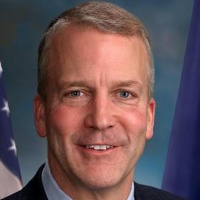
Dan Sullivan
Senator
AK
Dan Sullivan
Senator
AK
The GOLDEN DOME Act of 2025 establishes a comprehensive, next-generation missile defense shield to counter rapidly evolving global threats from ballistic, hypersonic, and unmanned systems. The bill creates a powerful, direct-reporting Program Manager to oversee the rapid development, testing, and deployment of integrated defense capabilities across space, air, land, and sea domains. It authorizes over $23 billion in funding, prioritizing the acceleration of space-based sensors, advanced interceptors, and non-kinetic defense technologies. Furthermore, the Act streamlines acquisition processes and enhances the Department of Defense's authority to protect assets against incursions by unmanned aerial systems.
This resolution formally condemns the recent surge in antisemitic attacks across the United States, citing specific tragedies and statistics to reaffirm the Senate's commitment to fighting hate.

James Lankford
Senator
OK
James Lankford
Senator
OK
This resolution formally condemns the recent surge in antisemitic attacks across the United States, citing specific tragedies in Washington, D.C., and Boulder, Colorado. It acknowledges the widespread celebration of this violence online and highlights alarming statistics showing the dramatic increase in religiously motivated hate crimes against Jewish Americans. Ultimately, the Senate reaffirms its commitment to fighting antisemitism as a threat to American democracy.
This resolution supports designating a week in June 2025 as "National Women's Sports Week" to celebrate the anniversary of Title IX and advocate for the protection of female-only athletic opportunities.

Joni Ernst
Senator
IA
Joni Ernst
Senator
IA
This resolution supports designating the week of June 23–29, 2025, as "National Women's Sports Week." The observance aims to celebrate the anniversary of Title IX and the significant growth of women's sports participation since its enactment. Furthermore, the resolution emphasizes the importance of protecting fair and safe athletic opportunities exclusively for female athletes. This week will honor the achievements of women in sports and promote equal access for all sexes.
This bill mandates the Committee on Foreign Investment in the United States (CFIUS) to annually review, update, and report on U.S. Government facilities and property deemed national security sensitive for real estate transaction reviews.

Tim Scott
Senator
SC
Tim Scott
Senator
SC
This bill mandates that the Committee on Foreign Investment in the United States (CFIUS) annually review and update a specific list of U.S. Government facilities and property deemed sensitive for national security. CFIUS must also report on any real estate transaction reviews involving these sensitive sites. This ensures the list remains current based on agency-specific annual reviews.
The PICTURES Act mandates the Director of National Intelligence to investigate and report on the hidden wealth and assets of top Chinese Communist Party officials and their families.
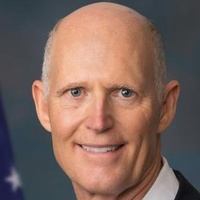
Rick Scott
Senator
FL
Rick Scott
Senator
FL
The PICTURES Act mandates the Director of National Intelligence (DNI) to investigate and publicly report on the hidden wealth and assets of top Chinese Communist Party (CCP) leaders and their families. This report must detail their domestic and foreign holdings, including real estate and luxury assets, within 180 days of enactment. The goal is to enhance U.S. foreign policy and national security decisions by exposing the alleged corruption of the CCP elite.
The REFOCUS DODEA Act mandates the prohibition and secure storage of student smartphones during the school day at Department of Defense Education Activity schools, with exceptions for medical or emergency needs.
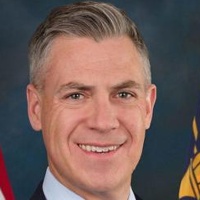
Jim Banks
Senator
IN
Jim Banks
Senator
IN
The REFOCUS DODEA Act mandates the Department of Defense Education Activity (DoDEA) to implement a strict policy banning student smartphone use during the school day. This new regulation requires students to secure their devices in lockers or approved pouches for the duration of the school day. Exceptions will be made only for documented medical needs or high-priority emergencies.
This Act prohibits U.S. persons from purchasing, selling, or holding securities of Chinese entities connected to military activities or human rights abuses, requiring divestment of existing holdings under penalty of severe civil and criminal fines.
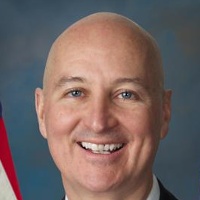
Pete Ricketts
Senator
NE
Pete Ricketts
Senator
NE
The PRC Military and Human Rights Capital Markets Sanctions Act of 2025 prohibits U.S. persons from purchasing, selling, or holding securities related to entities connected to the Chinese military or human rights abuses. This measure requires the President to publish a list of these "covered entities" drawn from various U.S. government watchlists. Individuals found in violation face significant civil and criminal penalties, including substantial fines and potential imprisonment. Existing prohibited holdings must be divested within specified timeframes after the bill's enactment.
This bill mandates detailed reporting and public transparency for federal payments while expanding data access across agencies to verify recipients and prevent improper government spending.
Joni Ernst
Senator
IA
Joni Ernst
Senator
IA
The Delivering On Government Efficiency in Spending Act mandates increased transparency by requiring federal agencies to report detailed information on all Treasury payments for public posting. It also enhances government integrity by granting the Treasury access to sensitive data, like new hire and tax records, to verify recipients and prevent improper payments. Furthermore, the bill requires agencies to verify bank account information before disbursing funds to ensure accuracy. These measures aim to improve oversight, reduce fraud, and increase accountability in federal spending.
This Act mandates that any final World Health Organization pandemic preparedness treaty or agreement must receive the advice and consent of the U.S. Senate by a two-thirds majority vote to be binding on the United States.

Ron Johnson
Senator
WI
Ron Johnson
Senator
WI
This Act mandates that any final convention or agreement on pandemic preparedness resulting from the World Health Organization's (WHO) International Negotiating Body must be treated as a formal treaty. Consequently, the United States cannot adopt or implement such an agreement without receiving the "advice and consent" of the Senate. This ensures that the Senate has a final, two-thirds majority vote on any binding international health instrument negotiated by the WHO.
The ABC-ED Act of 2025 expands public health data grants to track real-time hospital capacity, mandates CMMI pilot programs for improving emergency care for older adults and psychiatric crises, and directs a study on best practices for hospital capacity data systems.
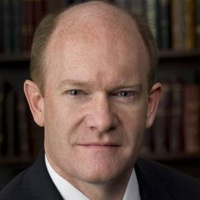
Christopher Coons
Senator
DE
Christopher Coons
Senator
DE
The ABC-ED Act of 2025 aims to improve emergency department efficiency by allowing public health grants to fund real-time hospital bed capacity tracking systems. It also mandates the Center for Medicare and Medicaid Innovation to pilot programs focused on enhancing emergency care for older adults and those in acute psychiatric crises. Finally, the bill directs a study on best practices for these capacity tracking systems and their impact on emergency wait times.
This bill awards the Congressional Gold Medal to the service members of MACVSOG to recognize their highly specialized and secret service during the Vietnam War.
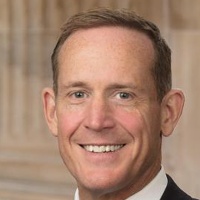
Ted Budd
Senator
NC
Ted Budd
Senator
NC
This bill officially authorizes the presentation of a Congressional Gold Medal to recognize the exceptional service and sacrifice of the members of the Military Assistance Command Vietnam – Studies and Observation Group (MACVSOG). Congress acknowledges MACVSOG's critical, highly secret missions during the Vietnam War, which set the standard for modern special operations forces. After presentation, the original medal will be given to the Smithsonian Institution for display and research. The Act also permits the creation and sale of bronze duplicates to cover production costs.
The DISRUPT Act establishes task forces and mandates detailed reports to counter the deepening military and economic cooperation between China, Russia, Iran, and North Korea.
Christopher Coons
Senator
DE
Christopher Coons
Senator
DE
The Defending International Security by Restricting Unacceptable Partnerships and Tactics (DISRUPT) Act aims to counter the growing security threat posed by the deepening cooperation between China, Russia, Iran, and North Korea. The bill mandates the creation of interagency task forces and detailed intelligence reports to analyze and disrupt this adversarial alignment across military, economic, and technological fronts. Ultimately, the policy seeks to constrain the global reach of these nations and enhance U.S. deterrence capabilities against simultaneous challenges.
This act authorizes the President to extend federal immunities and privileges under the International Organizations Immunities Act to ASEAN, CERN, and the Pacific Islands Forum (PIF).
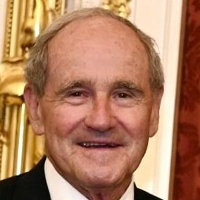
James Risch
Senator
ID
James Risch
Senator
ID
The PARTNER with ASEAN, CERN, and PIF Act grants the President the authority to extend the legal privileges and immunities of the International Organizations Immunities Act to the Association of Southeast Asian Nations (ASEAN), the European Organization for Nuclear Research (CERN), and the Pacific Islands Forum (PIF). This allows the U.S. to provide these key international partners with the same federal protections afforded to other recognized international organizations. The President will determine the specific terms and conditions for extending these benefits to each group.
The AFIDA Improvements Act of 2025 updates reporting requirements for foreign ownership of U.S. farmland, lowers the minimum ownership threshold for disclosure to 1 percent, and enhances information sharing with national security officials.
Pete Ricketts
Senator
NE
Pete Ricketts
Senator
NE
The AFIDA Improvements Act of 2025 updates the rules for reporting foreign ownership of U.S. farmland under the Agricultural Foreign Investment Disclosure Act of 1978. This bill lowers the minimum reporting threshold to 1% ownership for certain foreign investors and clarifies enforcement procedures for the Secretary of Agriculture. Furthermore, it mandates information sharing between the Department of Agriculture and national security officials (CFIUS) regarding these foreign investment disclosures. The Act also requires updates to official handbooks and an analysis of implementing a fully electronic reporting system.
The Combating Violent and Dangerous Crime Act revises federal statutes to strengthen penalties for bank robbery and vehicle crimes, clarify intent requirements for assaulting federal officers, create a new offense for distributing candy-flavored drugs to minors, and update the definition and jurisdiction for federal kidnapping.
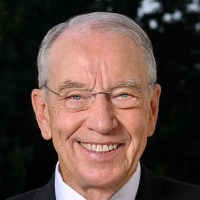
Charles Grassley
Senator
IA
Charles Grassley
Senator
IA
The Combating Violent and Dangerous Crime Act revises federal statutes concerning several serious offenses. This bill strengthens penalties for bank robbery and motor vehicle crimes, while also clarifying the intent required to convict individuals who assault federal officers. Furthermore, it establishes a new federal crime targeting the distribution of controlled substances disguised as candy or drinks to minors.
The Energy Choice Act prohibits state and local governments from enacting regulations that restrict residents' or businesses' access to energy sources transported across state lines.

Jim Justice
Senator
WV
Jim Justice
Senator
WV
The Energy Choice Act aims to prevent state and local governments from enacting regulations that restrict consumer access to various energy sources, including natural gas, hydrogen, and electricity, if those sources are transported across state lines. This legislation ensures that local codes cannot ban or limit the connection or expansion of services based on the energy type or source. In essence, it protects the ability of residents and businesses to choose from energy options available through interstate commerce.