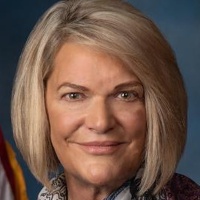
Legislative Activity
Track Cynthia's sponsored bills, co-sponsored legislation, and voting record
This bill extends the deadline for the Colorado River System conservation pilot program until 2026 and 2027.

John Hickenlooper
Senator
CO
John Hickenlooper
Senator
CO
This bill, the Colorado River Basin System Conservation Extension Act, reauthorizes and extends the existing Colorado River System conservation pilot program. It pushes back key deadlines for the program, allowing it to continue operating for an additional two years. The legislation also updates the official naming reference within the program's description.
This Act allows designated "health marketplace pools" to be treated as employers so they can offer group health plans or insurance coverage to their members.

Rand Paul
Senator
KY
Rand Paul
Senator
KY
The Health Marketplace for All Act of 2025 amends federal law to recognize certain "health marketplace pools" as employers for the purpose of offering group health plans. This allows these pools to provide comprehensive or standalone prescription drug coverage to their members. The Act establishes specific rules for how these pools must be structured to ensure fair, non-discriminatory access to coverage for all members. These changes aim to expand access to group health insurance options through organized risk pools.
This Act rescinds billions of dollars in previously appropriated budget authority from various State Department, foreign aid, and international programs, as well as future funding for the Corporation for Public Broadcasting.
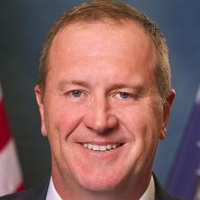
Eric Schmitt
Senator
MO
Eric Schmitt
Senator
MO
The Rescissions Act of 2025 immediately cancels previously allocated budget authority across various government accounts, primarily targeting State Department and foreign aid programs. This legislation rescinds billions of dollars designated for international organizations, global health initiatives, development assistance, and peacekeeping operations. Additionally, it cancels future funding set aside for the Corporation for Public Broadcasting in fiscal years 2026 and 2027.
The TERMS Act mandates that online service providers clearly disclose their account restriction policies beforehand and provide advance notice before suspending or terminating user accounts, subject to FTC enforcement.
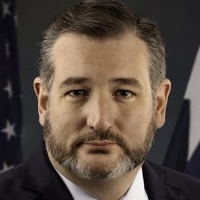
Ted Cruz
Senator
TX
Ted Cruz
Senator
TX
The TERMS Act mandates that online service providers clearly disclose their rules and processes for account termination or suspension *before* users sign up. This legislation requires providers to give advance written notice of most account restrictions, detailing the violation and appeal options. Furthermore, providers must publish annual transparency reports detailing enforcement actions taken against users. The Federal Trade Commission (FTC) is tasked with enforcing these new standards.
This bill mandates detailed reporting and public transparency for federal payments while expanding data access across agencies to verify recipients and prevent improper government spending.

Joni Ernst
Senator
IA
Joni Ernst
Senator
IA
The Delivering On Government Efficiency in Spending Act mandates increased transparency by requiring federal agencies to report detailed information on all Treasury payments for public posting. It also enhances government integrity by granting the Treasury access to sensitive data, like new hire and tax records, to verify recipients and prevent improper payments. Furthermore, the bill requires agencies to verify bank account information before disbursing funds to ensure accuracy. These measures aim to improve oversight, reduce fraud, and increase accountability in federal spending.
This bill awards the Congressional Gold Medal to the service members of MACVSOG to recognize their highly specialized and secret service during the Vietnam War.
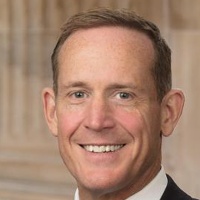
Ted Budd
Senator
NC
Ted Budd
Senator
NC
This bill officially authorizes the presentation of a Congressional Gold Medal to recognize the exceptional service and sacrifice of the members of the Military Assistance Command Vietnam – Studies and Observation Group (MACVSOG). Congress acknowledges MACVSOG's critical, highly secret missions during the Vietnam War, which set the standard for modern special operations forces. After presentation, the original medal will be given to the Smithsonian Institution for display and research. The Act also permits the creation and sale of bronze duplicates to cover production costs.
This Act mandates that any final World Health Organization pandemic preparedness treaty or agreement must receive the advice and consent of the U.S. Senate by a two-thirds majority vote to be binding on the United States.

Ron Johnson
Senator
WI
Ron Johnson
Senator
WI
This Act mandates that any final convention or agreement on pandemic preparedness resulting from the World Health Organization's (WHO) International Negotiating Body must be treated as a formal treaty. Consequently, the United States cannot adopt or implement such an agreement without receiving the "advice and consent" of the Senate. This ensures that the Senate has a final, two-thirds majority vote on any binding international health instrument negotiated by the WHO.
This bill mandates that FHA disclosures include information on VA loan assumptions and requires mortgage applications processed by Fannie Mae and Freddie Mac to include a question about military service.
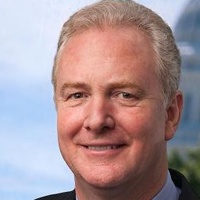
Chris Van Hollen
Senator
MD
Chris Van Hollen
Senator
MD
The VA Loan Informed Disclosure Act of 2025, or VALID Act, aims to increase awareness of VA loan options for consumers. It mandates that FHA disclosures include information about assuming VA-backed loans. Furthermore, the Act requires Fannie Mae and Freddie Mac to add a mandatory military service question to the standard mortgage application form.
This resolution formally establishes an annual "Life Month" to affirm the inherent value of all human life, especially the unborn, and to encourage legislative action and support for life-affirming resources.
Ted Cruz
Senator
TX
Ted Cruz
Senator
TX
This resolution formally declares the nation's foundational belief in the inherent right to life for every human being, including the unborn. It recognizes the Supreme Court's decision to return authority over life protection laws to the people and their elected officials. Furthermore, the bill establishes an annual "Life Month" to commend organizations supporting life and urge lawmakers to enact protections for the unborn.
The HEALTH Panel Act establishes a new Panel of Health Advisors within the Congressional Budget Office to provide expert technical guidance on health care policy analyses and cost estimates.
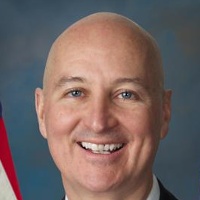
Pete Ricketts
Senator
NE
Pete Ricketts
Senator
NE
The HEALTH Panel Act establishes a new Panel of Health Advisors within the Congressional Budget Office (CBO) composed of 15 independent experts. This Panel will provide technical guidance and recommendations to improve the CBO's analysis, modeling, and cost estimates related to federal health care policy. The CBO Director must publicly report on how these expert recommendations are incorporated into official CBO projections.
This Act expands veterans' access to timely community care for mental health and substance-use treatment when the VA cannot provide it quickly enough, while also increasing transparency in community care metrics.
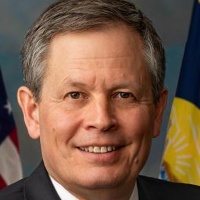
Steve Daines
Senator
MT
Steve Daines
Senator
MT
The Protecting Veteran Community Care Act aims to expand veterans' access to timely community care, particularly for mental health and substance-use services when the VA cannot provide them quickly. This legislation prevents the VA from using its own scheduling delays as a reason to deny veterans access to outside care options. Furthermore, the bill mandates increased transparency by requiring the VA to report detailed metrics on all community care requests and limits the VA's ability to unilaterally change community care access standards without Congressional approval.
This resolution formally honors the life, achievements, and legacy of former United States Senator Christopher "Kit" Bond of Missouri.
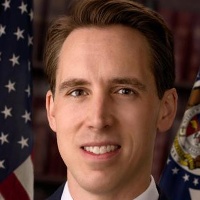
Joshua Hawley
Senator
MO
Joshua Hawley
Senator
MO
This resolution serves as a formal tribute honoring the life, achievements, and enduring legacy of former United States Senator Christopher "Kit" Bond of Missouri. It recognizes his decades of public service, including his terms as Missouri Governor and U.S. Senator, where he championed infrastructure, agriculture, and conservative values. The Senate expresses deep sadness over his passing and directs that official copies of this tribute be sent to his family.
This bill improves the CDFI Bond Guarantee Program by adjusting guarantee calculations, setting new limits, extending the program's deadline, and requiring reports on its effectiveness.

Tina Smith
Senator
MN
Tina Smith
Senator
MN
The CDFI Bond Guarantee Program Improvement Act of 2025 aims to strengthen the Community Development Financial Institutions (CDFI) Bond Guarantee Program. This legislation adjusts the calculation and sets new annual limits for government guarantees on bonds issued for community and economic development. Furthermore, it extends the program's authorization period and mandates the Treasury Secretary to report twice on the program's effectiveness to Congress.
This bill permanently extends the Iran Sanctions Act of 1996 by repealing its scheduled expiration date.

Tim Scott
Senator
SC
Tim Scott
Senator
SC
This bill seeks to permanently reauthorize the Iran Sanctions Act of 1996 by repealing its scheduled expiration date. By removing the sunset provision, Congress ensures these sanctions against Iran's weapons programs and support for terrorism remain in effect indefinitely. The legislation reaffirms the U.S. policy to fully enforce the existing sanctions.
This Act authorizes livestock producers and their employees to take action against black vultures reasonably believed to be harming livestock or related property, with specific reporting requirements.
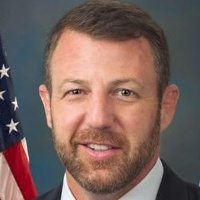
Markwayne Mullin
Senator
OK
Markwayne Mullin
Senator
OK
The Black Vulture Relief Act of 2025 authorizes livestock producers and their employees to take action against black vultures that are harming or threatening livestock or related property. This provision allows for the capture, killing, or dispersal of the birds, provided that poisoning is strictly prohibited. Those who take action must report the activity to the U.S. Fish and Wildlife Service once the required reporting form is made available.
This bill mandates new electronic, transparent, and timely prior authorization requirements for Medicare Advantage plans to improve seniors' access to care.

Roger Marshall
Senator
KS
Roger Marshall
Senator
KS
The Improving Seniors’ Timely Access to Care Act of 2025 aims to modernize and increase transparency in the prior authorization process for Medicare Advantage plans. This bill mandates the adoption of electronic prior authorization systems and requires plans to publicly report detailed data on their approval, denial, and appeal rates. Furthermore, it establishes new standards to protect enrollees and grants the Secretary authority to enforce faster decision timelines for care requests.
The TAKE IT DOWN Act criminalizes the intentional sharing of nonconsensual intimate images and deepfakes while requiring online platforms to establish clear procedures for their rapid removal upon request.
Ted Cruz
Senator
TX
Ted Cruz
Senator
TX
The TAKE IT DOWN Act establishes new federal crimes for the intentional sharing of nonconsensual intimate images, including realistic AI-generated deepfakes, with enhanced penalties for content involving minors. It mandates that online platforms create clear reporting systems and remove reported nonconsensual intimate content within 48 hours. The Federal Trade Commission (FTC) is empowered to enforce these notice and removal requirements against covered platforms.
This Act mandates that states implement an Enhanced Income Identification and Verification Platform within one year to continue receiving federal funds for covered benefit programs, utilizing comprehensive income data matching.
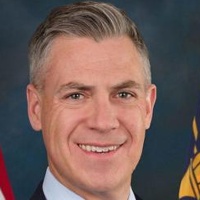
Jim Banks
Senator
IN
Jim Banks
Senator
IN
The Timely and Accurate Benefits Act mandates that states implement an "Enhanced Income Identification and Verification Platform" within one year to continue receiving federal funding for covered benefit programs. This platform requires states to use comprehensive, real-time data matching to verify "enhanced gross income" from all sources, including bank transactions (with claimant permission). The goal is to ensure accurate eligibility and benefit levels for federal assistance programs.
This bill mandates that the U.S. oppose restrictions by international financial institutions on financing for fossil fuel and nuclear energy projects to combat global poverty.
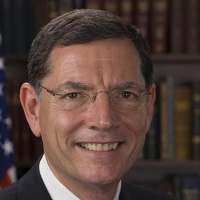
John Barrasso
Senator
WY
John Barrasso
Senator
WY
This Act mandates that the U.S. government actively oppose restrictions imposed by major international financial institutions on financing for fossil fuel and civil nuclear energy projects. The Treasury Secretary must direct U.S. representatives to reverse current policies blocking these energy sources and promote financing for reliable, affordable power in developing nations. Furthermore, U.S. funding to the World Bank's lending arm may be significantly reduced until it certifies the removal of these financing bans and adopts policies promoting these energy projects.
This bill clarifies that the federal government, not states, has exclusive authority to set emission standards for certain existing locomotives and small engines used in construction or farm equipment.
Joni Ernst
Senator
IA
Joni Ernst
Senator
IA
The LOCOMOTIVES Act clarifies federal authority under the Clean Air Act regarding emissions standards for certain existing locomotives and engines used in construction or farm equipment. This legislation ensures that federal standards, rather than varying state standards, apply to these specific engines, particularly those under 175 horsepower and locomotives engaged in commerce. Essentially, it centralizes regulatory power over these emissions sources at the federal level.