This resolution designates July 2026 as "National Anti-Counterfeiting and Consumer Education and Awareness Month" to highlight the importance of trademarks and educate the public on the safety risks posed by counterfeit goods.
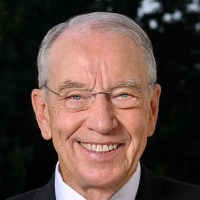
Charles "Chuck" Grassley
Senator
IA
This resolution designates July 2026 as "National Anti-Counterfeiting and Consumer Education and Awareness Month" to highlight the critical role trademarks play in protecting consumer safety and the economy. It emphasizes the growing dangers posed by counterfeit goods—ranging from unsafe electronics to illicit pharmaceuticals—and underscores the need for robust public education to combat these threats. The bill affirms a national commitment to supporting federal, state, and private sector efforts to reduce the demand for and supply of illegal counterfeit products.
National Anti-Counterfeiting Month Set for July 2026: New Push to Tackle $7.4 Billion Fake Goods Market.
This resolution officially designates July 2026 as "National Anti-Counterfeiting and Consumer Education and Awareness Month." While that is a mouthful, the goal is straightforward: the federal government is sounding the alarm on the explosion of fake goods flooding our digital and physical doorsteps. The resolution highlights a massive surge in seizures, with U.S. Customs and Border Protection grabbing over 78 million counterfeit items in 2025 alone—averaging about $20 million worth of fakes every single day. By setting aside this month, the government aims to ramp up educational campaigns that help you spot a knockoff before you hit 'buy.'
The High Cost of 'Too Good to Be True'
We’ve all seen those ads for designer bags or high-end electronics at prices that seem impossible. This resolution points out that these deals often come with hidden dangers. According to the text, over 87% of dangerous counterfeit seizures—things like electronics that might catch fire or cosmetics with toxic ingredients—originated from China and Hong Kong in 2025. It’s not just about losing money on a shoddy product; it’s about the fact that these items bypass the safety standards that legitimate companies have to follow. For a parent buying a cheap charger or a student looking for discounted skincare, the bill emphasizes that the real cost could be a house fire or a trip to the ER.
Prescription for Danger
One of the most sobering parts of this resolution focuses on your medicine cabinet. The text notes that in 2025, the DEA seized 47 million fentanyl-laced fake prescription pills. Counterfeiters are increasingly using the anonymity of the internet to sell what look like standard medications but are actually lethal cocktails. By designating this awareness month, the resolution supports federal and state efforts to teach consumers how to verify their pharmacy sources. It’s a direct response to the reality that for many people, the convenience of ordering pills online has created a massive blind spot that organized criminal networks are currently exploiting.
Protecting the Hustle
If you’re a small business owner or a creator, this resolution is also looking out for your brand. It marks the 42nd anniversary of the Lanham Act, the law that basically lets you own your brand name and logo. The resolution points out that businesses are currently spending millions of dollars just to play 'whack-a-mole' with counterfeiters on third-party sites—money that could otherwise go toward hiring more staff or developing new products. By focusing on reducing both the supply of fakes and the consumer demand for them, the government is trying to shore up an economy where intellectual property is a primary export. It’s a signal that the 'wild west' of online third-party marketplaces is under the microscope.