This resolution celebrates the historic 2026 FIFA World Cup and welcomes the international community to the first tournament jointly hosted by the United States, Canada, and Mexico.
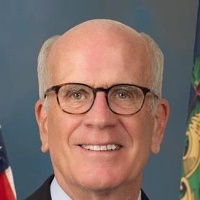
Peter Welch
Senator
VT
This resolution celebrates the historic significance of the 2026 FIFA World Cup, the first hosted jointly by the United States, Canada, and Mexico. It welcomes the international community to North America for the expanded 48-team tournament. The bill expresses support for the event as a symbol of continental unity and recognizes soccer's role in global friendship.
North America Prepares for Massive 2026 World Cup: 104 Matches Across 16 Cities to Test Continental Unity.
This resolution officially rolls out the red carpet for the 2026 FIFA World Cup, marking the first time in history that three nations—the United States, Canada, and Mexico—will jointly host the world’s biggest sporting event. It isn’t just a pat on the back for soccer fans; it’s a formal recognition of the massive logistical and diplomatic undertaking ahead. The tournament is set to be the largest ever, expanding to 48 national teams and a record-breaking 104 matches. For those living in one of the 11 U.S. host cities, from Seattle to Miami, this resolution signals that the federal government is leaning into the event’s potential to mirror the 1994 World Cup’s success, which famously birthed Major League Soccer and brought 3.6 million fans to American stadiums.
A Continental Game Plan
The resolution emphasizes that this tournament is a byproduct of decades of peace and cooperation between the three North American neighbors. By highlighting the 16 host cities (11 in the U.S., 3 in Mexico, and 2 in Canada), the text underscores a commitment to a "home-team atmosphere" for every visiting nation. For small business owners in these hubs—whether you run a sports bar in Philly or an Airbnb in Dallas—the resolution frames the event as a major moment for local economies and international visibility. It explicitly thanks Canada and Mexico for the collaboration, suggesting that the tournament is being viewed as much as a diplomatic win as an athletic one.
Access and the 250th Anniversary
Timing is everything, and the resolution points out that the tournament coincides with the United States’ 250th anniversary. Because of this high-profile overlap, the Senate is committing to "equal access" for teams, media, and fans from all nations. This is a key detail for the travel and hospitality sectors, as it implies a push for smooth visa processing and equal protection under U.S. law for international visitors. By framing soccer as a "universal language" that requires nothing more than a ball and a field, the resolution seeks to use the 2026 games as a global bridge-building exercise, focusing on the sport's unique ability to connect 3.5 billion fans across different backgrounds and tax brackets.