This resolution amends Senate rules to prohibit Senators, officers, and employees from trading on prediction markets.
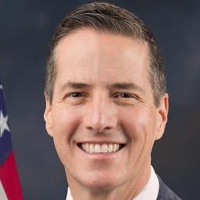
Bernie Moreno
Senator
OH
This resolution amends Senate rules to prohibit Senators, officers, and employees from trading on prediction markets based on the outcome of specific events. It specifically bans entering into transactions dependent on whether an event occurs, with an exception for certain insurance policies. The Senate also expresses its sense that other branches of government should adopt similar restrictions.
Senate Mulls Ban on Prediction Market Trading for Members and Staff
Alright, let's talk about a new resolution hitting the Senate floor that’s all about keeping things clean and clear in government. This isn't some massive overhaul, but it’s a pretty direct move to keep our elected officials and their teams focused on their jobs, not on betting markets.
Betting on the Future: What's Changing?
So, what's the deal? This resolution, if passed, would amend Rule XXXVII of the Standing Rules of the Senate. Think of it as updating the Senate's internal playbook. The big change? It would explicitly prohibit Senators, officers, and employees of the Senate from trading on prediction markets.
What are prediction markets, you ask? Imagine a stock market, but instead of company shares, you're buying and selling contracts based on whether a specific event will happen or not. Will a certain bill pass? Will a particular candidate win an election? People bet on these outcomes. The resolution defines this as any “agreement, contract, swap, or transaction involving an excluded commodity (as defined in section 1a of the Commodity Exchange Act) that depends on whether a specific event occurs, does not occur, or the extent to which it occurs.” Basically, if you're betting on future events, especially those that could be influenced by your position, that’s a no-go. The only exception here is legitimate insurance policies, where you actually have a real, insurable interest, which makes sense.
Why the Ban?
This isn't just about stopping a fun hobby. The core idea here is to prevent potential conflicts of interest. Imagine a Senator who knows a specific policy is about to be announced. If they could bet on the outcome of that policy's impact on, say, an industry, that's a clear advantage. This ban aims to shut down any perception or reality of insider trading or using privileged information for personal financial gain. For the general public, this means more trust that decisions are being made for the right reasons, not for someone's personal prediction market portfolio.
Broader Implications
Beyond just the Senate, this resolution also includes a “Sense of the Senate” clause. This isn't a binding law for other branches, but it's basically the Senate saying, “Hey, House of Representatives, executive branch, and judicial branch — you guys should probably look into doing something similar.” It’s a nudge for a government-wide standard on this issue, suggesting that ethical boundaries around prediction markets should apply across the board. For regular folks, this could mean a more consistent ethical framework for all public servants, which is always a good thing for maintaining faith in our institutions.
Ultimately, this resolution is a fairly straightforward move to bolster ethical standards in the Senate. It means that while the rest of us might be betting on our fantasy football teams, our lawmakers and their staff will be keeping their focus squarely on the job at hand, without the added distraction or temptation of prediction market payouts.