This resolution denounces any attempt by the President to unlawfully nationalize or assume direct control over federal elections, affirming that such authority rests with state legislatures and Congress.
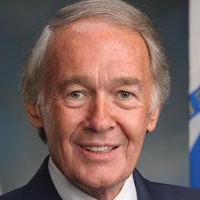
Edward "Ed" Markey
Senator
MA
This resolution denounces any stated intent by the President to nationalize or assume direct control over federal elections. It affirms that the Constitution grants primary authority over elections to state legislatures and Congress, not the President. The resolution declares that any unilateral attempt by the President to take over election processes would be unconstitutional and unlawful.
Senate Resolution Reaffirms State Control Over Elections with 2020 Fraud Claims Rejection
This resolution formally denounces any suggestion that the President of the United States can 'nationalize' or take direct control of federal elections. It relies on Article I, Section 4 of the Constitution to clarify that the primary authority to run elections belongs to state legislatures and Congress, not the executive branch. By citing specific instances where President Donald J. Trump called for a federal takeover of voting processes in at least 15 locations, the resolution seeks to draw a hard line against executive overreach. It also explicitly rejects the idea that the 2020 election was rigged, noting that law enforcement and intelligence agencies from the previous administration found no credible evidence of widespread fraud.
Drawing the Constitutional Line
The resolution acts as a formal 'keep off the grass' sign for the White House regarding the ballot box. It clarifies that unless Congress passes a specific law or the Constitution is amended, the President has zero unilateral authority to change how, when, or where you vote. For a local poll worker or a state election official, this reinforces that their current rules and procedures—set at the state level—cannot be legally overridden by a presidential memo or executive order. The text declares that any such attempt would be 'unconstitutional, unlawful, and invalid,' essentially providing a legal framework for states to ignore federal directives that bypass existing laws.
Accountability and the Impeachment Clause
In a significant move toward defining executive boundaries, the resolution states that interfering with state election powers isn't just a policy disagreement—it is a potential 'high crime.' It explicitly mentions that if a President tries to usurp these powers reserved for the states or Congress, such conduct would be grounds for impeachment and removal from office under Article II. This creates a clear standard for future oversight, signaling that the administration’s duty is to 'faithfully execute' the laws passed by others, rather than creating its own rules for the democratic process.
Protecting Local Control
By reinforcing federalism, the resolution ensures that election administration stays close to home. For the average voter, this means your local county clerk or secretary of state remains the final word on voting hours and machine security, rather than a centralized federal agency in D.C. The resolution argues that this decentralized system is essential to public confidence. It positions the current constitutional setup as a safeguard, ensuring that no single person in the executive branch can flip a switch to change the mechanics of an election across all 50 states simultaneously.