This resolution expresses Congressional support for the Ratepayer Protection Pledge, ensuring that the costs of electricity infrastructure for AI data centers are borne by the companies themselves rather than by households and small businesses.
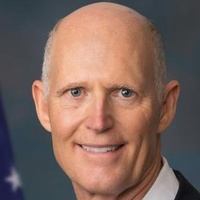
Rick Scott
Senator
FL
This resolution expresses Congressional support for the "Ratepayer Protection Pledge," an initiative where major technology companies commit to covering the infrastructure costs associated with their data centers. By ensuring these companies pay for their own power expansion, the policy aims to protect households and small businesses from rising electricity rates. Furthermore, the resolution directs federal agencies to support these commitments to ensure reliable, affordable energy as AI infrastructure grows nationwide.
Tech Giants Pledge to Pay Their Own Power Bills: New Resolution Aims to Shield Households from AI-Driven Rate Hikes
This resolution formally backs the 'Ratepayer Protection Pledge,' a deal where massive tech companies like Amazon, Google, and Meta agree to foot the bill for the massive power upgrades their data centers require. By shifting the financial burden of new grid infrastructure away from the general public, the measure seeks to ensure that the rapid expansion of artificial intelligence doesn't result in higher monthly utility bills for the rest of us. The Department of Energy projects that data centers could gobble up 12 percent of the nation's total electricity by 2028, and under current rules, the cost to upgrade the grid for these 'power hungry' neighbors usually gets tacked onto everyone else's bill.
The 'Pay-Whether-Used' Protection
At the heart of this policy is a shift in how utilities charge the world’s largest companies. Usually, when a big factory or data center moves into town, the local utility builds new lines and substations, then raises rates for every household and small business to pay for it. This resolution supports a new 'pay-whether-used' model (Section 1). This means if a company like Oracle or OpenAI wants a massive power connection, they negotiate a separate rate and commit to paying for that infrastructure even if they don't use the full amount of power. For a local coffee shop owner or a family on a fixed budget, this acts as a financial firewall, preventing industrial-scale expansion from draining their bank accounts.
Boosting Grid Reliability
The resolution doesn't just stop at who pays the bill; it looks at how these data centers can actually help the grid when things get dicey. Because these facilities have massive backup generators, the pledge encourages them to feed power back into the public grid during shortages or peak summer heat. To make this happen, the resolution directs the Department of Energy and the Federal Energy Regulatory Commission to cut through the red tape and speed up the process for connecting these new power sources. The goal is to turn these massive energy consumers into a sort of 'backup battery' for the community, potentially making blackouts less likely for schools and hospitals.
A Voluntary Framework with Real Stakes
While the resolution is a 'sense of Congress'—meaning it’s an official stance rather than a law that sends people to jail—it sets a high bar for the tech industry. It explicitly calls out companies that haven't signed the pledge yet, urging them to step up and make similar commitments. For the companies involved, this means higher direct costs for their expansion projects. For the average citizen, the challenge lies in the 'speeding up' of permits mentioned in the bill; while faster connections help the grid, it will be up to federal agencies to ensure that 'fast-tracking' doesn't mean skipping over environmental or local community safety checks. It's a move toward making sure the AI boom pays its own way instead of being subsidized by your monthly electric bill.