The USTRx Act establishes a Chief Pharmaceutical Trade Negotiator to combat foreign drug price controls and ensure fair market access for U.S. pharmaceutical products.
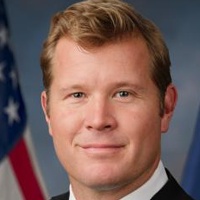
Tim Sheehy
Senator
MT
The Use Sovereignty To reduce Rx (USTRx) Act aims to combat foreign pharmaceutical price controls that exploit U.S.-funded innovation. The bill establishes a new Chief Pharmaceutical Trade Negotiator position to advocate for fair market access and requires the U.S. Trade Representative to annually report on and develop response plans for high-income countries that engage in unfair drug pricing practices.
New USTRx Act Creates Chief Negotiator to Tackle Foreign Drug Price Controls and Lower U.S. Healthcare Costs
The 'Use Sovereignty To reduce Rx Act' (USTRx Act) is a move to stop what Congress calls 'free-riding' by wealthy foreign nations. Right now, many high-income countries set strict price controls on medicines. Our lawmakers argue this forces American patients and taxpayers to foot the bill for global drug research while other countries enjoy the benefits at a discount. The bill aims to flip the script by demanding that foreign governments pay a 'fair share' for innovation, theoretically easing the financial burden on the U.S. healthcare system.
A New Power Player in D.C.
To get this done, the bill creates a heavy-hitter position: the Chief Pharmaceutical Trade Negotiator. Think of this person as the lead attorney for American drug interests on the world stage. Ranked alongside the Chief Agricultural Negotiator, this official’s sole job is to hunt down trade policies in high-income countries—like those in the EU or Japan—that 'undervalue' new treatments. Under Section 3, they are tasked with taking 'appropriate action' against any policy that makes it hard for U.S. drug companies to get full market access. For a worker in a U.S. biotech lab, this could mean more stable funding for new projects; for a patient waiting on a breakthrough cure, it’s intended to keep the R&D pipeline flowing.
The Global Report Card
The bill doesn't just hire a negotiator; it starts a massive paperwork trail. The U.S. Trade Representative (USTR) must now publish an annual 'naughty list' of high-income countries. As required by Section 4, the government will scrutinize whether these nations are using 'non-market-based' pricing or if their systems are 'unjustifiable.' If a country like Canada or Germany is found to be suppressing prices in a way that 'diminishes incentives for innovation,' the USTR has just 30 days to drop a response plan. This could lead to trade investigations or even retaliatory tariffs, which is where things get tricky for the average consumer. While the goal is to lower your pharmacy bill, trade wars can sometimes lead to price hikes in other sectors or even retaliatory shortages of certain goods.
Balancing the Scales of Innovation
There is a bit of a 'gray area' here regarding how this plays out at your local pharmacy. The bill assumes that if foreign countries pay more, the U.S. might pay less, but it doesn't explicitly mandate that drug companies lower U.S. prices once they start making more profit abroad. Furthermore, the terms 'appropriate action' and 'significant harm' in Section 3 are fairly broad. This gives the new Negotiator a lot of room to operate, but it also means the success of the bill depends entirely on how aggressively—or diplomatically—they handle these high-stakes trade talks. For most of us, the impact will be felt in whether this actually leads to lower premiums or just shifts the global chess board for pharmaceutical giants.