This bill authorizes qualified former military special operations personnel to carry concealed firearms nationwide, subject to specific training, certification, and identification requirements.
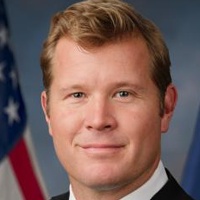
Tim Sheehy
Senator
MT
The Special Operations Forces Concealed Carry Act allows qualified former military special operations personnel to carry concealed firearms nationwide, similar to the rights currently granted to retired law enforcement officers. To qualify, veterans must maintain honorable discharge status, meet annual state-level firearms training requirements, and complete a federally certified use-of-force course. The bill also mandates that the Department of Defense and the Department of Veterans Affairs establish a formal identification program to verify these credentials.
Special Ops Veterans to Gain Nationwide Concealed Carry Rights: New Training and ID Standards Set to Launch
The Special Operations Forces Concealed Carry Act aims to grant elite veterans the same interstate firearm privileges currently held by retired police officers. Under the proposal, former members of the U.S. Armed Forces who were screened, selected, and qualified for special operations—think Navy SEALs, Army Rangers, and Green Berets—would be authorized to carry concealed firearms in any state, regardless of local licensing laws. This isn't a free pass, though; to keep this status, these veterans must prove their skills annually by meeting state active-duty marksmanship standards at their own expense and completing a Department of Justice-certified course on de-escalation and the legal duties of a civilian using force.
The Elite Credentials Check
To qualify as a "qualified special operator," a veteran must have held a specific special warfare military occupational specialty (MOS) as defined by the U.S. Special Operations Command (SOCOM). For those who served in the Navy, this includes commissioned officers qualified in special warfare and enlisted Special Warfare Operators. The bill requires these individuals to carry specific identification: either a new photo ID issued by the Department of Defense (DoD) or the VA, or their official discharge papers alongside a government photo ID. If a police officer pulls them over or stops them, they are required to present these documents immediately. This creates a uniform standard, but it also means the DoD and VA have to build a brand-new identification program from scratch within 180 days (Section 4).
Transition Period and Practical Hurdles
While the bill sets up a structured system, the rollout could be a bit messy for local law enforcement. For the first six months, before the official new IDs are ready, veterans can use their service documentation as proof of their right to carry. The Attorney General is tasked with telling local police departments how to handle this within 90 days, but there is a real risk of confusion on the ground. If you’re a patrol officer in a state with strict gun laws, verifying a stack of military discharge papers you’ve never seen before—instead of a standard ID card—could lead to delays or legal headaches for everyone involved. Furthermore, the bill specifies that the carrying authority ends the second a veteran is under the influence of alcohol or any intoxicating substance (Section 3), placing the responsibility for sobriety and legal compliance squarely on the operator.
Accountability and the Fine Print
One of the most significant parts of this bill is what it takes away: the right to sue. Section 5 explicitly states that there is "no private right of action." This means if a government agency drops the ball on the identification program, or if a private entity fails to comply with the Act, citizens and veterans cannot file a lawsuit to force compliance or seek damages. Any legal remedies are limited to what existed before this bill was written. While this protects the government from a wave of litigation, it also removes a major incentive for agencies to get the implementation right on the first try. For the general public, the bill relies on the rigorous annual training and the "Expert" level marksmanship of these veterans to ensure that expanding concealed carry to this new group doesn't compromise public safety.