The State-Sponsored Visa Pilot Program Act of 2026 establishes a new nonimmigrant visa category allowing U.S. states to sponsor foreign nationals for temporary, state-regulated employment to support local economic development.
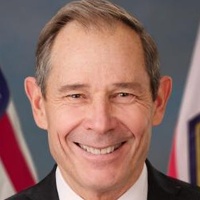
John Curtis
Senator
UT
The State-Sponsored Visa Pilot Program Act of 2026 establishes a new "W" nonimmigrant visa category, allowing individual U.S. states to sponsor foreign nationals for temporary work and residence to support local economic development. Participating states are responsible for regulating employment and ensuring compliance, while federal oversight manages security vetting and national program limits. This pilot program aims to provide states with greater flexibility to address specific labor needs while maintaining strict federal standards for worker protections and program accountability.
State-Sponsored Visa Pilot Act: New W-Visa Program Grants States Power to Recruit Foreign Workers and Residents Through 2026
The State-Sponsored Visa Pilot Program Act of 2026 introduces a significant shift in how people enter and work in the U.S. by creating the 'W visa.' Instead of the federal government calling all the shots, individual states could soon sponsor foreign nationals to live and work within their borders to boost local economies. Whether it’s a tech hub needing specialized coders or a rural area looking for capital investment, states would design their own rules for who gets in and what they do, provided the state legislature signs off and the feds give the green light. The program allows for a three-year stay, renewable at the state’s request, and even lets workers bring their families along for the ride.
The State-Led Workforce Experiment
Under this bill, states aren't just passive observers; they become active recruiters. A state like Ohio or Arizona could petition for a specific number of visas—starting with a base of 5,000 plus a share of a national pool of 245,000—to fill gaps in their local labor market. For a small business owner struggling to find staff or a startup looking for international investors, this could be a game-changer. However, the bill (Section 3) requires states to prove these new arrivals won't displace U.S. workers or drive down wages. It’s a delicate balance: states get the labor they need, but they have to monitor their own backyards to ensure local workers aren't getting pushed out of their jobs.
The Fine Print on Rights and Responsibilities
If you’re a foreign national coming in on a W visa, the rules are strict. You are generally tied to the sponsoring state; if you decide to move or work elsewhere without a specific multi-state agreement (an 'interstate compact'), your status is terminated, and you face removal. To keep everyone honest, states can require a bond—a chunk of cash you pay upfront to ensure you follow the rules. If more than 3% of a state’s visa holders break the residency rules, that bond could jump to $4,000 or more (Section 3). Furthermore, while these workers pay into Social Security and Medicare, they are barred from receiving federal means-tested benefits like SNAP or Medicaid. It’s a 'pay-in, but don't-take-out' system designed to ensure the program remains a net positive for the Treasury.
A Path for the Undocumented and Limited Legal Recourse
One of the most striking provisions is a 'reset' button for certain people already here. States can request a waiver for undocumented individuals who have been in the U.S. since before December 31, 2016, allowing them to join the W visa program if they pay a $1,000 penalty and pass background checks. However, this opportunity comes with a heavy legal trade-off. To get the visa, individuals must waive their right to appeal most removal orders or contest admissibility decisions at the border. Additionally, if the federal government denies a state’s application to run a program, there is no judicial review allowed—meaning the feds have the final, unchallengeable word on which states get to participate and which don't.